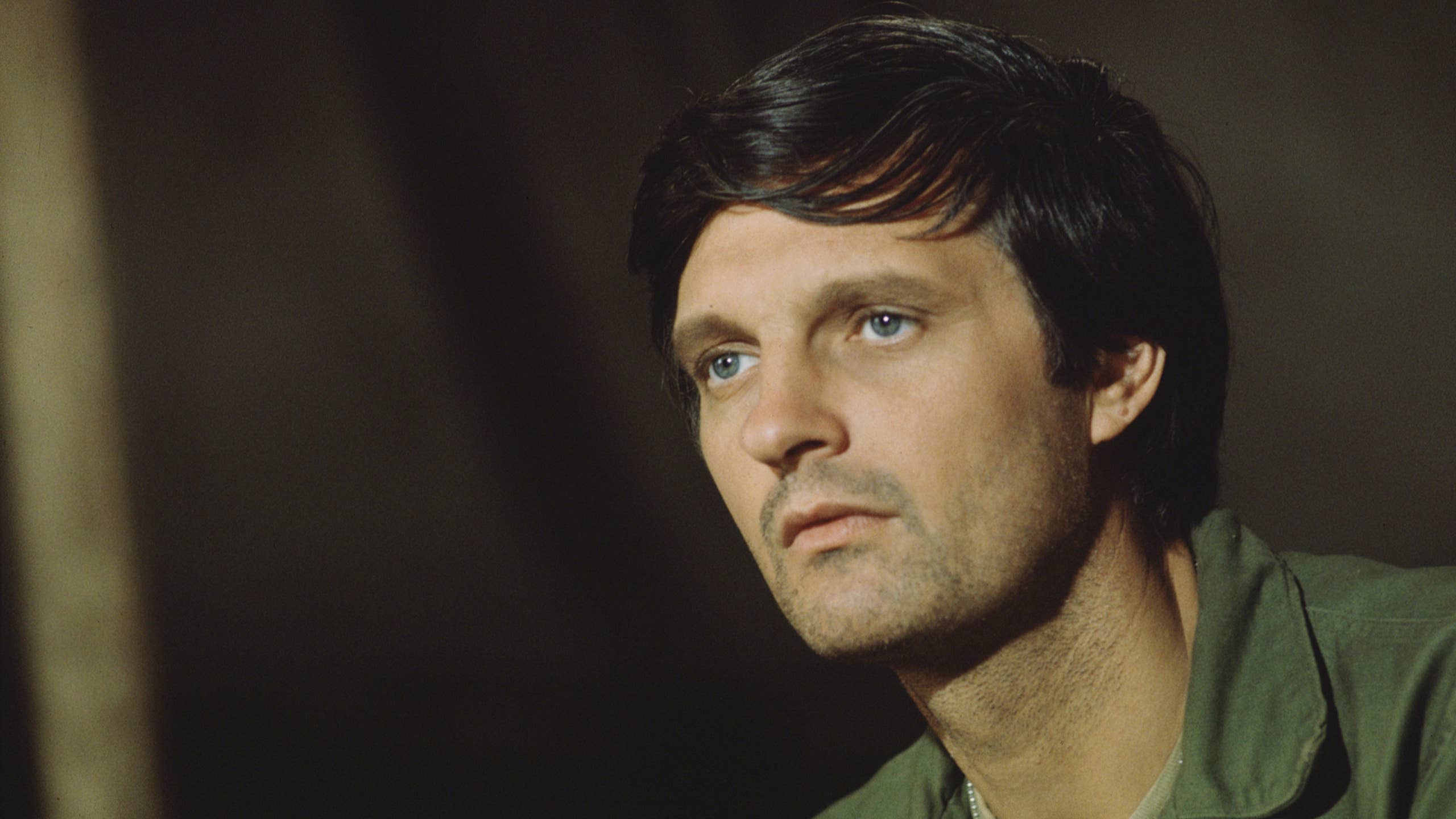
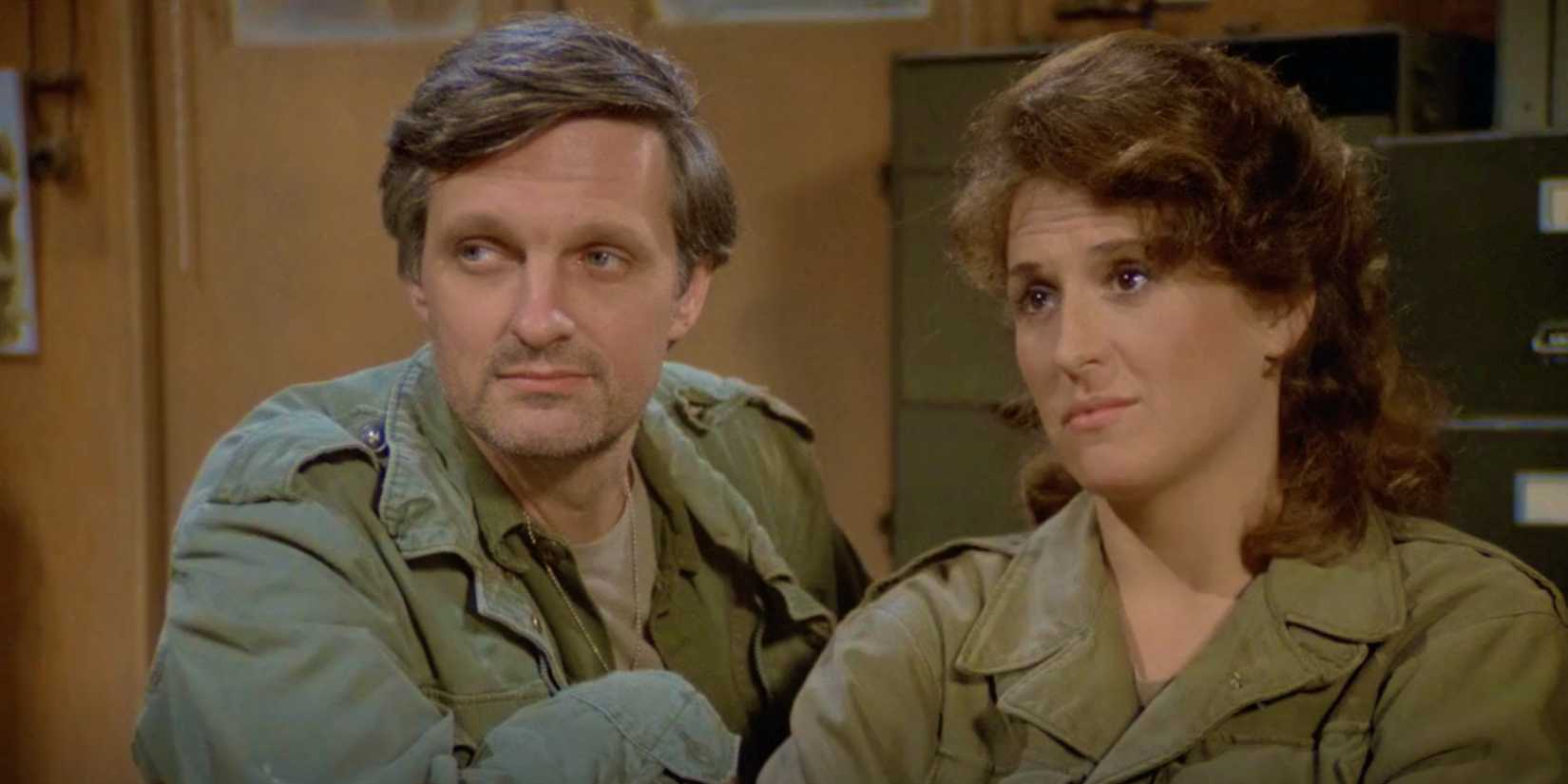
Alan Alda is a multi-award-winning actor, director, screenwriter, and author best known for his portrayal of Captain Hawkeye Pierce on the legendary television series MASH*. Beyond his entertainment career, he is a dedicated science communicator and a pioneer in teaching empathetic communication through the Alan Alda Center for Communicating Science.
Early Life and the Formative Years of Alphonso D'Abruzzo
Born Alphonso Joseph D'Abruzzo on January 28, 1936, in the Bronx, New York, Alan Alda was destined for a life in the spotlight, though his journey was marked by significant early adversity. He was the son of Robert Alda (born Alphonso Giuseppe Giovanni Roberto D'Abruzzo), a successful actor of vaudeville and burlesque who later found fame in films like Rhapsody in Blue. His mother, Joan Browne, was a former Miss New York pageant winner. The stage name "Alda" was a portmanteau created by his father, combining the first two letters of Alphonso and D’Abruzzo.
At the age of seven, Alda contracted polio, a disease that would leave a permanent mark on his worldview. During the 1940s, polio was a terrifying epidemic, and the treatments were often as grueling as the illness itself. Alda underwent the Sister Kenny treatment, which involved the application of agonizingly hot, damp wool wraps to the limbs every few hours to prevent muscle contraction. This period of isolation and physical pain fostered a deep sense of resilience and an analytical mind. He often spent his recovery time observing the world around him, a trait that would later define his observational style of acting and writing.
Growing up in the wings of theaters, Alda traveled extensively with his father. He was exposed to the mechanics of performance from a young age, watching burlesque sketches and vaudeville routines. This "backstage" education provided him with a technical understanding of comedy and timing that no formal school could replicate. Despite the glamour of his father’s career, Alda saw the hard work, the repetitive rehearsals, and the precarious nature of the profession, which grounded his own eventual approach to the craft.
Education and the Transition to Professional Acting
Alda attended Fordham University in the Bronx, where he began to hone his intellectual and artistic interests. During his junior year, he participated in a study abroad program in Paris, a transformative experience that broadened his cultural horizons. While in Europe, he performed in a play with his father and made several television appearances, further solidifying his desire to pursue acting as a serious career.
After graduating from Fordham in 1956 with a Bachelor of Arts in English, Alda served a brief stint in the U.S. Army Reserve, completing a six-month tour in Korea as a gunnery officer. While he did not see combat, his time in Korea provided a layer of authenticity to his later work on MASH*, as he had first-hand experience with the landscape and the military environment.
Upon returning to the United States, Alda began his professional career in earnest. He joined the Cleveland Play House and later the Second City in Chicago. His time at Second City was particularly pivotal; the improvisational techniques he learned there became the cornerstone of his acting philosophy. Improv taught him the importance of listening and reacting in the moment—skills that he would later champion not just in acting, but in science communication and interpersonal relationships.
The MASH Era: Cultural Impact and Artistic Growth
In 1972, Alan Alda accepted the role of Captain Benjamin Franklin "Hawkeye" Pierce in the television adaptation of the film MASH*. While the show began as a situational comedy set during the Korean War, it evolved into something far more complex under Alda’s influence. He was not merely the star of the show; he became its creative heartbeat, eventually serving as a writer and director for many episodes.
Alda’s portrayal of Hawkeye Pierce redefined the American leading man. Hawkeye was brilliant, sarcastic, and womanizing, yet deeply sensitive, vulnerable, and fiercely anti-war. Alda pushed for the show to reflect the true horrors of surgery and the psychological toll of conflict, ensuring that the "blood" in the operating room was visible and that the emotional stakes remained high.
His commitment to the series was unparalleled. Alda remains the only person to win Primetime Emmy Awards for acting, writing, and directing on the same series. By the time MASH* concluded its 11-year run in 1983, it had become a cultural phenomenon. The series finale, "Goodbye, Farewell and Amen," which Alda directed and co-wrote, was watched by over 105 million viewers, a record for a single television episode that stood for decades.
Expansion into Film and Dramatic Television
Following the conclusion of MASH*, Alda successfully avoided the "typecasting" trap that often befalls television stars. He transitioned into a prolific career in film, both in front of and behind the camera. In 1981, he wrote, directed, and starred in The Four Seasons, a sophisticated look at middle-aged friendship that was both a critical and commercial success.
Alda also became a frequent collaborator with director Woody Allen, appearing in films such as Crimes and Misdemeanors (1989), Manhattan Murder Mystery (1993), and Everyone Says I Love You (1996). In Crimes and Misdemeanors, Alda played Lester, a pompous and successful television producer, a role that earned him widespread acclaim for his ability to play unlikable characters with nuance.
In the 2000s, Alda experienced a career resurgence in dramatic television. He joined the cast of The West Wing as Senator Arnold Vinick, a principled Republican presidential candidate. His performance was lauded for its dignity and complexity, earning him another Emmy Award. His ability to portray a conservative politician with empathy and intelligence—despite his own well-known liberal leanings—demonstrated his incredible range and commitment to the integrity of the script.
A Second Calling: The Alan Alda Center for Communicating Science
Perhaps the most unique chapter of Alda’s biography is his pivot toward science communication. From 1993 to 2005, he hosted the PBS series Scientific American Frontiers. This role required him to interview world-renowned scientists about complex topics ranging from quantum physics to neuroscience.
Alda discovered that the most engaging interviews occurred when he used his improvisational skills to truly "connect" with the scientists, forcing them out of their prepared lectures and into a genuine conversation. This realization led to the founding of the Alan Alda Center for Communicating Science at Stony Brook University in 2009.
The Center utilizes "The Alda Method," which employs improvisational theater exercises to help scientists, doctors, and researchers communicate their work more effectively to the public. The goal is not to turn scientists into actors, but to help them build empathy with their audience and use clear, vivid language. As of 2026, the Center has trained thousands of professionals worldwide, significantly impacting how scientific data is shared and understood by policymakers and the general public.
Literary Contributions and Personal Philosophy
Alan Alda is also an accomplished author, having written several best-selling memoirs and books on communication. His first memoir, Never Have Your Dog Stuffed: And Other Things I've Learned, published in 2005, explored the concept of authenticity and the dangers of clinging to the past. The title refers to a childhood trauma involving his well-intentioned father having a deceased pet dog stuffed, which taught Alda that trying to preserve the appearance of life often masks the reality of change.
His subsequent books, including Things I Overheard While Talking to Myself (2007) and If I Understood You, Would I Have This Look on My Face? (2017), focus on the search for meaning and the technical aspects of human connection. Alda’s writing is characterized by the same wit and intellectual curiosity found in his acting. He often discusses the importance of "knowing what you don't know" and the necessity of staying curious throughout one's life.
Personal Life, Resilience, and Health
In 1957, Alan Alda married Arlene Weiss, a concert clarinetist and photographer. Their marriage is one of the most enduring in Hollywood, spanning nearly seven decades. They have three daughters—Eve, Elizabeth, and Beatrice—and several grandchildren. The couple has split their time between New York City and New Jersey for most of their lives, maintaining a relatively private personal life despite Alda's fame.
In 2018, Alda publicly revealed that he had been diagnosed with Parkinson's disease three years prior. He chose to disclose his condition to encourage others with the diagnosis to remain active and engaged. True to his word, Alda has continued to work, host his podcast Clear+Vivid with Alan Alda, and lead workshops at his center. He often speaks about his "shaky" hands with humor, viewing the disease as just another challenge to be navigated with curiosity rather than fear.
| Career Milestone | Year | Significance |
|---|---|---|
| MASH Premiere | 1972 | Debuted as Hawkeye Pierce, beginning an 11-year run. |
| Directorial Debut | 1974 | Directed his first episode of MASH* ("Mail Call"). |
| The Four Seasons | 1981 | Wrote, directed, and starred in this hit feature film. |
| MASH Finale | 1983 | Co-wrote and directed the most-watched TV episode in history. |
| Scientific American Frontiers | 1993 | Began hosting PBS series, sparking his passion for science. |
| Oscar Nomination | 2005 | Nominated for Best Supporting Actor for The Aviator. |
| Alda Center Founded | 2009 | Established the Center for Communicating Science at Stony Brook. |
| Parkinson's Announcement | 2018 | Publicly shared his diagnosis to inspire others. |
Frequently Asked Questions
Did Alan Alda serve in the military?
Yes, Alan Alda served in the United States Army Reserve. Following his graduation from Fordham University in 1956, he completed a six-month tour of duty in South Korea as a gunnery officer. While he was not involved in active combat (the Korean War had ended in an armistice three years prior), his time in the country gave him a personal perspective on the setting of MASH*.
How many Emmys has Alan Alda won?
Alan Alda has won a total of six Primetime Emmy Awards. Five of these were for his work on MASH* (as an actor, writer, and director), and his sixth was for his role as Senator Arnold Vinick on The West Wing. He is notable for being the first person to win Emmys for acting, writing, and directing for the same television series.
What is the Alan Alda Center for Communicating Science?
The Alan Alda Center for Communicating Science is an organization based at Stony Brook University. It was founded by Alda to help scientists and healthcare professionals communicate complex information in ways that are clear, engaging, and easy for the public to understand. The Center uses improvisational techniques to help experts connect more effectively with their audiences.
What is Alan Alda’s current health status?
As of 2026, Alan Alda continues to live with Parkinson's disease, a diagnosis he first received in 2015. He has remained remarkably active, continuing his podcast, writing, and advocacy work. He credits regular exercise—including boxing and tennis—along with a positive mental attitude for helping him manage the symptoms of the disease.
Is Alan Alda still active in the entertainment industry?
Yes, Alan Alda remains active, though he has shifted much of his focus toward his podcast, Clear+Vivid, where he interviews experts and celebrities about the art of communication. He also occasionally takes on acting roles in film and television when the project aligns with his interests, such as his acclaimed performance in the 2019 film Marriage Story.
Recommended Next Steps for Fans and Researchers
To gain a deeper understanding of Alan Alda's contributions to culture and science, several avenues are recommended:
- Watch MASH* Chronologically: Observe the evolution of the series from a broad comedy to a sophisticated dramedy. Pay particular attention to the episodes Alda wrote or directed, such as "In Love and War" or "The Life You Save."
- Read His Memoirs: Start with Never Have Your Dog Stuffed. It provides the most comprehensive look at his childhood and the philosophy that drives his work.
- Listen to "Clear+Vivid": This podcast is the best way to hear Alda’s current thoughts on empathy and connection. His interviews with scientists and fellow actors demonstrate "The Alda Method" in real-time.
- Explore the Alda Center Website: For those interested in the technical side of communication, the Alan Alda Center for Communicating Science offers resources and insights into how the gap between experts and the public can be bridged.
Alan Alda’s biography is not just a record of a successful acting career; it is a testament to the power of curiosity and the importance of human connection. From the battle with polio to the heights of television stardom and his current role as a champion for science, Alda has consistently used his platform to foster understanding in an increasingly complex world.