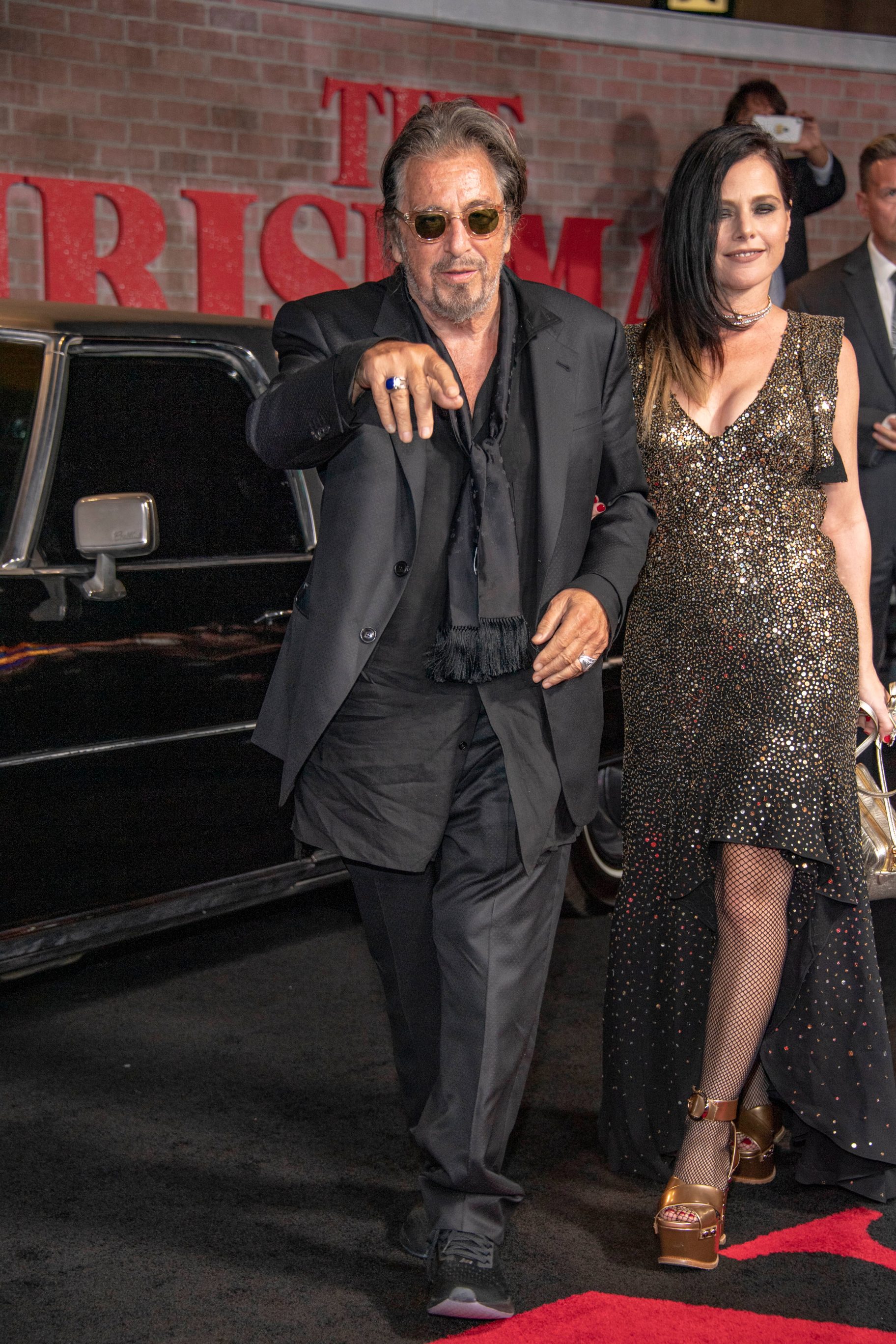
Al Pacino is widely documented as being 5 feet 7 inches (170 cm) tall. While his presence on the silver screen is often described as "larger than life," his actual physical stature is slightly below the average height for an American male. Throughout his storied career, this measurement has been a point of interest for fans and film historians alike, particularly regarding how he matches up against his contemporaries in the "New Hollywood" era of the 1970s.
The Official Measurement vs. Public Perception
For decades, the standard biographical data for Al Pacino has cited him at 5'7". This figure is the most commonly accepted "official" height provided by talent agencies and biographical databases like IMDb. However, as with many actors whose careers span over half a century, the public perception of his height has fluctuated significantly.
In the world of professional acting, height is often a sensitive subject. For Pacino, his height became a talking point almost from the moment he was cast in his breakout role as Michael Corleone in The Godfather (1972). Production executives at Paramount initially expressed concerns that Pacino was "too short" to play the character, who they envisioned as a more physically imposing figure. Despite these early reservations, Pacino’s performance proved that screen presence and gravitational charisma could easily supersede physical inches.
In more recent years, particularly as we look at his appearances in 2026, observers have noted that Pacino may appear slightly shorter than his prime measurement. This is a natural consequence of the aging process, which typically involves the compression of spinal discs and changes in posture. Estimates from height-tracking communities often suggest that in his later years, Pacino may stand closer to 5'5" or 5'6", though 5'7" remains the historical benchmark for his career.
Height in the Context of the New Hollywood Movement
To understand "Al Pacino height explained," one must look at the era in which he rose to stardom. The late 1960s and early 1970s marked the "New Hollywood" movement, a period where the traditional "tall, dark, and handsome" archetype of the Golden Age—represented by actors like Cary Grant (6'1") or Gregory Peck (6'3")—was being challenged.
The industry shifted toward gritty realism and "character-actor" leads. This era allowed actors who didn't fit the classical mold to take center stage. Pacino was part of a cohort of legendary performers whose physical statures were modest but whose emotional ranges were immense.
- Dustin Hoffman: Often cited at 5'5".
- Robert De Niro: Typically measured at 5'9".
- Gene Hackman: A taller outlier at 6'2".
- Richard Dreyfuss: Approximately 5'5".
Pacino’s 5'7" frame was perfectly suited for the intense, urban, and often ethnic characters he portrayed. His height added a layer of "everyman" relatability to his roles, making his outbursts of power (such as those in Scarface or And Justice for All) feel more earned and explosive because they came from a man who did not physically dominate the room by default.
Cinematic Techniques: Managing Stature on Screen
Film is a medium of illusion, and directors have long used various techniques to manage the height of their actors. When Al Pacino is on screen, his height is rarely a distraction, thanks to a combination of technical precision and artistic choice.
Camera Angles and Framing
Directors of photography often use "low-angle" shots to make a shorter actor appear more commanding. By placing the camera slightly below the actor's eye line and tilting upward, the subject gains a sense of authority and physical scale. Conversely, when Pacino shared scenes with much taller actors, directors might use "medium close-ups" to eliminate the height disparity visible in full-body shots.
The Use of "Lifts" and Footwear
It is a common industry practice for actors to wear "elevator shoes" or "lifts"—insoles designed to add two to three inches of height. While Pacino has rarely commented on his wardrobe choices in this regard, fashion analysts have occasionally pointed to the heavy-soled boots or slightly elevated heels he wore in films like Heat (1995), where he stood toe-to-toe with the 5'9" Robert De Niro.
Blocking and Set Design
"Blocking" refers to the precise positioning of actors in a scene. If a height difference is too distracting, a director might have the shorter actor stand on a small platform (often called a "pancake" or a "Manly box") during static shots. Alternatively, the taller actor might be asked to stand with their legs further apart (the "Stance") to lower their eye line, or scenes might be staged with actors sitting down to equalize their heights.
Comparative Height Analysis: Al Pacino and Co-stars
Comparing Al Pacino to his most famous co-stars provides a clearer picture of his physical presence. The following table illustrates how his 5'7" frame interacts with the heights of other industry titans.
| Actor | Stated Height | Notable Collaboration | Height Difference |
|---|---|---|---|
| Marlon Brando | 5'9" (175 cm) | The Godfather | 2 inches taller than Pacino |
| Robert De Niro | 5'9" (175 cm) | Heat, The Irishman | 2 inches taller than Pacino |
| John Cazale | 5'10" (178 cm) | The Godfather, Dog Day Afternoon | 3 inches taller than Pacino |
| Diane Keaton | 5'7" (170 cm) | The Godfather Trilogy | Approximately equal |
| Michelle Pfeiffer | 5'7" (170 cm) | Scarface | Approximately equal |
| Robert Redford | 5'10" (178 cm) | (Industry peer) | 3 inches taller than Pacino |
| Joe Pesci | 5'4" (163 cm) | The Irishman | 3 inches shorter than Pacino |
In films like The Godfather, the height difference between Pacino and James Caan (5'9") or Marlon Brando was negligible and easily managed. However, in The Irishman (2019), significant digital effects and physical blocking were required because the real-life Jimmy Hoffa (whom Pacino played) was around 5'5", while Frank Sheeran (played by De Niro) was 6'4". Interestingly, in this specific case, the film had to navigate making the actors match their historical counterparts rather than just making everyone look "tall."
The Biological Reality of Aging in 2026
As we observe Al Pacino in 2026, it is important to factor in the physiological changes that occur in the ninth decade of life. Most men lose between one and two inches of height between the ages of 30 and 80. This is caused by the narrowing of the spaces between the vertebrae and a loss of muscle mass in the torso that helps maintain an upright posture.
While Pacino’s official "Hollywood height" remains 5'7", contemporary red carpet appearances often show him standing at a height closer to his co-stars who are 5'5" or 5'6". This does not diminish his legacy; rather, it highlights the endurance of a performer who has remained a leading man long after the physical "peak" typically required by the industry.
The Psychology of the "Short" Leading Man
There is a psychological component to how Al Pacino’s height has influenced his acting style. Shorter actors often develop a more "explosive" vocal range and more expansive physical gestures to command attention. Pacino’s famous "Hoo-ah!" in Scent of a Woman or his high-decibel delivery in Any Given Sunday are examples of a performer using sound and energy to fill a space that their physical frame might not.
This "shorter leading man" syndrome has actually been a benefit for Pacino. It allowed him to play "outsider" characters—men who had to fight harder, scream louder, and be smarter than the giants around them. From the low-level criminal in Panic in Needle Park to the embattled detective in Serpico, his height reinforced the narrative that his characters were underdogs.
Why Does Al Pacino's Height Matter?
In the grand scheme of cinematic history, a few inches may seem trivial. However, "Al Pacino height explained" matters because it challenges the traditional Hollywood bias toward height. Pacino, along with his peers, proved that the "power" of an actor is located in the eyes and the voice, not the vertical measurement.
His career serves as a blueprint for shorter actors entering the industry today. In an era where superhero films often demand 6'2" physiques, Pacino remains the ultimate counter-argument: a man who conquered the box office and the Academy Awards while standing 5'7".
Frequently Asked Questions
Is Al Pacino actually 5'7"? In his prime, 5'7" (170 cm) was the generally accepted measurement. Like many people in their 80s, he has likely experienced some height loss due to aging, meaning he may currently stand closer to 5'5" or 5'6".
Was Al Pacino considered too short for The Godfather? Yes. Producers at Paramount, specifically Robert Evans, initially wanted a taller, more conventional lead like Robert Redford or Warren Beatty. Director Francis Ford Coppola had to fight the studio to keep Pacino, arguing that his intensity was more important than his height.
Does Al Pacino wear elevator shoes? While never officially confirmed by the actor, it is widely believed that Pacino, like many Hollywood actors of his stature, has used footwear with internal lifts or thicker soles to appear taller during filming and high-profile public appearances.
How does Al Pacino's height compare to Robert De Niro's? Robert De Niro is approximately 5'9", making him about two inches taller than Pacino. In their collaborative films, this difference is usually minimal and managed through standard cinematic blocking.
Who is the shortest actor Al Pacino has worked with? Among his famous collaborators, Joe Pesci is notably shorter at 5'4". In The Irishman, the height difference between Pacino and Pesci was visible but fit the characters they were portraying.
Summary and Next Steps
Al Pacino’s height is a confirmed 5 feet 7 inches, a measurement that has defined his physical presence since the 1970s. While he may not possess the towering stature of some action stars, his career is a testament to the fact that talent and "screen weight" are not determined by height.
For those interested in the technical side of film, observing Pacino's work in The Godfather versus The Irishman offers a fascinating look at how cinematography has evolved to manage actor heights over fifty years. Whether through the use of "Manly boxes" in the 70s or digital de-aging and height adjustment in the 2020s, Pacino remains a giant of the industry—regardless of the specific number of inches.