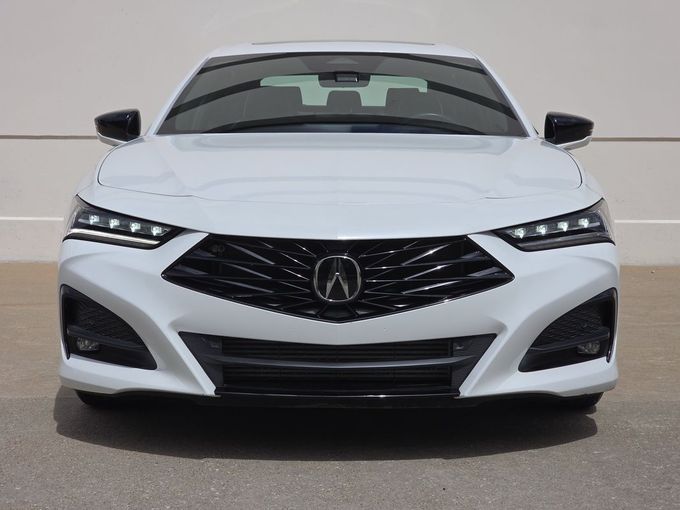
The Acura TLX A-Spec is powered by a 2.0-liter DOHC VTEC turbocharged four-cylinder engine, delivering 272 horsepower and 280 lb-ft of torque. While the A-Spec trim focuses primarily on aesthetic and handling upgrades, it shares this potent, responsive powerplant with the standard TLX, paired exclusively with a 10-speed automatic transmission.
The Architecture of the Acura TLX A-Spec Engine
The heart of the Acura TLX A-Spec, particularly in the second-generation models (2021–2026), is the K20C4 engine. This 2.0-liter turbocharged inline-four is a member of Honda’s acclaimed Earth Dreams technology family. It represents a significant shift from the naturally aspirated engines of previous decades, moving toward forced induction to meet modern demands for both efficiency and immediate torque.
The engine block is constructed from high-pressure die-cast aluminum with cast-iron cylinder liners for durability. The cylinder head is also aluminum alloy, featuring a dual overhead cam (DOHC) design. One of the defining technical aspects of this engine is the integration of the exhaust manifold directly into the cylinder head casting. This design allows the turbocharger to be mounted closer to the exhaust ports, which significantly reduces the distance exhaust gases must travel, thereby minimizing turbo lag and improving thermal management.
The A-Spec engine utilizes a mono-scroll turbocharger with an electronic wastegate. Unlike older vacuum-actuated systems, the electronic wastegate provides precise control over boost pressure, allowing the engine to maintain peak performance across a wider range of altitudes and temperatures. In the 2026 TLX A-Spec, this system is tuned to provide a flat torque curve, ensuring that the maximum 280 lb-ft of torque is available starting as low as 1,600 RPM.
Understanding VTEC and Variable Timing
Acura has not abandoned its heritage with the move to turbocharging. The TLX A-Spec engine features VTEC (Variable Valve Timing and Lift Electronic Control) on the exhaust valves. In this specific application, VTEC is used to improve turbocharger spooling. By changing the lift and duration of the exhaust valves, the engine can push more exhaust energy into the turbocharger at low RPMs, further mitigating the "dead zone" typically associated with small-displacement turbocharged engines.
Complementing VTEC is the Dual Variable Timing Control (VTC) system. VTC allows the engine computer to independently adjust the phasing of both the intake and exhaust camshafts. This continuous adjustment optimizes the "overlap" between the intake and exhaust cycles based on real-time driving conditions. During cruising, the system prioritizes fuel efficiency; under heavy acceleration, it shifts to maximize volumetric efficiency, ensuring the cylinders are filled with the densest possible air-fuel mixture.
Performance Dynamics and Power Delivery
The output of 272 horsepower and 280 lb-ft of torque places the TLX A-Spec in a competitive position within the premium compact sports sedan segment. However, the raw numbers only tell part of the story. The way the A-Spec delivers this power is defined by its pairing with a 10-speed planetary gear automatic transmission.
This transmission, developed in-house by Honda/Acura, offers a wide gear ratio spread. The lower gears are short, allowing for aggressive off-the-line acceleration, while the tenth gear acts as a deep overdrive for highway cruising, often keeping engine speeds below 2,000 RPM at 70 mph. The A-Spec trim specifically features steering-wheel-mounted paddle shifters that allow the driver to execute rapid multiple-gear downshifts—up to four gears at once—when performance is demanded.
For the 2026 model year, the TLX A-Spec continues to offer the Super Handling All-Wheel Drive (SH-AWD) system as a primary drivetrain option. The engine’s torque is processed through this system, which can send up to 70% of available torque to the rear wheels. More importantly, it can distribute 100% of that rear torque to either the left or right wheel. This torque-vectoring capability transforms the engine's output into lateral grip, allowing the car to accelerate through corners rather than pushing wide (understeering).
Technical Specifications Comparison
To understand where the A-Spec engine sits within the TLX hierarchy and the broader market, it is helpful to compare it against the performance-oriented Type S variant and the historical V6 benchmarks.
| Feature | 2.0L Turbo (A-Spec / Tech) | 3.0L V6 Turbo (Type S) |
|---|---|---|
| Engine Code | K20C4 | J30AC |
| Horsepower | 272 hp @ 6,500 RPM | 355 hp @ 5,500 RPM |
| Torque | 280 lb-ft @ 1,600-4,500 RPM | 354 lb-ft @ 1,400-5,000 RPM |
| Compression Ratio | 9.8:1 | 9.8:1 |
| Fuel Delivery | Direct Injection | Direct Injection |
| Recommended Fuel | Premium Unleaded (91+ Octane) | Premium Unleaded (91+ Octane) |
| Turbo Setup | Single-Scroll | Twin-Scroll |
| 0-60 MPH (approx.) | 5.9 seconds | 4.9 seconds |
Fuel Requirements and Efficiency
The TLX A-Spec engine utilizes a high-pressure direct-injection system that sprays fuel directly into the combustion chamber. This allows for a relatively high compression ratio for a turbocharged engine (9.8:1), which improves thermal efficiency.
While the engine can run on regular 87-octane gasoline, Acura strongly recommends premium 91-octane or higher. Using lower-octane fuel can result in the engine's knock sensors detecting pre-ignition, causing the ECU (Engine Control Unit) to retard timing. This results in a noticeable decrease in both horsepower and fuel economy. For drivers wanting to extract the full 272 horsepower advertised, premium fuel is a requirement, not a suggestion.
In terms of efficiency, the 2026 TLX A-Spec with SH-AWD typically achieves an EPA-estimated 21 mpg in the city and 29 mpg on the highway. Front-wheel-drive versions, where available, see a slight increase of approximately 1-2 mpg. These figures are achieved through the use of an Idle Stop system, which shuts the engine down at traffic lights, and the highly efficient 10th gear in the transmission.
Maintenance and Long-Term Reliability
The K20 series engines are widely regarded as some of the most reliable turbocharged powerplants on the market. However, maintaining the "Acura" level of longevity requires adherence to specific service intervals.
Oil Maintenance
The engine uses 0W-20 full synthetic oil. Because turbochargers are lubricated and cooled by engine oil, they subject the fluid to extreme heat. Acura’s Maintenance Minder system monitors driving habits, cold starts, and ambient temperatures to determine when an oil change is necessary. Typically, this occurs every 5,000 to 7,500 miles. Neglecting oil changes in the A-Spec can lead to carbon buildup on the intake valves—a common issue in direct-injection engines—and premature turbocharger wear.
Cooling System
The turbocharger in the TLX A-Spec is also water-cooled. This ensures that even after the engine is turned off, the "thermal siphon" effect can help cool the turbo bearings. Owners should ensure the coolant is replaced according to the manufacturer's schedule (usually at 100,000 miles or 10 years) to prevent internal corrosion of the cooling jackets.
Spark Plugs and Air Filters
The high-boost nature of the 2.0T engine means that spark plugs are under more stress than in a naturally aspirated V6. Iridium-tipped plugs are standard and generally last 100,000 miles, but performance enthusiasts often inspect them earlier. The engine air filter should be replaced every 15,000 to 30,000 miles, as a clogged filter will force the turbo to work harder to achieve the target boost, increasing heat and reducing efficiency.
Common Questions and Clarifications
The TLX A-Spec is often the subject of confusion regarding its performance vs. its appearance. Below are the most common inquiries regarding the engine.
Is the A-Spec engine different from the Base TLX engine?
No. Mechanically, the engine in the A-Spec trim is identical to the engine found in the Base and Technology trims. The A-Spec designation refers to the appearance package (larger wheels, blacked-out trim, sport seats) and specific chassis tuning. The only way to obtain a more powerful engine in the TLX lineup is to move up to the Type S, which features the 3.0L V6 Turbo.
Does the A-Spec have a V6 engine option?
In the first generation of the TLX (2015–2020), the A-Spec was available with a 3.5-liter naturally aspirated V6. However, since the 2021 redesign, the A-Spec is exclusively paired with the 2.0-liter turbocharged four-cylinder. If you are shopping for a 2026 model, the V6 is reserved strictly for the Type S.
How does the 2.0T compare to the old 3.5L V6?
While the old V6 produced slightly more peak horsepower (290 hp), the modern 2.0T in the A-Spec provides significantly more low-end torque (280 lb-ft vs. 267 lb-ft). Because the torque arrives much earlier in the RPM range, the 2.0T often feels faster and more responsive in daily "stop-and-go" traffic than the old V6.
Can the TLX A-Spec engine be tuned?
Yes. The K20C4 platform is very popular in the aftermarket community. Because it shares much of its architecture with the Civic Type R's engine, there are various Stage 1 and Stage 2 ECU flashes available from reputable tuners. These can often increase output to over 300 horsepower and 350 lb-ft of torque without hardware changes, though this may void parts of the factory warranty.
Performance Tuning and Drive Modes
The engine’s character in the TLX A-Spec is heavily influenced by the Integrated Dynamics System (IDS). This system allows the driver to choose between Comfort, Normal, Sport, and Individual modes.
In Sport Mode, the engine's mapping is altered to provide more aggressive throttle response. The 10-speed transmission also changes its logic, holding gears longer and maintaining a higher baseline RPM to ensure the turbocharger is always ready to provide boost. Additionally, the A-Spec features Active Sound Control, which uses the car's audio system to enhance the engine's natural frequency inside the cabin, providing a more visceral auditory experience that matches the "A-Spec" branding.
Summary of Findings
The Acura TLX A-Spec engine is a sophisticated, high-output four-cylinder that prioritizes a broad torque curve and modern efficiency. While it does not offer a power advantage over the base TLX, its integration with the 10-speed automatic and SH-AWD system creates a driving experience that is both engaging and reliable.
For those seeking a balanced premium sedan in 2026, the K20C4 engine provides enough performance to satisfy most enthusiasts while maintaining the lower operating costs and higher fuel economy of a four-cylinder. If your priority is maximum straight-line speed, the Type S remains the necessary upgrade; however, for the majority of drivers, the A-Spec engine represents the "sweet spot" of the TLX range.
Next Action: If you are considering a pre-owned or new 2026 TLX A-Spec, verify the service history for consistent oil changes with synthetic 0W-20 fluid, as the turbocharger's longevity depends heavily on the quality of its lubrication.