In Michigan, active shooter preparedness is governed by a combination of state-mandated school safety legislation, workplace violence prevention guidelines, and emergency management protocols overseen by the Michigan State Police (MSP). These protocols emphasize the “Run, Hide, Fight” framework, prioritize early notification systems, and mandate regular, site-specific drills for schools, public institutions, and high-occupancy commercial facilities.
Understanding the Regulatory Framework in Michigan
The approach to active shooter mitigation in Michigan is rooted in the "Emergency Management Act" (Public Act 390 of 1976, as amended). Under this framework, local municipalities and school districts are required to maintain current Emergency Operations Plans (EOPs) that address violent intruder scenarios. As of 2026, the Michigan State Police Emergency Management and Homeland Security Division (MSP/EMHSD) serves as the primary resource for training and technical assistance, ensuring that local entities adhere to standardized response protocols.
For educational institutions, the focus is defined by the "School Safety Initiative." Michigan law requires schools to conduct specific numbers of security drills annually, including lockdowns or “intruder drills.” These mandates are not merely administrative checkboxes; they are designed to build muscle memory among staff and students, reducing reaction times during a real-world event. Private sector entities, while not bound by the same legislative mandates as public schools, are encouraged to adopt similar standards through the Occupational Safety and Health Administration (OSHA) "General Duty Clause," which requires employers to provide a workplace free from recognized hazards that are causing or are likely to cause death or serious physical harm.
The Run, Hide, Fight Model
The standardized response for an active shooter incident in Michigan is the Run, Hide, Fight protocol. This model, supported by the Department of Homeland Security and the MSP, provides a clear hierarchy of survival actions.
1. Run (Evacuate) If there is an accessible escape path, attempt to evacuate the premises. This is the primary objective.
- Leave your belongings behind.
- Help others escape if possible, but do not let their hesitation slow you down.
- Prevent others from entering an area where the shooter may be located.
- Call 911 only when you are in a safe location.
2. Hide (Barricade) If evacuation is not possible, find a place to hide where the shooter is less likely to find you.
- Lock the door and blockade it with heavy furniture.
- Silence your cell phone (including vibrate mode) and turn off any source of noise.
- Hide behind large items (e.g., cabinets, desks) that may provide ballistic protection.
- Remain quiet and stay low to the ground.
3. Fight (Defend) As a last resort, and only when your life is in imminent danger, attempt to disrupt or incapacitate the shooter.
- Act as aggressively as possible against the shooter.
- Improvise weapons using common office or classroom supplies (e.g., fire extinguishers, heavy chairs).
- Commit to your actions; hesitation can be fatal.
Developing a Site-Specific Emergency Action Plan (EAP)
A robust emergency plan in Michigan must account for the specific layout and population of a facility. Creating a plan involves four distinct phases: assessment, training, notification, and response.
Assessment
Conduct a physical security audit of your facility. Identify primary and secondary exits, areas that lack locking mechanisms, and exterior glass that may need ballistic film. In Michigan, the MSP offers site assessment tools that help facility managers identify vulnerabilities such as unmonitored entry points or inadequate communications infrastructure.
Notification Systems
Early warning is the most effective deterrent to casualties. Michigan facilities are increasingly moving toward multi-modal notification systems. These include:
- PA Systems: Used to provide clear, concise instructions rather than coded language.
- Mass Notification Software: Applications that push alerts to employee or student mobile devices.
- Panic Alarms: Silent alarms that notify law enforcement directly, bypassing the delay of a 911 call.
Training and Drills
Training must be recurring. A single seminar is insufficient to maintain readiness. In 2026, best practices for Michigan organizations include quarterly tabletop exercises for management and biannual, low-stress drills for the general population. These drills should focus on the "what if" scenarios unique to the location—such as how to evacuate a high-rise office building versus a single-story school layout.
Comparison of Emergency Communication Modalities
| System Type | Primary Benefit | Limitation |
|---|---|---|
| Mobile Apps | Direct, real-time alerts | Dependent on cellular network strength |
| PA/Intercom | High visibility/audio reach | Can be ignored or overridden by chaos |
| Silent Alarms | Immediate police notification | Offers no guidance to occupants |
| Visual Beacons | Instant awareness of threat | Requires visual proximity to the device |
Law Enforcement Response and Interaction
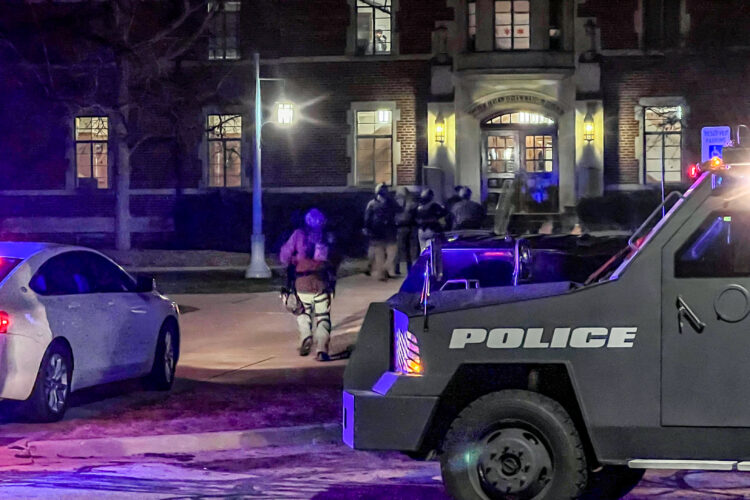
When Michigan law enforcement arrives at an active shooter scene, their primary objective is to stop the threat. They will move toward the sound of gunfire, bypassing victims.
What to expect during a police response:
- Personnel may be armed: Law enforcement may be carrying rifles or shotguns and wearing ballistic vests.
- Commands may be loud and directive: Officers will provide clear, forceful instructions. Follow them immediately without question.
- Hands must be visible: Keep your hands empty and raised with your fingers spread. Do not point, scream, or make quick movements toward officers.
- Treatment of victims: Officers will not stop to assist the injured until the threat is neutralized. Rescue teams (EMS) will follow the initial police wave to provide medical aid.
It is critical to remember that in the heat of a high-stress, rapidly evolving incident, police are operating on limited information. Your adherence to their commands is essential to ensure they can identify you as a victim rather than a threat.
Behavioral Threat Assessment and Prevention
Prevention begins long before an incident occurs. Michigan’s school districts and many corporate environments have adopted "Behavioral Threat Assessment" (BTA) teams. These teams are composed of mental health professionals, law enforcement, and administrators tasked with identifying individuals who may be on a path toward violence.
Key indicators that necessitate a report to a BTA team or local authorities include:
- A recent significant loss or life stressor.
- Specific, communicated threats of violence against a school or workplace.
- Obsessive research into mass violence or school shootings.
- Sudden, drastic changes in personality, hygiene, or social withdrawal.
The goal is early intervention—connecting the individual with mental health resources or social support—rather than waiting for a crisis to occur. If you are in Michigan and observe concerning behavior, you can report it anonymously via the OK2SAY program for students or by contacting local non-emergency police lines for general workplace or community concerns.
Frequently Asked Questions
1. Are active shooter drills required for all Michigan workplaces? While state law mandates drills for public schools, private workplaces are not legally required to conduct specific active shooter drills under Michigan statute. However, they are strongly recommended under OSHA general duty guidelines to ensure a safe work environment.
2. How does the "Run, Hide, Fight" protocol differ from older "Lockdown" policies? Older "Lockdown" policies often encouraged staying in place regardless of the threat's proximity. Modern "Run, Hide, Fight" protocols emphasize dynamic decision-making, allowing individuals to evacuate if a safe path exists, rather than remaining trapped in a static location.
3. What should I do if I am caught in an active shooter situation with children? The priority remains the same: Run, Hide, Fight. When children are present, keep them calm and low to the ground. If you are hiding, use your body to shield them from view and noise. Instruct children to follow your lead exactly.
4. Does the Michigan State Police provide on-site training for businesses? Yes, the MSP/EMHSD offers resources and can assist local emergency management coordinators in organizing training sessions for private and public sector organizations, depending on staff availability and local demand.
5. Is there a way to report potential threats anonymously in Michigan? Yes, for schools, the OK2SAY program is the state’s primary confidential reporting tool. For general public threats, contact your local law enforcement agency, which can take reports regarding public safety concerns.
Recommendations for Immediate Action
- Identify Exits: Regardless of where you are, locate two exits immediately upon entering a new space.
- Verify Emergency Plans: If you are an employee or student, ask your administration for a copy of the emergency response plan. If it hasn't been updated since 2024, request a review.
- Establish Communication: Ensure your contact information is current in your organization's mass notification system.
- Mental Health First Aid: Consider training for staff members in Mental Health First Aid; this provides tools to recognize distress in others, potentially preventing a violent incident before it manifests.
Preparedness is not about living in fear; it is about maintaining a state of readiness that allows for calm, decisive action if the unthinkable occurs. By understanding the protocols and participating in regular training, you significantly increase the survivability of yourself and those around you.