In 2026, the cost to repair an AC refrigerant leak typically ranges from $350 to $2,000, with a national average of approximately $850. This total encompasses three distinct phases: professional leak detection ($150–$400), the physical repair or part replacement ($200–$1,500), and the subsequent refrigerant recharge ($50–$150 per pound, depending on the gas type).
Air conditioning systems are designed as closed-loop systems, meaning they should never "consume" or "run out" of refrigerant under normal operating conditions. If your system is low on coolant, there is a physical breach in the copper lines, the evaporator coil, or the condenser unit. Addressing this issue in 2026 has become more complex due to the ongoing phase-down of legacy hydrofluorocarbons (HFCs) like R-410A and the industry-wide shift toward mildly flammable A2L refrigerants. Understanding the variables involved in repair costs is essential for deciding whether to fix an aging unit or invest in a modern, more efficient replacement.
Factors Influencing AC Refrigerant Leak Repair Costs
The wide variance in repair estimates is rarely arbitrary. Several technical and economic factors dictate the final invoice. In 2026, the most significant drivers of cost are the type of refrigerant the system uses, the location of the leak within the unit, and the specific methodology required to locate the breach.
Refrigerant Type and Market Availability
By 2026, the Environmental Protection Agency (EPA) mandates under the AIM Act have significantly restricted the production and import of R-410A. Consequently, the price per pound for R-410A has risen sharply compared to a decade ago.
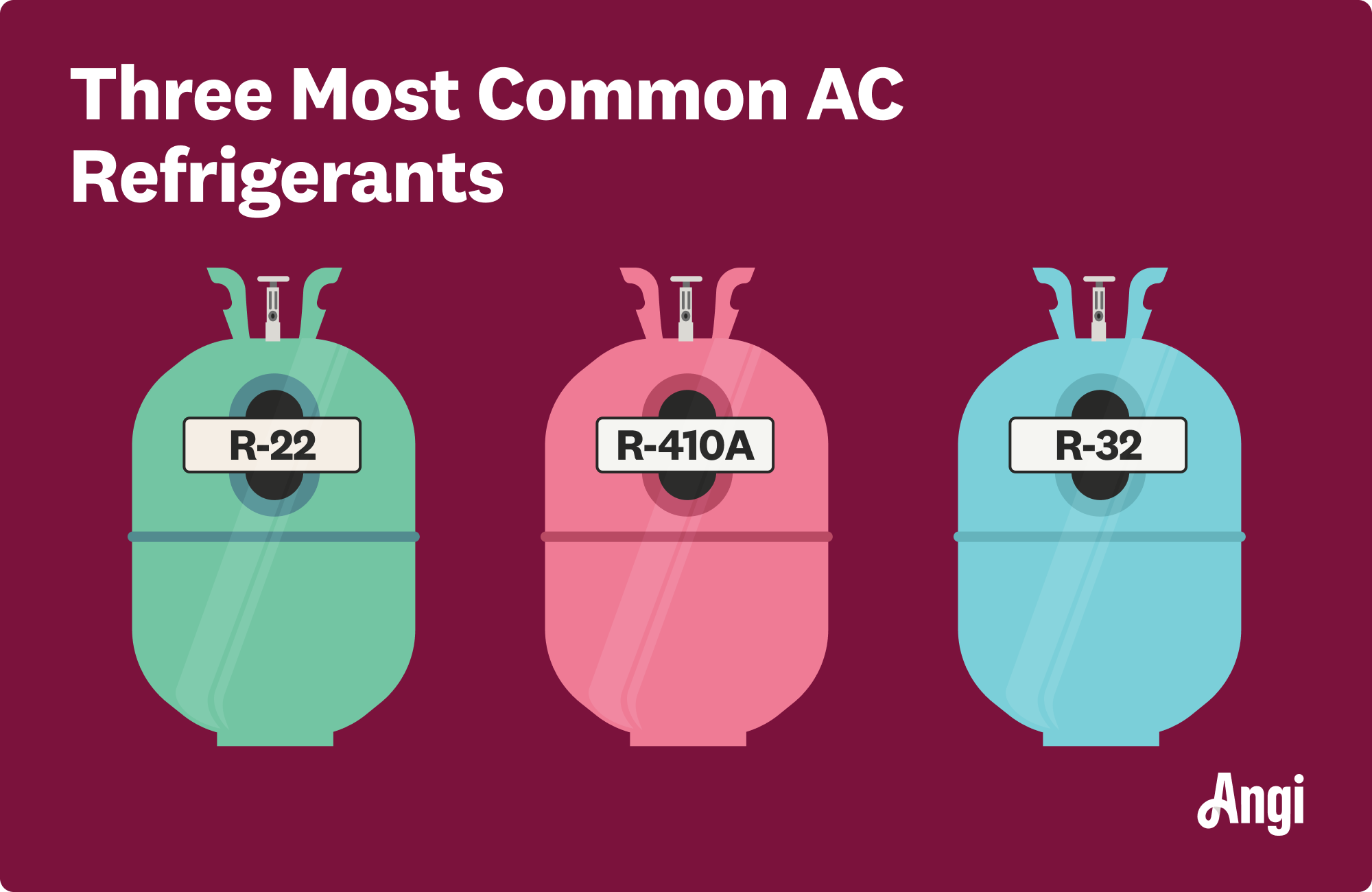
- R-22 (Freon): Systems using R-22 are now considered antique. Since production ceased entirely years ago, homeowners can only access recycled or reclaimed R-22, which can cost $200 to $600 per pound.
- R-410A (Puron): While still common in millions of homes, its diminishing supply has pushed prices to $80–$180 per pound at the consumer level.
- R-454B and R-32: These are the new "A2L" standards for systems manufactured after 2024. Because they are the current industry standard, their bulk pricing is more stable, typically ranging from $50 to $100 per pound.
Severity and Location of the Leak
A "pinhole" leak in a visible copper line set is vastly cheaper to repair than formicary corrosion deep within an evaporator coil. If the leak is located in a joint or a service valve, a technician can often perform a "braze repair" by re-sealing the connection. However, if the leak is located in the middle of the aluminum fins of the evaporator coil, the entire component usually requires replacement. Replacing a coil is a labor-intensive process that can easily exceed $1,500.
Regional Labor Rates
Labor costs vary significantly based on your geographic location and the season. In 2026, HVAC technicians are in high demand. Hourly rates generally fall between $100 and $250 per hour. Emergency repairs during peak summer months often carry a "trip charge" or "diagnostic fee" of $150 to $300 before any actual work begins.
The Three Stages of the Repair Process
Repairing a refrigerant leak is not a singular task but a multi-step technical procedure. Each stage carries its own set of costs and requirements.
1. Leak Detection Methods
Before a technician can fix a leak, they must find it. This is often the most frustrating part of the process for homeowners because leaks can be microscopic.
- Electronic Leak Detectors ("Sniffers"): These handheld devices sense the chemical presence of refrigerant in the air. This is usually the first step and costs $100–$200.
- Nitrogen Isolation Test: If a sniffer fails, the technician will evacuate the remaining refrigerant and pressurize the system with high-pressure nitrogen. By watching a pressure gauge over 12 to 24 hours, they can confirm if the system is holding pressure. This is more definitive but costs $250–$500.
- Ultraviolet (UV) Dye Test: A fluorescent dye is injected into the system. As the refrigerant circulates, the dye escapes through the leak and glows under a UV light. This method costs $150–$300 but may require the technician to return a few days later to inspect the unit.
2. The Physical Repair or Replacement
Once the leak is identified, the technician must address the hardware.
- Schrader Valve Replacement: Similar to a tire valve, these can wear out. Replacing one is relatively inexpensive, often costing $100–$200 plus the cost of the service call.
- Evaporator Coil Replacement: This is the most common major repair. For a standard residential unit, the coil itself may cost $600 to $1,000, with labor adding another $500 to $1,000.
- Condenser Coil Repair: Located in the outdoor unit, these coils are susceptible to damage from debris or pets. Repairs range from $500 to $1,500.
3. Evacuation and Recharging
After the physical repair is completed, the technician must use a vacuum pump to remove all air and moisture from the lines. This is a critical step; if moisture remains, it can react with the oil in the compressor and cause a catastrophic system failure (often called "acid burnout"). Once a deep vacuum is achieved, the technician recharges the system with the exact weight of refrigerant specified by the manufacturer.
Average Cost Breakdown by Component (2026 Estimates)
The following table provides a breakdown of common refrigerant-related repair costs. These figures include both parts and professional labor.
| Repair Service | Estimated Cost (Low) | Estimated Cost (High) | Average Time Required |
|---|---|---|---|
| Leak Detection (Electronic) | $100 | $250 | 1–2 Hours |
| Nitrogen Pressure Test | $200 | $500 | 2–4 Hours |
| Recharge (R-410A per lb) | $80 | $180 | 1 Hour |
| Recharge (R-454B/R-32 per lb) | $50 | $100 | 1 Hour |
| Evaporator Coil Replacement | $1,200 | $2,500 | 4–6 Hours |
| Condenser Coil Replacement | $1,000 | $2,200 | 3–5 Hours |
| Copper Line Set Repair | $300 | $800 | 2–3 Hours |
| Service Valve Replacement | $250 | $450 | 1–2 Hours |
Why "Topping Off" Is No Longer a Viable Solution
In the past, some homeowners opted to "top off" their refrigerant every summer rather than fixing the leak. In 2026, this is increasingly discouraged for several reasons:
- Legal Restrictions: EPA regulations (Section 608) strictly prohibit the intentional venting of refrigerants. While residential systems have fewer mandatory repair requirements than large commercial systems, HVAC professionals are increasingly discouraged from recharging systems known to have significant leaks without performing a repair.
- Escalating Costs: With R-410A prices rising due to the 2026 phase-down milestones, "topping off" 2 or 3 pounds of gas every year is a poor financial strategy. The cost of the wasted gas will quickly exceed the cost of a permanent repair.
- System Health: A leak allows moisture and non-condensables to enter the system. This puts immense strain on the compressor. By the time you decide to fix the leak, the compressor may already be damaged, leading to a much larger repair bill.
Repair vs. Replace: The 2026 Dilemma
When faced with a $1,500 repair bill for a refrigerant leak, many homeowners must decide if it is time to replace the entire HVAC system.
The Age of the System
The average lifespan of an AC unit is 12 to 15 years. If your unit is more than 10 years old and uses R-410A, a major leak in the evaporator coil is often the "beginning of the end." Investing $2,000 into a decade-old system that uses a phasing-out refrigerant is generally seen as a poor investment.
The "Rule of 5,000"
A common industry rule of thumb is to multiply the age of the unit by the cost of the repair. If the result is greater than $5,000, you should replace the unit. For example:
- A 12-year-old unit with a $600 repair = $7,200 (Replace)
- A 5-year-old unit with a $600 repair = $3,000 (Repair)
Energy Efficiency and Tax Incentives
Newer systems using R-454B or R-32 are significantly more energy-efficient than older R-410A models. Furthermore, many energy-efficiency tax credits (such as those established by the Inflation Reduction Act) remain relevant in 2026, potentially offering up to $2,000 in credits for high-efficiency heat pumps, which can offset the cost of a full replacement.
Common Signs of a Refrigerant Leak
Homeowners should monitor their systems for these early warning signs to catch leaks before they lead to compressor failure:
- Reduced Cooling Capacity: The air coming from the vents feels lukewarm or "room temperature," even when the thermostat is set to 70°F.
- Hissing or Bubbling Noises: A distinct hissing sound near the indoor or outdoor unit often indicates gas escaping under high pressure.
- Frozen Evaporator Coils: When refrigerant levels are low, the coil temperature drops below freezing, causing condensation to turn into ice. You may see ice buildup on the indoor unit or the copper lines outside.
- Spiking Utility Bills: As the system loses its ability to transfer heat, it runs longer and harder to reach the target temperature, leading to a surge in electricity consumption.
Frequently Asked Questions
Can I add refrigerant to my AC myself?
No. Under EPA Section 608 regulations, only certified technicians are permitted to purchase and handle refrigerants. Furthermore, modern A2L refrigerants (R-454B/R-32) used in 2026 systems are mildly flammable and require specialized tools and training to handle safely. Attempting a DIY recharge can lead to system damage, legal fines, and physical injury.
How long does a refrigerant leak repair take?
A standard leak repair takes between 3 and 8 hours. Simple repairs, like replacing a service valve, can be done in a morning. Complex repairs, such as replacing an evaporator coil located in a cramped attic or crawlspace, typically require a full day of labor.
Does a home warranty cover refrigerant leak repairs?
Most standard home warranties cover the mechanical failure of the AC unit, but they often have "caps" on the cost of refrigerant. In 2026, many warranties limit refrigerant coverage to $10 or $20 per pound, which is significantly lower than the actual market price. Homeowners are often left to pay the "difference" out of pocket.
Will a "leak seal" additive work?
Chemical leak sealants are controversial in the HVAC industry. While they can sometimes plug microscopic pinholes in older systems, they can also gum up the expansion valve or the compressor. Most manufacturers will void your warranty if they find evidence of leak-seal additives in the system. They should only be used as a last resort on systems already slated for replacement.
Why is R-410A so expensive in 2026?
The AIM Act, passed by Congress, mandated a phased reduction in HFC production. By 2026, production levels have been cut by 40% compared to the 2011-2013 baseline. This restricted supply, coupled with steady demand for repairs on older units, has naturally driven the price higher.
Final Recommendation
If you suspect a refrigerant leak in 2026, the first step is to hire a NATE-certified technician to perform an electronic leak search. Do not agree to "add a few pounds" of refrigerant without first identifying the source of the leak. If your system is over 12 years old or requires more than 5 pounds of R-410A, request a quote for a full system replacement alongside the repair estimate. In the current economic and regulatory landscape, transitioning to a high-efficiency system using modern A2L refrigerants often provides better long-term value than patching an obsolete unit.