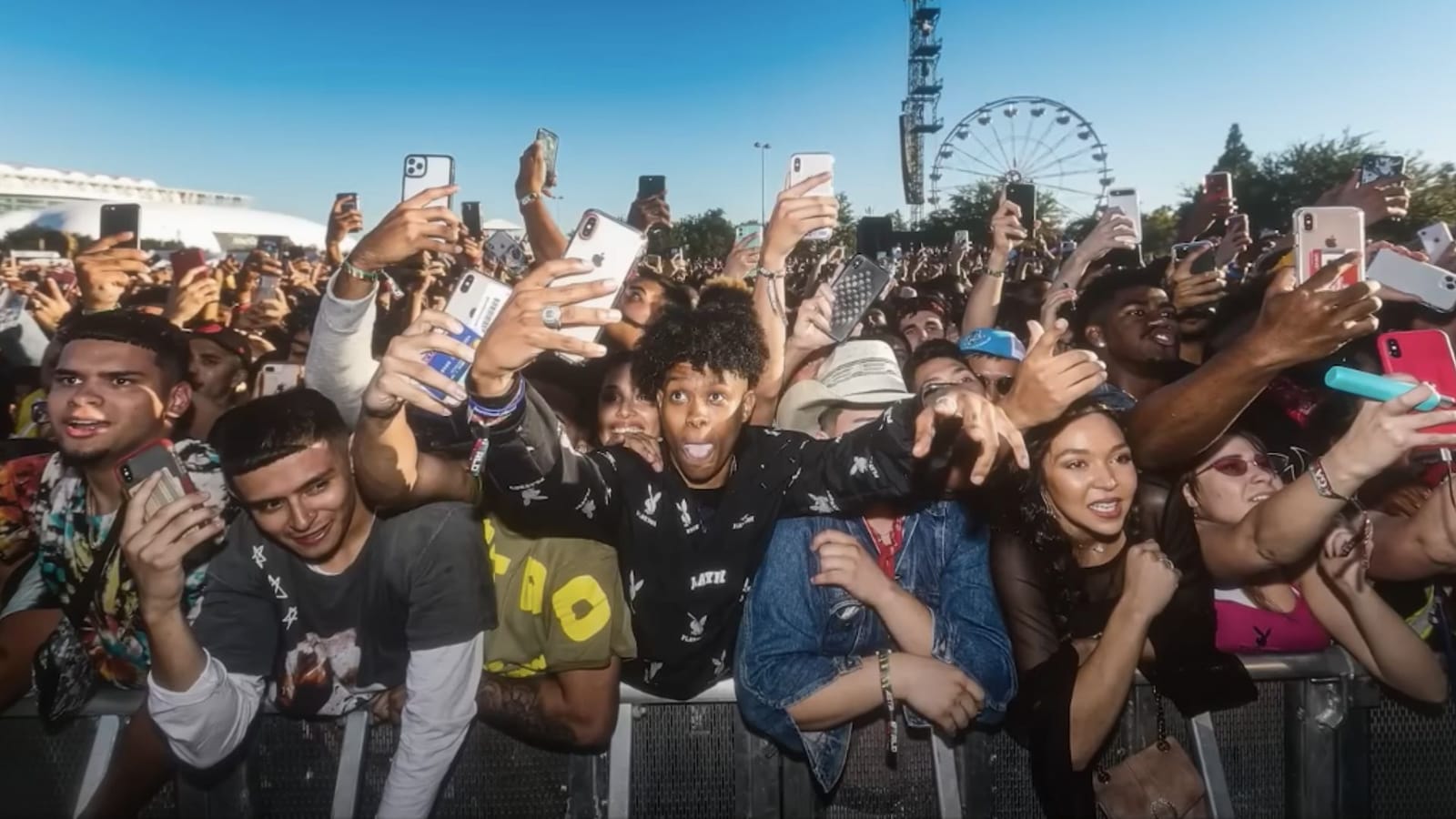
In the wake of the 2021 Astroworld tragedy, the live events industry has undergone a radical transformation, prioritizing standardized emergency stop protocols, unified command structures between private security and public first responders, and data-backed crowd density monitoring. These shifts are designed to prevent the lethal "crowd crush" dynamics that resulted in ten fatalities and hundreds of injuries in Houston, Texas.
The events of November 5, 2021, at NRG Park remain a somber benchmark for the concert industry. As of 2026, the legal, logistical, and cultural fallout has solidified into a set of industry-standard "best practices" that have redefined how festivals are planned and executed. The tragedy revealed systemic failures in communication, venue design, and emergency response. By analyzing the investigations and subsequent litigation, experts have identified nine critical lessons that serve as a blueprint for modern event safety.
1. The Necessity of a Standardized "Stop the Show" Protocol
One of the most harrowing aspects of the Astroworld aftermath was the confusion over who had the authority to stop the performance. Despite the Houston Fire Department declaring a "mass casualty event" at 9:38 PM, the show continued for nearly 40 minutes. This delay highlighted a fatal ambiguity in the chain of command.
In 2026, the primary lesson adopted by major promoters is the implementation of a clear, non-ambiguous "Stop the Show" protocol. This means identifying a specific individual—often the safety director or a ranking law enforcement officer in the Unified Command Center—who has the unilateral authority to cut the sound and lights. This protocol must be agreed upon in writing by the artist’s management, the venue, and the promoter before the event begins.
Furthermore, artists are now routinely briefed on specific visual cues and verbal commands to use if they witness distress in the crowd. The "Stop the Show" lesson teaches that saving lives must supersede contractual obligations or the "flow" of a performance.
2. Unified Command and Inter-Agency Communication
The Astroworld investigation revealed a significant disconnect between the Houston Police Department (HPD), the Houston Fire Department (HFD), and the private security firm hired by Live Nation. Reports indicated that different groups were on different radio frequencies, leading to a "silo" effect where critical information regarding crowd distress was not shared in real-time.
The lesson here is the mandatory establishment of a Unified Command Center (UCC). In modern large-scale events, representatives from medical services, fire, police, and event production must sit in the same room with shared radio channels.
Key components of unified communication now include:
- Shared Radio Interoperability: Ensuring that private security can talk directly to municipal first responders without relaying through multiple dispatchers.
- Common Operating Language: Avoiding jargon and using standardized "plain talk" to ensure that an "emergency" is understood with the same level of urgency by all parties.
- Real-time Log Tracking: Digital logs that record every incident report and the subsequent response, allowing the UCC to see patterns of crowd distress as they emerge geographically.
3. Beyond "Check-the-Box" Permit Applications
The Texas Task Force on Concert Safety, established after the tragedy, emphasized that the permitting process had become too administrative and not sufficiently analytical. In the Astroworld case, the event’s "Emergency Response Plan" was found to be a template that did not adequately address the specific risks of a high-energy "festival seating" (general admission) environment.
Today, the lesson learned is that permitting must be a collaborative, iterative process. Organizers are now required to submit site-specific plans that include "worst-case scenario" modeling. This includes:
- Detailed ingress and egress routes that can accommodate emergency vehicles even when the crowd is at peak capacity.
- Specific contingency plans for weather, fire, and—most importantly—crowd surges.
- A requirement for local fire marshals to have a permanent, roving presence throughout the venue rather than just a pre-show inspection.
4. Redefining Venue Design and "Dead Zones"
The physical layout of the Astroworld stage area contributed significantly to the tragedy. The use of "pen" barriers, intended to manage the crowd, instead created "dead zones" where pressure could build with no means of escape. When the crowd surged toward the stage, those in the front and against the barriers were trapped.
The lesson for 2026 venue design is the use of managed pressure relief systems. Modern festival layouts now favor:
- T-Shaped or Cross-Shaped Barriers: These break the crowd into smaller, more manageable blocks and provide security with internal pathways to reach distressed fans.
- Wider Perimeter Aisles: Ensuring that there is always a clear path for medical teams to move along the edges of the crowd.
- Visual Sightline Adjustments: Ensuring that "dead spots" where security cannot see the ground are eliminated through the use of elevated observation platforms.
5. Enhanced Training for Security and Medical Staff
In the litigation following Astroworld, testimony suggested that some security personnel were hired with little to no training in crowd dynamics or emergency first aid. Similarly, the medical provider was criticized for being overwhelmed and under-equipped to handle a mass-casualty surge.
The industry has since learned that quantity does not equal quality. Lesson five focuses on the "Professionalization of Event Security." This includes:
- Mandatory Crowd Management Certification: Requiring staff to understand the physics of crowd crush and the psychological signs of crowd panic.
- Triage Readiness: Medical teams at large festivals must be equipped like mobile ER units, capable of handling cardiac arrest and respiratory failure on-site, rather than merely acting as a "bandage station."
- Standardized Briefings: Every staff member, from ticket takers to elite security, must receive a site-specific safety briefing on the day of the event.
6. Accountability and the Legal Reality of Negligence
The Astroworld aftermath saw over 2,500 lawsuits consolidated into a massive legal proceeding. By 2024 and 2025, several high-profile settlements reached by the families of victims (such as the family of 9-year-old Ezra Blount) sent a clear message to the industry: The financial and reputational cost of safety failure is catastrophic.
This lesson has forced insurance companies to play a larger role in event safety. Promoters now face prohibitively high premiums unless they can prove they have met stringent safety audits. The "Aftermath" taught the industry that safety is not just a moral obligation but a fundamental requirement for business continuity. Corporate social responsibility is now weighed against the "bottom line" of potential multi-billion dollar litigations.
7. The Necessity of Data-Driven Crowd Monitoring
In 2021, crowd monitoring was largely visual and subjective. Security guards would "keep an eye" on the mosh pit. The tragedy proved that human eyes are not enough to gauge the density of thousands of people in the dark.
The technological lesson is the implementation of AI-driven crowd analytics. Modern festivals utilize:
- Heat Mapping: Using overhead cameras and AI to identify areas where crowd density exceeds 4-5 people per square meter (the threshold for danger).
- Real-time Density Alerts: Automated systems that notify the UCC the moment a specific "pen" or area reaches a critical density level.
- Social Media Monitoring: Tracking real-time posts from fans inside the crowd who may be reporting distress before it is visible to security.
8. Proactive Communication with the Audience
A key finding from crowd safety experts is that "crowd panic" is often caused by a lack of information. At Astroworld, fans in the back had no idea those in the front were being crushed, so they continued to push forward.
The lesson is that organizers must talk to the fans. This involves:
- Pre-Event Education: Using apps and social media to teach fans about "looking out for each other" and identifying the location of exits and medical tents.
- PA System Dominance: The ability for safety announcements to override the artist's audio at any time.
- Large-Scale Visual Signage: Using the massive LED screens on stage to display emergency directions, rather than just artist visuals, when a problem is detected.
9. Re-evaluating the Cultural Narrative of "Raging"
The brand of Travis Scott and the Astroworld Festival was built on "raging"—an intense, high-energy, and often chaotic fan experience. The aftermath forced a difficult conversation about whether certain performance styles are inherently unsafe for massive crowds.
The final lesson is the moderation of performance dynamics. While high energy is a staple of live music, artists and promoters now recognize their role in "setting the temperature" of the crowd. This includes:
- Calculated Setlists: Building in "cooldown" periods or slower songs to lower the crowd's physical intensity.
- Direct Artist Intervention: Performers are now more likely to pause a show to tell the crowd to "take a step back" if things look too tight.
- Security-Informed Performance Metrics: Using data to tell an artist when the crowd is reaching a state of "over-arousal" that could lead to a surge.
Comparison of Event Safety Standards (Pre-2021 vs. Post-2021)
The following table outlines the specific shifts in industry standards that have been codified as of 2026.
| Safety Feature | Pre-Astroworld 2021 Standards | Post-2021 Industry Lessons |
|---|---|---|
| Command Authority | Often vague; focused on artist/manager. | Defined "Kill Switch" authority in UCC. |
| Crowd Monitoring | Human observation from ground level. | AI-driven heat maps and density sensors. |
| Venue Layout | Large, open general admission pits. | Segmented "pens" with pressure relief. |
| Communication | Siloed radio channels (Police vs. Private). | Unified Command with shared channels. |
| Emergency Plans | Generic/Template-based documents. | Site-specific, vetted risk assessments. |
| Medical Presence | Basic First Aid/Contracted EMTs. | Advanced Life Support (ALS) mobile units. |
| Artist Responsibility | Encouraged "raging" and chaos. | Trained in crowd cues and "Step Back" calls. |
Frequently Asked Questions
What exactly is a "crowd crush"?
A crowd crush occurs when the density of people exceeds the capacity of the space, typically reaching 6 or more people per square meter. At this point, individuals lose the ability to move independently, and the crowd behaves like a fluid. Pressure from behind is transferred forward, making it impossible for those at the front to breathe as their chests are compressed.
Who is legally responsible for safety at a music festival?
Legal responsibility is typically shared among several entities, including the event promoter (e.g., Live Nation), the venue owner (e.g., the county or a private firm), the security company, and the medical service provider. Contracts usually include "indemnification" clauses, but as seen in the Astroworld lawsuits, multiple parties are often held liable for systemic failures.
Can technology actually prevent these tragedies?
Technology like AI heat mapping and density sensors provides the data needed to make decisions, but it cannot prevent a tragedy on its own. The lesson from 2021 is that data must be paired with the will to act—meaning the command center must be willing to pause or stop a show the moment the data shows a dangerous density level.
Have general admission (GA) tickets been banned?
General admission has not been banned, but it is much more strictly regulated. Many festivals now use "tiered" GA or "zoned" GA, where barriers prevent the entire crowd from pushing into a single front area. This limits the total number of people in any one section to a safe capacity.
What should I do if I am caught in a crowd surge?
Safety experts recommend the "boxer stance": keep your feet firm and your arms up in front of your chest to create "breathing space." Do not fight the current of the crowd; instead, move diagonally toward the edges of the surge. Most importantly, try to stay on your feet, as falling is the primary danger in a high-density crowd.
Moving Forward: The Future of Live Events
The legacy of Astroworld 2021 is a permanent shift toward a "safety-first" culture in live entertainment. For fans and professionals alike, the most significant next action is vigilance. Organizers must continue to invest in the professionalization of security and the integration of real-time monitoring technology.
For attendees, the lesson is one of collective responsibility. Modern festivals are increasingly encouraging a culture of "active bystanders," where fans are taught to recognize the signs of a crowd crush—such as people being unable to move their arms or the "wave" motion of a crowd—and to alert staff immediately. As we move through 2026, the industry continues to refine these nine lessons, ensuring that the joy of live music never again comes at the cost of human life.