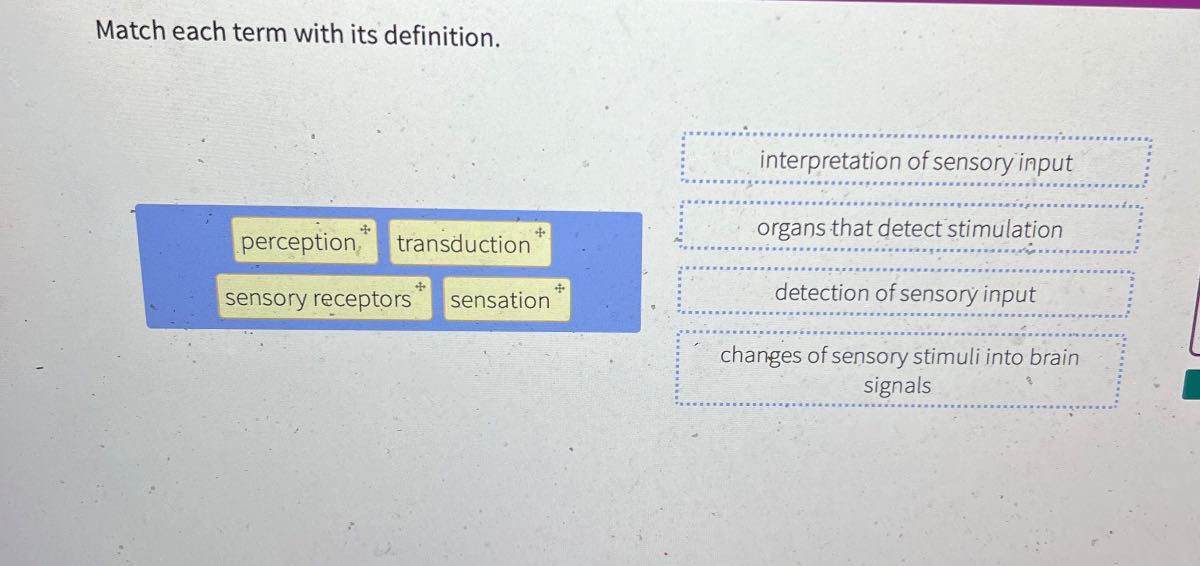
Sensory transduction is the biological process through which physical energy from the environment is converted into electrical signals by the nervous system. This transformation involves five distinct stages: stimulus detection, membrane potential change (receptor potential), action potential generation, signal transmission through neural pathways, and final integration within the central nervous system.
The human experience is not a direct window into reality but a sophisticated reconstruction of environmental data. Every sound we hear, every texture we feel, and every color we see begins as raw physical energy—photons, pressure waves, or chemical molecules. For the brain to "understand" these inputs, they must be translated into the universal language of the nervous system: electricity. This translation process, known as sensory transduction, is the fundamental bridge between the physical world and our conscious perception.
As of 2026, advances in neurobiology and optogenetics have further clarified how these stages are not merely passive relays but active filters that shape, amplify, and sometimes distort the information reaching our consciousness. Understanding the five steps of transduction provides a blueprint for how we navigate and interpret the universe.
Step 1: Stimulus Detection and Selective Filtering
The first step in the journey of perception is the interaction between a physical stimulus and a specialized sensory receptor. This stage is defined by the principle of the adequate stimulus, which states that each type of receptor is evolved to respond most efficiently to a specific form of energy. For example, the rods and cones in the retina are optimized for electromagnetic radiation (light), while the hair cells in the cochlea are tuned for mechanical vibrations.
During this stage, receptors do more than just "notice" energy; they act as the first line of biological filtering. Receptors have specific sensitivity thresholds; if a stimulus is too weak, the receptor remains inactive, and the information is lost to the organism. This selective filtering ensures that the brain is not overwhelmed by the "background noise" of the universe, such as the constant pressure of air on the skin or the microscopic movements of dust.
In mechanoreception (touch), this involves the physical deformation of the cell membrane. In chemoreception (taste and smell), it involves the binding of a molecule to a protein receptor, much like a key fitting into a lock. This initial contact is the only moment where the nervous system directly touches the external world. Beyond this point, everything becomes a series of internal representations.
Step 2: The Generation of Receptor Potentials (The Analog Phase)
Once the stimulus is detected, the sensory receptor must convert that physical energy into a change in its internal electrical state. This is known as the receptor potential. Unlike the "all-or-nothing" signals sent to the brain, receptor potentials are graded. This means the magnitude of the electrical change is directly proportional to the intensity of the stimulus.
This step typically involves the opening or closing of ion channels in the receptor's membrane. For instance, when a pacinian corpuscle in the skin is compressed, mechanically gated ion channels pull open, allowing positively charged sodium ions ($Na^+$) to rush into the cell. This influx of positive charge makes the inside of the cell less negative—a process called depolarization.
The receptor potential is an "analog" signal. If you press lightly on your arm, the depolarization is small. If you press harder, the depolarization is larger. This stage is crucial because it preserves the nuances of the stimulus intensity before the signal is digitized for long-distance travel. In some senses, such as vision, the process is actually hyperpolarizing (the cell becomes more negative), but the principle remains the same: the stimulus is now an electrical gradient.
Step 3: Threshold Crossing and Action Potential Generation
For the signal to leave the sensory organ and travel toward the brain, it must overcome a critical hurdle: the firing threshold. Because receptor potentials are local and dissipate quickly over distance, they cannot reach the brain on their own. They must trigger an action potential—a self-propagating electrical pulse that can travel meters without losing strength.
This transition from a graded potential to an action potential is the "digitization" of sensory information. If the receptor potential is strong enough to reach a certain voltage (the threshold), voltage-gated ion channels at the base of the nerve fiber (the axon hillock) snap open, initiating the spike.
At this stage, the nervous system employs frequency coding to represent intensity. Since an individual action potential is always the same size, the brain cannot tell a loud sound from a quiet one based on the "height" of the pulse. Instead, it judges intensity by how fast the pulses are firing. A dim light might trigger 5 pulses per second, whereas a blinding light might trigger 500. This ensures that the message remains clear and undistorted as it travels through the long, complex "wiring" of the body.
Step 4: Neural Transmission and Synaptic Relay
Once generated, the action potentials travel along afferent (incoming) nerve fibers toward the central nervous system. This is not a simple direct wire; the signal must pass through multiple checkpoints or synapses. A synapse is a microscopic gap between two neurons where the electrical signal is briefly converted into a chemical signal.
When the action potential reaches the end of a sensory neuron (the axon terminal), it triggers the release of neurotransmitters. These chemicals cross the gap and bind to receptors on the next neuron in the chain. This relay allows for further modulation of the signal. For example, inhibitory neurons can "dampen" the signal at the synapse, explaining why we eventually stop noticing the feeling of clothes against our skin—a phenomenon known as sensory adaptation.
Most sensory signals (with the notable exception of olfaction) are routed through the thalamus, a structure often called the "switchboard" of the brain. The thalamus organizes the incoming data, prioritizes urgent information (like pain), and directs the signals to the appropriate specialized processing zones in the cerebral cortex. This routing is essential for maintaining the order and clarity of our perceptions.
Step 5: Central Integration and the Construction of Perception
The final step occurs in the cerebral cortex, where the raw electrical pulses are integrated, interpreted, and assigned meaning. This is the stage where "sensation" becomes "perception." The brain receives pulses from the optic nerve and, by comparing the timing and frequency across millions of fibers, reconstructs edges, motion, depth, and color.
Central integration involves the synthesis of information from multiple sources. For instance, your perception of flavor is not just the result of transduction in the taste buds (Step 1–4), but the integration of those signals with olfactory data from the nose and tactile data from the tongue. The primary sensory areas of the brain (such as the V1 for vision or S1 for touch) share data with association areas that link the current input to memories and expectations.
It is at this stage that the "shape" of perception is finalized. The brain makes "best guesses" based on incomplete data, filling in blind spots and correcting for movement. Consequently, what we perceive is a highly processed, filtered, and useful hallucination of the world, optimized for survival rather than a 1:1 perfect recording of reality.
Comparison of Transduction Mechanisms by Modality
The physical world offers various types of energy, and the human body has developed distinct pathways to handle them. The following table compares how the five steps of transduction manifest across different sensory systems.
| Sensory Modality | Stimulus Type (Step 1) | Receptor Type | Mechanism of Potential (Step 2) | Primary Path to Brain (Step 4) | Primary Cortical Target (Step 5) |
|---|---|---|---|---|---|
| Vision | Photons (Light) | Rods and Cones | Hyperpolarization via phototransduction | Optic Nerve -> Thalamus (LGN) | Occipital Lobe (V1) |
| Audition | Pressure Waves (Sound) | Hair Cells (Cochlea) | Depolarization via mechanical gating | Auditory Nerve -> Thalamus (MGN) | Temporal Lobe (A1) |
| Somatosensation | Mechanical/Thermal | Mechanoreceptors / Thermoreceptors | Depolarization via ion channel opening | Spinal Cord -> Thalamus (VPL) | Parietal Lobe (S1) |
| Olfaction | Airborne Chemicals | Olfactory Neurons | Depolarization via G-protein pathways | Olfactory Bulb (Bypasses Thalamus) | Piriform Cortex |
| Gustation | Dissolved Chemicals | Taste Buds | Depolarization via ion or G-protein receptors | Cranial Nerves -> Thalamus (VPM) | Insular Cortex |
Factors Influencing Transduction Efficiency
The accuracy and speed of sensory transduction are not static; they are influenced by biological health, environmental conditions, and the state of the nervous system.
- Adaptation: Many receptors are "phasic," meaning they fire rapidly when a stimulus first appears but slow down or stop if the stimulus remains constant. This prevents the brain from being bogged down by unchanging information, such as the background hum of an air conditioner.
- Threshold Modulation: The "sensitivity" of transduction can be adjusted by the brain. In high-stress "fight or flight" situations, the brain may lower the threshold for certain stimuli (like sound) while raising it for others (like pain), a process known as stress-induced analgesia.
- Pathology and Damage: Transduction can be disrupted at any of the five steps. In sensorineural hearing loss, the hair cells (Step 1) are often damaged, meaning the physical sound wave never generates a receptor potential. In peripheral neuropathy, the transmission (Step 4) is compromised due to damage to the myelin sheath or the axon itself.
Research published in Nature Neuroscience suggests that by 2026, many sensory prosthetic devices—such as advanced cochlear implants and retinal chips—work by bypassing the damaged early steps (1 and 2) and directly stimulating the nervous system at Step 3 or 4, essentially "hacking" the transduction chain to restore perception.
Frequently Asked Questions
What is the main difference between sensation and perception?
Sensation refers to the first three steps of the transduction process: the detection of stimuli and the conversion into electrical signals. Perception is the final step (Step 5), where the brain interprets those signals to create a meaningful mental image of the world. Sensation is biological and largely universal, while perception is psychological and can be influenced by experience, culture, and expectation.
Why does the sense of smell bypass the thalamus?
Olfaction is evolutionarily one of the oldest senses. It links directly to the limbic system (the emotional and memory center of the brain) without the "filter" of the thalamus. This is why smells often trigger intense, immediate emotional memories compared to sights or sounds. This unique pathway is an exception to the standard "relay" model of Step 4.
What happens if a stimulus doesn't reach the threshold?
If the receptor potential generated in Step 2 is too weak to reach the firing threshold in Step 3, no action potential is generated. The signal effectively "dies" at the receptor site. This is why we cannot feel a single grain of dust on our arm or hear sounds below a certain decibel level; the energy is insufficient to trigger the "all-or-nothing" spike required for neural travel.
Can transduction be improved through training?
While the physical receptors (Step 1) usually cannot be "trained" to be more sensitive, the brain's ability to integrate and interpret the signals (Step 5) is highly plastic. For example, a sommelier can distinguish subtle chemical differences in wine that a layperson cannot, not because their tongue is better at transduction, but because their brain has become more efficient at processing the resulting data.
How do painkillers affect the transduction process?
Painkillers can work at different stages. Local anesthetics (like lidocaine) block voltage-gated sodium channels, preventing the generation of action potentials (Step 3). Opioids, on the other hand, work primarily in the central nervous system (Step 4 and 5) by altering how the brain receives and interprets the pain signals sent from the periphery.
Practical Recommendation for Maintaining Sensory Health
To preserve the integrity of the five transduction steps, it is essential to protect the delicate hardware involved in Steps 1 and 2. Unlike many other cells in the body, sensory receptors—particularly the hair cells in the ear and the photoreceptors in the eye—often do not regenerate once destroyed.
- Protect the Receptors: Use high-quality ear protection in environments exceeding 85 decibels and wear UV-rated sunglasses to prevent oxidative stress on retinal cells.
- Support Neural Transmission: Ensure adequate intake of B-vitamins (especially B12), which are critical for maintaining the myelin sheath that speeds up signal transmission in Step 4.
- Monitor Metabolic Health: Conditions like diabetes can lead to high blood sugar, which damages the small blood vessels supplying sensory nerves, leading to "transduction failure" or neuropathy.
- Engage in Sensory Enrichment: To keep Step 5 (central integration) sharp, engage in activities that require sensory discrimination, such as learning a musical instrument, practicing tactile crafts, or culinary tasting.