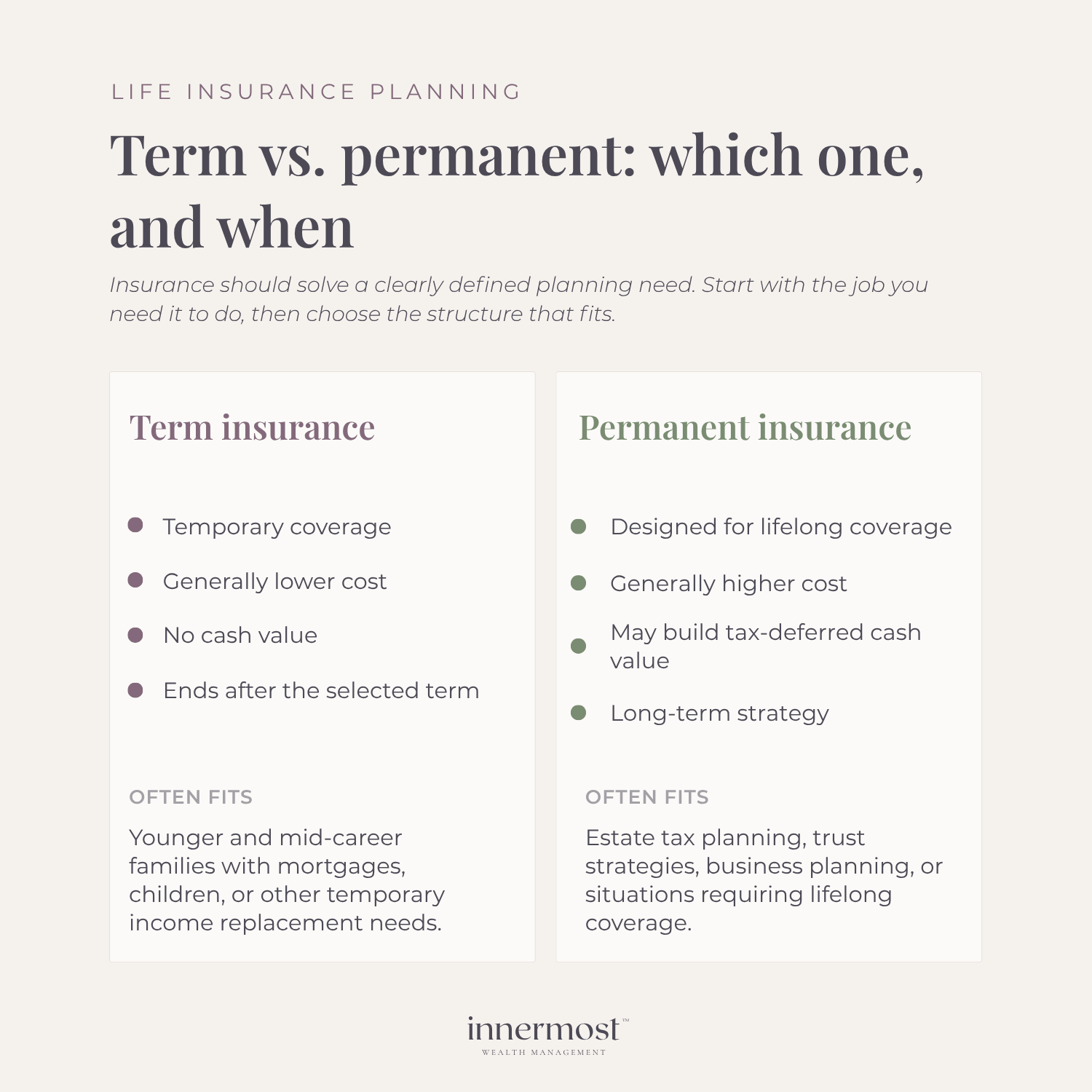
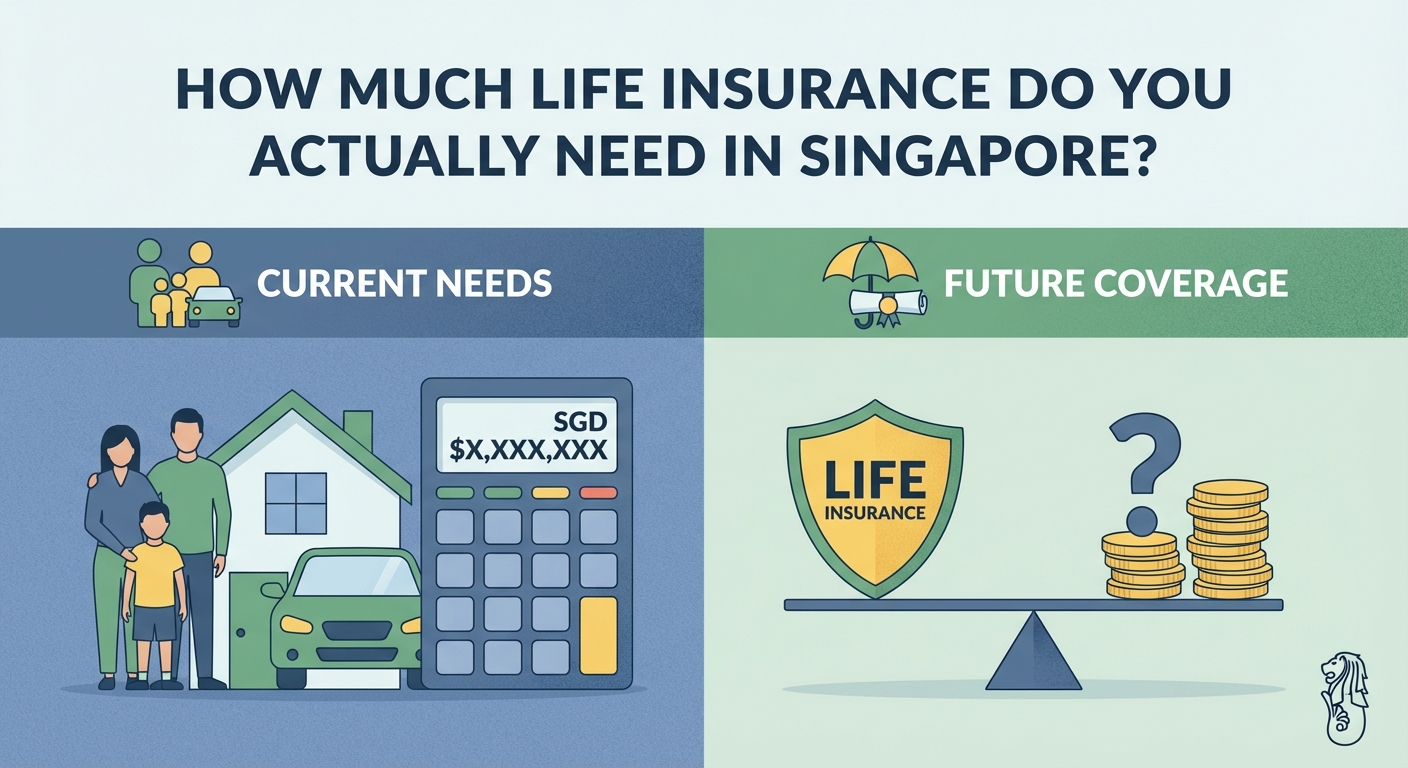
To determine how much supplemental life insurance you need, you can use the Multiplier Method (multiplying your annual income by 10 to 15), the DIME Formula (calculating the sum of Debt, Income replacement, Mortgage, and Education), or a Financial Needs Analysis (subtracting your current assets from your total long-term liabilities). These methods help bridge the gap between your employer’s basic coverage and your family’s actual financial requirements.
For most employees in 2026, the basic life insurance provided by an employer is rarely enough to sustain a family’s lifestyle or cover significant long-term debts. Basic coverage often defaults to one or two times your annual salary, which may barely cover immediate final expenses and a few months of bills. Supplemental life insurance allows you to purchase additional coverage through your employer’s group plan, often at competitive rates, to ensure your beneficiaries are truly protected.
Determining the exact "right" amount requires balancing your current budget with your future obligations. Below are three detailed ways to calculate your supplemental life insurance needs, along with the technical factors that influence these decisions in today's economic environment.
1. The Multiplier Method: The Rule of Thumb for 2026
The Multiplier Method is the most straightforward way to estimate life insurance needs. Historically, financial advisors recommended a coverage amount equal to 7 to 10 times your annual gross income. However, as we move through 2026, many experts suggest a multiplier of 12 to 15 times your annual salary due to the cumulative impact of inflation and the rising cost of healthcare and housing over the past decade.
Why the Multiplier Works
This approach assumes that your family will invest the death benefit and live off the generated interest or a combination of principal and interest. If you earn $100,000 and have $1.5 million in total coverage, a 5% annual return on that principal provides $75,000 a year, which helps replace a significant portion of your after-tax income.
When to Adjust the Multiplier
The multiplier is not a one-size-fits-all solution. You should aim for the higher end of the range (15x) if you:
- Are the sole breadwinner for a large family.
- Have children under the age of five.
- Live in a high-cost-of-living (HCOL) urban area.
- Expect significant future medical expenses for a dependent.
Conversely, if you are nearing retirement, have a paid-off mortgage, and your children are financially independent, a lower multiplier (or even no supplemental coverage) might be appropriate. The goal of supplemental insurance is to fill the "gap" between your existing basic coverage (e.g., $100,000) and your target (e.g., $1.2 million).
2. The DIME Formula: A Targeted Approach
If the Multiplier Method feels too generalized, the DIME formula offers a more granular look at your specific financial obligations. DIME stands for Debt, Income, Mortgage, and Education. By adding these four categories together, you can create a customized coverage goal that reflects your actual lifestyle.
D: Debt and Final Expenses
Start by totaling all your non-mortgage debts. This includes car loans, credit card balances, personal loans, and student debt. Additionally, you should factor in final expenses, such as funeral and burial costs, which in 2026 can average between $10,000 and $20,000 depending on your location and preferences.
I: Income Replacement
Decide how many years your family will need your income. A common strategy is to cover the years until your youngest child reaches age 18 or 22. If you earn $80,000 and want to provide coverage for 10 years, you would need $800,000 in this category. This provides a "bridge" for your spouse or partner to adjust their lifestyle or career path without immediate financial pressure.
M: Mortgage
For most households, the mortgage is the largest recurring expense. Providing enough supplemental insurance to pay off the mortgage entirely can dramatically reduce your family’s monthly cash flow requirements. Use your current principal balance—not the original loan amount—for this calculation.
E: Education
Estimate the cost of sending your children to college or vocational school. According to data from the College Board, tuition and fees continue to outpace general inflation. In 2026, parents often set aside $100,000 to $250,000 per child, depending on whether they anticipate public or private university enrollment.
By summing these four components (D + I + M + E) and subtracting any existing basic life insurance, you arrive at the amount of supplemental insurance you should purchase.
3. Financial Needs Analysis (Gap Analysis)
The most comprehensive method is a Financial Needs Analysis (FNA). This is a "top-down" approach that looks at your family's total financial picture, including assets you already own. This method is preferred by financial planners because it prevents "over-insuring," which can lead to unnecessary premium costs.
Step 1: Calculate Total Financial Obligations
This includes everything in the DIME formula but adds "emergency fund" seeding and "legacy goals" (e.g., leaving a specific inheritance or charitable gift). It also considers the "Blackout Period" for Social Security—the time between when a youngest child turns 16 and a surviving spouse reaches retirement age, during which survivor benefits may be limited or unavailable.
Step 2: Inventory Existing Assets
List all liquid and semi-liquid assets that your family could use if you were to pass away. This includes:
- Basic Group Life Insurance: The amount provided for free by your employer.
- Existing Individual Policies: Any term or whole life policies you already own outside of work.
- Savings and Investments: 401(k) balances, IRAs, and brokerage accounts (though you may want to leave retirement funds for their intended purpose).
- Social Security Survivor Benefits: An estimate of what your family would receive monthly.
Step 3: Determine the Supplemental Gap
The formula is: (Total Obligations) - (Existing Assets) = Supplemental Need.
This method is highly technical because it often requires accounting for the "present value" of future money. If your family needs $5,000 a month for 20 years, they don't necessarily need $1.2 million upfront if that money is invested and grows. However, for a DIY calculation, using simple totals is a safer, more conservative approach to ensure adequacy.
Comparing the Three Methods
| Feature | Multiplier Method | DIME Formula | Financial Needs Analysis |
|---|---|---|---|
| Complexity | Low | Moderate | High |
| Speed | Instant | 10–15 Minutes | 30–60 Minutes |
| Accuracy | General Estimate | High for Debt/Mortgage | Very High (Comprehensive) |
| Best For | Quick check-ins | Families with young children | High-net-worth individuals |
| Primary Focus | Income replacement | Specific liabilities | Total financial health |
Understanding Supplemental Life Insurance Features in 2026
When you decide on an amount, you must also understand how supplemental policies differ from the "Basic" insurance your employer provides. There are several technical aspects to consider before signing up during your open enrollment period.
Guaranteed Issue vs. Evidence of Insurability (EOI)
Most employers offer a "Guaranteed Issue" (GI) amount for supplemental insurance. This is the amount you can buy without answering medical questions or undergoing a physical exam. In 2026, GI limits typically range from $150,000 to $300,000 for employees. If your calculated need exceeds the GI limit, you will likely have to submit Evidence of Insurability (EOI). This involves a health questionnaire and potentially a paramedical exam. If you have significant health issues, you might choose to limit your supplemental coverage to the GI amount to avoid a possible denial.
Portability and Conversion
One risk of relying on supplemental life insurance through an employer is that the coverage is usually tied to your job. If you leave your company, you may lose the coverage. Check if your policy is portable (meaning you can take it with you at a similar rate) or convertible (meaning you can turn it into an individual permanent policy, often at a higher cost). In a volatile 2026 job market, portability is a crucial feature.
Premium Age Bands
Supplemental life insurance rates are typically "age-banded." Unlike a private term policy where your premium stays the same for 20 years, supplemental premiums often increase every five years (e.g., at age 35, 40, 45). When calculating how much you can afford, look at the rate table for future years to ensure the coverage remains affordable as you age.
Common Pitfalls to Avoid
Over-reliance on "1x Salary"
Many people assume that because their employer provides 1x or 2x their salary, they are "covered." For a family with a mortgage and children, 1x salary rarely lasts longer than 12 to 18 months once taxes, final expenses, and immediate debt payments are settled.
Ignoring the Spouse’s Needs
If your employer offers supplemental coverage for spouses, don't overlook it. Even if a spouse does not earn an income, their contribution to childcare and household management has a massive replacement cost. A "stay-at-home" parent's life insurance need is often calculated by the cost of outsourcing those services for the remaining years children are in the home.
Forgetting Inflation
A $500,000 policy bought in 2020 has significantly less purchasing power in 2026. When using any of the three methods above, always err on the side of slightly more coverage to account for the continued rise in the cost of living.
Frequently Asked Questions
Can I have both supplemental life insurance and a private policy?
Yes, and many financial advisors recommend it. You can use supplemental insurance through your employer to take advantage of low group rates and "Guaranteed Issue" amounts, while maintaining a private individual term policy that stays with you regardless of your employment status. This "laddering" strategy provides both cost-efficiency and long-term security.
Is supplemental life insurance taxable?
Generally, the death benefit from a supplemental life insurance policy is paid to beneficiaries tax-free. However, if your employer pays for coverage in excess of $50,000, the "imputed income" (the value of the excess coverage) may be considered a taxable benefit to you, the employee, during your lifetime. This is reported on your W-2.
What happens if I am denied for the amount above the Guaranteed Issue?
If you are denied coverage after submitting Evidence of Insurability (EOI), you usually still get to keep the Guaranteed Issue amount. A denial for the "extra" amount does not typically cancel the basic or GI supplemental coverage you already have.
Is supplemental life insurance cheaper than private term insurance?
Not always. For young, healthy individuals, private term life insurance can sometimes be less expensive because it is individually underwritten. Supplemental group insurance uses "pooled" risk, meaning healthy people often subsidize the cost for those with health issues. It is always wise to compare your workplace supplemental rates against a quote for a private 20-year term policy.
Does supplemental life insurance cover accidental death only?
No. Supplemental life insurance is typically a term life product that covers death by any cause (with standard exclusions like suicide within the first two years). It is different from Accidental Death and Dismemberment (AD&D), which only pays out if the death is the result of a covered accident. Be careful not to confuse the two when calculating your "total" life insurance.
Next Steps for Coverage
After using the Multiplier, DIME, or FNA method to find your number, your next step is to review your employer's Summary Plan Description (SPD). This document will outline the maximum coverage available, the rate per $1,000 of coverage, and the Guaranteed Issue limits.
If you find that your supplemental need is high (e.g., over $500,000) and you are in good health, consider applying for an individual policy first to lock in a level premium for the next 20 to 30 years. Use the supplemental workplace plan to "top off" your coverage or to secure insurance if you have pre-existing conditions that make private insurance expensive.