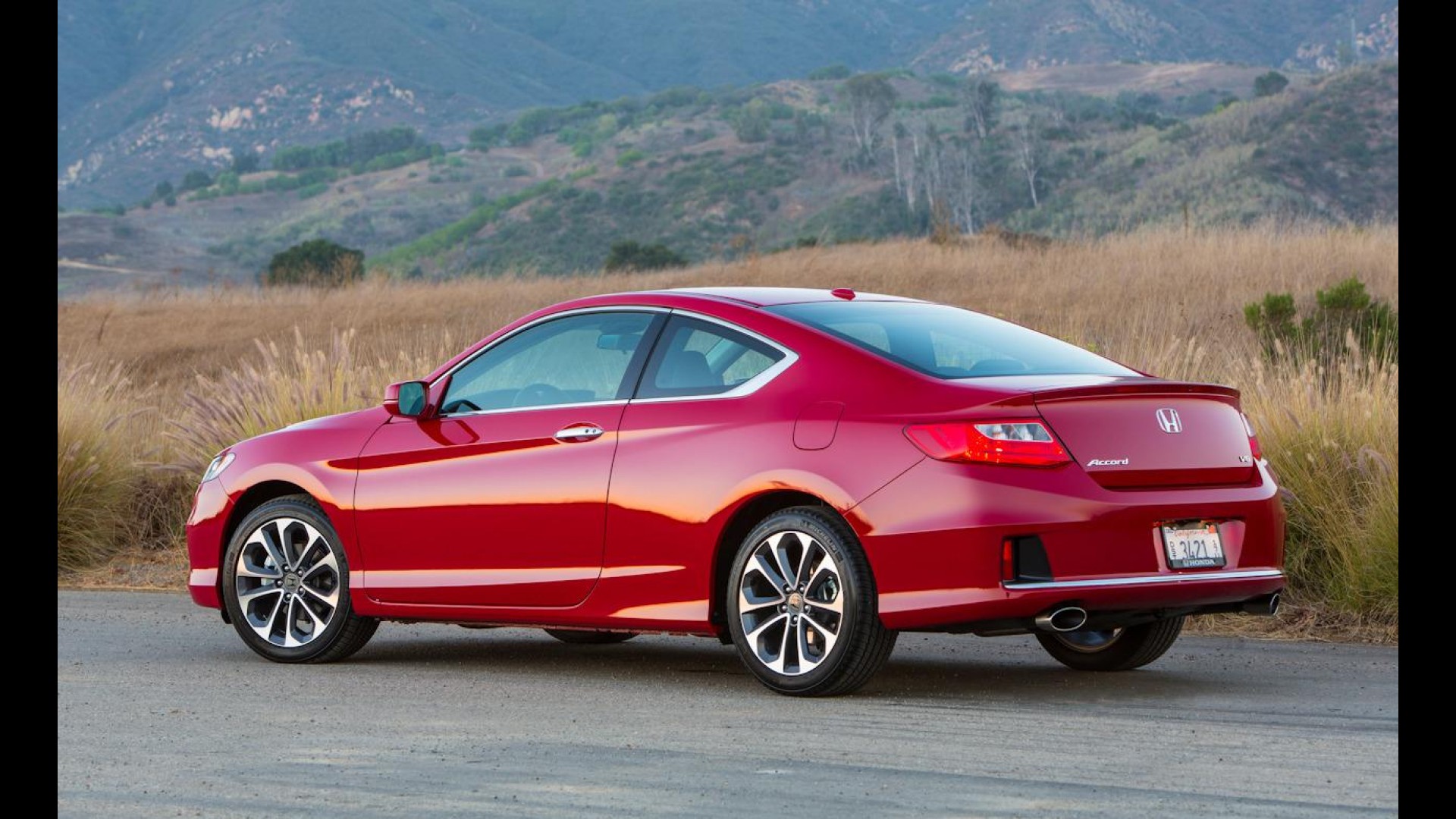
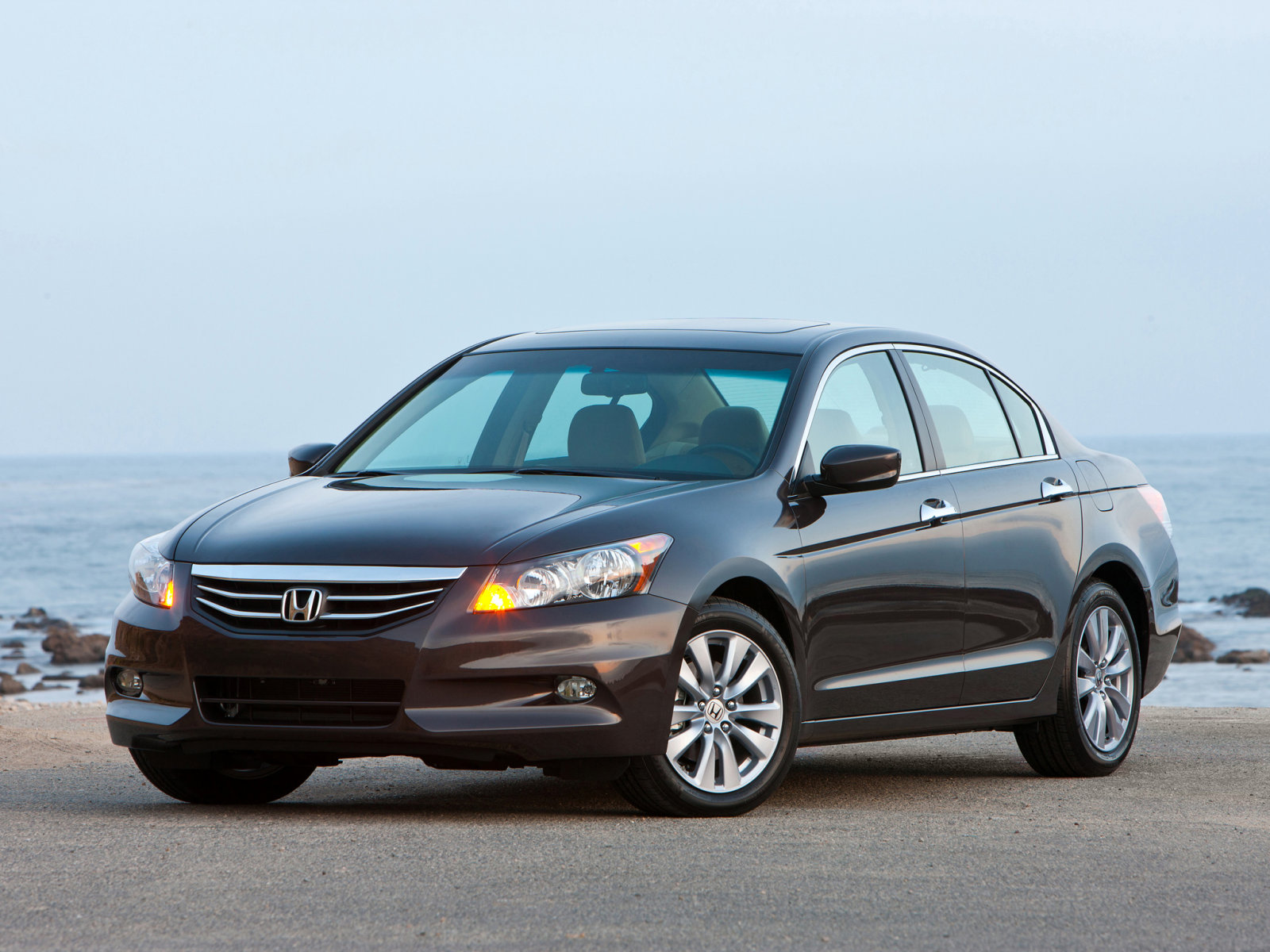
The 2013 Honda Accord V6 produced 278 horsepower and 252 lb-ft of torque using a 3.5-liter J35Y1 SOHC i-VTEC engine. This powertrain marked the debut of Honda’s "Earth Dreams" technology, combining high-output performance with Variable Cylinder Management (VCM) to achieve a then-competitive 34 MPG on the highway while delivering a 0-60 mph time of approximately 5.6 seconds.
In the landscape of mid-size sedans, the 2013 Honda Accord V6 remains a significant milestone. As we look back from 2026, this vehicle represents one of the final high-water marks for naturally aspirated, large-displacement engines in the family car segment before the industry pivoted almost entirely to small-displacement turbocharged units. The "power story" of the 2013 Accord V6 is not merely about a number on a spec sheet; it is about how Honda refined its legendary J-Series engine to balance the conflicting demands of enthusiast-level performance and environmental responsibility.
The Heart of the Story: The J35Y Series Engine
The 278 hp figure was generated by the J35Y1 (for sedans) and J35Y2 (for manual coupes) engines. This 3.5-liter V6 was a substantial evolution of the previous J35Z series found in the eighth-generation Accord. To understand the power story, one must look at the internal refinements Honda engineers implemented to squeeze more efficiency and vigor out of the 60-degree V6 architecture.
Honda utilized a Single Overhead Cam (SOHC) design, which might have seemed dated compared to the Double Overhead Cam (DOHC) setups used by competitors like Toyota or Nissan. However, the SOHC design allowed for a more compact engine package and reduced weight. The "magic" happened through the Intelligent Variable Valve Timing and Lift Electronic Control (i-VTEC) system. By 2013, Honda had perfected the ability to switch between low-rpm and high-rpm cam profiles, allowing the engine to breathe efficiently across the entire power band.
The engine featured a die-cast aluminum alloy block with cast-iron cylinder liners, ensuring durability under the stress of high-output driving. The 2013 iteration also saw the introduction of revised intake ports and a more efficient tumble-ratio design, which improved the air-fuel mixture's combustion speed. This resulted in a crisp throttle response that many modern turbocharged engines still struggle to emulate in 2026.
Earth Dreams Technology: The Efficiency Paradox
When Honda introduced the "Earth Dreams" moniker with the 2013 Accord, it was often met with skepticism by performance enthusiasts. They feared that "green" branding would mean a sterilized driving experience. On the contrary, the Earth Dreams philosophy focused on reducing internal friction and optimizing every stage of the combustion process.
For the V6, this meant the inclusion of Variable Cylinder Management (VCM). The VCM system allowed the engine to operate on three cylinders during light-load conditions, such as cruising at highway speeds. When the driver demanded the full 278 hp, the system would seamlessly re-engage the dormant bank of cylinders.
To prevent the driver from feeling the vibrations associated with a three-cylinder imbalance, Honda employed Active Control Engine Mounts (ACM) and Active Noise Cancellation (ANC). The ACM units would physically vibrate in opposition to the engine’s harmonics, effectively canceling out the shudder that typically occurs when a V6 runs on only one bank. From the cabin, the transition was nearly imperceptible, a testament to the engineering depth Honda invested in this platform.
Transmission Pairings: Manual Versatility and Automatic Refinement
The power story of the 2013 Accord V6 is split between two very different driving experiences based on the transmission choice. While the sedan was exclusively available with a six-speed automatic, the V6 Coupe offered a rare six-speed manual transmission that transformed the car into a genuine "sleeper" performance vehicle.
The Six-Speed Automatic
The automatic transmission was a significant upgrade from the five-speed units of previous years. It featured a wider gear ratio spread, which allowed for better off-the-line acceleration (utilizing a shorter first gear) and quieter, more fuel-efficient highway cruising. The transmission logic was programmed to hold gears longer during spirited driving, sensing lateral G-forces to prevent mid-corner upshifts that could upset the car's balance.
The Six-Speed Manual (The Enthusiast’s Choice)
For those who sought to fully exploit the 278 hp, the V6 Coupe with the six-speed manual was the pinnacle. Interestingly, the manual version of the engine did not feature VCM. Honda engineers recognized that manual drivers preferred a more direct connection to the engine and were less likely to prioritize the marginal fuel savings of cylinder deactivation. This version of the J35 engine provided a raw, linear power delivery that remains highly sought after on the used market in 2026. The short-throw shifter and well-weighted clutch made the Accord V6 Coupe one of the most engaging front-wheel-drive cars of its era.
Performance Benchmarks and Real-World Speed
In 2013, the Accord V6 was surprisingly fast, often catching drivers of more expensive luxury sport sedans off guard. The 278 hp was delivered at 6,200 RPM, with the 252 lb-ft of torque peaking at 4,900 RPM. While these peaks seem high, the i-VTEC system ensured a broad torque curve, providing ample "go" from as low as 2,500 RPM.
Independent testing at the time clocked the Accord V6 Sedan at a 0-60 mph time of 5.6 to 5.8 seconds. The standing quarter-mile was typically achieved in the low 14-second range at speeds exceeding 100 mph. These figures put the Accord in direct competition with the entry-level versions of the BMW 3-series and Audi A4 of that timeframe, despite the Honda being a significantly larger and more affordable vehicle.
| Specification | 2013 Honda Accord V6 (J35Y1) |
|---|---|
| Engine Type | 3.5L SOHC i-VTEC V6 |
| Horsepower | 278 hp @ 6,200 rpm |
| Torque | 252 lb-ft @ 4,900 rpm |
| Compression Ratio | 10.5:1 |
| Fuel System | Multi-Point Fuel Injection |
| Valvetrain | 24-Valve SOHC i-VTEC |
| Cylinder Deactivation | VCM (3-cylinder mode) |
| EPA Fuel Economy (Auto) | 21 City / 34 Highway / 25 Combined |
| 0-60 MPH Time | ~5.6 - 5.8 Seconds |
Chassis and Handling: Managing the Power
A common criticism of high-horsepower front-wheel-drive cars is torque steer—the tendency of the car to pull to one side under heavy acceleration. Honda addressed this in the 2013 Accord by using equal-length drive shafts and a sophisticated front suspension geometry. While some feedback was still felt through the steering wheel, the car remained remarkably composed during full-throttle merges.
The ninth-generation Accord also saw a move to a MacPherson strut front suspension, replacing the double-wishbone setup of the eighth generation. While purists lamented the change, Honda’s tuning of the struts, combined with a high-rigidity steel subframe, allowed the V6 models to handle the weight of the larger engine with agility. The V6 models were also equipped with larger 11.5-inch ventilated front disc brakes to ensure that the stopping power matched the "go" power.
Long-Term Reliability and 2026 Perspective
Thirteen years after its initial release, the 2013 Honda Accord V6 has solidified its reputation for reliability, provided certain maintenance milestones are met. For owners and prospective buyers in 2026, the J35 engine is considered one of the last "bulletproof" Honda powerplants, though it requires more hands-on maintenance than its four-cylinder counterparts.
The Timing Belt Requirement
Unlike the four-cylinder K-series engines which use a timing chain, the V6 J-series uses a rubber timing belt. This belt must be replaced every 100,000 miles or seven years. In 2026, any 2013 Accord V6 that hasn't had its second timing belt service is a "ticking time bomb," as a belt failure will result in catastrophic internal engine damage due to the interference design.
The VCM Controversy
Over the years, some owners reported issues with the VCM system, including premature spark plug fouling or excessive oil consumption. This was caused by the cylinders staying "cold" during deactivation, allowing oil to seep past the rings. In the enthusiast community, "VCM Muzzler" devices became a popular aftermarket modification. these devices trick the engine computer into thinking the coolant hasn't reached the temperature required for cylinder deactivation, effectively keeping the car in 6-cylinder mode at all times. This slightly reduces fuel economy but provides a smoother idle and prevents long-term oil consumption issues.
Comparison with Contemporaries (2013)
When the 278 hp Accord debuted, it faced stiff competition. The Toyota Camry V6 offered 268 hp, while the Nissan Altima 3.5 delivered 270 hp. The Accord's advantage was not just in the ten extra horsepower, but in the refinement of its delivery. The Toyota was often described as "clinical," while the Nissan's CVT (Continuously Variable Transmission) was frequently criticized for "rubber-band" feel. The Honda, with its traditional geared automatic or engaging manual, was widely regarded as the "driver’s choice" among family sedans.
Frequently Asked Questions
Does the 2013 Honda Accord V6 require premium fuel?
No. Despite its high output of 278 hp, the 2013 Accord V6 was engineered to run on 87-octane regular unleaded gasoline. The engine's knock sensors and sophisticated ECU (Electronic Control Unit) can adjust timing to prevent detonation. While some users report slightly better throttle response with 91 or 93 octane, there is no significant horsepower gain or manufacturer requirement for premium fuel.
How can I tell if the VCM is working?
In the 2013 Accord, the dashboard features an "ECO" light. While this light indicates that the vehicle is being driven efficiently, it is most often illuminated when the Variable Cylinder Management system has deactivated three of the cylinders. If you feel a slight hesitation or "judder" when the ECO light turns off, it may indicate that the active engine mounts are beginning to wear.
What is the difference between the V6 engine in the Sedan and the Coupe?
While both are 3.5-liter engines producing roughly the same power, the Coupe with the 6-speed manual transmission (J35Y2) does not have Variable Cylinder Management. The Sedan and the Automatic Coupe (J35Y1) both feature VCM. Additionally, the manual Coupe features a different intake manifold tuning to provide a more aggressive exhaust note and slightly more mid-range torque.
Is the 2013 Accord V6 faster than the 2.0T that replaced it?
The 10th-generation Accord (2018+) replaced the V6 with a 2.0-liter turbocharged four-cylinder. In a straight line, the 2.0T is often slightly faster due to its higher torque (273 lb-ft) available much lower in the RPM range. However, many drivers prefer the 2013 V6 for its linear power delivery, the sound of the naturally aspirated J-series engine, and the lack of "turbo lag."
What are the most common mechanical issues at high mileage?
By 2026, common issues for the 2013 V6 include leaking valve cover gaskets, worn compliance bushings in the front suspension, and failed spool valves (which can leak oil onto the alternator). The automatic transmissions are generally robust if the fluid has been changed every 30,000 to 50,000 miles.
Practical Recommendation for 2026
If you are considering a 2013 Honda Accord V6 today, focus your inspection on the maintenance records rather than the odometer. This engine is capable of 250,000+ miles, but only if the timing belt and water pump have been serviced on schedule. For those seeking a daily driver that offers a blend of comfort and "sleeper" performance, the V6 Sedan is an excellent choice. For collectors or enthusiasts, a V6 Coupe with the 6-speed manual is a rare gem that represents the end of an era for Honda’s legendary naturally aspirated powerplants. Ensure you check for oil consumption and consider a VCM bypass if you plan on keeping the vehicle for the long term.