The standard 2017 Nissan Rogue utilizes factory wheel diameters of 17, 18, and 19 inches, depending on the trim level. All configurations share a 5x114.3 mm (5x4.5 inches) bolt pattern, a 66.1 mm center bore, and M12x1.25 lug nuts torqued to 83 lb-ft. Common OEM tire sizes include 225/65R17, 225/60R18, and 225/55R19.
Model Disambiguation: Standard Rogue vs. Rogue Sport
Before purchasing new wheels or replacement tires, it is essential to distinguish between the two distinct vehicles Nissan sold under the "Rogue" nameplate for the 2017 model year.
Nissan executed a mid-cycle refresh for the standard 2017 Nissan Rogue (T32 generation), updating its exterior front fascia, interior trim, and available package configurations. Concurrently, Nissan introduced the smaller Nissan Rogue Sport (known in international markets as the Nissan Qashqai).
While both vehicles target the crossover market and utilize a 5x114.3 mm bolt pattern, they built upon different platform dimensions. The Rogue Sport features a shorter wheelbase, distinct body panel clearances, and different OEM tire sizing profiles (such as 215/65R16 on base trims).
This guide focuses exclusively on the standard, full-size 2017 Nissan Rogue across its S, SV, SL, and Hybrid trim configurations.
Master Wheel and Tire Specification Matrix
The table below outlines the factory-installed wheel and tire specifications for every standard trim level of the 2017 Nissan Rogue.
| Trim Level | Wheel Size | Rim Width & Offset (ET) | Bolt Pattern (PCD) | Center Bore (CB) | OEM Tire Size | Lug Nut Specs & Torque |
|---|---|---|---|---|---|---|
| S (Base) | 17-inch | 17 x 7.0J ET35 | 5x114.3 mm | 66.1 mm | 225/65R17 | M12x1.25 / 83 lb-ft |
| SV | 17-inch | 17 x 7.0J ET35 | 5x114.3 mm | 66.1 mm | 225/65R17 | M12x1.25 / 83 lb-ft |
| SV (Optional/Pkg) | 18-inch | 18 x 7.0J ET35 | 5x114.3 mm | 66.1 mm | 225/60R18 | M12x1.25 / 83 lb-ft |
| SL | 19-inch | 19 x 7.0J ET40 | 5x114.3 mm | 66.1 mm | 225/55R19 | M12x1.25 / 83 lb-ft |
| SV Hybrid | 17-inch | 17 x 7.0J ET35 | 5x114.3 mm | 66.1 mm | 225/65R17 | M12x1.25 / 83 lb-ft |
| SL Hybrid | 18-inch / 19-inch | 18x7.0J ET35 / 19x7.0J ET40 | 5x114.3 mm | 66.1 mm | 225/60R18 / 225/55R19 | M12x1.25 / 83 lb-ft |
Critical Wheel Metrics Explained
Selecting aftermarket wheels or replacing original equipment requires a working knowledge of five basic engineering metrics. Deviating too far from factory limits can lead to suspension interference, premature wheel bearing wear, incorrect speed readings, or unsafe handling.
1. Bolt Pattern (Pitch Circle Diameter - PCD)
The 2017 Nissan Rogue uses a 5x114.3 mm bolt pattern (frequently listed as 5x4.5 inches in North America). This metric means the wheel uses 5 lug holes evenly spaced along an imaginary circle with a diameter of 114.3 mm.
Because 5x114.3 mm is one of the most widely used bolt patterns among Japanese automakers, a vast selection of aftermarket wheels will physically align with the Rogue's wheel studs. However, proper fitment requires meeting all other dimensions described below.
2. Center Bore and Hub-Centric Design
The factory hub diameter for the 2017 Nissan Rogue is 66.1 mm. The center bore is the opening in the center of the wheel that fits snugly over the vehicle's wheel hub snout.
Nissan designs its factory setup to be hub-centric. This means the central hub collar—not the lug studs—supports the weight of the vehicle and centers the wheel perfectly on the axle.
- OEM Wheels: Features an exact 66.1 mm center bore, placing zero lateral shear stress on the lug studs.
- Aftermarket Wheels: Frequently manufactured with oversized center bores (such as 73.1 mm) to fit multiple vehicle models. When installing aftermarket wheels with a center bore larger than 66.1 mm, you must use hub-centric rings (73.1 mm exterior to 66.1 mm interior). Installing wheels without hub-centric rings transfers the load to the studs, often causing high-speed steering wheel vibrations and potentially shearing the lug studs under heavy braking.
3. Wheel Offset (ET) and Width
Factory rims for the 2017 Rogue measure 7.0 inches wide (7.0J), with an offset ranging between +35 mm (ET35) on 17-inch and 18-inch models and +40 mm (ET40) on 19-inch models.
- Positive Offset (+): Indicates that the mounting hub surface of the wheel sits toward the front outer face of the rim.
- Fitment Window: For aftermarket setups maintaining the stock 7.0 to 8.0-inch rim width, acceptable offset ranges fall between +35 mm and +45 mm.
- Consequences of Incorrect Offset: Lower numerical offsets (e.g., +25 mm) push the wheel outward toward the fender lip, risking fender contact over bumps. Higher numerical offsets (e.g., +50 mm) push the rim inward toward the strut body, potentially rubbing against the front coil spring perch or inner fender liner during tight turns.
4. Fastener Thread Pitch and Seat Style
The 2017 Rogue uses M12 x 1.25 lug nuts (Metric 12 mm stud diameter with a fine 1.25 mm thread pitch).
When buying replacement lug nuts or aftermarket wheels, match the lug nut seat style to the wheel pocket design:
- Conical / Tapered (60-degree): Used on almost all aftermarket wheels and standard Nissan factory aluminum wheels.
- Mag / Washer Seat: Used primarily on older OEM Toyota/Nissan truck styles; rarely found on standard Rogue rims, but incorrect to mix with conical pockets.
- Ball Seat: Commonly used by Honda/Acura; do not use ball-seat lug nuts on conical Nissan wheel seats, as the contact surface will be insufficient to maintain proper clamp load.
5. Lug Nut Tightening Torque
The factory-recommended wheel nut torque for the 2017 Nissan Rogue is 83 lb-ft (113 N·m). Overtightening lug nuts with an uncalibrated impact wrench can warp the brake rotors or stretch the wheel studs, leading to stud failure. Undertightening can allow lug nuts to back off during driving.
Detailed OEM Trim Breakdown
- 2017 Nissan Rogue Trim Levels
- S (Base): 17" Steel Wheels | 225/65R17 Tires | ET35
- SV: 17" Alloy Wheels (Opt. 18") | 225/65R17 or 225/60R18 | ET35
- SL: 19" Alloy Wheels | 225/55R19 Tires | ET40
- Hybrid (SV/SL): 17" or 18" Alloys | Focused on Low Rolling Resistance
2017 Nissan Rogue S
The base S trim came equipped from the factory with 17 x 7.0-inch steel wheels fitted with full plastic wheel covers.
- Factory Tire Size: 225/65R17
- Overall Diameter: ~28.5 inches (724 mm)
- Performance Profile: The 65-series sidewall provides a tall rubber cushion. This layout delivers compliance over uneven pavement, protection against pothole damage, and lower tire replacement costs.
2017 Nissan Rogue SV
The mid-tier SV trim introduced 17 x 7.0-inch aluminum alloy wheels as standard equipment, wrapped in 225/65R17 tires.
- Optional Configuration: SV models equipped with optional appearance packages featured 18 x 7.0-inch aluminum alloy wheels running 225/60R18 tires.
- Performance Profile: The 18-inch setup offers a modest bump in steering response by reducing sidewall flex slightly while maintaining roughly the same overall rolling diameter (~28.6 inches).
2017 Nissan Rogue SL
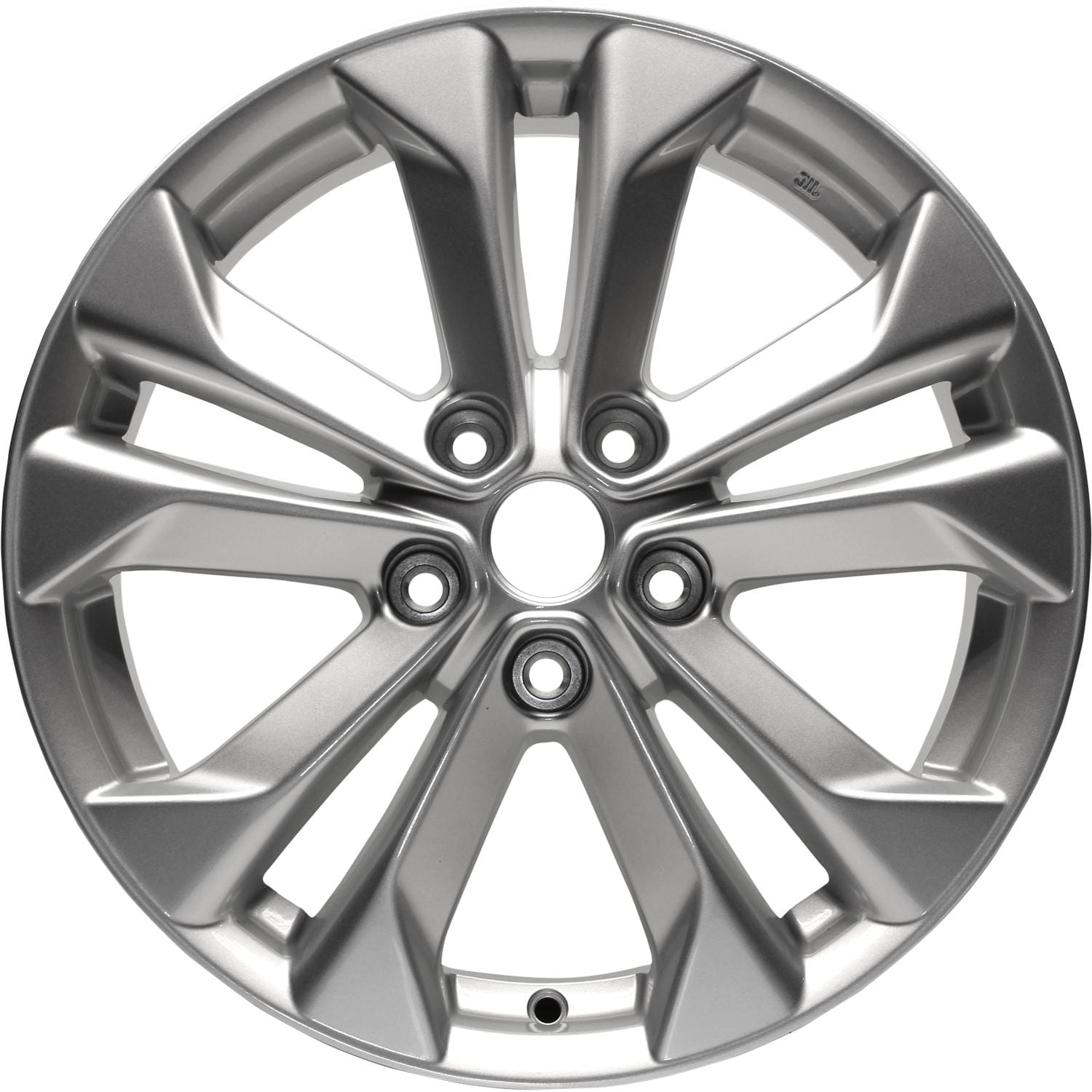
The top-tier SL trim came standard with 19 x 7.0-inch split 5-spoke aluminum alloy wheels.
- Factory Tire Size: 225/55R19
- Overall Diameter: ~28.7 inches (730 mm)
- Performance Profile: The 19-inch wheel combined with a 55-series aspect ratio gives the Rogue SL a sharper turn-in response and a more modern profile. However, the thinner sidewall makes the rim more vulnerable to impact damage from severe potholes, and replacement 19-inch tires carry a premium cost compared to 17-inch options.
2017 Nissan Rogue Hybrid (SV and SL)
Introduced for 2017, the Rogue Hybrid paired a 2.0L engine with an electric motor. The SV Hybrid ran standard 17-inch alloy wheels (225/65R17), while the SL Hybrid used 18-inch alloy wheels (225/60R18) or 19-inch alloy wheels depending on equipment packages.
- Special Considerations: When replacing tires on the Hybrid trim, select Low Rolling Resistance (LRR) tires to maintain the vehicle's EPA fuel economy ratings.
Upsizing, Downsizing, and Aftermarket Rules
Modifying wheel size is a common way to adjust styling, handling, or winter capability. However, any modification must respect vehicle geometry and electronic constraints.
- OEM Base: 225/65R17 (~28.5" Overall Diameter)
- Plus 1 (18"): 225/60R18 or 235/55R18 (Diameter change: < 0.5%)
- Plus 2 (19"): 225/55R19 or 235/50R19 (Diameter change: < 0.8%)
- Downsizing (Winter): 17" is the MINIMUM recommended wheel size
Overall Rolling Diameter Tolerance (+/- 2%)
The vehicle’s Anti-lock Braking System (ABS), Vehicle Dynamic Control (VDC), and Intelligent All-Wheel Drive (AWD) systems continuously monitor wheel speed sensors. To prevent sensor errors or mechanical binding in the AWD coupling, keep the overall diameter of new tire/wheel combinations within +/- 2% to 3% of the factory base tire (28.5 inches).
- Example - Stock 17": 225/65R17 = 28.52 inches overall diameter.
- Example - Plus 1 (18"): 225/60R18 = 28.63 inches overall diameter (0.38% increase - Ideal).
- Example - Plus 2 (19"): 225/55R19 = 28.74 inches overall diameter (0.77% increase - Ideal).
- Example - Plus 3 (20" Aftermarket): 245/45R20 = 28.68 inches overall diameter (0.56% increase - Acceptable fitment on 20x8.0 ET38 rim).
Downsizing for Winter Conditions
For winter driving, downsizing from a 19-inch factory setup (SL trim) to a 17-inch wheel package is common practice.
- Benefits: 17-inch tires are less expensive, and the taller 65-series sidewall absorbs winter potholes while offering improved traction in deep snow when running a slightly narrower tire profile.
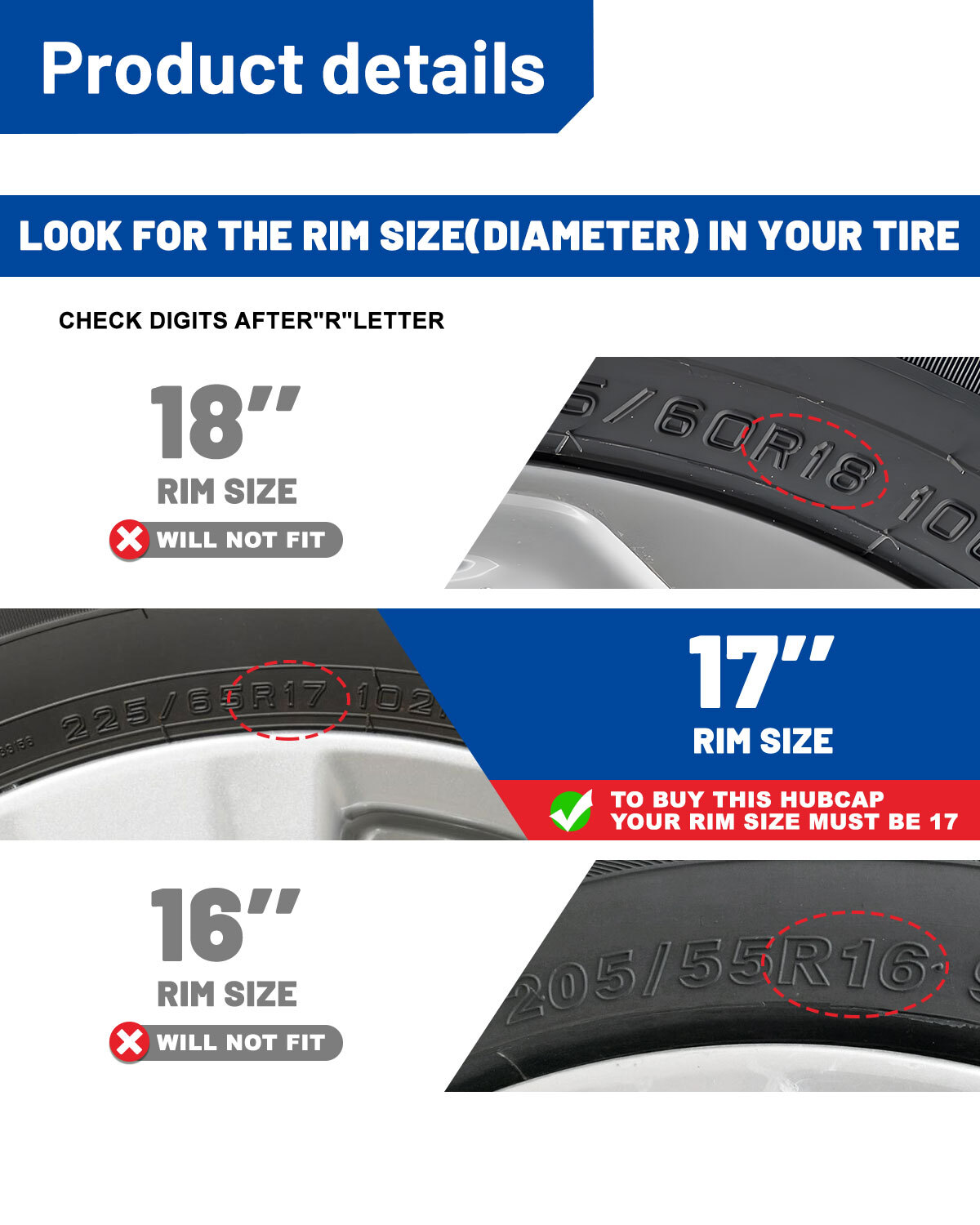
- Brake Clearance Caution: Do not install 16-inch wheels on a 2017 standard Nissan Rogue. The front brake caliper assembly requires clear radial clearance inside the barrel of the wheel. Most 16-inch wheels will contact the front brake caliper housing, resulting in wheel binding or caliper damage. Maintain 17 inches as your minimum rim diameter.
Impact on Intelligent AWD
If your 2017 Rogue has All-Wheel Drive, all four tires must be identical in brand, model, tread depth, and size. Running tires with unequal tread wear (e.g., two brand-new front tires paired with two worn rear tires) creates a difference in rolling circumference. Over extended driving, this difference forces the transfer case and electronic rear coupling to slip continuously, risking premature drivetrain failure.
TPMS and Sensor Calibration
The 2017 Nissan Rogue uses a direct Tire Pressure Monitoring System (TPMS). Each wheel features an interior valve-stem-mounted pressure sensor transmitting at 315 MHz.
- Swapping Complete Sets: If you keep dedicated summer and winter wheel packages, fit your winter set with compatible 315 MHz TPMS sensors.
- Sensor Re-Learn: When rotating tires or installing new sensors, the Rogue’s onboard computer usually updates sensor positions automatically after 10–15 minutes of continuous driving above 16 mph (25 km/h). If the TPMS light remains illuminated, a shop must trigger the sensors using a handheld TPMS OBD-II tool.
- Sensor Transfer: You can transfer OEM sensors from standard factory rims into aftermarket wheels, provided the aftermarket wheels feature standard valve stem mounting holes.
Step-by-Step Wheel Installation Guide
Improper installation can lead to wheel vibration, stud damage, or dangerous loose-wheel conditions. Follow these verification and torque steps whenever installing wheels on your 2017 Rogue.
Wheel Installation Sequence:
- Clean Hub Face
- Mount Hub Ring
- Hand-Thread Lugs
- Star Pattern
- Torque to 83 lb-ft
Step 1: Prep the Hub Face
Before mounting a wheel, clear surface rust and road grime from the vehicle's rotor hat surface using a wire brush. Apply a thin layer of anti-seize compound around the center hub lip (do not apply anti-seize to the wheel stud threads, as lubricated threads cause over-torquing).
Step 2: Install Hub-Centric Rings (Aftermarket Rims)
If using aftermarket wheels with a center bore larger than 66.1 mm, slide metal or durable poly-carbonate hub-centric rings over the vehicle’s center hub collar before sliding the wheel into place.
Step 3: Align and Hand-Thread Fasteners
Place the wheel over the studs and thread all five M12x1.25 lug nuts by hand for at least 4 to 5 full revolutions. Never start lug nuts with an impact tool, as fine-thread M12x1.25 studs cross-thread easily.
Step 4: Seat Lug Nuts in a Star Pattern
Using a 21 mm socket or lug wrench, snug down the lug nuts in a crisscross (star) pattern (1-3-5-2-4 sequence) while the vehicle is resting on jack stands. This ensures the wheel pulls flat against the brake rotor face.
Step 5: Final Torque Setting
Lower the vehicle until the tires contact the ground. Use a calibrated torque wrench to tighten each lug nut to 83 lb-ft (113 N·m) in the same star pattern.
Re-torque the lug nuts after driving 50 to 100 miles on newly mounted wheels to account for any initial seating movement.
Frequently Asked Questions
Can I install 16-inch wheels on a standard 2017 Nissan Rogue?
No. Installing 16-inch wheels on a standard 2017 Nissan Rogue is not recommended. The front brake system requires clearance that most 16-inch rim barrels cannot provide, risking contact with the brake caliper. Stick to a minimum wheel diameter of 17 inches.
What is the exact lug nut torque spec for the 2017 Nissan Rogue?
The factory lug nut torque specification for all 2017 Nissan Rogue models is 83 lb-ft (113 N·m) using standard dry threads.
Will wheels from a Nissan Altima or Murano fit the 2017 Rogue?
Many OEM wheels from an Altima, Maxima, or Murano share Nissan’s standard 5x114.3 mm bolt pattern and 66.1 mm center bore. However, check the rim width and offset carefully. Murano wheels are often wider (7.5 to 8.0 inches) with offsets around +50 mm, which may sit closer to the inner suspension components on a Rogue unless verified.
What tire size should I run if I upgrade to 20-inch wheels?
If upgrading to a 20x8.0-inch aftermarket rim with an offset between +35 mm and +40 mm, the optimal tire size is 245/45R20. This retains an overall rolling diameter of 28.68 inches, keeping speedometer variance under 0.6% compared to the factory base configuration.
How does changing my wheel diameter affect the speedometer?
Changing wheel diameter alters the distance the tire travels per revolution. If your new overall tire diameter is larger than factory spec, your speedometer will read slower than your actual vehicle speed. If your overall diameter is smaller, your speedometer will read faster. Keeping tire diameter within +/- 2% of the factory 28.5-inch baseline preserves accurate speedometer readings.
Does the 2017 Nissan Rogue require special lug nuts for alloy wheels?
Factory alloy wheels on the 2017 Rogue require 60-degree conical seat lug nuts with M12x1.25 threading. If you replace factory steel wheels with aftermarket alloys, verify whether the new wheel requires narrow-tuner lug nuts (spline drive) to fit down inside the smaller lug recesses of the aftermarket rim.
Practical Action Plan for Owners
When purchasing new wheels or replacing original tires on your 2017 Nissan Rogue, follow this checklist to ensure correct fitment:
- Verify Your Model Variant: Ensure your vehicle is a standard Rogue (S, SV, SL, or Hybrid) and not a Rogue Sport.
- Match Key Metrics: If buying aftermarket rims, insist on a 5x114.3 mm bolt pattern, an offset of +35 mm to +45 mm, and purchase 66.1 mm hub-centric adapter rings if the center bore is oversized.
- Check Tire Outer Diameter: Ensure your selected tire size yields an overall rolling diameter close to 28.5 inches (e.g., 225/65R17, 225/60R18, or 225/55R19).
- Prepare TPMS: Purchase 315 MHz sensors or arrange for your tire installer to transfer your factory sensors to the new wheel set.
- Torque Properly: Torque all lug nuts in a star pattern to 83 lb-ft using a calibrated torque wrench, and re-torque after 50 to 100 miles of driving.