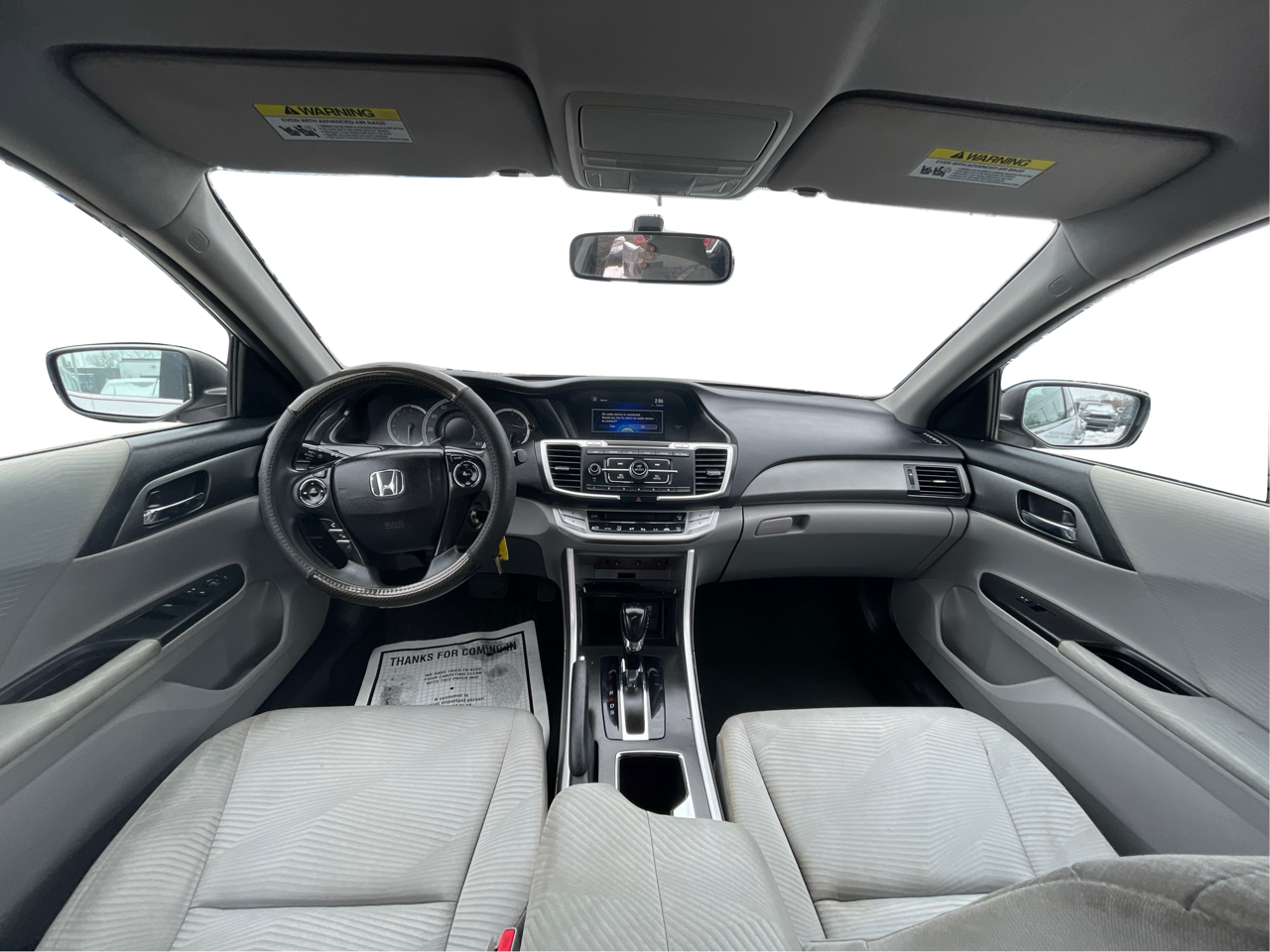
The 2015 Honda Accord LX is powered by a 2.4-liter Earth Dreams Technology direct-injection 4-cylinder engine that produces 185 horsepower and 181 lb-ft of torque, delivering a balanced combination of responsive daily acceleration, high thermal efficiency, and refined mechanical operation for midsize sedan drivers.
Introduction to the 2015 Honda Accord LX Powertrain
Understanding the 2015 Honda Accord LX power profile requires looking closely at what sits beneath the hood of one of North America's most popular midsize sedans. As part of the ninth generation of the Accord lineup, the LX trim serves as the entry-point model, yet it shares its core powertrain architecture with higher-tier four-cylinder variants. When buyers, prospective owners, or automotive enthusiasts research the 2015 Honda Accord LX power overview, they are typically looking to understand how its engine, transmission options, fuel delivery systems, and real-world performance metrics interact.
Evaluating this vehicle requires a careful look at its technical specifications, operational design choices, and mechanical longevity. The powertrain was engineered during an era when Honda aggressively pushed its Earth Dreams Technology initiative, focusing heavily on maximizing fuel economy without sacrificing the responsiveness drivers expect from a midsize sedan. This comprehensive technical overview examines the internal mechanics, transmission pairings, real-world driving dynamics, maintenance requirements, and common considerations associated with the 2015 Honda Accord LX power delivery system.
Core Engine Specifications and Earth Dreams Technology
At the heart of the 2015 Honda Accord LX power delivery is a naturally aspirated, 2.356-liter (commonly referenced as a 2.4-liter) inline-four engine. Built with an aluminum-alloy block and cylinder head, this powerplant utilizes a double overhead camshaft (DOHC) layout featuring i-VTEC (intelligent Variable Valve Timing and Lift Electronic Control) combined with Variable Timing Control (VTC).
The defining characteristic of this engine generation is Honda’s Direct Injection (DI) fuel system. Unlike port-injection systems of previous generations, direct injection sprays high-pressure fuel directly into the combustion chamber, optimizing air-fuel mixing, thermal efficiency, and power output.
Key Engine Performance Figures
- Displacement: 2,356 cc (2.4 liters)
- Horsepower: 185 hp at 6,400 RPM
- Torque: 181 lb-ft at 3,900 RPM
- Compression Ratio: 11.1:1
- Valvetrain: 16-valve DOHC i-VTEC + VTC
- Fuel Induction: Direct Fuel Injection
- Recommended Fuel: Regular Unleaded (87 Octane)
The compression ratio of 11.1:1 is relatively high for a standard, mass-market passenger vehicle running on regular 87-octane gasoline, made possible by precise direct injection timing and advanced knock-control sensors. Peak torque of 181 lb-ft arrives at a relatively low 3,900 RPM, which ensures that the vehicle feels responsive during city driving and routine passing maneuvers without forcing the transmission to constantly downshift.
Transmission Pairings: CVT vs. Manual
Power from the engine is routed to the front wheels through one of two transmission options available on the LX trim for the 2015 model year. The transmission choice heavily influences the driving character, efficiency ratings, and overall power delivery experience of the vehicle.
| Transmission Type | Gears / Ratios | Primary Characteristics |
|---|---|---|
| Continuously Variable (CVT) | Infinitely Variable (With Sport Mode) | Optimized for fuel efficiency, smooth power delivery, simulated shift points |
| 6-Speed Manual (Discontinued 2016) | 6 Forward, 1 Reverse | Driver engagement, direct mechanical linkage, lower final-drive flexibility |
The Continuously Variable Transmission (CVT)
The vast majority of 2015 Honda Accord LX models found on the road are equipped with Honda’s Earth Dreams CVT. Unlike traditional stepped automatic transmissions with fixed gears, a CVT uses a steel belt running between variable-width pulleys to provide an infinite range of gear ratios. This allows the engine to operate continuously at its most efficient RPM range regardless of vehicle speed.
To mitigate the "rubber-band" sensation often criticized in early CVTs, Honda engineered simulated stepped ratios under heavy acceleration, mimicking a traditional automatic transmission to provide a more natural auditory and physical feedback loop for the driver. A dedicated "Sport" mode alters the transmission mapping to hold higher engine speeds, keeping the power band engaged for more aggressive throttle response.
The 6-Speed Manual Transmission
For purists, the 2015 Accord LX was also offered with a crisp 6-speed manual transmission. While rarer in the marketplace, this transmission provides a completely mechanical connection that allows skilled drivers to extract maximum acceleration performance from the 185-hp four-cylinder engine. The gear ratios are well-spaced, making highway cruising comfortable while providing short throws that enhance the driving dynamic of an otherwise practical family sedan.
Real-World Performance and Driving Dynamics
Specifications on paper tell only part of the story. In real-world driving environments, the 2015 Honda Accord LX power profile is characterized by linear acceleration, predictable throttle calibration, and composure at highway speeds.
City Driving and Low-End Torque
Because peak torque arrives at 3,900 RPM, the Accord LX moves away from a stoplight with confidence. The direct-injection system provides an immediate response to initial throttle inputs, making stop-and-go urban commuting effortless. The steering system—an Electric Power-Assisted Rack-and-Pinion Steering (EPS)—weighs up appropriately at higher speeds while remaining light and nimble during parking maneuvers.
Highway Passing and High-Speed Cruising
When merging onto high-speed interstates or executing passing maneuvers at 60 to 75 MPH, the 2.4-liter engine demonstrates adequate power reserves. While it lacks the low-end surge of the optional 3.5-liter V6 engine found in higher trims, it never feels underpowered for routine driving conditions. The CVT quickly adjusts its ratio to sweep the engine up into its high-horsepower sweet spot near 6,400 RPM when full throttle is applied, though cabin engine noise increases noticeably under heavy, sustained acceleration due to sound-deadening limits on the base LX trim.
Fuel Economy and Efficiency Impacts
One of the primary engineering goals of the Earth Dreams powertrain was minimizing fuel consumption without downsizing to a turbocharged engine. The 2015 Accord LX achieves exceptional fuel economy figures that remain competitive in the midsize sedan segment.
- CVT Fuel Economy Estimates (EPA): 27 MPG city / 36 MPG highway / 30 MPG combined
- Manual Fuel Economy Estimates (EPA): 24 MPG city / 34 MPG highway / 27 MPG combined
These figures are achieved through a combination of low internal mechanical friction, aerodynamic body styling, precise fuel metering, and an Econ mode button located on the dashboard. When activated, Econ mode alters throttle sensitivity and optimizes air conditioning compressor operation to prioritize maximum fuel savings during daily commutes.
Maintenance Considerations and Long-Term Reliability
Maintaining the power delivery and mechanical integrity of the 2015 Honda Accord LX requires adhering to manufacturer service intervals. Because this engine utilizes direct injection, certain maintenance realities must be factored into long-term ownership.
Direct Injection and Carbon Buildup
Unlike port-injected engines where fuel washes over the intake valves, direct-injection engines spray fuel directly into the combustion chamber. Over high mileage, this means intake valves can accumulate carbon deposits because fuel no longer cleans them as it passes by. Owners should use Top Tier detergents and be mindful of periodic intake valve cleaning if rough idling or hesitation develops past 100,000 miles.
Timing Chain Serviceability
The 2.4-liter Earth Dreams engine uses a steel timing chain rather than a rubber timing belt. Designed to last the lifetime of the engine under proper oil change intervals, the timing chain eliminates the need for costly 100,000-mile belt replacements. However, using high-quality synthetic 0W-20 motor oil and adhering strictly to the Maintenance Minder system (displayed on the dashboard) is critical to protect the timing chain tensioners and variable valve timing actuators from oil starvation or sludge buildup.
Frequently Asked Questions
Does the 2015 Honda Accord LX have a turbocharger?
No. The 2015 Honda Accord LX utilizes a naturally aspirated 2.4-liter four-cylinder engine. It relies on direct fuel injection and i-VTEC variable valve timing to generate power rather than forced induction, resulting in linear throttle response and simpler mechanical architecture.
What kind of oil does the 2015 Honda Accord LX require?
The engine requires full synthetic 0W-20 motor oil. Using the correct viscosity is essential for the proper operation of the variable valve timing system and to ensure quick lubrication during cold engine startups.
Is the 2015 Honda Accord LX powerful enough for family road trips?
Yes. With 185 horsepower, the vehicle easily maintains highway speeds, handles steep mountain grades with routine downshifting, and comfortably carries passengers and luggage without feeling strained under normal touring conditions.
Can the 2015 Honda Accord LX run on E85 fuel?
No. The vehicle is designed to run on standard unleaded gasoline with an octane rating of 87 or higher. Using high-ethanol blends like E85 not approved for this engine can damage fuel system components and void manufacturer warranties.
How does the CVT affect the power delivery compared to a standard automatic?
The CVT eliminates traditional gear-shifting pauses, providing an unbroken stream of acceleration. While it can produce a steady, high-pitched engine drone under full throttle, it keeps the engine operating at peak efficiency during everyday driving.
Conclusion and Next Actions
The 2015 Honda Accord LX power overview reveals a mechanically sound, highly efficient, and durable powertrain engineered for longevity and practical daily commuting. Whether evaluating a used model for purchase or performing routine maintenance on an existing vehicle, understanding the capabilities and limitations of the 2.4-liter Earth Dreams engine ensures optimal performance. For prospective buyers, verifying maintenance records—particularly regular oil changes using 0W-20 synthetic oil—is the single most important step to ensuring long-term powertrain health.