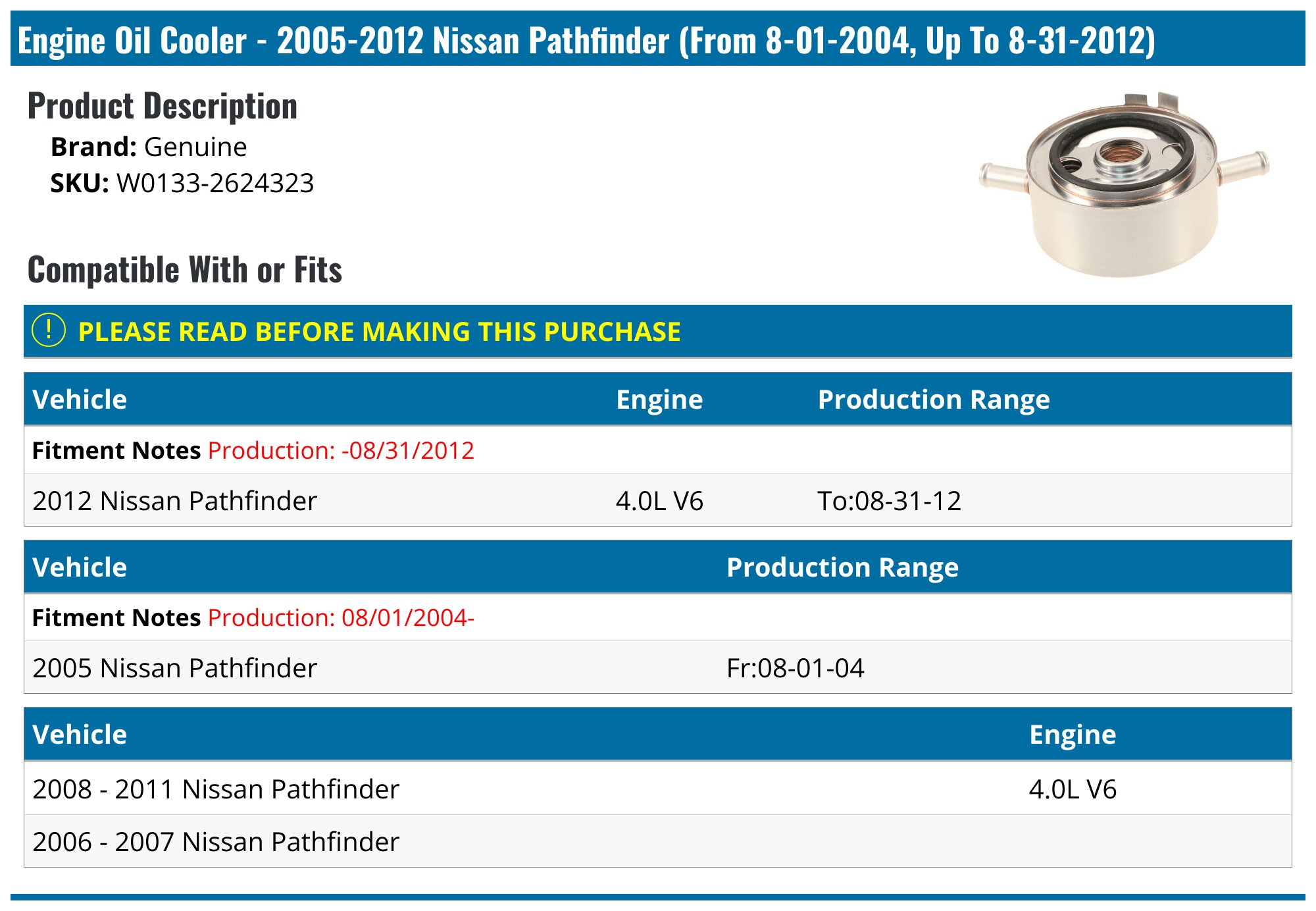
The 2012 Nissan Pathfinder requires different oil capacities depending on the engine installed: the 4.0L V6 (VQ40DE) requires 5.375 US quarts (5.1 liters) of oil with a filter change, while the 5.6L V8 (VK56DE) requires 6.875 US quarts (6.5 liters). Both engines typically use 5W-30 viscosity oil under standard operating conditions.
Understanding the oil capacity and maintenance requirements for the 2012 Nissan Pathfinder is essential for preserving the longevity of this rugged, body-on-frame SUV. As these vehicles reach 14 years of age in 2026, many are entering a "high-mileage" phase where precise lubrication becomes even more critical for engine health. Whether you are performing a routine DIY oil change or verifying the work of a technician, knowing the exact specifications for your specific engine variant prevents common issues like oil starvation or overpressurization.
Identifying Your Engine Variant
Before purchasing oil or filters, you must verify which engine is under the hood of your 2012 Pathfinder. This model year was the final year of the third-generation (R51) Pathfinder, and it offered two distinct powerplants that require different amounts of oil.
The 4.0L V6 (VQ40DE)
The 4.0L V6 is the most common engine found in the 2012 Pathfinder. It belongs to Nissan’s legendary VQ engine family, known for its durability and timing chain-driven overhead cams. In the Pathfinder, this engine was designed for a balance of daily drivability and moderate towing. It is easily identified by a large plastic engine cover that usually features "V6 4.0" branding.
The 5.6L V8 (VK56DE)
The 5.6L V8 was available primarily in the LE trim and was designed for heavy-duty towing and high-performance needs. This engine shares many components with the Nissan Titan and Armada. It is significantly larger and takes up more space in the engine bay. If your Pathfinder has a "V8" badge on the liftgate or the engine cover, you must follow the higher capacity guidelines.
Comprehensive Oil Capacity Specifications
Oil capacity is not just a single number; it varies based on whether you are changing the oil filter at the same time and whether the engine is "dry" (after a rebuild) or undergoing a standard service. For the vast majority of owners in 2026, the "Refill with Filter Change" measurement is the most important.
4.0L V6 Engine Oil Capacity
- Refill with Oil Filter Change: 5.375 US Quarts (approx. 5.1 Liters)
- Refill without Oil Filter Change: 5.0 US Quarts (approx. 4.7 Liters)
- Dry Engine (Overhaul): 6.125 US Quarts (approx. 5.8 Liters)
5.6L V8 Engine Oil Capacity
- Refill with Oil Filter Change: 6.875 US Quarts (approx. 6.5 Liters)
- Refill without Oil Filter Change: 6.25 US Quarts (approx. 6.0 Liters)
- Dry Engine (Overhaul): 8.0 US Quarts (approx. 7.6 Liters)
| Engine Type | Oil Capacity (with Filter) | Recommended Viscosity | Drain Plug Torque |
|---|---|---|---|
| 4.0L V6 (VQ40DE) | 5.375 Quarts (5.1L) | 5W-30 | 25 ft-lbs (34 Nm) |
| 5.6L V8 (VK56DE) | 6.875 Quarts (6.5L) | 5W-30 | 25 ft-lbs (34 Nm) |
Selecting the Right Oil Type and Viscosity
While capacity tells you how much to buy, the oil type tells you what to buy. In 2026, the oil market has evolved significantly since the 2012 Pathfinder was manufactured.
Viscosity (5W-30)
Nissan recommends 5W-30 as the preferred viscosity for both the V6 and V8 engines across most temperature ranges. The "5W" refers to the oil's flow characteristics in cold weather (Winter), while the "30" indicates its thickness at operating temperatures.
- Colder Climates: If you live in an area where temperatures frequently drop below -20°F (-29°C), 5W-30 remains suitable, though some synthetic blends offer better cold-start protection.
- Towing/Hot Climates: For those using the V8 for heavy towing in 100°F+ heat, staying with a high-quality 5W-30 synthetic is generally better than switching to a thicker 10W-40, as the tighter tolerances in Nissan engines require the correct flow rate to lubricate upper valvetrain components.
Synthetic vs. Conventional vs. High-Mileage
By 2026, most 2012 Pathfinders will have exceeded 150,000 miles.
- Full Synthetic: Highly recommended. It resists thermal breakdown better than conventional oil and provides superior protection for the timing chains, which are a known sensitive point in the VQ40DE engines.
- High-Mileage Formulas: These contain seal conditioners that help "swell" old gaskets and seals, potentially slowing down or preventing minor oil leaks at the rear main seal or valve covers.
- API Standards: Ensure any oil you purchase carries the API (American Petroleum Institute) Starburst symbol. In 2026, you will likely find API SP or SN Plus ratings, both of which are backward compatible and exceed the requirements of the original 2012 owner's manual.
Required Tools and Supplies for an Oil Change
To perform a successful oil change on the 2012 Pathfinder, gather the following supplies. Having everything ready prevents the common frustration of being stuck with a drained oil pan and no way to finish the job.
- Socket Wrench and 14mm Socket: Used for the oil drain plug.
- Oil Filter Wrench: The V6 filter is located behind a small access door in the front skid plate; the V8 filter is also near the front.
- Drain Pan: Must hold at least 7 quarts to safely accommodate the V8 engine.
- Funnel: Helps prevent spills onto the serpentine belt or alternator.
- New Crush Washer: Nissan uses a copper or aluminum crush washer on the drain plug. These are designed to be replaced every time to prevent slow leaks.
- Clean Rags: For wiping the mounting surface of the oil filter.
Step-by-Step Oil Change Procedure
Following a structured process ensures that you don't overfill the engine or leave a loose component that could lead to engine failure.
1. Preparation
Run the engine for 5–10 minutes to warm the oil, which helps it drain more thoroughly. Park on a level surface, engage the parking brake, and lift the front of the vehicle using ramps or a jack and jack stands. Never work under a vehicle supported only by a floor jack.
2. Draining the Old Oil
Locate the oil drain plug on the bottom of the oil pan. On the V6 model, this is usually accessible without removing the entire plastic splash shield. Place your drain pan underneath and remove the 14mm plug. Allow the oil to drain until it is only a slow drip. While draining, inspect the old oil for any metallic flakes or a "milky" appearance, which could indicate internal wear or coolant contamination.
3. Replacing the Oil Filter
- V6 Access: The oil filter is located on the front of the engine, passenger side. You may need to reach through the wheel well or an access port in the skid plate.
- Removal: Use your filter wrench to loosen the filter. Be prepared for a small amount of oil to spill out as the seal breaks.
- Installation: Take the new filter and smear a small amount of fresh oil on the rubber gasket. Screw the filter on by hand until it makes contact with the mounting surface, then tighten it an additional 1/2 to 3/4 turn. Do not over-tighten with a wrench.
4. Reinstalling the Drain Plug
Clean the drain plug and install a new crush washer. Thread the plug back into the oil pan by hand to avoid cross-threading. Torque the plug to 25 ft-lbs (34 Nm). If you do not have a torque wrench, snug it down firmly with a socket wrench, but do not use excessive force, as the oil pan threads are easily damaged.
5. Filling with Fresh Oil
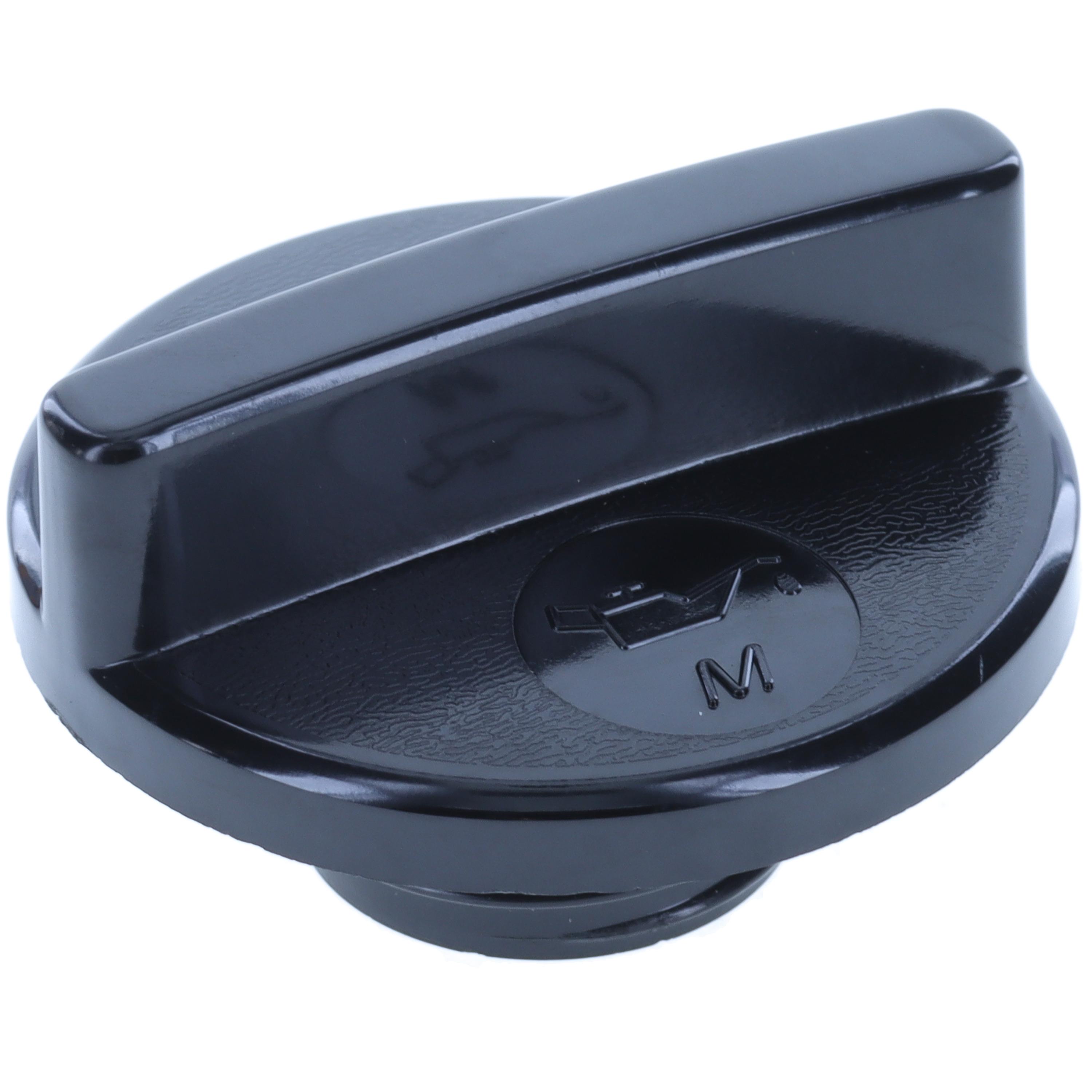
Remove the oil fill cap on top of the engine. Use a funnel to pour in the required amount (5.375 quarts for V6, 6.875 quarts for V8). It is often safer to add slightly less than the full amount (e.g., 5 quarts for the V6), check the level, and then top off to reach the "Full" mark on the dipstick.
6. Verification and Cleanup
Replace the oil cap and start the engine. Let it idle for 1–2 minutes while checking underneath for any leaks at the drain plug or filter. Turn off the engine and let it sit for at least 5 minutes to allow the oil to settle back into the pan. Pull the dipstick, wipe it clean, re-insert it fully, and pull it again to check the level. It should be between the "Low" and "Full" marks (often indicated by two holes or a hatched area).
The Importance of the Oil Filter
A common mistake is focusing solely on the oil capacity while neglecting the filter. The 2012 Pathfinder utilizes a spin-on canister filter. For the 4.0L V6, the filter is relatively small for the engine displacement, which means it can reach its "dirt-holding capacity" quickly if you use low-quality filters.
In 2026, with the availability of high-efficiency synthetic media filters, it is wise to choose a filter rated for 10,000+ miles, even if you change your oil every 5,000 miles. Brands like Wix (XP series), Mobil 1, or Nissan OEM (15208-9E01A) are highly regarded for these engines. A high-quality filter ensures that the bypass valve functions correctly during cold starts, preventing unfiltered oil from circulating through the engine.
Troubleshooting Common Issues
The Oil Level is Too High
If you accidentally poured 6 quarts into a V6 engine, you have overfilled it. Overfilling can cause "foaming" or aeration of the oil as the crankshaft hits the oil surface. Aerated oil does not lubricate effectively and can lead to increased pressure on seals. If the level is more than 1/4 inch above the "Full" mark, drain the excess.
The Oil Pressure Light Flickers
If the oil pressure light on the dashboard flickers at idle after an oil change, immediately turn off the engine. Check the oil level first. If the level is correct, the issue may be a faulty oil pressure sending unit (a common high-mileage failure on the VQ40DE) or an improperly seated oil filter.
Oil Leaks after Change
The most common source of leaks after a DIY change is the reuse of the old crush washer. These washers are "one-time use" because they deform to create a perfect seal. If you see a drip at the plug, you will likely need to drain the oil into a clean container, replace the washer, and refill.
Maintenance Schedules for 2026
Given that a 2012 Pathfinder is a high-mileage vehicle by 2026 standards, the "Severe Service" schedule is often the most appropriate.
- Normal Driving: Change oil and filter every 7,500 miles or 6 months.
- Severe Driving (Towing, Off-roading, Short Trips): Change oil and filter every 3,750 to 5,000 miles.
Regularly checking your oil level is crucial. Older VQ and VK engines may consume a small amount of oil (up to 1 quart every 1,500–2,000 miles) depending on the condition of the piston rings and valve stem seals. Checking the dipstick every second fuel fill-up is a best practice for vehicles of this vintage.
Frequently Asked Questions
Can I use 0W-20 in my 2012 Pathfinder?
No, 0W-20 is generally too thin for the tolerances of the VQ40DE and VK56DE engines. While many modern cars use 0W-20 for fuel economy, the 2012 Pathfinder was engineered for 5W-30. Using a thinner oil may result in increased engine noise and insufficient protection at high operating temperatures.
How do I reset the oil maintenance light?
On the 2012 Pathfinder, you can reset the maintenance reminder through the instrument cluster or the infotainment screen (if equipped with navigation). Use the "Info" or "Setting" buttons on the dash to navigate to the "Maintenance" menu, select "Engine Oil," and choose the "Reset" option.
What happens if I put 5 quarts in my V8 Pathfinder?
Putting only 5 quarts in the 5.6L V8 would leave it nearly 2 quarts low. This is dangerous as it reduces the oil's ability to dissipate heat and can lead to oil starvation during cornering or steep inclines. Always ensure you have the full 6.875 quarts for the V8.
Is it necessary to change the crush washer every time?
While you can sometimes get away with reusing it, it is not recommended. A new crush washer costs less than a dollar and is the primary defense against a leaking drain plug. Replacing it ensures a leak-free seal and prevents you from over-tightening the plug to stop a leak.
Why is the V6 oil capacity a fraction (5.375)?
The fractional capacity is a result of the conversion from liters (5.1L) to quarts. When buying oil, it is easiest to buy a 5-quart jug and one individual quart. You will use about 1/3 of the second quart to reach the proper level.
Final Recommendation
To keep your 2012 Nissan Pathfinder running reliably in 2026, prioritize high-quality 5W-30 full synthetic oil and a premium filter. For the V6 engine, keep 5.5 quarts on hand; for the V8, ensure you have 7 quarts. Always replace the drain plug crush washer and check your dipstick regularly between changes. By adhering to these specific capacities and maintenance steps, you can ensure your Pathfinder continues to handle both daily commutes and off-road adventures for years to come.