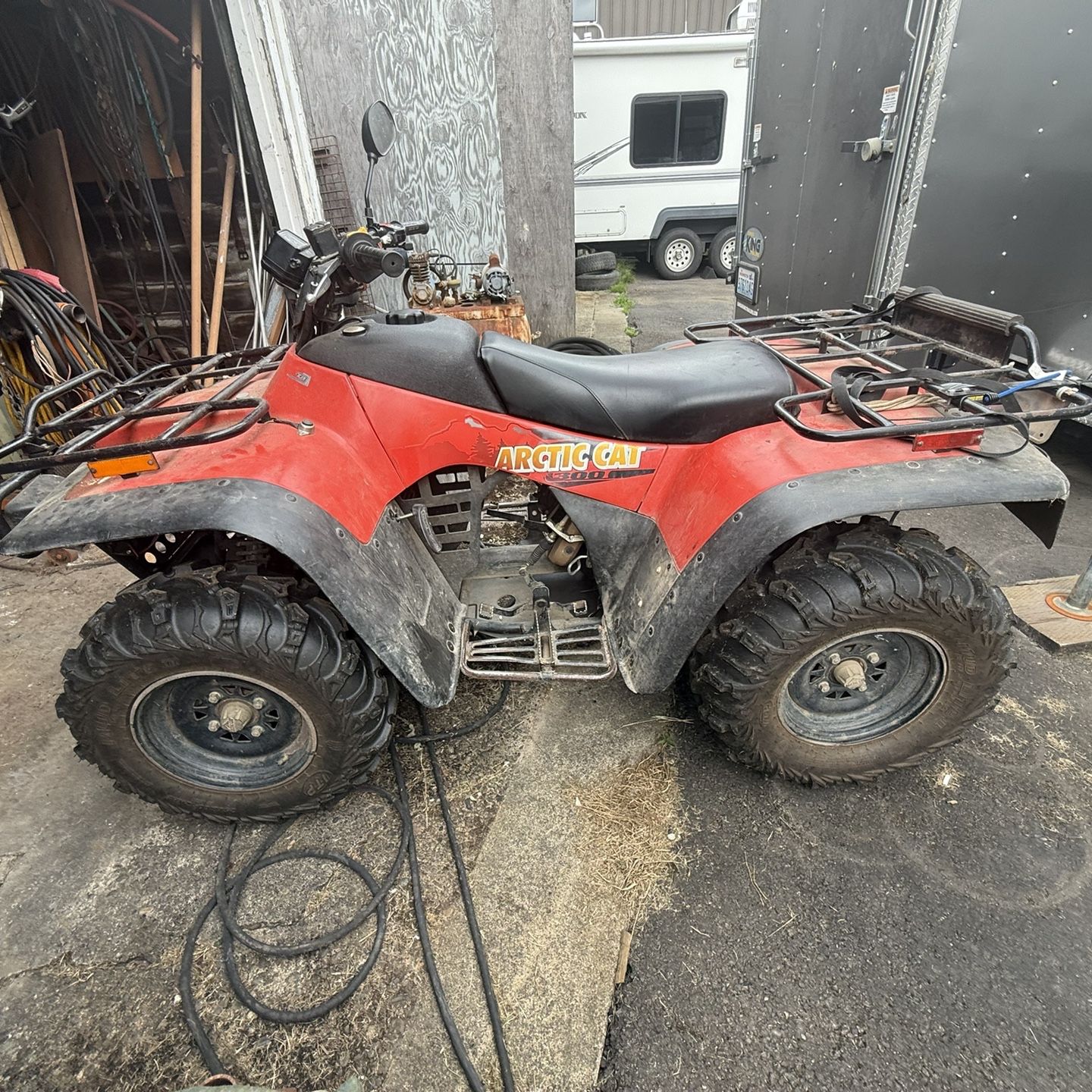
The 2001 Arctic Cat 300 is a mid-sized utility ATV featuring a 280cc, four-stroke Suzuki-sourced engine, an innovative-for-its-time four-wheel independent suspension, and a versatile 5-speed transmission with three sub-transmission ranges. As of 2026, it remains a highly regarded legacy machine for budget-conscious hobbyists and small-property owners due to its mechanical simplicity, exceptional ground clearance, and rugged construction.
The Legacy of the 2001 Arctic Cat 300
When the 2001 Arctic Cat 300 was released, the ATV market was in a state of rapid transition. Arctic Cat, a brand historically synonymous with snowmobiles, had been aggressively carving out a niche in the off-road vehicle market since the mid-1990s. The 300 model was designed to bridge the gap between small-displacement "sport" utilities and the heavy, expensive "big bore" machines.
In the landscape of 2001, most 300-class ATVs were built with cost-cutting in mind, often featuring solid rear axles and limited suspension travel. Arctic Cat defied this trend by equipping the 300 with features typically reserved for flagship models. This included a fully independent rear suspension (IRS), which provided a level of ride comfort and technical climbing ability that was nearly unheard of in its displacement class. Today, in 2026, these design choices have allowed the 2001 Arctic Cat 300 to remain relevant as a dependable workhorse on farms and trails, even as modern machines become increasingly complex and reliant on electronic sensors.
Engine and Powerplant Specifications
The heart of the 2001 Arctic Cat 300 is its 280cc, four-stroke, single-cylinder engine. This powerplant was not designed in-house by Arctic Cat but was instead sourced through a strategic partnership with Suzuki. This engine is essentially the same unit found in the legendary Suzuki KingQuad 300 of the same era, a fact that remains a major selling point for owners seeking reliable spare parts and proven longevity.
Technical Engine Breakdown
The engine utilizes a Single Overhead Cam (SOHC) design with a four-valve cylinder head. The four-valve configuration was a significant technical advantage, as it allowed the engine to "breathe" more efficiently than the two-valve designs common in many entry-level ATVs. By increasing the surface area for intake and exhaust, the engine could maintain better torque across a wider RPM range.
The cooling system is an air-and-oil-cooled hybrid. While it lacks the radiator and water pump of a liquid-cooled machine, it features a robust oil cooler mounted high on the frame to protect it from mud and debris. This design simplifies maintenance—eliminating the risk of coolant leaks or water pump failure—while still providing enough thermal management to handle long days of low-speed chore work in the summer heat.
Fuel Delivery and Ignition
Fueling is handled by a Mikuni BST31 carburetor. In 2026, many enthusiasts appreciate this mechanical setup over modern Electronic Fuel Injection (EFI) because it can be serviced with basic hand tools. However, it does require periodic cleaning and is sensitive to the ethanol-blended fuels common in modern pumps. The ignition is a standard Capacitor Discharge Ignition (CDI) system, which is generally maintenance-free but can be a point of failure if the electrical connectors are allowed to corrode.
Transmission and Drivetrain Versatility
Perhaps the most unique aspect of the 2001 Arctic Cat 300 is its sophisticated drivetrain. Unlike many modern ATVs that use a Continuously Variable Transmission (CVT) with a rubber belt, the 300 features a 5-speed manual-shift transmission with an automatic centrifugal clutch.
The Power of the Sub-Transmission
The machine is equipped with a unique "three-range" sub-transmission. This allows the rider to select between High, Low, and Super-Low ranges via a secondary lever. When combined with the 5-speed gearbox, the rider effectively has 15 different forward gear ratios to choose from.
- High Range: Used for general trail riding and reaching the machine's top speed of approximately 40–45 mph.
- Low Range: Ideal for moderate hills and light towing.
- Super-Low Range: Designed for heavy-duty work, such as pulling a loaded trailer or navigating extremely technical, rocky terrain where "creeping" speed is essential.
This geared transmission is particularly prized by those who use their ATVs for heavy labor. Because there is no CVT belt to slip or burn up under load, the 2001 Arctic Cat 300 can apply its torque to the ground with much higher efficiency during low-speed, high-stress tasks.
4WD Engagement
The 4x4 model features a mechanical lever to engage the front wheels. It is a true 4WD system, although it lacks a locking front differential, meaning power is usually sent to three wheels in extremely slippery conditions (two in the rear, one in the front). There was also a 2x4 variant of the 300 produced, which was lighter and more nimble but lacked the "Super-Low" range and the extreme utility of its 4WD sibling.
Chassis, Suspension, and Handling
One of the primary reasons the 2001 Arctic Cat 300 was considered "best in class" at its launch was the chassis design. Arctic Cat focused on ground clearance and suspension travel to ensure the machine wouldn't get "high-centered" in deep ruts or mud.
Independent Suspension (IRS)
The 2001 model features double A-arm suspension in the front and a fully independent ACT (Arctic Cat Technology) rear suspension. The IRS allows each rear wheel to move vertically without affecting the other. In practical terms, this means that if the left rear wheel hits a rock, the chassis remains stable while the suspension absorbs the impact. In contrast, a solid-axle machine would tip the entire vehicle to the side.
The suspension provides roughly 6.5 inches of travel at both the front and rear. While this may seem modest by 2026 "long-travel" standards, the geometry allowed for a class-leading 10.5 inches of ground clearance. This height is a critical advantage when navigating wooded trails or farm fields where stumps and rocks are prevalent.
Braking and Tires
The braking system consists of dual hydraulic discs in the front and a single hydraulic disc in the rear. Unlike older drum-brake systems, these discs offer consistent stopping power even after being submerged in water or mud. The stock tire size was 24x8-12 in the front and 25x10-12 in the rear, a staggered setup that provided a balance of steering precision and rear-end flotation.
Technical Specifications Table
| Feature | Specification |
|---|---|
| Engine Type | 280cc, 4-Stroke, SOHC, 4-Valve |
| Cooling System | Air/Oil Cooled |
| Bore x Stroke | 68.5 mm x 71.0 mm |
| Transmission | 5-Speed Manual with Auto-Clutch |
| Sub-Transmission | High, Low, Super-Low Ranges |
| Drive System | Selectable 2WD/4WD (Shaft Drive) |
| Front Suspension | Double A-Arm (6.5" travel) |
| Rear Suspension | Independent (6.5" travel) |
| Ground Clearance | 10.5 Inches |
| Dry Weight | Approx. 600 lbs (4x4 model) |
| Fuel Capacity | 4.75 Gallons (18 Liters) |
| Front Rack Capacity | 75 lbs |
| Rear Rack Capacity | 150 lbs |
| Towing Capacity | 850 lbs |
Ownership and Maintenance in 2026
Buying a 2001 Arctic Cat 300 in 2026 requires a different mindset than buying a new vehicle. After a quarter-century of existence, the condition of these machines depends entirely on how they were stored and maintained.
Common "Gremlins" to Watch For
While the Suzuki engine is nearly bulletproof, several age-related issues are common:
- Fuel Petcock Leaks: The vacuum-operated fuel valves are notorious for failing, which can lead to fuel leaking into the crankcase. Many owners replace these with manual "on/off" valves.
- Suspension Bushings: Because the 300 has so many pivot points due to the IRS, the rubber and plastic bushings can wear out, leading to "sloppy" handling or squeaking.
- CV Boots: The independent suspension uses Constant Velocity (CV) axles. If the rubber boots tear and are not replaced, mud and grit will destroy the joints.
- Carburetor Gumming: If the machine has sat for several months with modern ethanol fuel, the small jets in the Mikuni carb will likely be clogged.
Parts Availability
Fortunately, because this machine shares its engine with the Suzuki KingQuad 300, mechanical engine parts are still widely available through both OEM channels and the aftermarket. Body panels and specific Arctic Cat frame components are becoming harder to find new, often requiring owners to scour salvage yards or online marketplaces for "part-out" units.
Operational Limitations and Suitability
It is important to understand what the 2001 Arctic Cat 300 is not. It is not a high-speed racing machine. With a top speed hovering around 45 mph, it will not keep up with modern sport-utility ATVs like the Can-Am Outlander or Polaris Sportsman on wide-open fire roads. Its suspension, while comfortable, is tuned for utility rather than high-speed jumps.
However, it excels in tight, technical environments. Its relatively narrow width allows it to fit through trails that would block a full-sized 700cc machine. For hunters, it is a quiet, capable vehicle for hauling gear into a stand. For small-scale farmers, it is an ideal tool for towing small trailers, checking fences, or spraying weeds.
Comparison: Arctic Cat 300 vs. The Competition
In 2001, the primary competitors were the Honda FourTrax 300 (and the newer Rancher 350) and the Yamaha Big Bear 400.
- Vs. Honda: The Honda machines were legendary for their reliability but lacked the independent rear suspension of the Arctic Cat. The Honda had a solid rear axle, which was better for heavy tongue weight on the hitch but much harsher on the rider's back and less capable in deep ruts.
- Vs. Yamaha: The Yamaha Big Bear offered a slightly larger engine but, like the Honda, stuck with a semi-independent or solid-axle rear end for its base utility models. The Arctic Cat 300's "Super-Low" gearing gave it a technical climbing advantage that the Yamaha struggled to match without the same gear reduction.
Frequently Asked Questions
What kind of oil does a 2001 Arctic Cat 300 use?
The 2001 Arctic Cat 300 requires a high-quality 10W-40 oil designed specifically for ATVs with wet clutches. It is critical to use oil with a JASO MA rating. Do not use standard automotive motor oil, as "energy-conserving" additives can cause the centrifugal clutch to slip, eventually leading to transmission failure.
How much weight can the 2001 Arctic Cat 300 tow?
The official towing capacity is rated at approximately 850 lbs. However, when using the "Super-Low" range, the machine can move heavier loads on flat ground. Users should be cautious not to exceed the tongue weight limit, as the independent rear suspension will squat significantly under heavy vertical loads, which can affect steering and ground clearance.
Is the 2001 Arctic Cat 300 good for beginners?
Yes, it is an excellent beginner machine. The automatic clutch means the rider does not have to worry about a hand-operated clutch lever, but the manual gear selection teaches the rider how to manage engine power effectively. The 300cc displacement provides enough power to be useful without being so fast that it becomes dangerous for a novice.
Where is the VIN located on a 2001 Arctic Cat 300?
The Vehicle Identification Number (VIN) is typically stamped into the frame on the front left side, near the A-arm mounts, or on the rear frame rail. This 17-digit code is essential for identifying the exact manufacturing date and for ordering specific replacement parts.
Does the 2001 Arctic Cat 300 have a backup starter?
Yes, most models from this era were equipped with a recoil (pull) starter in addition to the electric start. This is a highly valued feature for remote trail riding, as it allows the engine to be started even if the battery is dead or the starter motor fails.
Final Recommendations for Potential Buyers
If you are looking for a reliable, "old-school" ATV in 2026, the 2001 Arctic Cat 300 is a premier choice in the 300cc class. When inspecting a used unit, prioritize the condition of the frame and the CV boots. A well-maintained engine will likely last for decades, but a rusted frame or neglected suspension can be costly to repair.
Focus on finding a machine that has been stored indoors and shows no signs of "milky" oil, which would indicate water ingestion. If you find one in good condition, it will serve as a versatile tool that offers a unique combination of manual-gear control and independent-suspension comfort that few modern entry-level ATVs can replicate.