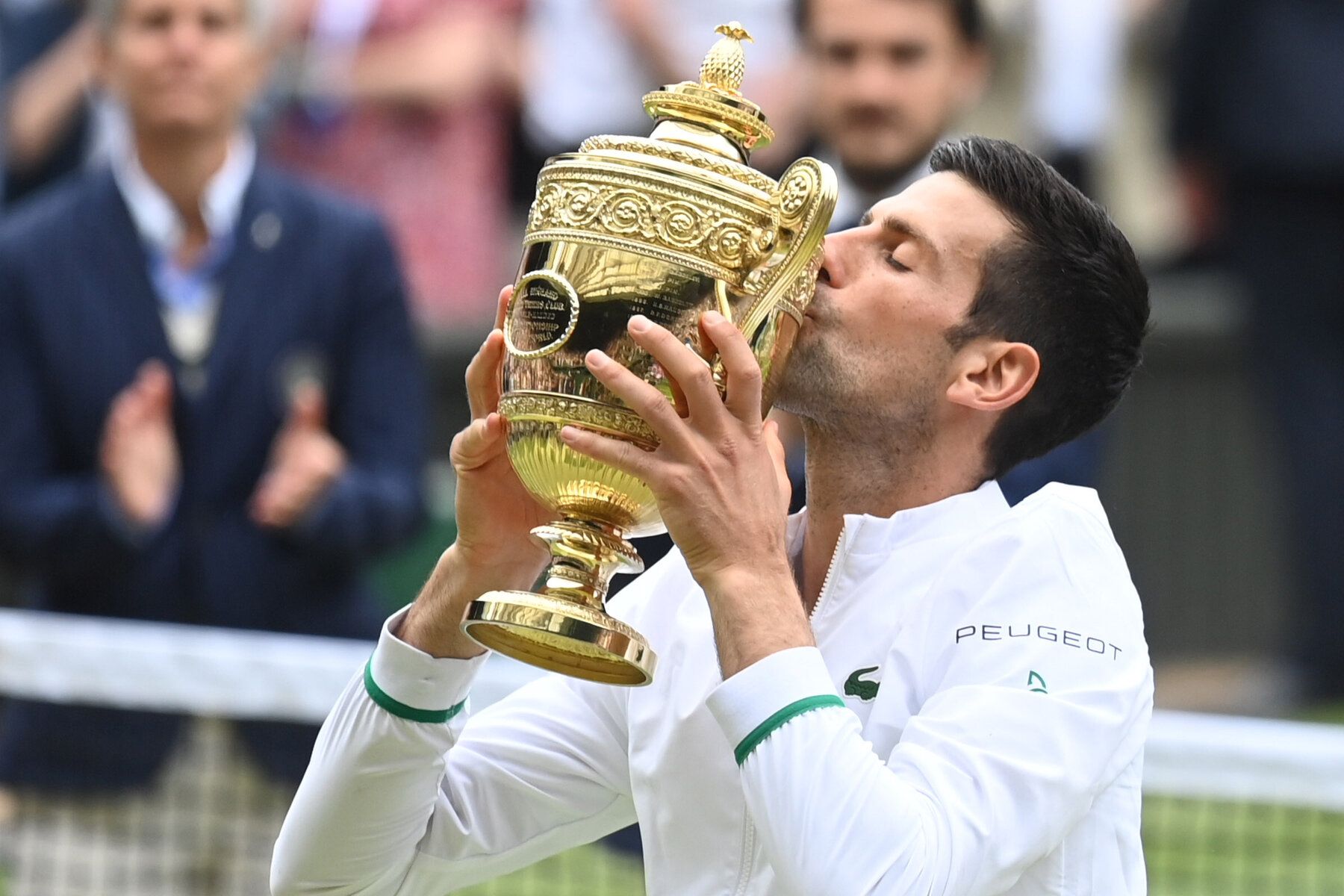
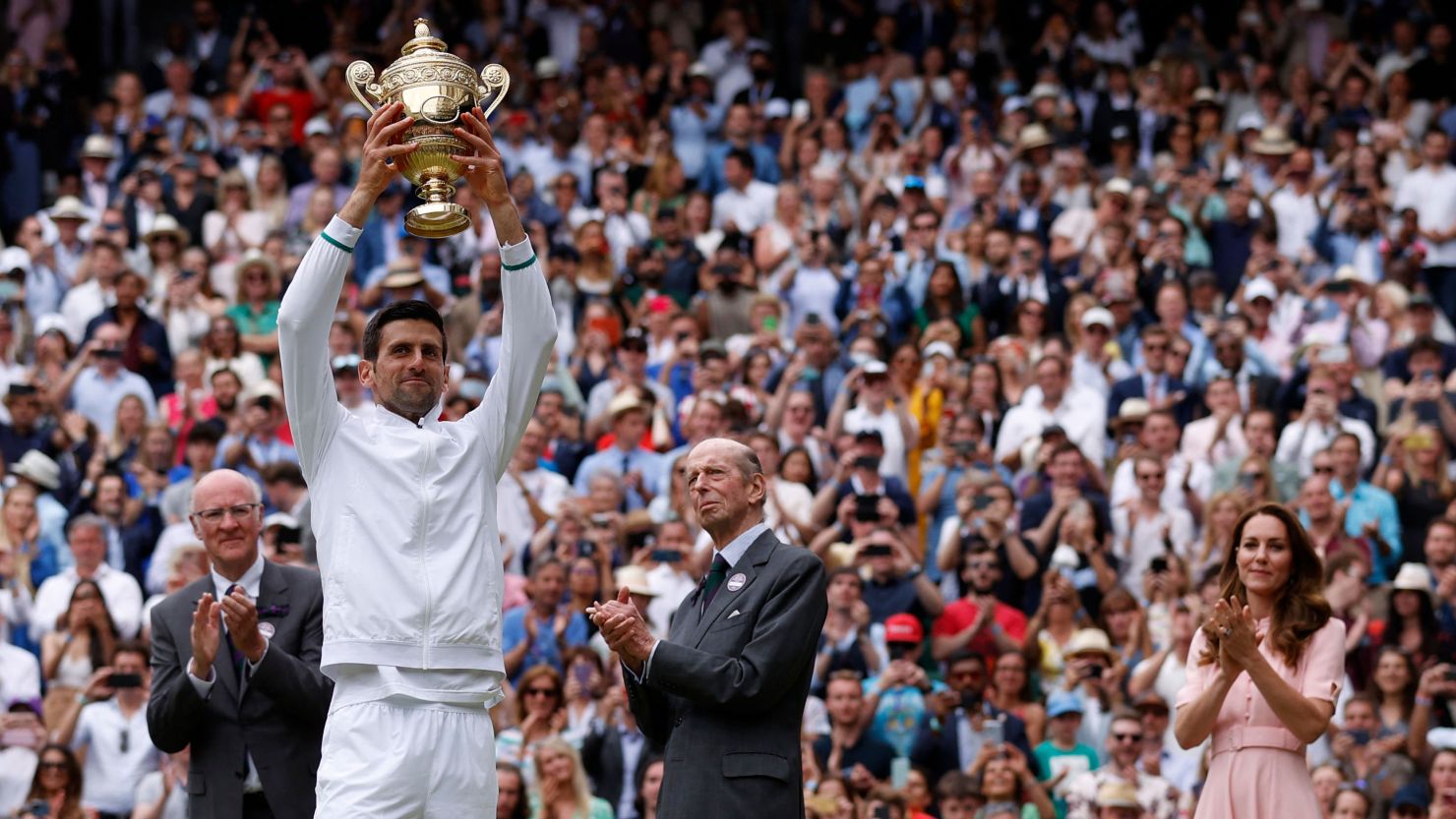
Novak Djokovic secured his sixth Wimbledon title and 20th Grand Slam trophy on July 11, 2021, by defeating Italy's Matteo Berrettini in a four-set final. This victory was historically significant, as it allowed Djokovic to equal the long-standing record of 20 major titles held by Roger Federer and Rafael Nadal.
The 2021 Wimbledon Championships served as a masterclass in defensive resilience and tactical adaptability. As we look back from the vantage point of 2026, the 2021 final stands as one of the most critical turning points in the "Greatest of All Time" (GOAT) debate, marking the moment Djokovic officially drew level with his primary rivals before eventually surpassing them. The tournament was also notable for being the first held after the 2020 cancellation due to the pandemic, and it featured the last professional appearance of Roger Federer at the All England Club.
The Path to the 2021 Championship
Djokovic’s journey to the 2021 final was characterized by a clinical efficiency that had become his trademark. Entering the tournament as the heavy favorite, he was the defending champion from 2019 (the 2020 event having been cancelled). His path through the draw demonstrated not only his physical superiority on grass but also his ability to handle varying styles of play.
In the opening round, Djokovic faced a young Jack Draper. Although Draper managed to unsettle the champion by taking the first set, Djokovic quickly recalibrated, losing only five more games in the remainder of the match. This early scare served as a wake-up call, after which Djokovic did not drop another set until the final.
His victories over veteran Kevin Anderson in the second round and Denis Kudla in the third showcased his return-of-serve dominance. By the time he reached the quarterfinals and semifinals, facing Marton Fucsovics and Denis Shapovalov respectively, Djokovic had mastered the court conditions. The semifinal against Shapovalov was particularly noteworthy; while the scoreline suggested a straight-sets victory (7-6, 7-5, 7-5), the match was highly competitive. Shapovalov pushed Djokovic to the limit in every set, but the Serbian’s ability to win the "big points"—a recurring theme in his career—proved the difference.
The Final: Novak Djokovic vs. Matteo Berrettini
The final on July 11, 2021, pitted the world’s best defender against one of the tour’s most powerful servers. Matteo Berrettini, the first Italian man to reach a Wimbledon singles final, entered the match with a formidable grass-court season, having won the Queen’s Club title just weeks prior.
Set 1: The Italian Surge
The match began with Djokovic looking uncharacteristically nervous. He struggled with his ball toss and committed several double faults early on. Despite these jitters, he managed to build a 5-2 lead and held set points. However, Berrettini’s massive forehand began to find its mark. The Italian broke back and forced a tiebreak, which he won 7-4 with a 138-mph ace. The crowd at Centre Court, largely rooting for the underdog, erupted as the "Big Three" hegemony seemed momentarily under threat.
Set 2 and 3: The Djokovic Response
Djokovic responded with the "cold-blooded" efficiency that has defined his late-career resurgence. He immediately broke Berrettini at the start of the second set, racing to a 4-0 lead. While Berrettini attempted a late-set comeback, Djokovic closed it out 6-4.
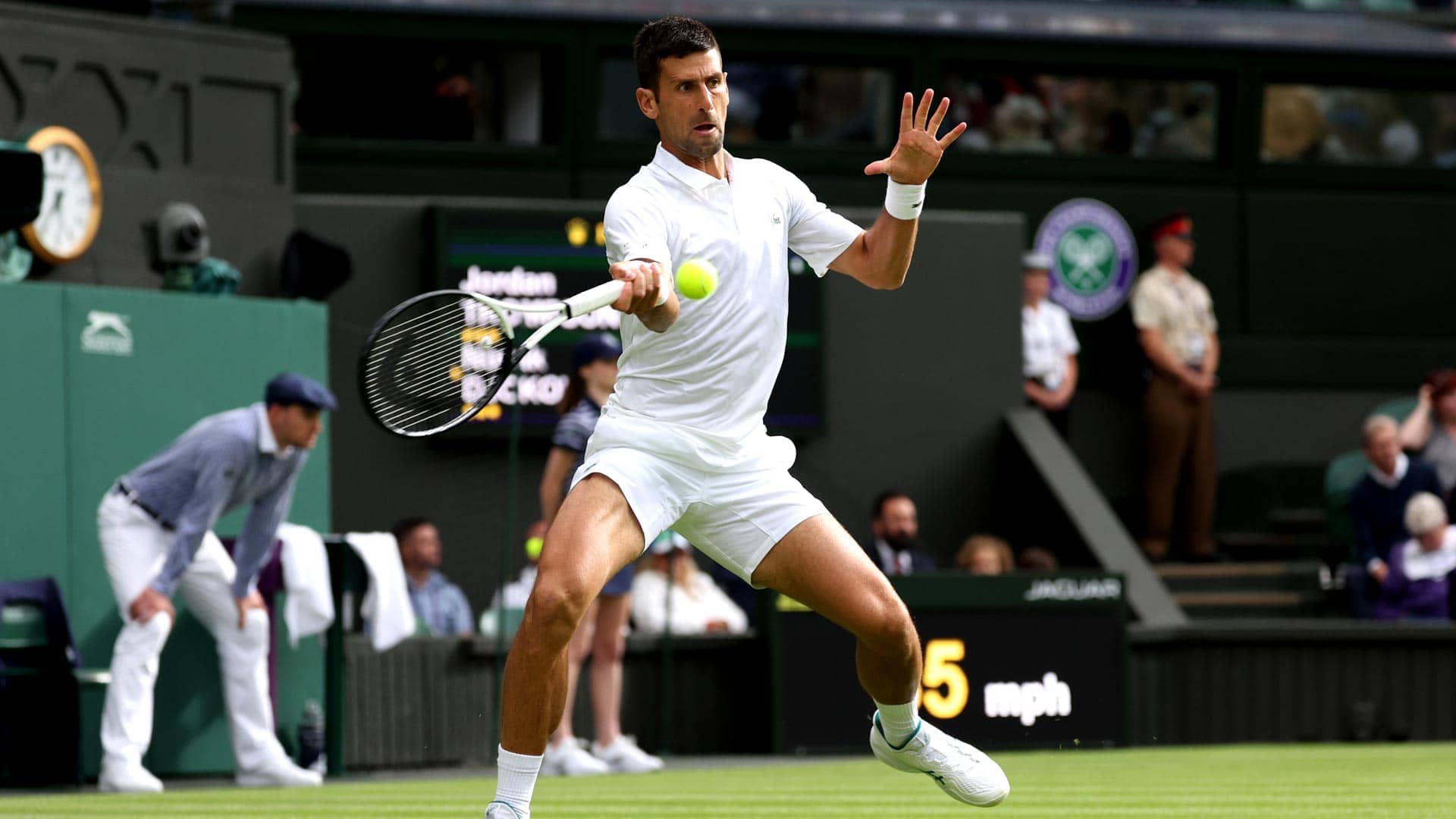
The third set followed a similar pattern. Djokovic’s return of serve—widely considered the greatest in the history of the sport—neutralized Berrettini’s primary weapon. By standing deep and using a short, compact backswing, Djokovic was able to put 130-mph serves back at the Italian's feet, forcing him into uncomfortable low volleys or rushed groundstrokes. Djokovic took the third set 6-4, shifting the momentum entirely in his favor.
Set 4: Sealing the Record
By the fourth set, the physical toll of maintaining such high-intensity power was visible on Berrettini. Djokovic, meanwhile, seemed to have found his "Zen" state. He broke Berrettini in the seventh game of the set and remained unbreakable on his own serve. He closed out the match 6-3, falling to the grass in celebration as he secured his third consecutive Grand Slam of the 2021 season.
Technical Analysis of Djokovic’s Grass Court Dominance
To understand how Djokovic won Wimbledon 2021, one must look at the technical evolution of his game on grass. Traditionally a hard-court specialist, Djokovic transformed himself into a grass-court titan by mastering three specific areas:
- The Slide and Balance: Djokovic is unique in his ability to slide on grass as if it were clay. While most players fear losing their footing on the slick surface, Djokovic uses a controlled slide to reach wide balls, allowing him to stay in rallies that other players would lose. In the 2021 final, this was crucial in neutralizing Berrettini’s cross-court forehand.
- The Return Depth: Against a player like Berrettini, who relies on the "plus-one" (a big serve followed by a finishing forehand), the depth of the return is everything. Djokovic consistently hit his returns within two feet of the baseline, preventing Berrettini from stepping into the court.
- The Second Serve Evolution: Djokovic’s second serve in 2021 was significantly improved in terms of placement and kick. He utilized the "T" serve on the deuce side to keep Berrettini guessing, preventing the Italian from teeing up on second-serve returns.
Match Statistics: 2021 Wimbledon Men's Final
The following table provides a breakdown of the key metrics from the championship match:
| Statistic | Novak Djokovic (Winner) | Matteo Berrettini |
|---|---|---|
| Final Score | 6-7(4), 6-4, 6-4, 6-3 | 7-6(4), 4-6, 4-6, 3-6 |
| Aces | 5 | 16 |
| Double Faults | 4 | 3 |
| 1st Serve % | 61% | 61% |
| Winners | 31 | 57 |
| Unforced Errors | 21 | 48 |
| Net Points Won | 18/28 (64%) | 31/46 (67%) |
| Break Points Won | 6/15 (40%) | 2/7 (29%) |
| Total Points Won | 145 | 131 |
The statistics reveal a classic Djokovic victory: while Berrettini had more winners (57 to 31), he also committed more than double the unforced errors. Djokovic’s ability to force the opponent into one extra shot eventually broke the Italian’s resistance.
The Historical Significance of "Number 20"
The 2021 Wimbledon title was not just another trophy; it was a mathematical equalization of the sport's greatest rivalry. For over a decade, Roger Federer had held the record for most men's Grand Slams. Rafael Nadal had equaled him at Roland Garros 2020. By winning Wimbledon 2021, Djokovic made it a three-way tie at 20 titles each.
This moment was the peak of the "Big Three" era. It also set the stage for the 2021 US Open, where Djokovic attempted to achieve the "Calendar Grand Slam"—winning all four majors in a single year—a feat not achieved in the men's game since Rod Laver in 1969. Although he fell just short in the US Open final against Daniil Medvedev, the Wimbledon victory remained the crown jewel of his 2021 season.
From the perspective of 2026, we see this win as the foundation of the modern "Djokovic Era." Since 2021, the landscape of men's tennis has shifted, but the technical blueprints Djokovic utilized during that Wimbledon run—focusing on flexibility, return precision, and mental fortitude—remain the gold standard for success on grass.
Equipment and Conditioning in 2021
Djokovic’s success was also supported by a highly specific equipment setup and a rigorous conditioning regimen. In 2021, he was using a customized version of the Head Speed Pro racquet. The racquet was leaded up to provide more stability against heavy hitters like Berrettini, while his string setup (a hybrid of natural gut and Luxilon Alu Power) provided a balance of feel and spin.
Physically, Djokovic was at his peak at age 34. His diet—strictly plant-based and gluten-free—was often cited as the reason for his superior recovery times. During the 2021 tournament, London experienced varied humidity levels, which can affect the speed of the grass. Djokovic’s team, including coach Marian Vajda and Goran Ivanisevic (himself a Wimbledon legend), prepared him for these fluctuations, ensuring his footwork was adjusted for both the "slicker" early-round grass and the "dustier" late-round baselines.
Frequently Asked Questions
Who did Novak Djokovic beat in the 2021 Wimbledon final?
Novak Djokovic defeated Matteo Berrettini of Italy. The match took place on July 11, 2021, on Centre Court at the All England Lawn Tennis and Croquet Club. Berrettini was the first Italian to reach a Wimbledon singles final, but he was unable to overcome Djokovic's defensive prowess.
How many Wimbledon titles did Djokovic have after 2021?
After the 2021 victory, Novak Djokovic had a total of six Wimbledon titles (2011, 2014, 2015, 2018, 2019, and 2021). This put him just one behind William Renshaw and Pete Sampras (7), and two behind Roger Federer (8) at that specific time in his career.
What was the significance of the 2021 win for the "Big Three"?
The 2021 Wimbledon win was the moment Novak Djokovic reached 20 Grand Slam titles, creating a three-way tie with Roger Federer and Rafael Nadal. It was the first time in history that three active players concurrently held 20 major titles each, marking the height of the most competitive era in tennis history.
Did Djokovic lose any sets during the 2021 Wimbledon tournament?
Yes, Djokovic lost two sets during the entire tournament. He lost the first set of his opening-round match against Jack Draper (4-6) and the first set of the final against Matteo Berrettini (6-7). He won every other set he played during the championship.
What surface was the 2021 Wimbledon played on?
Like all Wimbledon championships, the 2021 event was played on outdoor grass courts. The specific grass used is 100% Perennial Ryegrass, maintained at a height of exactly 8mm to ensure consistent bounce and speed.
Strategic Recommendations for Analyzing Historic Matches
For researchers or fans looking to analyze the 2021 Wimbledon final or similar high-stakes matches, the following steps are recommended:
- Analyze Return Placement: Look at "Return Heat Maps" provided by official ATP or Wimbledon data. Notice how Djokovic targets the server's feet rather than looking for winners.
- Examine Unforced Error Ratios: In championship matches involving Djokovic, the key is often the "forced error" vs "unforced error" count. His strategy is to increase the opponent's "forced error" count through deep, heavy hitting.
- Review Set Transition: Pay close attention to the first two games of the second set if the champion loses the first set. Djokovic’s ability to secure an early break in the second set is a consistent tactical pattern in his major wins.
- Consult Official Records: For the most accurate data, always refer to the Wimbledon Official Website or the ATP Tour archives, which provide point-by-point breakdowns of the 2021 final.