In clinical coding, there is no single "all-in-one" code that captures both the diagnosis of coronary artery disease (CAD) and the presence of a stent in a single alphanumeric string. Instead, the most accurate coding for a patient with CAD and a history of stent placement involves using I25.10 for atherosclerotic heart disease of a native coronary artery without angina pectoris, paired with the status code Z95.5, which indicates the presence of a coronary angioplasty implant and graft.
The coding landscape for cardiovascular services in 2026 demands a high level of specificity regarding the location of the disease, the presence of angina, and the exact type of device used during the revascularization procedure. Whether you are coding for a follow-up encounter or a new surgical intervention, understanding the hierarchy of ICD-10-CM (diagnosis) and ICD-10-PCS (procedural) codes is essential for compliance and accurate reimbursement.
The Foundations of CAD Coding: The I25 Category
Coronary Artery Disease (CAD), often documented as atherosclerosis, is the primary reason for coronary stent placement. In the ICD-10-CM system, CAD is classified under the I25 category, titled "Chronic ischemic heart disease."
Native vs. Bypass Grafts
The first distinction a coder must make is whether the CAD is occurring in a native artery or a previous bypass graft.
- I25.1- Series: This is used for atherosclerosis of native coronary arteries.
- I25.7- Series: This is used for atherosclerosis of coronary artery bypass grafts (CABG), transplanted hearts, and other specified grafts.
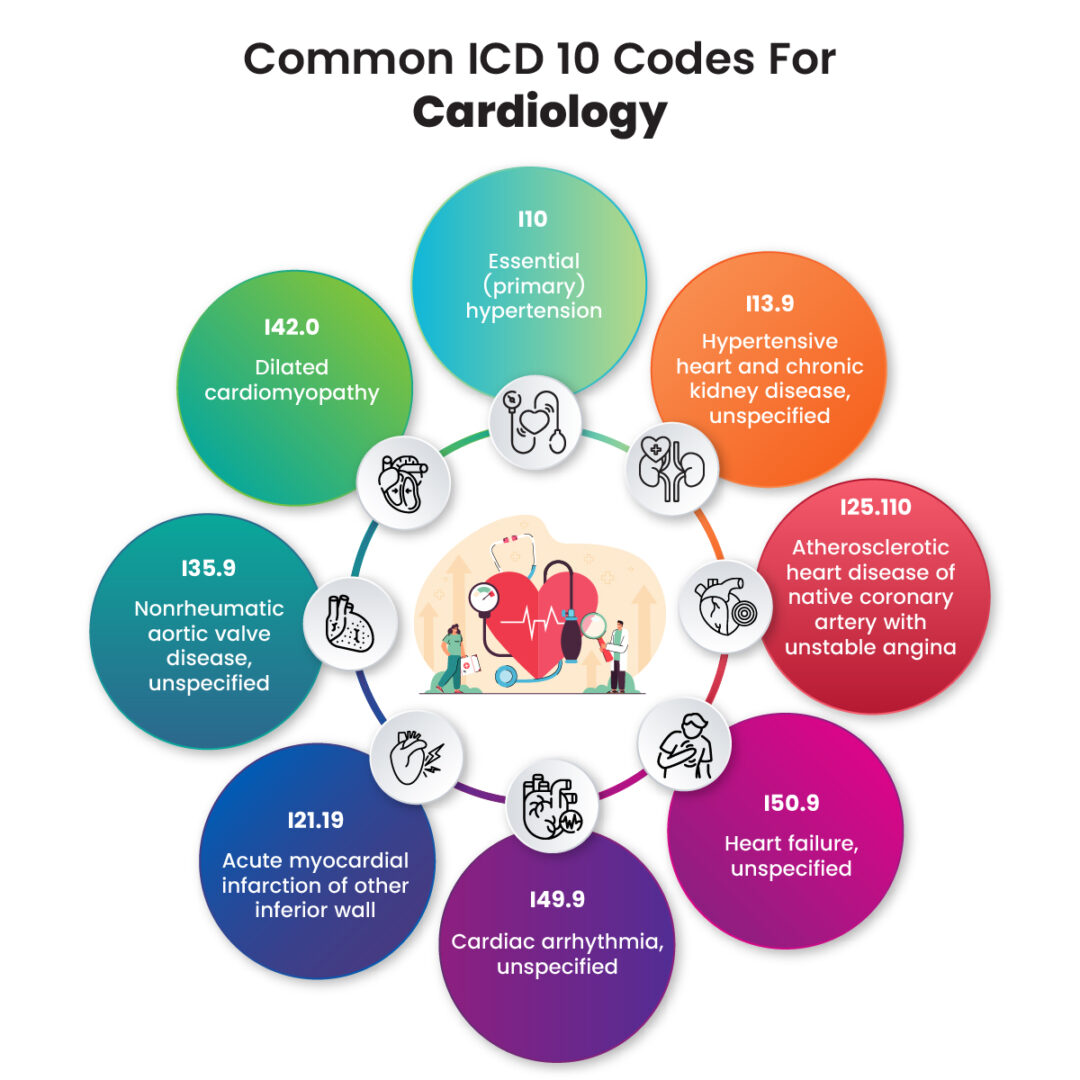
For the vast majority of patients receiving their first or second stent in their natural arteries, the I25.10 code is the default starting point. However, if the patient has documented angina pectoris, the code must be expanded to the fourth or fifth character to indicate the specific type of angina (e.g., I25.110 for CAD with unstable angina).
The "Combination Code" Rule
One of the most important rules in ICD-10-CM coding is the use of combination codes. When a patient has both CAD and angina, the system provides a single code that covers both. For example, you should not code I25.10 and I20.0 (Unstable angina) separately. Instead, you must use I25.110. This internal logic streamlines the reporting of chronic conditions but requires clinicians to provide detailed documentation regarding the stability of the patient's chest pain.
The Role of the Status Code: Z95.5
When a patient has a stent previously placed, they are no longer just a "CAD patient"; they are a "CAD patient with a history of intervention." In 2026, healthcare payers and risk-adjustment models (such as HCC coding) look specifically for status codes to understand the complexity of the patient's history.
The code Z95.5 (Presence of coronary artery angioplasty implant and graft) is used to indicate that the patient has a stent in place.
Why Z95.5 is Required
- Clinical History: It informs future providers that the patient has hardware in the coronary anatomy, which may influence future diagnostic tests like MRIs or repeat catheterizations.
- Medical Necessity: For follow-up visits (e.g., a six-month post-stent check-up), using Z95.5 alongside I25.10 justifies the medical necessity of the encounter and any associated diagnostic tests like an EKG or stress test.
- Exclusions: Note that Z95.5 should not be used if the encounter is for the actual placement of the stent; it is used for the presence of the device after the procedure has been completed.
Coding the Procedure: ICD-10-PCS for Stent Placement
If the "stent placement" is happening during the current encounter, the diagnosis code (I25.10) must be supported by a procedural code from the ICD-10-PCS system. In 2026, procedural coding remains highly granular, focusing on the root operation, the body part, the approach, and the specific device.
The Root Operation: Dilation
In ICD-10-PCS, stent placement is not coded as "insertion." Instead, it is classified under the root operation Dilation (7). The logic is that the primary goal of the procedure is to expand the lumen of the coronary artery.
The code structure for a coronary stent placement usually begins with 027, representing:
- 0: Medical and Surgical Section
- 2: Heart and Great Vessels
- 7: Dilation (Root Operation)
Identifying the Number of Arteries
The fourth character of the PCS code identifies how many coronary artery sites were treated. It is important to note that ICD-10-PCS counts sites, not necessarily individual branches, although in many cases they align.
- 0270: One artery site
- 0271: Two artery sites
- 0272: Three artery sites
Device Characters: Drug-Eluting vs. Bare Metal
The sixth character of the PCS code identifies the device. This is a critical distinction for hospital reimbursement and inventory tracking.
- 4: Intraluminal Device, Drug-Eluting (DES)
- 5: Intraluminal Device, Bare Metal (BMS)
- D: Intraluminal Device, Radioactive
A common code for a single drug-eluting stent placed in a native coronary artery via a percutaneous approach would be 027034Z.
Clinical Scenarios and Coding Examples
To better understand how these codes interact, consider the following common clinical scenarios encountered in 2026.
| Scenario | Primary Diagnosis | Secondary/Status Code | Procedure Code (If applicable) |
|---|---|---|---|
| New Diagnosis: Patient has CAD and is receiving their first drug-eluting stent today. | I25.10 (CAD, native) | N/A | 027034Z (Dilation with DES) |
| Follow-up: Patient had a stent placed 2 years ago; seen today for routine CAD management. | I25.10 (CAD, native) | Z95.5 (Presence of stent) | N/A |
| Bypass Patient: Patient with a history of CABG now has a new blockage in the graft requiring a stent. | I25.700 (Atherosclerosis of CABG with unstable angina) | Z95.1 (Presence of aortocoronary bypass graft) | 027034Z |
| Acute MI: Patient arrives with a STEMI; a stent is placed in the LAD to stop the heart attack. | I21.09 (STEMI involving other coronary artery) | N/A | 027034Z |
Documentation Requirements for 2026
For a coder to select the correct "1 code" (or combination) for CAD with stent placement, the physician's documentation must be precise. Vague documentation leads to "unspecified" codes, which are frequently flagged by insurance carriers for additional review.
1. Specification of the Artery
The documentation should clearly state whether the disease is in a native artery, an autologous venous graft (like a saphenous vein graft), or a non-autologous graft. If the location is not specified, the coder is forced to default to I25.10, which may not accurately reflect the patient's surgical history.
2. Status of Angina
Is the patient asymptomatic? Do they have stable exertional angina? Or is the angina unstable? Because the ICD-10-CM system utilizes combination codes for CAD and angina, the absence of this information prevents the use of the most specific code available.
3. Procedure Details (The "PCS" Factors)
For the surgical coder, the operative report must include:
- The approach (e.g., percutaneous via femoral artery vs. open).
- The number of sites dilated.
- The type of stent (Drug-eluting, Bare metal, or Bioresorbable).
Common Pitfalls in Coding CAD and Stents
Despite the maturity of the ICD-10 system, several common errors persist in 2026 that can impact data integrity and financial outcomes.
Overuse of Z95.5
A common mistake is using Z95.5 as the primary diagnosis. Status codes are almost always "supplemental." The primary code should describe the condition being treated (the CAD), while the Z-code provides context about the patient's history.
Confusion with PTCA without Stent
Sometimes a patient undergoes a Percutaneous Transluminal Coronary Angioplasty (PTCA) where a balloon is used to widen the artery, but no stent is left behind. In this case, the procedural code character for the device would be Z (No Device) instead of 4 or 5. Using the stent-specific code for a non-stent procedure is a compliance risk.
Ignoring the "Excludes1" Notes
In the ICD-10-CM manual, certain codes cannot be reported together. For example, there are specific "Excludes1" notes for atherosclerotic heart disease that prevent coding certain types of chronic ischemic heart disease with acute forms of the disease unless specific criteria are met. Always check the tabular list for these instructional notes.
Frequently Asked Questions
Is there a specific ICD-10 code for a clogged stent?
Yes. If a stent becomes blocked (restenosis), it is no longer coded as simple CAD. Instead, you would use a code from the T82.8- series (Complications of cardiac and vascular prosthetic devices, implants and grafts). Specifically, T82.855A (Stenosis of coronary artery stent) is often used, followed by the CAD code.
Should I code Z95.5 if the patient has a pacemaker?
No. Z95.5 is specific to coronary angioplasty implants (stents). If the patient has a pacemaker, you would use Z95.0 (Presence of cardiac pacemaker). If they have both, you may use both status codes to provide a complete clinical picture.
What is the difference between I25.10 and I25.110?
I25.10 is for CAD in a native artery without any angina pectoris. I25.110 is a combination code that signifies the patient has CAD in a native artery and that they are currently experiencing unstable angina.
Do I need to code the specific artery (like LAD or RCA)?
While the ICD-10-CM diagnosis codes (I25.1-) do not currently require identifying the specific branch (LAD vs. RCA), the ICD-10-PCS procedural codes do require you to identify the number of sites. Furthermore, clinical documentation that specifies the artery is highly valuable for medical necessity and future surgical planning.
Can I use Z98.61 for stent placement?
Z98.61 (Coronary angioplasty status) is a valid code but is often considered redundant if Z95.5 is used. Most coding guidelines prefer Z95.5 because it specifically mentions the "implant" (stent), whereas Z98.61 refers to the procedure of angioplasty which may or may not have included a stent.
Summary and Next Actions
Accurately coding for CAD with stent placement requires a two-pronged approach: identifying the current state of the disease (ICD-10-CM) and detailing the intervention used to treat it (ICD-10-PCS).
For most clinical scenarios in 2026, the primary diagnosis will be I25.10 (for native artery CAD), accompanied by Z95.5 to denote the presence of the stent. If a procedure is being performed, the coder must select a "Dilation" code from the 027 series in the PCS manual, ensuring the device character (4 for DES, 5 for BMS) matches the surgical record.
Practical Recommendations:
- Review the Operative Report: Never code a stent type based on "common practice." Verify in the report if it was Drug-Eluting or Bare Metal.
- Verify Angina Status: Check the "History of Present Illness" (HPI) and "Assessment and Plan" to see if angina is mentioned, as this will change your I25 code.
- Audit for Status Codes: Ensure your billing software or EHR is capturing Z95.5 for all post-surgical CAD patients to maximize the accuracy of risk-adjustment data.
For further guidance, healthcare professionals should consult the latest Official ICD-10-CM Guidelines for Coding and Reporting provided by CMS and the NCHS, which are updated annually to reflect new clinical technologies and classification changes.