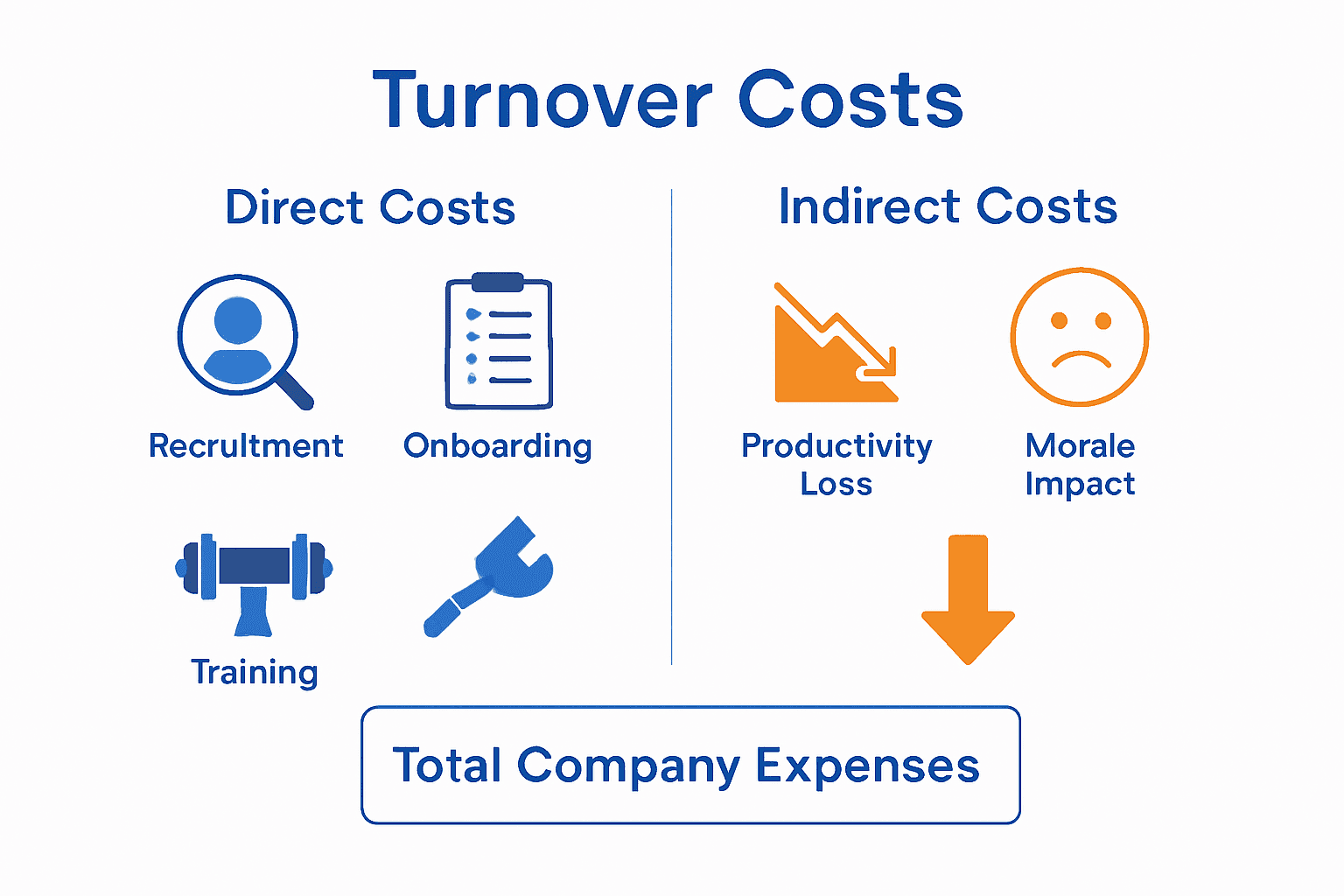
Managing 1 employee payroll in a single-employee company often traps business owners in a complex web of administrative overhead, compliance traps, and surprising financial drains. While software packages scale down for solopreneurs and single-member LLCs, the foundational requirements of tax registration, workers' compensation, and recurring reporting fees remain largely identical to those of larger enterprises, creating a disproportionate operational burden.
The Reality of Single-Employee Payroll Systems
When a business owner decides to run payroll for just one employee—frequently themselves as an S-corporation officer or a single-member Limited Liability Company (LLC) electing corporate taxation—they often expect a streamlined process. After all, calculating gross pay, withholding federal income tax, Social Security, Medicare, and submitting standard withholdings appears mathematically straightforward on the surface. However, the operational machinery required to execute these simple calculations is designed for scale, meaning the fixed costs and labor hours do not shrink linearly with headcount.
For a sole proprietor or single-employee enterprise, payroll processing introduces structural shifts in how cash flow and liability are managed. Traditional payroll services charge a base platform fee regardless of whether you are paying fifty employees or just one. Furthermore, state-level requirements such as state unemployment insurance (SUI) accounts, state disability insurance, paid family leave taxes, and local occupational taxes require separate registration and quarterly reporting. Consequently, the true cost of a one-person payroll extends far beyond the hourly rate or annual salary printed on the pay stub.
Why Solopreneurs and Single-Member Entities Run Payroll
Understanding why single-employee companies implement formal payroll systems clarifies the motivation behind bearing these hidden costs. The most common driver is corporate tax classification and legal structure.
S-Corporation Election and Reasonable Compensation
Many small business owners elect S-corporation status with the Internal Revenue Service (IRS) to minimize self-employment taxes. Under this structure, the owner must be treated as a W-2 employee and paid "reasonable compensation" for services rendered, while any remaining business income can be distributed as shareholder distributions exempt from self-employment taxes. This mandatory W-2 classification makes a formal payroll system non-negotiable.
Worker Classification and Compliance
In scenarios where a single-employee company brings on its first independent worker or formalizes the owner's operational status, misclassification penalties drive businesses toward legitimate payroll structures. State and federal labor departments heavily scrutinize independent contractor (1099) versus employee (W-2) relationships. Establishing a formal payroll mechanism safeguards the business against costly worker misclassification audits, back-tax assessments, and statutory penalties.
Benefits Administration and Retirement Accounts
Running formal payroll facilitates access to structured employee benefits that require W-2 verification. Solo 401(k) plans, health reimbursement arrangements (HRAs), and group health insurance policies often require formal payroll reporting to establish eligibility, calculate contribution limits, and maintain compliance with federal regulations.
Breakdown of Hidden Costs in 1 Employee Payroll
The financial impact of maintaining a single-employee payroll system manifests in direct software expenses, mandatory state fees, professional service overhead, and significant opportunity costs.
| Cost Category | Typical Financial Impact | Nature of the Expense | Operational Impact |
|---|---|---|---|
| Payroll Software Base Fees | $20 to $60 per month | Fixed operational cost | Charged regardless of employee count; scales poorly for micro-businesses. |
| Per-Employee Surcharges | $4 to $10 per month | Variable software fee | Minimal marginal cost, but represents a high percentage of total software spend. |
| State Unemployment Insurance (SUI) | Varies by state and industry experience rating | Mandatory tax obligation | New employer rates can tie up capital; requires ongoing annual rate reconciliation. |
| Workers' Compensation Insurance | $400 to $1,500+ annually | Mandatory legal requirement | Minimum policy premiums apply even for low-risk, single-employee office environments. |
| Accountant or CPA Oversight | $500 to $2,000+ annually | Professional service fee | Often required to handle year-end reconciliations, W-2/W-3 filings, and quarterly returns. |
Software Overhead and Base Fees
Most modern cloud-based payroll providers utilize a pricing model consisting of a flat monthly base fee plus a per-employee fee. For a company with fifty employees, a $45 base fee is an insignificant rounding error. For a company with a single employee, that same $45 base fee represents an annual fixed software expenditure of $540 just to process one check or direct deposit per pay period.
Mandatory Insurance and State Contributions
Even with zero traditional employees besides the owner, state and federal regulations frequently mandate insurance policies that carry fixed minimum premiums. Workers' compensation insurance is a prime example. Insurance carriers typically enforce a minimum annual premium for workers' comp policies, meaning a desk-bound consultant or digital freelancer running a single-employee S-corp may pay hundreds of dollars a year for coverage that scales well beyond their actual risk exposure. Similarly, State Unemployment Insurance (SUI) requires setup and minimum taxable wage base contributions, adding administrative and financial weight.
The True Cost of Tax Deposit Errors
Payroll tax compliance operates on strict federal and state deposit schedules (semi-weekly or monthly based on total liability). Because a single-employee company generates a smaller tax liability, owners are prone to treating deadlines casually or misunderstanding the electronic federal tax payment system (EFTPS) schedules. Payroll tax penalties are notoriously punitive, often featuring strict percentage-based fines for late deposits, which can quickly erase any tax savings gained by the corporate structure.
Operational Friction and Time Investment
Beyond monetary outlays, the hidden cost of 1 employee payroll includes the non-recoverable time spent managing compliance routines. Time spent on administrative tasks represents lost billable hours or neglected revenue-generating activities.
Registration and Setup Complexity
Establishing a payroll system requires obtaining a federal Employer Identification Number (EIN), registering with state tax agencies, setting up a state unemployment insurance account, and filing local tax registrations where applicable. Each agency maintains its own portal, password requirements, and remittance schedules.
Ongoing Maintenance and Filing Schedules
A single-employee payroll demands continuous lifecycle management across multiple calendars:
- Per Pay Period: Calculating gross-to-net pay, executing direct deposits or manual checks, and recording journal entries.
- Monthly/Semi-Monthly: Depositing federal income tax and FICA (Social Security and Medicare) withholdings according to IRS schedules.
- Quarterly: Filing federal Form 941 (Employer's Quarterly Federal Tax Return) and state-equivalent unemployment and withholding returns.
- Annually: Reconciling W-2 and W-3 forms, filing federal Form 940 (FUTA tax), and preparing state annual reconciliations.
Alternatives and Mitigation Strategies for Solopreneurs
Business owners seeking to minimize the financial and operational friction of single-employee payroll have several strategic paths available, depending on their corporate election and operational needs.
Evaluating Sole Proprietorships and Single-Member LLCs
If an S-corporation tax election is not tax-advantageous for your current revenue level, operating as a disregarded entity (single-member LLC or sole proprietorship) bypasses the W-2 payroll requirement entirely. Owners of disregarded entities take owner's draws rather than W-2 wages, reporting business profit directly on Schedule C of their personal Form 1040 and paying self-employment tax. This eliminates software base fees, quarterly 941 filings, and W-2 generation. However, this choice must be weighed against self-employment tax liabilities once net income crosses specific thresholds.
Leveraging Scaled, Low-Cost Payroll Providers
For those who legally require payroll (such as active S-corporations), selecting micro-business-optimized payroll platforms can mitigate software overhead. Some modern financial technology platforms integrate free or heavily discounted basic payroll tiers for single-owner corporations when paired with their business checking accounts or merchant services.
Outsourcing to Qualified Professionals
When the internal time cost of managing multi-agency compliance outweighs the financial expense, outsourcing payroll to a certified public accountant (CPA) or a specialized boutique bookkeeping firm often proves more economical. Professional oversight eliminates the risk of costly late-filing penalties, ensures accurate handling of reasonable compensation rules, and frees the owner to focus on core business growth.
Frequently Asked Questions
Do I need to run payroll for myself if I am the only employee in my LLC?
If your single-member LLC is taxed as a standard disregarded entity, you do not run payroll for yourself; instead, you take owner's draws and pay self-employment tax via your personal tax return. However, if your LLC has elected S-corporation or C-corporation status with the IRS, you are legally classified as an employee-officer and must be paid a reasonable W-2 wage through a formal payroll system.
What is the cheapest way to handle 1 employee payroll?
The most cost-effective method depends on your technical comfort and corporate structure. Using IRS-approved direct-entry state portals combined with free calculation tools can minimize software costs, though most solopreneurs opt for automated micro-business software tiers to avoid manual calculation errors and missed state filing deadlines.
Can I skip workers' compensation insurance if I am the only employee?
State laws regarding workers' compensation for single-employee corporations vary significantly. Some states allow corporate officers to explicitly opt-out or waive coverage for themselves, while other jurisdictions mandate coverage regardless of corporate officer status. You must verify local state labor board rules to determine mandatory compliance.
What happens if I miss a quarterly payroll tax filing deadline?
Missing a quarterly payroll tax return (such as Form 941) or a tax deposit triggers automatic failure-to-file and failure-to-pay penalties from the IRS and state tax agencies. Penalties scale based on how late the deposit is, and interest accrues daily on unpaid balances until the account is brought into compliance.
Summary and Recommended Next Actions
Managing 1 employee payroll requires a clear-eyed assessment of whether the administrative and financial burdens align with your company's current stage of growth. If your business model requires W-2 issuance due to S-corp elections or formal employee structures, budget adequately for both software subscription costs and mandatory state insurance premiums.
Recommended Next Action: Review your current business entity classification with a licensed CPA or tax professional. Verify whether your net revenue genuinely justifies the tax savings of an S-corporation election relative to the fixed overhead of maintaining single-employee payroll and compliance reporting.