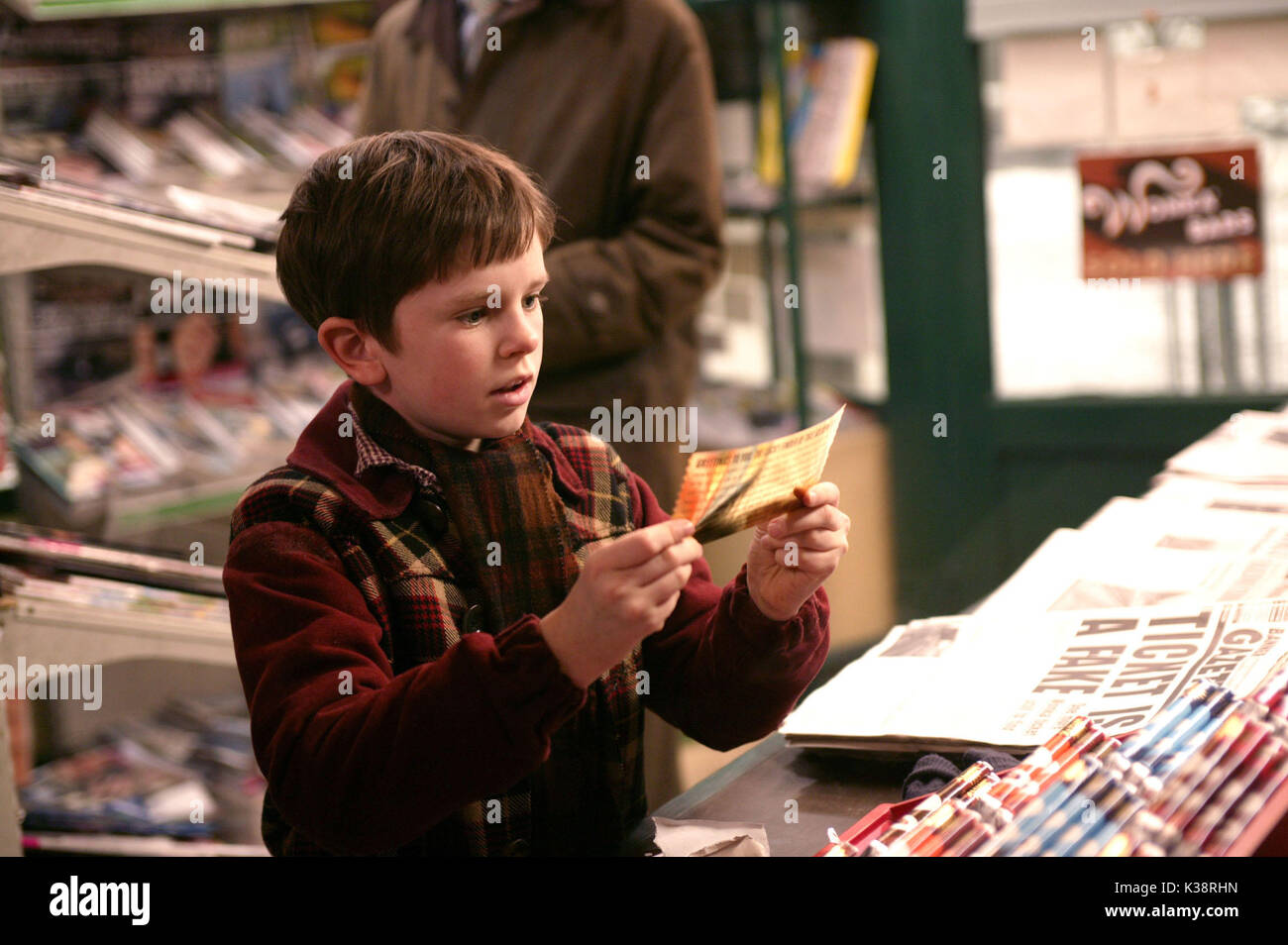
Freddie Highmore portrayed the title character, Charlie Bucket, in Tim Burton’s 2005 film adaptation of Charlie and the Chocolate Factory. Cast at just twelve years old, Highmore was famously recommended for the role by co-star Johnny Depp. His performance is widely regarded as the emotional anchor of the film, providing a grounded, sincere contrast to the eccentricities of the chocolate factory.
In the landscape of cinema history, few child performances are as pivotal as Freddie Highmore’s turn as the impoverished yet hopeful Charlie Bucket. As we look back from the vantage point of 2026, the 2005 version of Roald Dahl’s classic tale remains a visually stunning and narratively distinct interpretation, largely due to Highmore’s ability to project innocence without appearing saccharine. While Tim Burton’s direction and Johnny Depp’s polarizing portrayal of Willy Wonka often dominate the conversation, it is Highmore’s Charlie who provides the audience with a necessary moral compass.
The Casting Process: The Johnny Depp Recommendation
The story of how Freddie Highmore secured the role of Charlie Bucket is nearly as famous as the movie itself. Highmore had previously worked with Johnny Depp on the 2004 film Finding Neverland, where he played Peter Llewelyn Davies. Depp was so impressed by the young actor's emotional range and professional conduct that he personally reached out to director Tim Burton.
Depp reportedly told Burton that Highmore was the best child actor he had ever worked with, urging the director to skip a broad casting call and focus on Highmore. Burton, who often relies on a close-knit circle of collaborators, took the recommendation seriously. After seeing Highmore’s performance in Finding Neverland, Burton realized that Highmore possessed a rare "old soul" quality that was essential for a character living in the dire poverty described in Dahl’s book.
Highmore’s casting brought a level of gravitas to the production. Unlike the 1971 adaptation, which featured Peter Ostrum in a more whimsical light, the 2005 version required an actor who could realistically portray the physical and emotional weight of a child who is genuinely hungry and worried about his family’s survival. Highmore met this challenge by delivering a performance that was understated, relying heavily on expressive facial movements rather than theatricality.
Character Analysis: Charlie Bucket’s Moral Core
In Tim Burton’s Charlie and the Chocolate Factory, Charlie Bucket is defined by his selflessness. While the other four Golden Ticket winners—Augustus Gloop, Veruca Salt, Violet Beauregarde, and Mike Teavee—represent various childhood vices (gluttony, greed, pride, and obsession), Charlie represents virtue.
Highmore’s portrayal emphasizes Charlie’s love for his family over his desire for sweets. A key moment in the 2005 film that differs from both the book and the 1971 film is Charlie’s initial hesitation to visit the factory. When he realizes that he could sell the Golden Ticket to help his family buy food, it is his grandfather who convinces him that money is common, but a Golden Ticket is rare. Highmore plays this scene with a heartbreaking sincerity, making the audience believe that a child would truly prioritize a bowl of cabbage soup for his parents over a lifetime of chocolate.
The Contrast with Willy Wonka
The dynamic between Highmore’s Charlie and Depp’s Wonka is the heart of the 2005 film. Depp’s Wonka is socially awkward, traumatized by his own childhood, and disconnected from human emotion. Highmore’s Charlie, despite being a child, often seems more emotionally mature than the billionaire confectioner.
Throughout the factory tour, Highmore maintains a look of quiet wonder. He doesn't scream or run; he observes. This observational quality allows the audience to see the factory through his eyes. When Charlie finally wins the "grand prize," the conflict shifts from the factory’s dangers to a personal choice: Wonka offers him the factory on the condition that he leaves his family behind. Highmore’s firm, yet gentle refusal—"I wouldn't give up my family for anything. Not for all the chocolate in the world"—highlights the character's unwavering integrity.
Technical Execution and Production Context
Filmed primarily at Pinewood Studios in the United Kingdom, the production of the 2005 film was massive in scale. For a young actor like Highmore, the environment was both a playground and a high-pressure workplace. Tim Burton famously preferred practical sets over CGI wherever possible. This meant that the "Chocolate Room" featured a literal river of flowing chocolate-like substance and actual grass and trees made of edible or semi-edible materials.
Working with the Ensemble
Highmore had to hold his own against a powerhouse cast, including:
- Johnny Depp as Willy Wonka
- David Kelly as Grandpa Joe
- Helena Bonham Carter as Mrs. Bucket
- Noah Taylor as Mr. Bucket
- Deep Roy, who played every single Oompa Loompa
The chemistry between Highmore and David Kelly (Grandpa Joe) was particularly vital. Their relationship felt authentic, portraying a bond built on shared dreams and mutual respect. Highmore’s ability to react naturally to the bizarre elements of the set—such as the trained squirrels in the Nut Room or the shrinking technology in the Television Room—helped maintain the film's "heightened reality" without breaking the immersion.
Comparative Overview: 1971 vs. 2005 Charlie
To understand Highmore’s impact, it is helpful to compare the two major cinematic iterations of the Charlie Bucket character.
| Feature | 1971 Film (Peter Ostrum) | 2005 Film (Freddie Highmore) |
|---|---|---|
| Directorial Style | Mel Stuart (Whimsical/Musical) | Tim Burton (Gothic/Vivid) |
| Charlie's Demeanor | More active, slightly rebellious | Quiet, observant, deeply selfless |
| Family Dynamic | Warm, but less focus on extreme poverty | Emphasized poverty and family unity |
| Key Conflict | The "Fizzy Lifting Drink" mistake | The offer to leave family for the factory |
| Wonka Relationship | Paternal/Testing | Peer-like/Emotional Mirror |
| Actor Background | Only film role for Ostrum | Part of a long-term acting career for Highmore |
The 2005 version, and Highmore’s performance specifically, is often cited as being more faithful to the tone of Roald Dahl’s original text. Dahl’s books often featured "golden-hearted" children in grim circumstances, a balance that Highmore struck perfectly.
Freddie Highmore’s Career Trajectory Post-2005
For many child actors, a role as massive as Charlie Bucket marks the peak of their career. For Freddie Highmore, it was merely the beginning of an expansive and successful journey in the entertainment industry. His work in the 2005 film established him as a reliable lead capable of carrying a major studio production.
Immediately following Charlie and the Chocolate Factory, Highmore starred in A Good Year (2006) and the fantasy adventure The Spiderwick Chronicles (2008), where he played twin brothers. His ability to distinguish between two different personalities in The Spiderwick Chronicles further proved the technical skill he had begun to hone under Burton’s direction.
As he transitioned into adulthood, Highmore avoided the common pitfalls of child stardom. He took a brief hiatus to study Arabic and Spanish at Emmanuel College, Cambridge, demonstrating a commitment to education that mirrored the disciplined nature of his acting. He eventually returned to the screen in two career-defining television roles:
- Norman Bates in Bates Motel: A dark, psychological turn that showcased his range far beyond the "innocent boy" archetype.
- Dr. Shaun Murphy in The Good Doctor: A long-running role where he played a surgical resident with autism and savant syndrome, earning critical acclaim and several award nominations.
By 2026, Highmore is recognized not just as "the boy from the chocolate factory," but as a seasoned actor, producer, and director with one of the most stable and respected careers in Hollywood.
The Legacy of the 2005 Film in 2026
In the year 2026, the 2005 Charlie and the Chocolate Factory occupies a unique space in pop culture. With the 2023 release of the prequel Wonka starring Timothée Chalamet, interest in the franchise saw a significant resurgence. While the 2023 film served as an origin story, the 2005 film remains the most visually ambitious "main timeline" adaptation.
Critics in 2026 often point to Highmore’s performance as the element that has aged the most gracefully. While Johnny Depp’s portrayal of Wonka is frequently debated for its eccentricities, Highmore’s Charlie remains universally praised for its warmth. The film serves as a reminder of the power of "quiet" acting in an era of loud, bombastic blockbusters.
The 2005 film also marked a high point for practical effects and set design. In a 2026 context, where audiences often feel "CGI fatigue," the tactile nature of the Bucket cottage and the sprawling factory sets—realized through the lens of Highmore’s wide-eyed wonder—continues to inspire new generations of filmmakers.
Frequently Asked Questions
Why did Johnny Depp recommend Freddie Highmore for the role of Charlie?
Johnny Depp was profoundly impressed by Highmore's talent while filming Finding Neverland. Depp noted that Highmore possessed a maturity and emotional depth that was rare for a twelve-year-old. He felt that Highmore’s ability to ground a scene would be the perfect counterbalance to the more fantastical elements of Tim Burton’s vision for the chocolate factory.
How old was Freddie Highmore during the filming of Charlie and the Chocolate Factory?
Freddie Highmore was born in February 1992. Filming for Charlie and the Chocolate Factory took place primarily in 2004, making him approximately 12 years old during production. The film was released in July 2005, by which time he was 13.
Did Freddie Highmore actually eat the chocolate in the film?
While many of the props in the "Chocolate Room" were real and edible, the "Chocolate River" itself was made of a mixture of water, thickening agents, and food coloring. It was not actual melted chocolate, as real chocolate would have spoiled under the hot studio lights and become a health hazard. However, Highmore and the other children did have access to plenty of real Nestlé chocolate provided for the production’s marketing tie-ins.
Is Freddie Highmore still acting in 2026?
Yes, as of 2026, Freddie Highmore remains a prominent figure in the industry. Following the conclusion of The Good Doctor, he has transitioned into more behind-the-scenes work, including producing and directing, while continuing to take on challenging acting roles in both film and prestige television.
How does the 2005 film differ from the 1971 version regarding Charlie's character?
In the 1971 version, Charlie is a bit more of a typical "kid" who makes mistakes (such as stealing the Fizzy Lifting Drinks). In the 2005 version, Highmore’s Charlie is portrayed as almost entirely virtuous. The 2005 film also places a much heavier emphasis on Charlie’s relationship with his family, making his eventual choice to stay with them the climax of the movie, whereas the 1971 version focuses more on the "purity test" of returning the Everlasting Gobstopper.
Practical Recommendations for Viewers
For those revisiting the 2005 film or introducing it to a new generation in 2026, here are a few tips to enhance the experience:
- Watch Finding Neverland First: To appreciate the chemistry that led to Highmore’s casting, watch him alongside Johnny Depp in this film. It provides context for the mutual respect they brought to the chocolate factory.
- Focus on the Background: Pay attention to the details of the Bucket household. The production design by Alex McDowell is incredibly detailed, showing how the family’s poverty is reflected in the leaning structure of their home.
- Compare the "Golden Ticket" Scenes: Watch the 1971 and 2005 scenes back-to-back. Note how Highmore uses silence and stillness to convey the shock and joy of finding the ticket, compared to the more jubilant musical numbers of the past.
- Check for 4K Remasters: By 2026, high-quality 4K restorations of the film are widely available. The vibrant color palette of the factory benefits significantly from modern HDR (High Dynamic Range) technology.
Freddie Highmore’s performance as Charlie Bucket stands as a testament to the idea that a "hero" doesn't need to be loud or aggressive. Sometimes, the most powerful character is the one who simply remains kind in a world that is anything but.