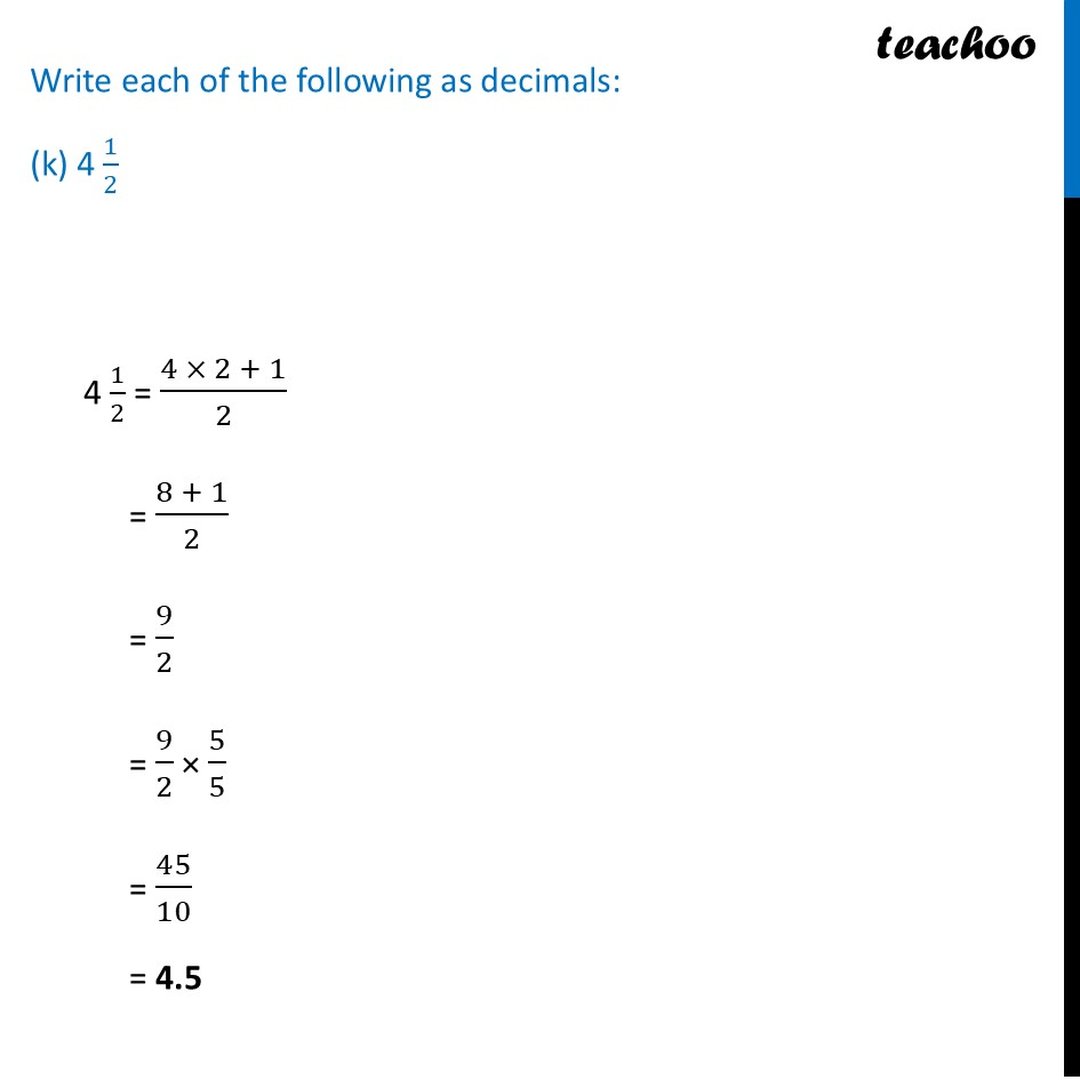
To convert the fractions 1/8, 2/8, 3/8, 4/8, 5/8, 6/8, 7/8, and 8/8 to decimals, divide the numerator by the denominator (8). This sequence follows a consistent pattern of 0.125 increments: 1/8 equals 0.125, 2/8 is 0.25, 3/8 is 0.375, 4/8 is 0.5, 5/8 is 0.625, 6/8 is 0.75, 7/8 is 0.875, and 8/8 is 1.0.
The Mathematical Foundation of Eighths
Understanding how to convert fractions with a denominator of 8 is a fundamental skill in both academic mathematics and practical daily life. In the base-10 system we use for most calculations, the number 8 holds a unique position. Because 8 is a power of 2 ($2 \times 2 \times 2 = 2^3$), any fraction with 8 as its denominator will result in a terminating decimal. This means the decimal does not repeat infinitely (like 1/3 or 1/6) but instead comes to a definite end after exactly three decimal places.
In the context of 2026, where digital precision is integrated into everything from smart construction tools to automated financial micro-investing, the ability to mentally bridge the gap between "one-eighth" and "zero point one two five" remains essential. This guide explores the mechanics of these conversions, the patterns that make them easy to remember, and the various methods used to achieve high-precision results.
Methods for Converting Eighths to Decimals
There are three primary ways to convert these fractions into decimal form. Each method provides insight into how numbers interact and is useful depending on whether you have a calculator, a piece of paper, or only your mind to work with.
The Long Division Method
The most reliable way to convert any fraction is through long division. For the fraction 1/8, you are essentially asking: "How many times does 8 go into 1?"
- Since 8 cannot go into 1, you place a decimal point after the 1 and add zeros (1.000).
- 8 goes into 10 one time, with a remainder of 2.
- Bring down the next zero to make it 20. 8 goes into 20 twice ($8 \times 2 = 16$), with a remainder of 4.
- Bring down the final zero to make it 40. 8 goes into 40 exactly five times ($8 \times 5 = 40$), with no remainder.
- The result is 0.125.
The Power of 10 Scaling Method
Because our decimal system is based on powers of 10 (10, 100, 1,000, etc.), you can convert a fraction by finding a number that turns the denominator into a power of 10. For the denominator 8, that magic number is 125.
- $8 \times 125 = 1,000$
- To keep the fraction balanced, you must multiply the numerator by 125 as well.
- For 3/8: $3 \times 125 = 375$.
- Therefore, 3/8 becomes 375/1,000, which is written in decimal form as 0.375.
The Fractional Increment Method
Once you know that 1/8 is equal to 0.125, you can find any other eighth by simply adding 0.125 for every step.
- 1/8 = 0.125
- 2/8 = 0.125 + 0.125 = 0.250
- 3/8 = 0.250 + 0.125 = 0.375 This linear progression makes eighths one of the easiest fractional sets to memorize for mental math.
Detailed Breakdown of 1/8 Through 8/8
Each fraction in this set has specific characteristics, simplified forms, and practical uses. Below is a detailed analysis of each conversion.
1/8 (One-Eighth)
Decimal: 0.125 The fraction 1/8 is the "unit fraction" for this set. In carpentry and manufacturing, 1/8 of an inch is a standard unit of measurement. In the financial sector, historical stock prices were often quoted in eighths of a dollar (12.5 cents) before the industry moved to full decimalization in 2001.
2/8 (Two-Eighths)
Decimal: 0.25 While 2/8 is technically correct, it is almost always expressed in its simplified form: 1/4. In decimal form, this is exactly one quarter, or 0.25. This is one of the most common decimals used in currency and basic probability.
3/8 (Three-Eighths)
Decimal: 0.375 This is a common measurement in the United States customary system. For instance, a 3/8-inch drill bit is a staple in most toolkits. It represents 37.5% of a whole.
4/8 (Four-Eighths)
Decimal: 0.5 Simplified, 4/8 is exactly 1/2. As a decimal, this is 0.5. It represents the halfway point in the sequence and is the simplest decimal in the set.
5/8 (Five-Eighths)
Decimal: 0.625 The fraction 5/8 is often used in mechanical engineering and the automotive industry for bolt sizes and clearances. It is slightly more than half and represents 62.5% of a unit.
6/8 (Six-Eighths)
Decimal: 0.75 Like 2/8, this fraction is typically simplified. 6/8 reduces to 3/4, which is 0.75 in decimal form. This is frequently used to describe "three-quarters" of an hour (45 minutes) or three-quarters of a dollar (75 cents).
7/8 (Seven-Eighths)
Decimal: 0.875 7/8 is just one unit away from a whole. It is often used to describe high-capacity levels or nearly completed tasks. In precision machining, 0.875 inches is a critical threshold for various standard fittings.
8/8 (Eight-Eighths)
Decimal: 1.0 Any fraction where the numerator and denominator are identical equals 1. In the context of eighths, it represents the completion of the set.
Comparison Table: Fractions to Decimals and Percentages
This table serves as a quick reference for the conversions of eighths, including their simplified forms and percentage equivalents.
| Fraction | Simplified Form | Decimal | Percentage | Common Usage |
|---|---|---|---|---|
| 1/8 | 1/8 | 0.125 | 12.5% | 1/8 inch measurements |
| 2/8 | 1/4 | 0.25 | 25% | One quarter, 25 cents |
| 3/8 | 3/8 | 0.375 | 37.5% | Standard drill bit size |
| 4/8 | 1/2 | 0.5 | 50% | One half, 50 cents |
| 5/8 | 5/8 | 0.625 | 62.5% | Architectural scales |
| 6/8 | 3/4 | 0.75 | 75% | Three quarters, 75 cents |
| 7/8 | 7/8 | 0.875 | 87.5% | Near-full capacity |
| 8/8 | 1 | 1.0 | 100% | One whole unit |
Practical Applications of Eighths in 2026
Even in a highly digital world, eighths remain relevant in several specialized fields. Understanding these conversions is not just an academic exercise but a practical necessity for accuracy.
1. Construction and Carpentry
The U.S. construction industry still relies heavily on the imperial system. Blueprints and measuring tapes are divided into eighths of an inch. A carpenter who can instantly convert 5/8 to 0.625 can use digital calipers or CAD (Computer-Aided Design) software more effectively. This allows for a seamless transition between physical measurements and digital design.
2. Cooking and Baking
In culinary arts, liquid and dry measurements often involve fractions of a cup. While many modern scales allow for switching between grams and ounces, some recipes still use fractions. For example, knowing that 1/8 of a cup is 0.125 cups helps when scaling recipes up or down using a calculator.
3. Financial Analysis
While stock markets have moved to decimals, some specific types of bonds and older financial instruments still reference eighths in their legacy documentation. Furthermore, fractional shares in modern trading apps are often calculated using high-precision decimals that are derived from these base fractions.
4. Data Science and Computing
In computing, "bits" and "bytes" are based on powers of 2. An 8-bit architecture (a byte) is the foundation of digital storage. While we rarely convert 3/8 of a byte, the logic of dividing data into eight parts is central to how information is processed and compressed.
Common Mistakes When Converting Eighths
Even though the math is straightforward, there are a few common pitfalls that people encounter:
- Misplacing the Decimal Point: When performing long division, it is easy to write 1.25 instead of 0.125. Always remember that since the numerator (1) is smaller than the denominator (8), the result must be less than 1.
- Rounding Errors: Sometimes, people round 0.125 to 0.13 or 0.375 to 0.38. While this is acceptable in some casual contexts, it loses the precision required for engineering or scientific calculations. Eighths should always be carried to three decimal places for total accuracy.
- Confusing 1/8 with 1/80: Adding a zero to the denominator drastically changes the value. 1/80 is 0.0125, whereas 1/8 is 0.125.
- Inverting the Division: A common error for beginners is dividing the denominator by the numerator (e.g., $8 \div 1$). This will give you the whole number 8 rather than the decimal 0.125. The "top" number always goes "inside" the division bracket.
Advanced Concept: Terminating vs. Repeating Decimals
As mentioned earlier, eighths are terminating decimals. To understand why, we look at the prime factorization of the denominator. A simplified fraction will result in a terminating decimal if and only if the prime factors of the denominator are only 2s, 5s, or both.
- Denominator 8 = $2 \times 2 \times 2$. (Only 2s, so it terminates).
- Denominator 10 = $2 \times 5$. (Terminates).
- Denominator 3 = 3. (Not a 2 or 5, so it repeats: 0.333...).
- Denominator 6 = $2 \times 3$. (Contains a 3, so it repeats: 0.1666...).
This mathematical rule ensures that no matter how large the numerator is, as long as the denominator is 8, you will never have to deal with an infinite string of numbers.
Frequently Asked Questions
Is 1/8 the same as 0.125?
Yes, 1/8 is exactly equal to 0.125. This is calculated by dividing 1 by 8. In a percentage format, this represents 12.5% of a whole. It is a terminating decimal, meaning it does not continue past the third decimal place.
How do I convert a fraction like 3/8 to a decimal without a calculator?
To convert 3/8 without a calculator, you can use the scaling method. Multiply both the top and bottom by 125. This gives you 375/1,000. Any number divided by 1,000 is simply that number with the decimal point moved three places to the left, resulting in 0.375. Alternatively, if you know 1/8 is 0.125, you can simply multiply 0.125 by 3 to get 0.375.
Why do some people say 2/8 is 0.25?
2/8 is equal to 0.25 because the fraction 2/8 can be simplified. By dividing both the numerator and the denominator by their greatest common factor, which is 2, you get 1/4. 1 divided by 4 is 0.25. All fractions in the "eighths" family can be converted by multiplying the number of eighths by 0.125. Since $2 \times 0.125 = 0.25$, the values are identical.
What is 7/8 as a decimal?
7/8 as a decimal is 0.875. This is found by dividing 7 by 8. It is also the result of subtracting 1/8 (0.125) from a whole (1.000). This measurement is frequently used in fabrication and woodworking to represent a value just under one inch or one unit.
Are these decimals used in the metric system?
The metric system is natively decimal-based, so it does not typically use fractions like 1/8. However, when converting between the U.S. customary system (inches) and the metric system (millimeters), these decimals are vital. For example, 1/8 of an inch is exactly 3.175 millimeters. To find this, you convert 1/8 to 0.125 and then multiply by 25.4 (the number of millimeters in an inch).
Summary of Next Steps
To master these conversions, practice identifying these decimals in your daily environment. Look at the side of a wrench, a measuring cup, or a rain gauge. By memorizing the 0.125 increment, you can quickly navigate between fractional and decimal systems without relying on external tools. For further study on more complex denominators, resources such as Khan Academy or the NIST Guide to the SI System provide extensive tutorials on unit conversion and decimal theory.