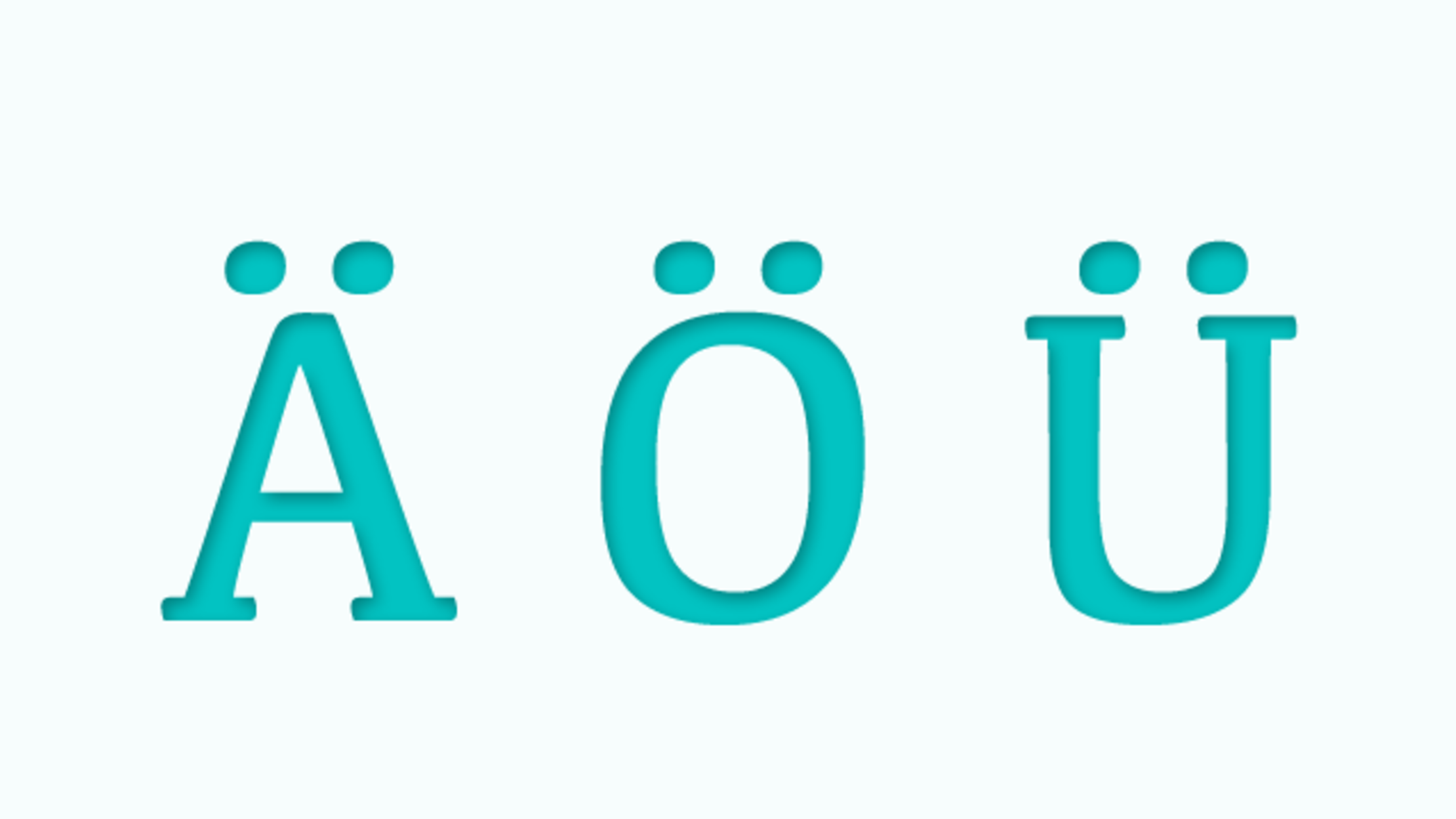
Pronouncing ä (a with umlaut) correctly requires understanding how the two dots above the letter modify mouth shape, tongue placement, and vocal resonance. In German, where the grapheme is most prominent, ä typically produces a sound close to the English "short e" in words like bed, bridging the gap between a standard open vowel and a closed front vowel.
Achieving native-level pronunciation of this vowel sound involves analyzing its phonetic properties, comparing it to familiar English sounds, and mastering specific tongue and lip configurations.
Linguistic Foundations of the Umlaut
The umlaut is a diacritical mark consisting of two horizontal dots placed over a vowel letter. Historically, the umlaut in Germanic languages originated from an evolutionary process called i-mutation (or umlaut in German). This occurred when a back vowel (such as a, o, or u) was influenced by an i or j sound in a following syllable, causing speakers to shift their tongue forward in the mouth to ease the transition between sounds over centuries of spoken usage.
In modern orthography, particularly in German, the umlaut serves two distinct purposes:
- It indicates a phonetic shift in the vowel's quality.
- It denotes grammatical shifts, such as forming the plural of nouns (e.g., Haus becomes Häuser) or conjugating strong verbs in the present tense (e.g., fahren becomes fährt).
Phonetically, ä is classified as a front vowel. While the base letter a is a central or back open vowel (produced low in the vocal tract with a relaxed tongue), adding the umlaut forces the tongue to arch toward the hard palate. This mechanical shift changes the acoustic resonance, raising the second formant frequency and creating a lighter, brighter vowel sound.
Phonetic Variations of A with Umlaut
The letter ä does not represent a single, unvarying acoustic target across all contexts or languages. Its pronunciation depends heavily on vowel length and regional accents.
Short vs. Long Ä in German
German vowels possess distinct lengths, and length frequently changes the exact timbre of the vowel sound.
- Short Ä (/ɛ/): This sound is identical to the short "e" found in English words like bed, red, and met. It is a lax vowel, meaning the tongue and vocal tract muscles are relatively relaxed. Examples in German include Männer (men) and Hände (hands).
- Long Ä (/ɛː/ or /eː/): When the vowel is lengthened—often indicated by a following silent h (as in Mähre) or an open syllable—it approaches a tense, open-e sound or even merges entirely with a long "e" sound (/eː/) in standard modern German (Hochdeutsch). For example, Käse (cheese) sounds virtually identical to Kese in many regions, leaning closer to the "ay" sound in the English word day without the final glide.
Regional and Dialectal Differences
Standard German pronunciation, codified for stage and broadcasting (Bühnendeutsch), distinguishes between the open short ä and the tense long ä. However, regional variations persist:
- Northern and Central Germany: Speakers often merge long ä and long e into a pure [eː] sound.
- Southern Germany, Austria, and Switzerland: Speakers may maintain a distinct acoustic quality between E and Ä, keeping the long ä slightly more open and closer to a lowered [æ] sound.
Step-by-Step Guide to Pronouncing Ä
Mastering the mechanics of the sound requires breaking down the physical movements of the mouth, tongue, and jaw.
[Base Vowel: A] ➔ [Tongue Shift: Forward] ➔ [Jaw Adjustment: Slightly Raised] ➔ [Target Sound: Ä]
Step 1: Start with the English "Ah"
Begin by pronouncing the open central unrounded vowel /ä/ or /a/, as in the English word father or calm. Your jaw should be dropped, and your tongue should be flat and resting at the bottom of your mouth.
Step 2: Push the Tongue Forward
Without changing the position of your lips significantly (keep them neutral or slightly spread, not rounded), push the body of your tongue forward toward your front teeth and arch it upward toward the roof of your mouth (the hard palate).
Step 3: Raise the Jaw Slightly
Close your jaw a fraction of an inch from the wide-open position used for father. Your mouth should now be open about halfway, similar to the mouth shape you form when beginning to say the word bed.
Step 4: Vocalize the Sound
Exaggerate the transition by alternating between a standard a and an ä.
- Say A (father).
- Shift immediately to Ä (bed).
If your vocal cords vibrate while maintaining this raised, fronted tongue position with a mid-open jaw, you are producing the correct German ä sound.
Comparison Table: English Equivalents and German Target Words
To bridge the gap between English phonology and German pronunciation, examine how the target sound correlates with familiar English vowel approximations.
| German Word | English Meaning | Phonetic Symbol (IPA) | Closest English Approximation | Pronunciation Description |
|---|---|---|---|---|
| Bär | Bear | [bɛːɐ̯] | "air" (without the r-coloring) | Long, open front vowel, slightly stretched. |
| Käse | Cheese | [ˈkɛːzə] | "kay-zuh" (with an open e) | Tense long vowel, approaching a closed e. |
| Männer | Men | [ˈmɛnɐ] | "men-er" | Short, lax vowel, identical to English e in bed. |
| Spät | Late | [ʃpɛːt] | "spate" (open variant) | Long tense vowel ending in a crisp dental t. |
| Äpfel | Apples | [ˈɛp͡fəl] | "ep-fel" | Short lax vowel followed by a labiodental affricate. |
Common Mistakes and How to Fix Them
Learners frequently encounter roadblocks when attempting to transition from English vowel habits to German front vowels.
Mistake 1: Pronouncing Ä like a Long English "A" (EI)
English speakers often rely on the diphthongized "A" sound heard in words like face [feɪs] or make [meɪk]. German ä is a pure monophthong (a single vowel sound that does not glide into an ee sound at the end).
- The Fix: Focus on holding your tongue steady. Record yourself saying Käse and check that your voice does not slide upward into a glide.
Mistake 2: Confusing Ä with A
Failing to shift the tongue forward results in pronouncing ä as a standard a. This changes word meanings entirely, turning grammatical forms into completely different vocabulary items. For instance, fahren (to drive) becomes fundamentally different from fährt (he/she drives).
- The Fix: Anchor your tongue forward. Think of smiling slightly or spreading the corners of your lips fractionally to prevent the jaw from dropping into the deep back-vowel posture of a.
Mistake 3: Over-Rounding the Lips
Because other umlauts like ö and ü require lip rounding, learners mistakenly round their lips when pronouncing ä.
- The Fix: Keep your lips relaxed and neutral or slightly spread horizontally. The modification for ä happens entirely inside the oral cavity via tongue placement, not via lip protrusion.
Beyond German: Ä in Other Languages
While most commonly associated with German, the letter ä appears in several other linguistic systems, each with distinct phonetic rules:
- Swedish and Finnish: In Swedish, ä represents an open front unrounded vowel, often phonetically realized as [æ] (similar to the vowel in the English word cat or bat) when short, and [ɛː] when long. Finnish uses ä similarly to represent the front-vowel counterpart to a, keeping it distinct from the English bed sound by maintaining a slightly more open jaw position.
- Estonian: Utilizes ä to represent the open front unrounded vowel [æ].
- Transcription and Anglicization: In English, ä occasionally appears in loanwords, foreign proper nouns, or stylistic typography (such as heavy metal umlauts), though it carries no native phonetic function in standard English orthography. When English speakers encounter names like H.P. Lovecraft styled with an umlaut (often historically stylized or used in band names like Motörhead), the diacritic is frequently ignored or treated as a stylistic flourish rather than a strict instruction to modify the vowel.
Troubleshooting and Practice Exercises
To lock in muscle memory for the correct pronunciation of ä, incorporate targeted minimal pair drills into your daily practice routine. Minimal pairs are words that differ by only one sound, making them ideal for training your ear and vocal tract to recognize subtle phonetic distinctions.
Minimal Pair Practice Drill
Read aloud and contrast the following pairs, paying close attention to whether your tongue shifts forward:
- Stall (stable) vs. Ställe (stables)
- Kanne (jug) vs. Kämme (combs)
- Bahrt (variant spelling/archaic) vs. Bärtig (bearded)
- Wahl (choice) vs. Wählen (to choose)
Focus on the physical sensation of the tongue moving forward for the second word in each pair. If you can cleanly execute this shift without altering your lip rounding, you have mastered the mechanical production of the umlauted a.