In standard insurance practice, a term life insurance policy does not mature upon endowment; instead, it expires at the end of its specified duration. Endowment is a feature exclusive to permanent life insurance, where the cash value grows to equal the face amount, typically when the insured reaches age 100 or 121.
To understand why the statement "a term life insurance policy matures upon endowment of the contract" is a critical point of confusion for many consumers and students of insurance, one must look at the specific legal and financial definitions of "maturity," "endowment," and "term." As of 2026, the insurance landscape remains strictly divided between policies designed for temporary protection and those designed for lifelong coverage with a savings component. Confusing the two can lead to significant errors in financial planning and estate management.
The Fundamental Definitions: Maturity vs. Expiration
In the insurance industry, the end of a policy's life is categorized in two distinct ways: expiration and maturity. While these terms are sometimes used interchangeably in casual conversation, they have vastly different meanings in a legal and actuarial context.
Maturity refers to the moment a life insurance contract pays out its face amount to the policy owner for a reason other than the death of the insured. This occurs when the policy’s cash value equals the death benefit. At this point, the contract has "endowed." The insurer pays the proceeds to the owner, and the coverage terminates because there is no longer any "insurance risk" for the company to carry.
Expiration (or termination), conversely, is what happens to a term life insurance policy. When the 10, 20, or 30-year period of a term policy concludes, the coverage simply ceases to exist. If the insured is still living, no benefit is paid, and no cash value has been accumulated. The contract has not matured; it has merely reached the end of its promised duration.
Understanding this distinction is vital for anyone reviewing their 2026 financial portfolio. If you hold a term policy, you should not expect an endowment payout at the end of the term. The premium you pay is strictly for the "death benefit" protection during the active years of the policy.
The Mechanics of Term Life Insurance
Term life insurance is often described as "pure" life insurance. Its primary function is to provide a high death benefit for a relatively low premium for a specific number of years. In 2026, term insurance remains the most cost-effective way for families to cover specific debts, such as mortgages, or to provide income replacement during child-rearing years.
Lack of Cash Value Accumulation
Unlike permanent policies, standard term insurance does not have a "savings" or "investment" account attached to it. Every dollar of the premium (minus the insurer's administrative costs) goes toward covering the actuarial risk of the insured dying during that term. Because there is no cash value being built up, there is nothing that can "endow."
The Concept of "Term to Age"
Some policies are written as "Term to Age 65" or "Term to Age 70." While these policies last longer than a standard 10-year level term, they still function on the same principle. If the insured reaches the specified age, the policy expires. There is no maturity payout because the policy was never designed to equal the face amount through cash accumulation.
The Anatomy of Endowment: When Cash Value Meets Face Amount
Endowment is a mathematical certainty built into permanent life insurance products, such as Whole Life. To understand how a policy matures, one must look at how the cash value is structured over decades.
When a permanent policy is issued, the premium is set at a level higher than what is necessary to cover the immediate risk of death. This "overpayment" in the early years is funneled into a cash value account that grows at a guaranteed rate. Actuaries design the policy so that the cash value increases over time while the "net amount at risk" for the insurance company decreases.
By the time the insured reaches a specific age—traditionally age 100, though most modern policies issued since the early 2000s use age 121 to account for increased longevity—the cash value is scheduled to equal the face amount.
Why Age 121?
As of 2026, the 2001 Commissioners Standard Ordinary (CSO) Mortality Table and subsequent updates are the benchmarks for these calculations. Because people are living longer, insurers pushed the "endowment age" to 121. If a policyholder reaches this age, the insurance company sends a check for the full death benefit. This is the definition of a policy maturing upon endowment.
Comparing Policy Structures: Term vs. Permanent
The following table clarifies the differences in how these policies behave at the end of their lifecycle, which is essential for determining which product aligns with your 2026 financial goals.
| Feature | Term Life Insurance | Whole Life (Permanent) | Endowment Policy |
|---|---|---|---|
| Primary Goal | Temporary Protection | Lifelong Protection & Savings | Targeted Savings/Maturity |
| Cash Value | None | Accumulates over time | Accumulates rapidly |
| End of Period | Expiration (No Payout) | Maturity/Endowment (Payout) | Maturity/Endowment (Payout) |
| Endowment Age | N/A | Typically Age 100 or 121 | Specific year (e.g., 20 years) |
| Premium Cost | Lowest | Moderate/High | Highest |
| Tax Treatment | Death benefit is tax-free | Death benefit is tax-free; Maturity is taxed | Payout above basis is taxed |
Special Cases: Return of Premium (ROP) and Hybrid Models
While the statement "a term life insurance policy matures upon endowment" is technically false in a traditional sense, there is one niche product that mimics the feel of a maturing policy: Return of Premium (ROP) Term Life Insurance.
In an ROP policy, if the insured survives the term (e.g., 20 years), the insurance company returns all the premiums paid during that time. While this may feel like a "maturity" or "endowment," it is not legally classified as such.
- Not an Endowment: The payout is simply a refund of premiums, not an accumulation of cash value that equals the face amount.
- Cost Factor: In 2026, ROP riders can increase the cost of term insurance by 30% to 100%.
- Taxation: Generally, the returned premiums are not taxable because they are considered a return of your "basis" (the money you already paid in).
Tax Considerations for Maturing Policies
If you hold a policy that actually matures upon endowment, you must be prepared for the tax implications. Unlike a death benefit, which is almost always received income-tax-free under IRS Section 101(a), a maturity payout is treated differently.
When a policy matures, the amount received that exceeds the cost basis (the total premiums paid into the policy minus any dividends received or withdrawals made) is treated as ordinary income.
For example, if you paid $50,000 in premiums over 50 years and the policy matures for $100,000, you will owe taxes on the $50,000 gain. In 2026, with the current tax brackets, this could be a significant liability for seniors who are already managing RMDs (Required Minimum Distributions) from their retirement accounts.
The Role of Actuarial Science in 2026
The reason term insurance cannot endow lies in the actuarial math. Actuaries at organizations like the Society of Actuaries (SOA) calculate premiums based on the probability of death within a specific window.
For a term policy, the probability of death is relatively low during the term, allowing for low premiums. However, if that policy were to "endow," the insurer would have to charge a premium that covers both the risk of death and the certainty of a payout at the end. This would effectively turn the term policy into a permanent policy, defeating its purpose as a low-cost, temporary safety net.
Common Misconceptions and Exam Context
If you encounter the phrase "a term life insurance policy matures upon endowment of the contract" in the context of an insurance licensing exam, it is almost certainly a distractor or a "false" statement.
- Whole Life matures at age 100/121.
- Endowment policies mature at a pre-set date (e.g., after 20 years or at age 65).
- Term Life expires at the end of the term.
The only way a term policy results in a payout is if the insured person dies while the policy is in force or if there is a specific rider, such as an Accelerated Death Benefit, which allows for a payout in the event of terminal illness.
Suitability: Choosing Between Term and Maturing Policies
Deciding whether you need a policy that expires or one that matures depends on your long-term financial strategy.
When to Choose Term (Expiration)
- You need maximum coverage for a minimum cost.
- You have a debt with a clear end date (e.g., a 30-year mortgage).
- You want to protect your family's lifestyle until your children are financially independent.
- You prefer to "buy term and invest the difference" in the stock market or other vehicles.
When to Choose Permanent (Maturity/Endowment)
- You want life insurance to be a part of your permanent estate plan.
- You want a guaranteed cash value that you can borrow against in the future.
- You have a lifelong dependent (e.g., a child with special needs).
- You are looking for a conservative, tax-deferred way to grow wealth alongside other investments.
Frequently Asked Questions
1. Can I convert my term policy so it matures later?
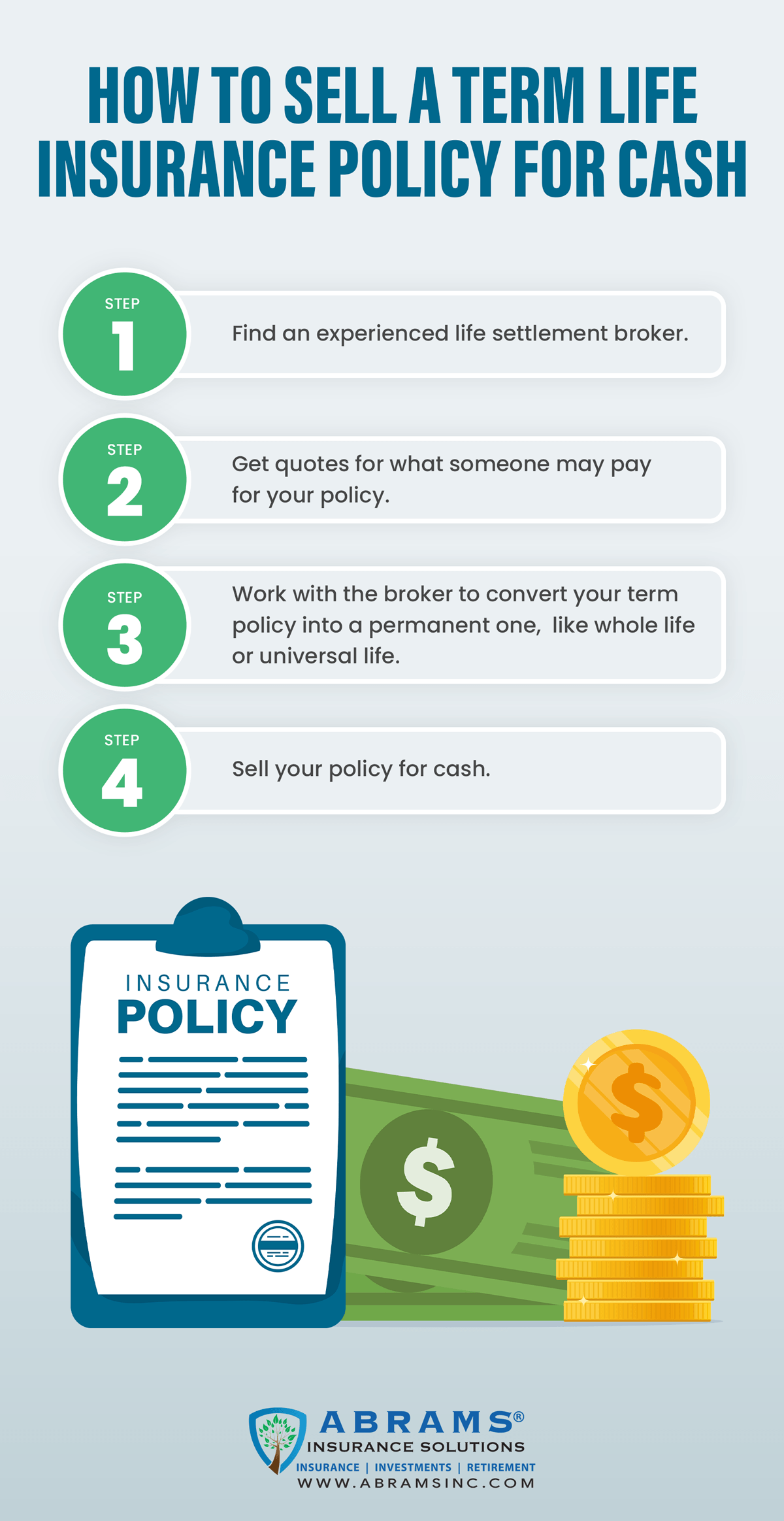
Yes, most term policies in 2026 include a conversion rider. This allows the policyholder to switch from a term policy to a permanent policy (like Whole Life) without undergoing a new medical exam. Once converted, the new policy will begin building cash value and will eventually mature upon endowment if kept in force until the specified age.
2. What happens if I am still alive when my 20-year term policy ends?
In most cases, the policy simply ends. You no longer have coverage, and you do not receive any money back. However, some policies offer "annual renewable term" options that allow you to keep the coverage year-by-year after the term ends, though the premiums usually become prohibitively expensive as you age.
3. Are endowment policies still sold in 2026?
Pure endowment policies (those designed primarily to pay out after a set number of years while the insured is alive) are much rarer today than they were in the mid-20th century. This is largely due to changes in tax laws (such as the DEFRA and TAMRA acts) that stripped many of the tax advantages from policies that accumulate cash value too quickly. Most people now use Whole Life or Universal Life for these needs.
4. Is the maturity payout the same as the death benefit?
Yes, the maturity payout is equal to the face amount (death benefit) of the policy. If you have a $250,000 Whole Life policy and you reach the endowment age of 121, the insurance company will pay you $250,000.
5. Why did my insurance company say my policy "matured" early?
This usually happens with "Endowment at Age 65" policies or similar products. These are specifically structured to mature at a younger age than traditional Whole Life. They have very high premiums because the cash value must equal the face amount in a much shorter timeframe.
Final Recommendation
If you are reviewing your insurance needs in 2026, it is vital to recognize that a term life insurance policy will not mature or endow. If your goal is to receive a lump sum at the end of a specific period while you are still living, you should look into permanent insurance products or specialized endowment contracts. If your goal is strictly protection against premature death at the lowest possible cost, term insurance remains the superior choice. Always consult with a licensed financial advisor to ensure your policy structure matches your tax bracket and long-term liquidity needs.