An orbit is the gravitationally curved trajectory of a celestial object or spacecraft around a point in space, such as the path of a planet around a star or a satellite around a planet. It occurs when an object’s forward motion perfectly balances the inward pull of gravity, allowing it to move in a continuous, repetitive loop rather than falling into the center of attraction.
Defining Orbital Mechanics in Practice
At its most fundamental level, an orbit is a delicate negotiation between velocity and gravity. When an object—be it a natural moon or an artificial satellite—travels through space, it possesses momentum. Without the influence of gravity, that object would move in a straight line forever, according to Newton’s First Law of Motion. However, the presence of a massive body, such as a planet or a star, exerts a gravitational force that continuously pulls the moving object toward its center.
If the object moves too slowly, the gravitational pull will cause it to fall toward the central body, resulting in a crash or a suborbital trajectory. If the object moves at an excessively high velocity, it can achieve escape velocity, leaving the gravitational influence of the central body entirely to travel into deep space. An orbit exists in the "Goldilocks zone" between these two extremes. The object travels fast enough that as it falls toward the planet, it continuously misses the surface because the curvature of the planet "drops away" beneath it.
The Geometry of Orbital Paths
Orbits are not always perfect circles. In fact, most natural orbits are elliptical, a fact established by Johannes Kepler in the early 17th century. Kepler’s First Law of Planetary Motion states that all planets move in elliptical orbits with the Sun at one focus.
An ellipse can be thought of as a "stretched" circle. The degree to which an orbit deviates from a perfect circle is known as eccentricity. An eccentricity of zero describes a perfect circle, while an eccentricity between zero and one describes an ellipse. When an object is at its closest point to the body it is orbiting, it is at "periapsis" (or perihelion for orbits around the Sun), where it moves at its highest speed. As it moves toward the "apoapsis" (or aphelion), which is the farthest point, its speed decreases significantly.
Major Types of Earth Orbits
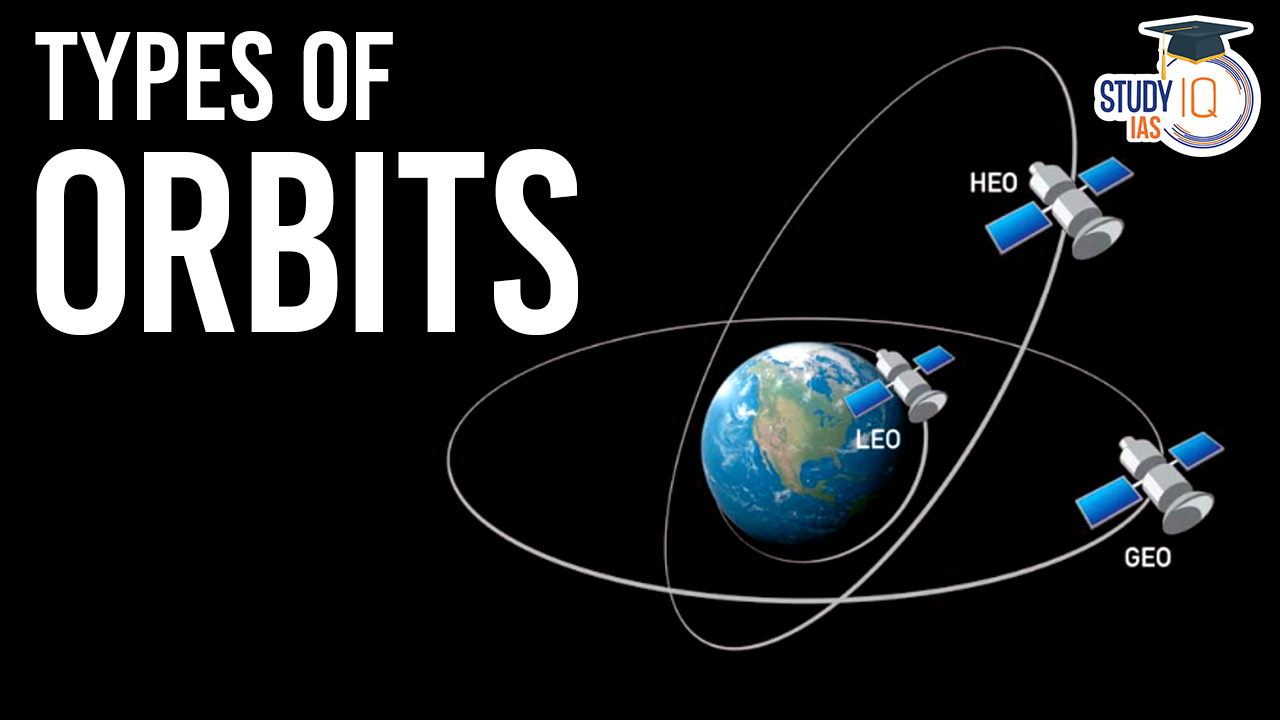
For humanity, understanding orbits is essential for the function of global communication, meteorology, and scientific research. Artificial satellites are placed in specific orbital regimes depending on their mission requirements. These regimes are defined primarily by their altitude above the Earth’s surface.
- Low Earth Orbit (LEO): Ranging from roughly 160 kilometers to 2,000 kilometers above the surface, LEO is the most common home for satellites. Because they are close to the planet, these satellites travel at very high speeds, completing an orbit in roughly 90 to 120 minutes. This is where the International Space Station operates.
- Medium Earth Orbit (MEO): Extending from above LEO up to 35,786 kilometers, MEO is frequently used by navigation systems like GPS. Satellites in MEO have orbital periods that vary depending on their exact altitude, typically ranging from two to 24 hours.
- Geostationary Orbit (GEO): This is a specific circular orbit at an altitude of approximately 35,786 kilometers directly above the Earth’s equator. At this altitude, the time it takes for the satellite to complete one orbit matches the Earth’s rotation period (one sidereal day). As a result, the satellite appears to remain fixed over a single spot on the Earth’s surface, which is ideal for telecommunications and weather monitoring.
Comparison of Common Orbital Regimes
The following table provides a high-level comparison of the characteristics and primary uses for different orbital heights.
| Orbit Type | Altitude Range | Typical Speed | Primary Use Case |
|---|---|---|---|
| LEO | 160 – 2,000 km | ~7.8 km/s | Imaging, ISS, Satellite Internet |
| MEO | 2,000 – 35,786 km | ~3.8 km/s | GPS, Navigation, Science |
| GEO | 35,786 km | ~3.07 km/s | Broadcast, Meteorology, Comms |
| HEO | Highly Variable | Variable | Deep space study, Polar coverage |
The Role of Velocity and Centripetal Force
The physics of an orbit is often explained through the concept of centripetal force. In this context, gravity acts as the centripetal force—the force that keeps an object moving in a curved path. For a circular orbit, the gravitational force provided by the central mass must exactly equal the required centripetal force to maintain that specific circular radius at a constant speed.
If the mass of the central body increases, the gravitational pull increases, requiring a higher orbital velocity to maintain the same altitude. Conversely, as the radius of the orbit increases (moving further away from the central body), the required orbital velocity decreases. This is why satellites closer to Earth must travel significantly faster than the Moon, which orbits at a much greater distance.
Perturbations and Orbital Decay
In an ideal physics model, an orbit would be permanent. In reality, orbits are subject to "perturbations"—external forces that cause the path to deviate over time. These include the gravitational influence of other celestial bodies, the non-spherical shape of the planet (the Earth is an oblate spheroid, not a perfect sphere), and solar radiation pressure.
A critical concern for low-altitude satellites is atmospheric drag. Even at the top of the atmosphere, thin wisps of gas exist. These molecules collide with the satellite, transferring kinetic energy to the atmosphere and slowing the satellite down. As the velocity drops, the satellite loses altitude. This process, known as orbital decay, eventually leads to the satellite re-entering the thicker parts of the atmosphere, where it will burn up. Operators must periodically perform "station-keeping" maneuvers—using on-board thrusters—to boost the satellite back into its intended altitude.
Frequently Asked Questions
Why don't satellites just fall to Earth? They are falling to Earth, but they are moving forward so fast that they miss it. As gravity pulls the satellite toward the center of the Earth, its high forward momentum carries it sideways. The combination of these two motions creates the curved path we call an orbit.
What is the difference between an orbit and a trajectory? An orbit is a closed or repeating path, where the object returns to the same relative position over time. A trajectory is simply the path an object takes through space. An object could have a suborbital trajectory, which means it will eventually impact the surface rather than looping around the body.
Can an orbit be changed once a satellite is launched? Yes, satellites use propulsion systems to change their orbits. By firing engines, they can change their velocity, which in turn alters the shape and altitude of their orbital path. This is necessary for reaching specific orbits after deployment, avoiding space debris, or eventually deorbiting at the end of a mission.
Do all objects in space orbit something? Not necessarily. While most objects are bound by the gravity of a larger body, there are "rogue" planets and asteroids that travel through interstellar space without orbiting a star. However, within a star system, almost all matter is influenced by the gravitational dominance of the star and the surrounding planets.
Next Steps for Orbital Analysis
For those interested in further study, the next step is to examine the "vis-viva" equation, which relates the sum of the kinetic and potential energy of an orbiting body to its distance from the central mass. Understanding these energy dynamics is essential for mission planning, satellite design, and predicting the lifespan of spacecraft currently in orbit. If you are researching specific satellite deployments, consult the current United States Space Command catalog or the data provided by the International Telecommunication Union (ITU) for real-time orbital status reports.