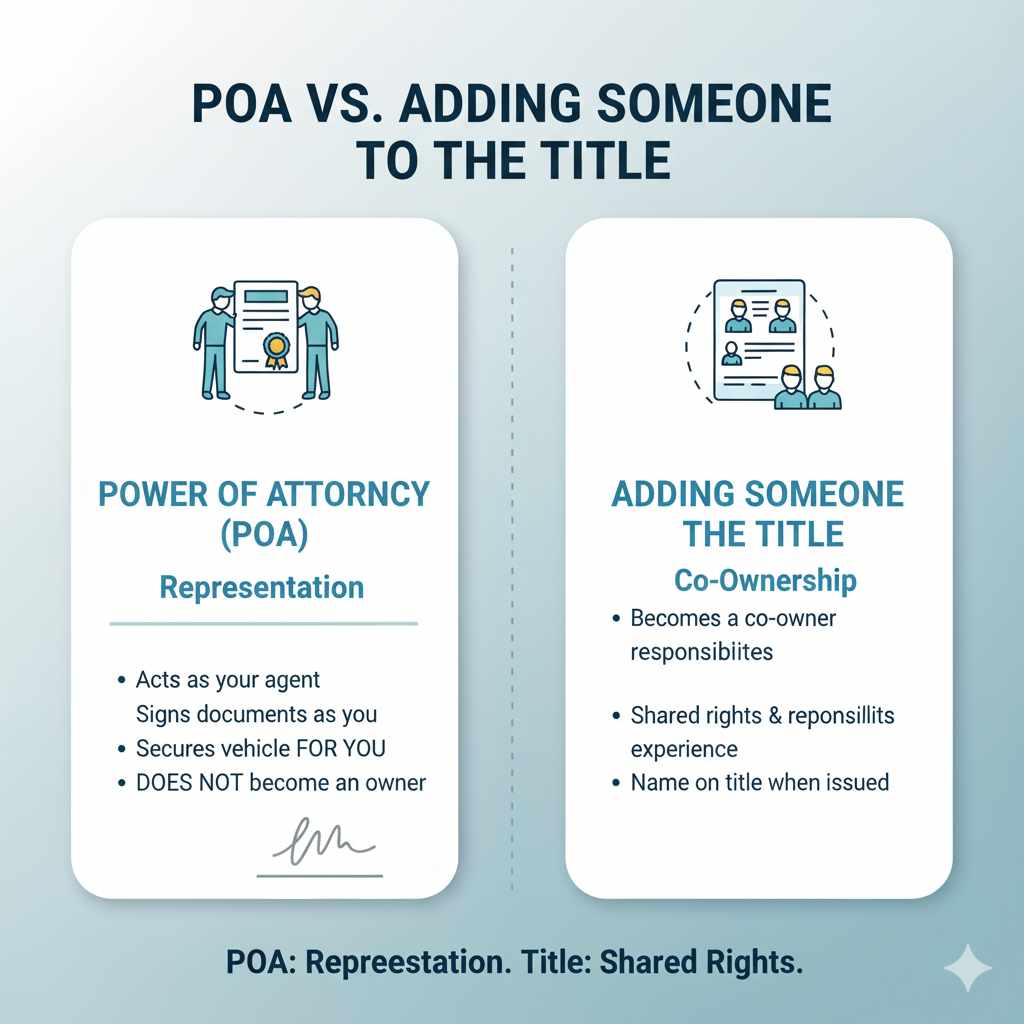
An agent acting under a Power of Attorney (POA) can purchase life insurance for the principal, provided the POA document explicitly grants the authority to conduct insurance and annuity transactions. Because these transactions involve the allocation of the principal’s assets and the designation of beneficiaries, legal frameworks in 2026 generally require specific, clearly stated authorization to prevent fraud and self-dealing.
Understanding the Scope of POA Authority in Insurance
The relationship between a principal (the person granting power) and an agent (the person receiving it) is built on the foundation of fiduciary duty. This duty requires the agent to act solely in the best interests of the principal. When it comes to financial products as complex as life insurance, the scope of the agent's authority is strictly governed by the text of the Power of Attorney document and the state laws where it was executed.
In 2026, most jurisdictions adhere to a version of the Uniform Power of Attorney Act (UPOAA). Under this act, authority over "Insurance and Annuities" is often treated as a specific category. If a POA document is "General" but does not explicitly list insurance transactions, an insurance carrier may refuse to issue a policy. This is because life insurance is not merely a purchase; it is a long-term financial contract that can significantly alter a principal’s estate plan.
General vs. Specific Authority
A "General Power of Attorney" might sound all-encompassing, but in practice, many financial institutions require specific language to allow for the creation of new contracts. If the principal is already incapacitated and the agent wishes to buy a policy to cover final expenses or fund a trust, the agent must present a "Durable" Power of Attorney that specifically mentions the power to:
- Apply for and purchase life insurance and annuities.
- Pay premiums from the principal's existing funds.
- Select or change beneficiary designations (this often requires an additional level of "specific" authorization).
- Surrender or borrow against the cash value of existing policies.
Prerequisites for Buying Life Insurance via POA
Before an agent can successfully secure a policy for a principal, several legal and procedural hurdles must be cleared. It is not as simple as signing a check; the insurance company has its own risk management protocols to follow.
1. The Language of the Document
The most critical prerequisite is the presence of "Insurance Transaction" language within the POA. As of 2026, legal experts recommend that a POA document specifically cite the ability to "apply for, purchase, receive, and maintain" insurance policies. If the document only mentions "banking" or "real estate," the agent will likely face a rejection from the insurance carrier's legal department.
2. The Principal’s Capacity and Insurable Interest
Life insurance requires an "insurable interest." A principal has an inherent insurable interest in their own life. When an agent buys a policy for the principal, the principal is typically the "insured." However, the insurance company will investigate whether the principal had the mental capacity to execute the POA in the first place. If the POA was signed after a diagnosis of severe dementia or while the principal was under duress, the entire document—and any insurance purchased under it—could be voided.
3. Underwriting and Medical Requirements
Buying life insurance in 2026 still involves underwriting. Even if the agent has the legal authority to apply, the principal (the insured) must still meet the insurance company's health standards. If the principal is unable to participate in a medical exam due to physical or cognitive decline, the agent may be limited to "Guaranteed Issue" or "Simplified Issue" policies, which typically have lower coverage limits and higher premiums.
The Role of "Hot Powers" in 2026 Estate Planning
In the legal landscape of 2026, certain powers are classified as "Hot Powers" or "Superpowers" because they carry a high risk of abuse. The authority to change a beneficiary on a life insurance policy is almost always considered a hot power.
If an agent uses the principal’s money to buy a life insurance policy and names themselves as the sole beneficiary, this creates a massive conflict of interest. To prevent this, many state laws require the POA document to specifically authorize the agent to "designate or change a beneficiary." Without this specific phrase, an agent may be able to buy the policy but will be legally restricted from naming anyone other than the principal’s estate as the beneficiary.
Table: Comparison of POA Authority Levels for Insurance
| Authority Type | Buying a New Policy | Changing Beneficiaries | Paying Premiums | Accessing Cash Value |
|---|---|---|---|---|
| General POA (Broad) | Maybe (depends on carrier) | No (usually requires "Hot Power") | Yes | Yes |
| Specific Insurance POA | Yes | Yes (if specified) | Yes | Yes |
| Limited/Special POA | Only for specified policy | No | Only for specified policy | No |
| Medical/Healthcare POA | No | No | No | No |
The Application Process: Steps for the Agent
When an agent decides that purchasing life insurance is in the principal's best interest—perhaps to cover future estate taxes or provide for a surviving spouse—they must follow a specific protocol to ensure the policy is valid and contest-proof.
Step 1: Legal Review of the POA
The agent should first have an estate planning attorney review the POA document to ensure it meets the current 2026 standards for insurance transactions. The attorney can provide an "Affidavit of Full Force and Effect," which many insurance companies require to prove the POA has not been revoked.
Step 2: Selecting the Right Product
The agent must evaluate products based on the principal’s financial needs. In 2026, common choices include:
- Whole Life Insurance: Provides a death benefit and builds cash value, which the agent can later use for the principal’s care.
- Term Life Insurance: Cheaper, but only provides a benefit if the principal passes away within a specific timeframe.
- Final Expense Insurance: Small policies specifically designed to cover burial and funeral costs, often easier to get for elderly principals.
Step 3: Submitting to Underwriting
The agent signs the application as "Agent for [Principal's Name]." The insurance company will then request a full copy of the POA. Their legal team will verify that the agent has the power to spend the principal’s money on premiums and that the beneficiary designation follows the principal’s known estate plan.
Step 4: Premium Management
The agent must ensure that premiums are paid from the principal’s funds, not the agent’s personal funds. Mixing assets (commingling) is a breach of fiduciary duty and can lead to the policy being contested by other heirs or scrutinized by tax authorities like the IRS.
Common Legal Pitfalls and Challenges
Even with a well-drafted POA, agents often run into significant hurdles. Awareness of these issues is essential for any agent acting in 2026.
The Problem of Self-Dealing
Self-dealing occurs when an agent uses their power to benefit themselves financially. If an agent buys a life insurance policy on the principal and names themselves as the beneficiary, other heirs can sue for a breach of fiduciary duty. To avoid this, agents should ensure that the beneficiary designations mirror the principal’s existing will or trust. If the principal's will says everything goes to three children equally, the life insurance should generally follow that same distribution.
Carrier Rejection
Insurance companies are private entities and are not always legally required to accept a POA. Some carriers have their own internal POA forms and may refuse to recognize a "statutory" form if it does not meet their specific criteria. In 2026, it is common for carriers to require the POA to be "recent"—often executed within the last 5 to 10 years—to ensure the principal’s intent hasn't changed.
State-Specific Variations
While the UPOAA has created more consistency, states like California, New York, and Florida have specific nuances regarding how insurance powers must be phrased. An agent moving a principal from one state to another may find that their POA is suddenly viewed differently by local insurance brokers and legal departments.
Financial and Tax Implications in 2026
Purchasing life insurance via a POA is often a strategic financial move. As of 2026, life insurance remains one of the few financial products that offers a tax-free death benefit to beneficiaries under Internal Revenue Code Section 101(a).
Estate Tax Planning
For high-net-worth principals, an agent might use a POA to purchase a policy intended to provide liquidity for estate taxes. However, if the principal "owns" the policy, it will be included in their taxable estate. In such cases, an agent with broad authority might need to coordinate with a trustee to have an Irrevocable Life Insurance Trust (ILIT) purchase the policy instead, assuming the POA grants the power to create and fund trusts.
Medicaid Considerations
If the principal is applying for Medicaid for long-term care, the agent must be extremely careful. Most states consider the cash value of a life insurance policy as an "uncountable asset" only if it is below a very small threshold (often $1,500 to $2,500). If an agent uses a POA to buy a large whole-life policy, they might inadvertently disqualify the principal from receiving Medicaid benefits.
Frequently Asked Questions
Can a POA name themselves as the beneficiary?
Generally, no, unless the Power of Attorney document explicitly grants the agent the power to make gifts to themselves or to change beneficiary designations in their own favor. Doing so without express written authority is considered a breach of fiduciary duty and "self-dealing," which can lead to civil lawsuits or criminal charges for elder financial abuse.
What if the insurance company refuses to honor the POA?
If an insurance carrier refuses a valid POA, the agent can provide a "Certification of Agent" under the Uniform Power of Attorney Act, which is a sworn statement that the POA is valid. In many states as of 2026, a financial institution that unreasonably refuses a valid statutory POA can be held liable for attorney’s fees and costs incurred in a court action to mandate acceptance.
Does the agent need to prove the principal is incapacitated?
If the POA is "Springing," the agent must provide medical evidence (usually a letter from one or two physicians) that the principal is incapacitated before the authority to buy insurance becomes active. If the POA is "Durable" and "Effective Immediately," the agent can act even if the principal is still competent, though it is best practice to involve the principal in the decision if possible.
Can a POA buy insurance on someone other than the principal?
A POA agent can only buy insurance on the life of another person (e.g., the principal’s spouse or child) if the principal themselves had an insurable interest in that person and the POA document grants the agent the authority to manage investments and insurance broadly. This is rare and typically requires very specific language regarding the "management of family assets."
What happens if the agent fails to pay the premiums?
If an agent has the authority and the principal has the funds, but the agent negligently allows a policy to lapse by failing to pay premiums, the agent can be held personally liable for the lost death benefit. Beneficiaries of the principal’s estate may sue the agent for the financial loss caused by this negligence.
Summary Recommendation for Agents
If you are an agent under a Power of Attorney and believe it is necessary to purchase life insurance for the principal, your first step must be a thorough document audit. Do not assume a "General" POA covers insurance. In the 2026 legal environment, specificity is the only protection against liability.
Before proceeding, consult with an insurance professional who understands POA-led applications and an estate attorney to verify that the proposed policy and beneficiary designations align with the principal’s existing estate plan. Document every reason why the purchase is in the principal’s best interest—whether for tax planning, final expenses, or protecting a surviving spouse—to shield yourself from future challenges by other heirs or government agencies.