Selecting an Enterprise Resource Planning (ERP) vendor requires matching your organization’s specific operational requirements, scale, and technical infrastructure with a platform’s core capabilities. This list of ERP vendors provides a structured overview of the current market leaders, categorized by business size and industry specialization, to help decision-makers navigate the complex process of digital transformation.
Understanding the ERP Market Landscape in 2026
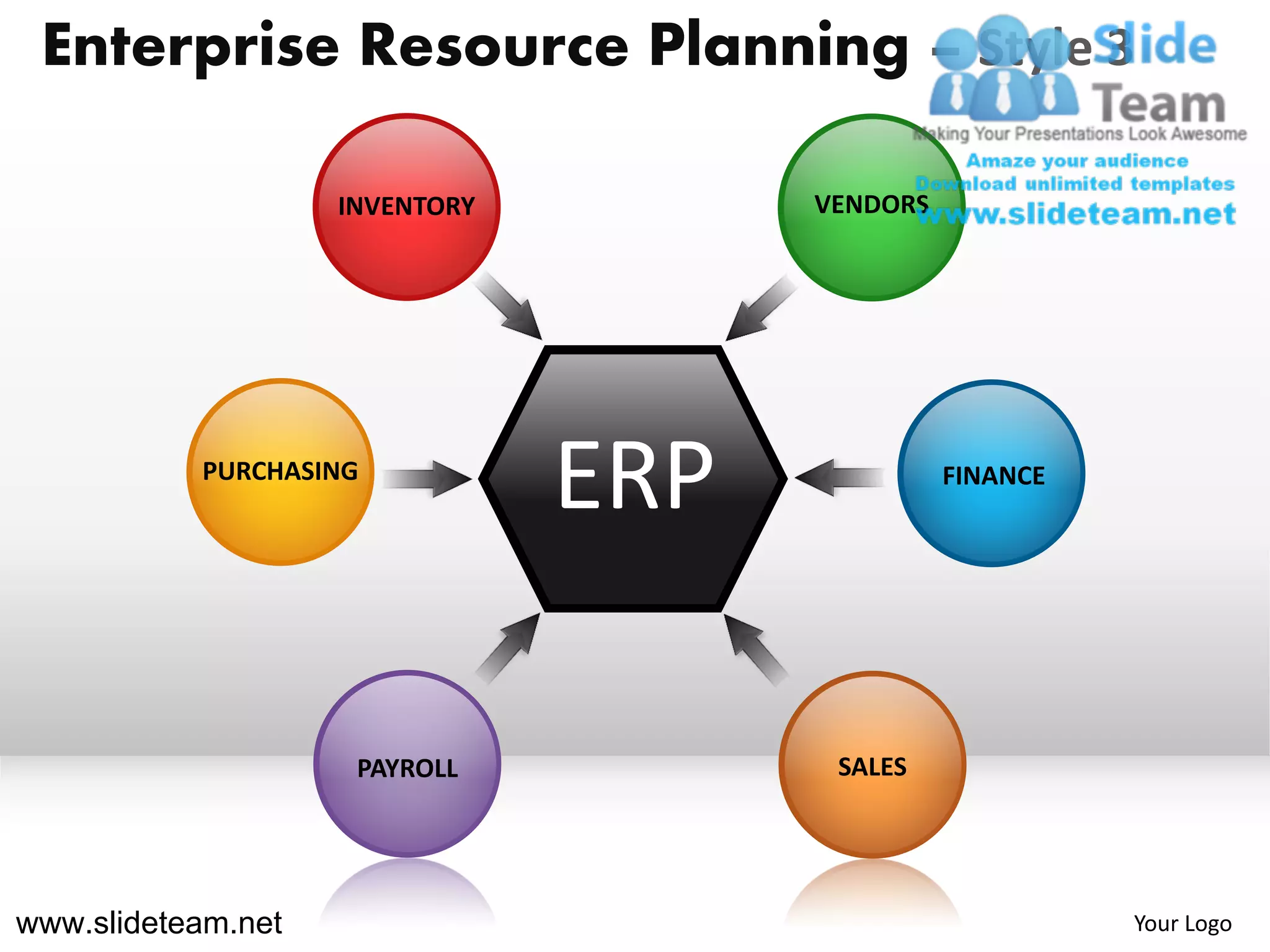
Enterprise Resource Planning (ERP) systems act as the digital backbone of an organization, integrating essential business processes—such as accounting, procurement, manufacturing, human resources, and supply chain management—into a unified data environment. By 2026, the market has shifted significantly toward cloud-native architectures, prioritizing artificial intelligence (AI) integration for predictive analytics and automated workflows.
When evaluating a list of ERP vendors, it is essential to distinguish between "Tier 1" vendors, typically serving global enterprises with complex, multi-national requirements, and "Tier 2" or "Tier 3" vendors, which often focus on mid-market companies or specific industry verticals. The selection process is rarely about finding the "best" software globally; it is about finding the vendor that minimizes the gap between your existing business processes and the system's out-of-the-box functionality.
Primary ERP Vendors by Market Segment
The following categorization highlights vendors that maintain a significant footprint in the current enterprise software landscape.
1. Tier 1 Global Enterprise Systems
These platforms are designed for large-scale operations with high transaction volumes and complex regulatory requirements across multiple jurisdictions.
- SAP (S/4HANA): Widely recognized for its depth in manufacturing and supply chain management. SAP S/4HANA is the flagship product, focusing on high-performance, in-memory processing. It is generally the standard for large multinational corporations requiring deep localization.
- Oracle (Fusion Cloud ERP): Known for its comprehensive financial management and human capital management (HCM) suites. Oracle’s architecture is built for organizations that prioritize a unified, cloud-first ecosystem and require advanced analytics and embedded AI capabilities.
- Microsoft (Dynamics 365 Finance & Operations): A strong competitor for enterprises heavily invested in the Microsoft stack. Its seamless integration with Azure, Power BI, and the Microsoft 365 environment makes it a preferred choice for organizations seeking interoperability with familiar productivity tools.
2. Mid-Market and Specialized Solutions
These vendors focus on flexibility, rapid deployment, and specific industry needs, such as professional services, retail, or distribution.
- NetSuite (Oracle): Often categorized as the leader in cloud-native ERP for mid-sized organizations. NetSuite offers a scalable, "all-in-one" platform that supports e-commerce, CRM, and financial management in a single cloud instance.
- Workday: Primarily known for its dominance in Finance and Human Resources. Workday has evolved into a robust ERP solution for service-centric organizations that prioritize employee experience and high-level financial reporting.
- Epicor: A perennial favorite for manufacturing and distribution firms. Epicor focuses on industry-specific functionality, offering deep features for inventory management, production scheduling, and shop-floor control.
- Sage (Sage X3/Intacct): Sage offers tiered solutions that scale from small business accounting to more robust ERP capabilities for mid-market manufacturing and wholesale distribution, focusing on usability and financial compliance.
Comparative Analysis of Key ERP Vendors
The table below summarizes the core focus areas for top-tier vendors. Note that "industry focus" indicates the sectors where each vendor traditionally demonstrates the highest level of specialization.
| Vendor | Typical Target Audience | Primary Strengths | Core Industry Focus |
|---|---|---|---|
| SAP | Large Enterprises | Scalability, deep process automation | Manufacturing, Automotive |
| Oracle | Large/Global Enterprises | Financial modeling, AI/Analytics | Financial Services, Public Sector |
| Microsoft | Mid-to-Large Enterprises | Ecosystem integration, UX | Retail, Professional Services |
| NetSuite | Mid-Market, Growth Firms | Cloud-native, E-commerce | Wholesale, SaaS, Services |
| Epicor | Mid-Market | Shop-floor control, Inventory | Manufacturing, Distribution |
| Workday | Services/Education/Gov | Financials, HCM | Services, Higher Education |
Prerequisites for Selecting an ERP Vendor
Before engaging with a vendor, your organization must undergo an internal readiness assessment. Skipping this phase often leads to "scope creep" and budget overruns during implementation.
- Define Business Requirements: Document your "must-have" versus "nice-to-have" features. Focus on your unique business processes—the activities that provide your organization with a competitive advantage—rather than generic accounting functions.
- Evaluate Technical Infrastructure: Assess whether your organization requires a Software-as-a-Service (SaaS) model (where the vendor manages the infrastructure) or a private/hybrid cloud deployment (which may be required for specific data sovereignty or security compliance).
- Establish Budgetary Constraints: Total Cost of Ownership (TCO) extends far beyond the initial licensing fee. You must account for implementation partner fees, data migration costs, employee training, and ongoing annual subscription increases.
- Assemble a Project Team: A successful ERP implementation requires a cross-functional team, including representation from IT, Finance, Operations, and HR. Executive sponsorship is mandatory; projects without strong leadership support are prone to failure.
The Implementation Lifecycle: What to Expect
Once a vendor is selected, the implementation typically follows a structured phases-based approach. Awareness of this process helps manage expectations regarding timeline and resource allocation.
- Discovery and Design: The implementation partner maps your current processes to the software. This phase often uncovers inefficiencies that can be addressed before the system is even configured.
- Data Migration: Cleaning and moving historical data from legacy systems is often the most time-consuming task. Do not underestimate the effort required to standardize data formats between the old and new systems.
- Configuration and Customization: While modern best practice is to adopt "out-of-the-box" features, some customization is often required. Keep customizations to a minimum, as they increase complexity during future system upgrades.
- User Acceptance Testing (UAT): End-users test the system in a sandbox environment to ensure that all workflows function as expected in a real-world scenario.
- Deployment and Training: The "Go-Live" phase. Training should be role-specific to ensure that staff can effectively use the new tools from the first day.
Common Risks and Mitigation Strategies
When choosing from a list of ERP vendors, acknowledge the inherent risks in replacing core business software.
- Over-Customization: Attempting to force the software to match legacy processes perfectly can result in a "dead-end" configuration that is impossible to upgrade. If a process does not fit the ERP, consider changing the business process to match the software’s best practices.
- Underestimating Change Management: ERP failure is rarely a technology problem; it is a people problem. If users resist the change, the system will not yield the expected efficiency gains. Invest heavily in internal communication and training.
- Scope Creep: Define the "phase one" scope clearly and stick to it. Defer non-essential requirements to subsequent phases to maintain the momentum and budget integrity of the initial launch.
Frequently Asked Questions (FAQ)
What is the difference between a Tier 1 and a Tier 2 ERP? Tier 1 vendors (like SAP or Oracle) are built for organizations with complex, multi-currency, multi-language, and global reporting needs. Tier 2 vendors (like NetSuite or Epicor) focus on specific mid-market segments with faster implementation timelines and lower TCO, often with less complex global regulatory requirements.
Should I choose a cloud-based or on-premise ERP? In 2026, the industry has largely standardized on cloud-based (SaaS) deployments. Cloud ERP offers regular, automated updates and lower infrastructure overhead. On-premise solutions are generally reserved for organizations in highly regulated sectors with strict requirements for data air-gapping or specific legacy hardware integration.
How long does an ERP implementation typically take? For mid-market organizations, a standard implementation can range from 6 to 18 months. For large enterprises, multi-year, phased rollouts across global regions are standard practice. Rushing the process significantly increases the risk of operational disruption.
Is it better to choose one "all-in-one" vendor or a "best-of-breed" strategy? An "all-in-one" strategy (using a single vendor's suite) minimizes integration risks and simplifies vendor management. A "best-of-breed" strategy involves selecting the best specific module (e.g., a specialist CRM paired with a specialist Finance ERP) and linking them via APIs. Best-of-breed offers more specialized features but requires significantly higher technical effort to maintain data synchronization.
What role does AI play in modern ERPs? AI is now standard for tasks like intelligent invoice matching, automated supply chain forecasting, and natural language query interfaces for reporting. When evaluating vendors, ask for demonstrations of how their AI features specifically reduce manual data entry for your staff.
Final Recommendation: Making the Decision
When you narrow down your list of ERP vendors, do not rely solely on vendor demonstrations, which are designed to show the system at its best. Request a "proof of concept" using your own data to see how the software handles your specific daily challenges. Prioritize vendors that demonstrate a strong local partner network; the quality of your implementation partner is often just as critical to your success as the software itself.