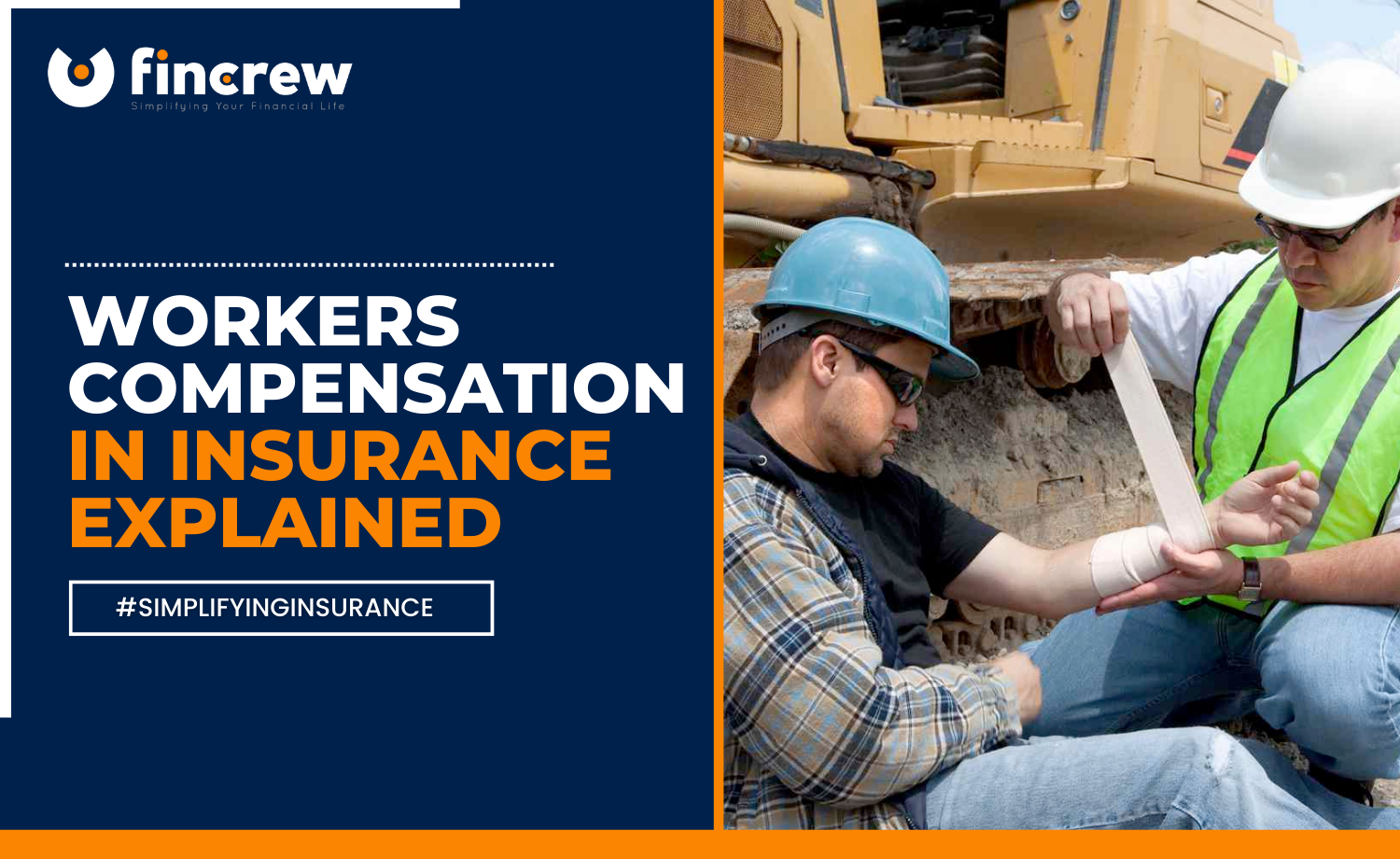
In 2026, the legal requirement for workers' compensation insurance depends primarily on your business location, the number of employees you hire, and your industry. In 49 out of 50 U.S. states, businesses with at least one employee are mandated by law to carry coverage to provide medical benefits and wage replacement to injured workers.
Workers' compensation insurance serves as a foundational element of the American labor system, often referred to as the "Grand Bargain." This legal framework ensures that employees receive guaranteed medical care and financial support for work-related injuries, regardless of fault. In exchange, employers receive protection from most personal injury lawsuits filed by employees. As we navigate the business landscape of 2026, understanding the nuances of these mandates is critical for operational compliance and financial security.
The General Mandate: State vs. Federal Jurisdictions
It is a common misconception that workers' compensation is governed by a single federal law. In reality, the requirement to carry insurance is almost entirely determined at the state level. Each state legislature drafts its own statutes, defines who qualifies as an "employee," and sets the penalties for non-compliance.
The Role of State Statutes
Most states require coverage the moment you hire your first employee. This includes full-time, part-time, and sometimes even seasonal or temporary workers. States like California, New York, and Illinois have some of the strictest requirements, where even a single part-time employee triggers the legal mandate.
Conversely, some states utilize a "numerical threshold." For example, in Alabama or Georgia, you may not be legally required to carry workers' compensation until you reach three or more employees. However, it is important to note that even if you are below the threshold, you are still liable for the costs of a workplace injury. If a worker is injured and you do not have insurance, you may be forced to pay medical bills and lost wages out of pocket, often at a much higher cost than the insurance premium.
Federal Workers' Compensation Programs
While private employers generally follow state laws, the federal government manages specific programs for certain types of workers. If your business involves maritime work, interstate trucking, or energy production on federal lands, you may fall under federal jurisdiction. Key federal programs include:
- The Longshore and Harbor Workers' Compensation Act (LHWCA): Covers maritime workers not covered by the Jones Act.
- The Federal Employees' Compensation Act (FECA): Covers federal civilian employees.
- The Black Lung Benefits Act: Provides compensation to miners disabled by pneumoconiosis.
Defining the "Employee" in 2026
The legal requirement to have insurance hinges on the legal definition of an employee. As the "gig economy" and remote work structures have matured into 2026, the distinction between a W-2 employee and a 1099 independent contractor has become a major focal point for state regulators.
W-2 Employees vs. Independent Contractors
If you hire a worker and control when, where, and how they perform their duties, they are likely considered an employee in the eyes of the law. Providing equipment, training, and a set schedule are strong indicators of an employer-employee relationship. Under these circumstances, workers' compensation is almost always mandatory.
Independent contractors, on the other hand, are generally responsible for their own insurance. However, states have become increasingly aggressive in preventing "misclassification." Many jurisdictions now use the ABC Test to determine if a worker is truly independent. To qualify as a contractor, the worker must:
- Be free from the control and direction of the hirer.
- Perform work that is outside the usual course of the hirer’s business.
- Be customarily engaged in an independently established trade or occupation.
The Risk of Misclassification
Misclassifying an employee as an independent contractor to avoid paying workers' compensation premiums is a high-risk strategy. In 2026, state insurance departments and departments of labor frequently share data to identify businesses that report high 1099 payments but zero workers' compensation coverage. If a "contractor" is injured and a court determines they were actually an employee, the business owner may face retroactive premium payments, massive fines, and criminal charges.
Common Exemptions and Exceptions
While coverage is broad, certain categories of workers and business structures are often exempt from mandatory workers' compensation laws. These exemptions vary significantly by state.
Sole Proprietors and Partners
In many states, if you are a sole proprietor or a partner in a partnership with no employees, you are not legally required to cover yourself. You have the option to buy a policy for personal protection, but the state does not mandate it. However, if you hire even one person, the mandate usually kicks in.
LLC Members and Corporate Officers
Members of a Limited Liability Company (LLC) or officers of a corporation are sometimes allowed to "opt-out" of coverage. This is common in small family-owned corporations where the owners want to reduce overhead. To do this, you must usually file a formal waiver or "Election of Non-Coverage" with the state's workers' compensation board.
Specific Industry Exemptions
Some states provide carve-outs for specific types of labor, such as:
- Domestic Workers: Nannies or housekeepers who work fewer than a certain number of hours per week.
- Agricultural Workers: Some states exempt small farms with few employees.
- Casual Labor: Work that is occasional, incidental, and not part of the regular business operations.
- Real Estate Agents: Often classified as independent contractors by specific state statutes.
State-by-State Thresholds and Requirements
To help visualize the landscape, the following table outlines the general requirements for selected states. Note that these are general guidelines and specific industry rules (like construction) often override these thresholds.
| State | Employee Threshold | Notes |
|---|---|---|
| California | 1 or more | Extremely strict enforcement; includes part-time employees. |
| Texas | Elective | The only state where coverage is not mandatory for most private employers. |
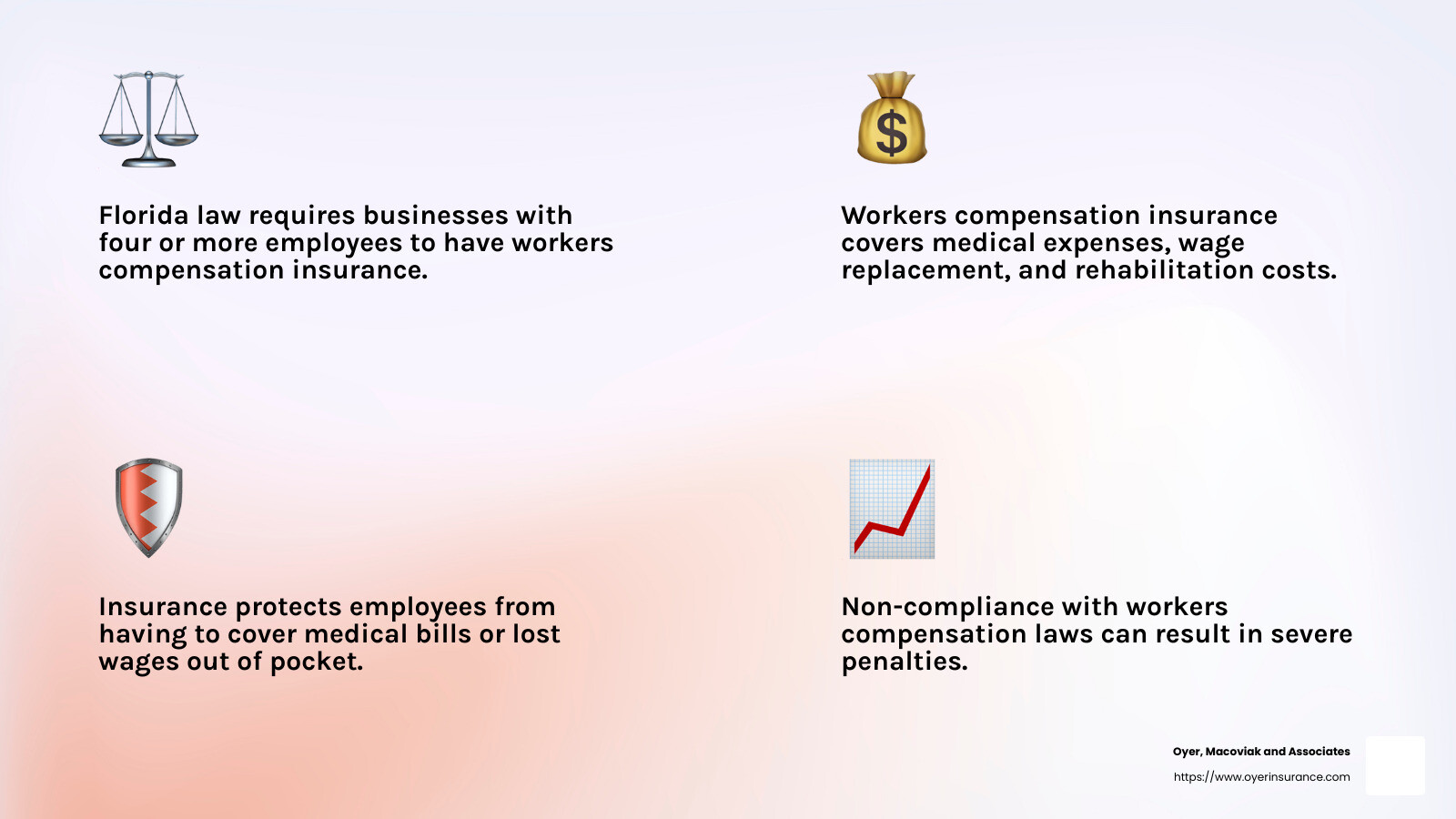
| Florida | 4 or more | Construction industry requires coverage for 1 or more employees. |
| Georgia | 3 or more | Includes regular part-time workers. |
| New York | 1 or more | Virtually all employers must provide coverage. |
| Ohio | 1 or more | Monopolistic state; must buy through the state fund. |
| Virginia | 2 or more | Threshold includes subcontractors used regularly. |
The Consequences of Non-Compliance
Operating without workers' compensation when it is legally required is a serious offense. State governments view this as a form of "tax evasion" and a violation of public safety.
Financial Penalties and Fines
Fines for non-compliance are often calculated on a per-day or per-employee basis. In states like Pennsylvania, failure to insure can result in penalties of up to $2,500 per day. Some states also charge a penalty equal to double or triple the amount the employer would have paid in premiums during the period they were uninsured.
Stop-Work Orders
If an inspector discovers you do not have required coverage, they can issue a "Stop-Work Order." This legally forces your business to cease all operations immediately until insurance is obtained and fines are paid. For a small business, a two-week closure can be a terminal event.
Criminal Liability
In many jurisdictions, the "willful" failure to provide workers' compensation insurance is a felony. Business owners and corporate officers can face jail time if an employee is severely injured or killed while the business is uninsured.
Civil Lawsuits
The "Exclusive Remedy" protection only applies if you have insurance. If you are uninsured, an injured employee can sue you in civil court for negligence. In these cases, the employer is often prohibited from using standard legal defenses, such as "contributory negligence" (arguing the employee was partially at fault).
Industry-Specific Requirements: The Construction Exception
The construction industry is treated with a higher level of scrutiny due to its high-risk nature. In many states that have a numerical threshold (like 3 or 5 employees), that threshold is waived for construction companies.
Why Construction is Different
Because construction workers are at a higher risk of catastrophic injury, states want to ensure that every worker on a job site is covered. In Florida, for example, a non-construction business needs 4 employees to trigger the mandate, but a construction business needs only 1.
Subcontractor Liability
One of the biggest traps for business owners is the "Statutory Employer" rule. If you hire a subcontractor who does not have their own workers' compensation insurance, you—the hiring contractor—become legally responsible for their injuries. Most general contractors will require a Certificate of Insurance (COI) from every subcontractor before allowing them on a job site to avoid this liability.
How Premiums Are Calculated and Managed
If you are legally required to have insurance, the cost will be determined by three primary factors: your payroll, your industry classification, and your claims history.
NCCI Classification Codes
The National Council on Compensation Insurance (NCCI) maintains thousands of "class codes." Each code represents a different job type and carries a different risk level. A clerical office worker (Code 8810) has a much lower rate than a roofing contractor (Code 5551). Your total premium is calculated by multiplying your total payroll (per $100) by the rate assigned to your class code.
The Experience Modification Rate (E-Mod)
The "E-Mod" is a multiplier that adjusts your premium based on your history of workplace injuries compared to other businesses in your industry. An E-Mod of 1.0 is average. If you have a clean safety record, your E-Mod might drop to 0.85, giving you a 15% discount. If you have many accidents, it could rise to 1.50, increasing your costs by 50%.
The Annual Audit
Workers' compensation is one of the few insurance types that is "audited." At the start of the year, you provide an estimate of your payroll. At the end of the year, the insurance company reviews your actual payroll records. If you hired more people than expected, you will receive an "audit premium" bill for the difference.
How to Obtain Coverage in 2026
Depending on your state, there are three main ways to secure the required coverage:
- The Voluntary Market: You purchase a policy from a private insurance company (e.g., Travelers, Liberty Mutual, or specialized tech-enabled carriers). This is where most businesses get their coverage.
- Monopolistic State Funds: In four states—Ohio, Washington, North Dakota, and Wyoming—you must buy insurance through a state-run fund. Private insurance is not allowed for the primary workers' comp mandate.
- The Assigned Risk Pool: If your business is in a high-risk industry or has a poor safety record, private companies may refuse to insure you. In this case, you are placed in the state's "assigned risk pool," which is coverage of last resort and is usually much more expensive.
FAQs
Can I skip workers' comp if I only hire family members?
In some states, you can exclude immediate family members (spouses, children, parents) from coverage if they are corporate officers or LLC members. However, if they are simply employees, most states require them to be covered just like any other worker. Always check your specific state's definition of "family exclusion."
Does workers' compensation cover remote employees?
Yes. If an employee is injured while performing work-related duties at home (e.g., a trip and fall while walking to their desk), it is generally compensable. In 2026, many states require you to carry insurance in the state where the employee is physically located, not necessarily where your headquarters is.
What is a "Ghost Policy"?
A "Ghost Policy" is a minimum-premium workers' comp policy for a business with no employees. It is common for sole proprietors in construction who need a Certificate of Insurance to get onto a job site. The policy provides zero coverage for the owner but satisfies the legal or contractual requirement to show that a policy exists.
Do I need insurance for interns?
Generally, yes. Even if the internship is unpaid, many states classify interns as employees for the purpose of workers' compensation. Because the cost of covering an intern is usually very low (due to low or zero payroll), it is far safer to include them in your policy than to risk a fine.
Is COVID-19 or other respiratory illness covered?
In 2026, most states have settled laws regarding occupational diseases. Generally, an illness is covered only if the nature of the employment creates a risk of contracting the disease that is significantly higher than the risk to the general public (e.g., healthcare workers).
Practical Recommendation
If you have anyone performing work for your business who is not a clearly defined independent contractor, you should assume you are legally required to carry workers' compensation insurance. Start by visiting your State Workers' Compensation Board website to verify the specific numerical thresholds for your jurisdiction. Even if you fall below the legal threshold, purchasing a policy is highly recommended to protect your personal and business assets from the potentially bankrupting costs of a workplace injury.