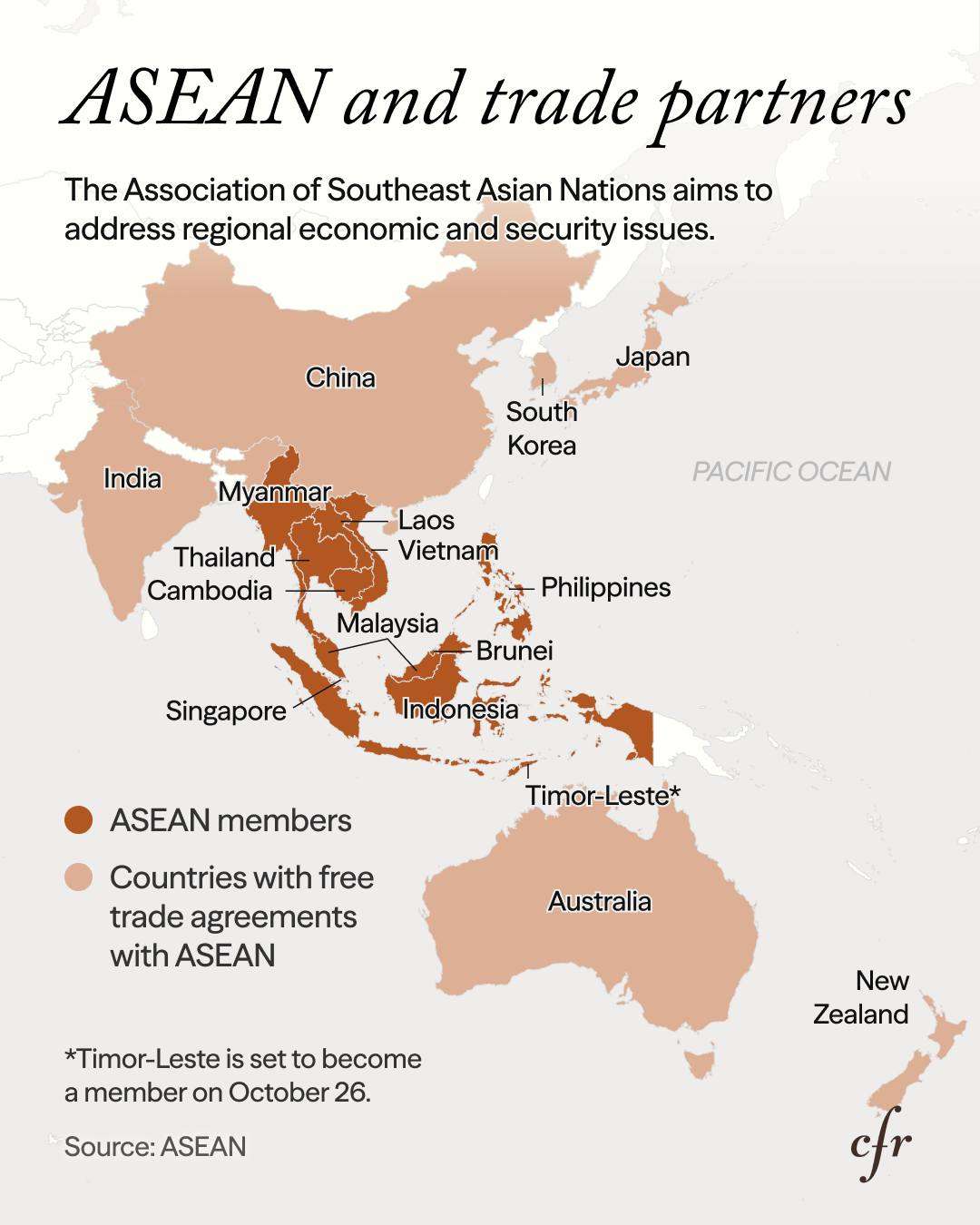
An ASEAN ETF (Exchange-Traded Fund) provides investors with a diversified vehicle to capture the economic expansion of the Association of Southeast Asian Nations. By pooling stocks from member countries like Indonesia, Singapore, Vietnam, and Malaysia, these funds offer a liquid, cost-effective way to gain exposure to the region's burgeoning middle class, digital transformation, and shifting global supply chains.
The investment landscape of 2026 reveals a Southeast Asia that has moved beyond its "emerging market" label to become a central pillar of global trade and domestic consumption. For investors looking to diversify away from saturated Western markets or the volatility of larger East Asian economies, the ASEAN bloc represents one of the most compelling structural growth stories of the decade. This guide examines how ASEAN ETFs function as a strategic window into this dynamic region, the underlying drivers of growth in 2026, and the practical steps for integrating these assets into a modern portfolio.
Defining the ASEAN ETF Landscape
An ASEAN ETF is an investment fund traded on stock exchanges, much like individual stocks, that tracks an index comprised of companies within the Southeast Asian region. The primary objective is to mirror the performance of the most influential corporations across the ten member states of the Association of Southeast Asian Nations (ASEAN). In practice, most of these ETFs focus on the "ASEAN-5"—Indonesia, Malaysia, the Philippines, Singapore, and Thailand—while increasingly incorporating high-growth frontier markets like Vietnam.
By 2026, the complexity of these markets has grown, making the ETF structure even more valuable for the average investor. Rather than navigating the disparate regulatory requirements, currency conversions, and brokerage hurdles of ten different nations, an investor can purchase shares in a single fund listed on major exchanges like the NYSE, HKEX, or SGX.
These funds typically follow a market-capitalization-weighted index. This means larger economies and more mature companies, such as Singaporean banks or Indonesian telecommunications giants, carry more weight in the portfolio. However, the internal composition is shifting. While traditional sectors like financials and real estate dominated the indices a decade ago, the 2026 landscape shows an increasing presence of technology, renewable energy, and advanced manufacturing firms.
The Strategic Rationale: Why Southeast Asia in 2026?
To understand why an ASEAN ETF is a valuable "window," one must look at the structural shifts defining the region today. Southeast Asia is no longer just a source of raw materials; it is a sophisticated consumer market and a high-tech manufacturing hub.
Demographic Dividends and the Middle-Class Boom
In 2026, the demographic profile of ASEAN remains its greatest asset. Unlike the rapidly aging populations in Europe, Japan, and parts of China, many ASEAN nations—particularly Indonesia and the Philippines—possess a "youth bulge." This young, productive workforce is entering its peak earning and spending years.
This demographic shift has fueled a massive expansion of the middle class. Estimates for 2026 suggest that over 65% of the ASEAN population now falls into the middle-class category, driving demand for everything from consumer electronics and healthcare to financial services and luxury goods. An ASEAN ETF captures this trend by holding shares in the retailers, banks, and service providers that cater to this growing domestic demand.
The Digital Transformation and "e-Conomy"
The digital economy in Southeast Asia has reached a point of maturity in 2026 that few predicted twenty years ago. The region's "mobile-first" population bypassed the PC era entirely, leading to a hyper-adoption of digital payments, e-commerce, and super-apps.
The integration of artificial intelligence and high-speed 5G networks across major metropolitan areas like Jakarta, Bangkok, and Ho Chi Minh City has created a self-sustaining tech ecosystem. ETFs that track the region now provide exposure to these digital leaders, many of whom have transitioned from venture-backed startups to profitable, publicly traded entities on regional exchanges.
Manufacturing and the "China Plus One" Strategy
Geopolitical shifts over the early 2020s led global corporations to diversify their manufacturing bases away from total reliance on China. By 2026, this "China Plus One" strategy has fully matured, with Vietnam, Malaysia, and Thailand emerging as primary beneficiaries.
The Regional Comprehensive Economic Partnership (RCEP), which is now fully operational and integrated, has lowered trade barriers and harmonized rules of origin across the bloc. This makes it easier for companies to operate a "hub and spoke" model within ASEAN. An ASEAN ETF allows investors to benefit from this industrial migration, capturing the growth of logistics, industrial real estate, and tech-manufacturing firms.
Comparing Popular ASEAN ETF Instruments
Investors have several options when choosing an ASEAN-focused fund. These vary by geographical focus, expense ratio, and the specific index they track.
| ETF Name | Ticker | Primary Focus | Expense Ratio (Estimated 2026) | Key Holdings Focus |
|---|---|---|---|---|
| Global X FTSE Southeast Asia ETF | ASEA | Top 40 ASEAN companies | 0.65% | Financials, Telcos, Real Estate |
| VanEck Vietnam ETF | VNM | Vietnam-listed equities | 0.59% | Real Estate, Consumer Staples, Financials |
| iShares MSCI Indonesia ETF | EIDO | Large and mid-sized Indonesian firms | 0.57% | Financials, Consumer Discretionary |
| iShares MSCI Thailand ETF | THD | Thai equity market | 0.58% | Energy, Financials, Tourism/Services |
| iShares MSCI Malaysia ETF | EWM | Malaysian equity market | 0.58% | Tech-Manufacturing, Financials, Utilities |
Note: Data represents typical market allocations observed in 2026; individual fund prospectuses should be consulted for real-time adjustments.
The Global X FTSE Southeast Asia ETF (ASEA) remains the most direct way to play the broad regional theme. It tracks the FTSE ASEAN 40 Index, which represents the performance of the largest companies in the five original ASEAN nations. For those seeking more concentrated growth, single-country ETFs like the VanEck Vietnam ETF (VNM) offer deeper exposure to specific high-growth frontier markets that may be underrepresented in broader regional funds.
Key Regional Players: A Deep Dive into Market Drivers
An ASEAN ETF is essentially a basket of national stories. Understanding the "window" requires looking at what is happening inside the major rooms of the house.
Indonesia: The Regional Giant
Indonesia is the largest economy in Southeast Asia and a dominant force in any broad ASEAN ETF. In 2026, the nation’s focus on "downstreaming"—the policy of processing raw materials like nickel and copper domestically rather than exporting them—has paid off. Indonesia is now a global hub for the electric vehicle (EV) battery supply chain. ETFs heavily weighted in Indonesia benefit from this industrial shift and the sheer scale of its 280-million-strong consumer market.
Vietnam: The Global Factory
Vietnam continues to be the star performer in terms of GDP growth. Having successfully moved up the value chain from textiles to complex electronics, Vietnam is a critical node in global supply chains. While still technically a "frontier market" in some classifications, its inclusion in regional ETFs is vital for capturing high-beta growth.
Singapore: The Financial Anchor
Singapore serves as the financial and logistical gateway for the entire region. Most broad ASEAN ETFs have a high allocation to Singaporean banks and Real Estate Investment Trusts (REITs). These provide stability and high dividend yields to the fund, balancing the more volatile growth profiles of Indonesia or the Philippines.
Risks and Considerations for Investors
While the growth story is compelling, investing in ASEAN ETFs in 2026 involves specific risks that require careful monitoring.
Volatility and Liquidity
Many Southeast Asian markets are still developing. While the top 40 companies in the region are highly liquid, the broader market can experience significant price swings. During periods of global economic stress, "risk-off" sentiment often leads to capital outflows from emerging markets, which can depress the Net Asset Value (NAV) of an ASEAN ETF regardless of the fundamental health of the companies within it.
Political and Regulatory Risks
The political landscape in ASEAN is diverse. Changes in government policy regarding foreign ownership, taxation, or trade can occur suddenly. For example, regulatory shifts in Indonesia’s mining sector or Thailand’s tourism policies can have immediate impacts on the stock prices of major companies. An ETF mitigates this through diversification, but it does not eliminate the risk entirely.
Currency Fluctuations
When you invest in an ASEAN ETF listed in US Dollars (USD), you are essentially making two bets: one on the underlying companies and one on the local currencies (like the Indonesian Rupiah or the Vietnamese Dong) against the Dollar. If the USD strengthens significantly, it can erode the gains made by the local stocks when they are converted back into the ETF’s reporting currency.
How to Invest in ASEAN ETFs: A Step-by-Step Guide
For those ready to gain exposure to Southeast Asian growth, the process is straightforward but requires attention to detail.
- Select Your Brokerage: Use a brokerage that offers access to international exchanges or US-listed ETFs. Major platforms like Interactive Brokers, Fidelity, or regional specialists provide the necessary tools.
- Determine Your Exposure Type: Decide if you want a broad regional fund (like ASEA) or a combination of country-specific funds (like EIDO for Indonesia or VNM for Vietnam). A broad fund is generally better for long-term "core" holdings.
- Analyze the Expense Ratio: In 2026, competitive expense ratios for regional ETFs typically range between 0.50% and 0.70%. High fees can significantly eat into long-term compounding.
- Check for Overlap: If you already hold a broad "Emerging Markets" ETF (like IEMG or VWO), you may already have exposure to ASEAN. Check the holdings to ensure you are not over-concentrating in the same region.
- Execute the Trade: Because these are ETFs, they can be bought and sold throughout the trading day. Using "limit orders" is recommended to ensure you get a fair price, especially in funds with lower daily trading volumes.
The Future Outlook: 2026 and Beyond
As we move through 2026, the ASEAN region is positioned to benefit from the "Green Transition." With vast reserves of critical minerals and growing investments in solar and wind infrastructure, the region is becoming a leader in sustainable development. Furthermore, the integration of the ASEAN Power Grid is beginning to facilitate the cross-border trade of renewable energy, creating new investment opportunities in the utility and infrastructure sectors.
The "window" provided by an ASEAN ETF is likely to show an increasingly green and technologically advanced landscape. For the global investor, the region represents a rare combination of demographic stability, technological adoption, and strategic geographic importance.
FAQ
What is the difference between an ASEAN ETF and an Emerging Markets ETF? An Emerging Markets (EM) ETF covers a global array of developing nations, including China, India, Brazil, and South Africa. An ASEAN ETF is a thematic, regional fund that focuses exclusively on Southeast Asia. While an EM ETF might have a 10-15% allocation to Southeast Asia, an ASEAN ETF provides 100% targeted exposure to the region's specific growth drivers.
Which country usually has the highest weight in an ASEAN ETF? Traditionally, Singapore and Indonesia hold the highest weights. Singapore's large, mature financial institutions and Indonesia's massive consumer and telecommunications firms dominate the market-cap-weighted indices. However, Vietnam's weight has been steadily increasing as its equity markets mature and more of its companies meet the criteria for index inclusion.
Are dividends from ASEAN ETFs taxed? Yes, but the treatment depends on your tax residency and the country where the ETF is listed. Many ASEAN countries have withholding taxes on dividends. When an ETF receives these dividends, the tax is often deducted at the source. Investors should consult a tax professional regarding foreign tax credits and treaty benefits applicable in 2026.
Can I invest in an ASEAN ETF through my 401(k) or IRA? If your 401(k) offers a "brokerage window" or if you have a self-directed IRA, you can typically purchase any US-listed ASEAN ETF. However, standard 401(k) plan lineups rarely include these specialized regional funds, usually opting for broader international or emerging market funds instead.
How does the RCEP agreement affect my investment? The Regional Comprehensive Economic Partnership (RCEP) facilitates smoother trade between ASEAN and partners like Australia, Japan, and South Korea. For an ETF investor, this is a long-term tailwind. It lowers the cost of doing business for the companies within the ETF, potentially leading to higher profit margins and more robust regional supply chains.
Practical Recommendation
For most diversified investors in 2026, an ASEAN ETF should serve as a "satellite" holding rather than the core of a portfolio. A 5% to 10% allocation can provide a meaningful boost to growth and a hedge against stagnation in developed markets. Start with a broad-based fund like the Global X FTSE Southeast Asia ETF (ASEA) to capture the stability of Singapore alongside the growth of Indonesia. As you become more familiar with the individual economies, you might consider "tilting" your portfolio with a country-specific fund like VNM (Vietnam) to capture the high-velocity manufacturing expansion.