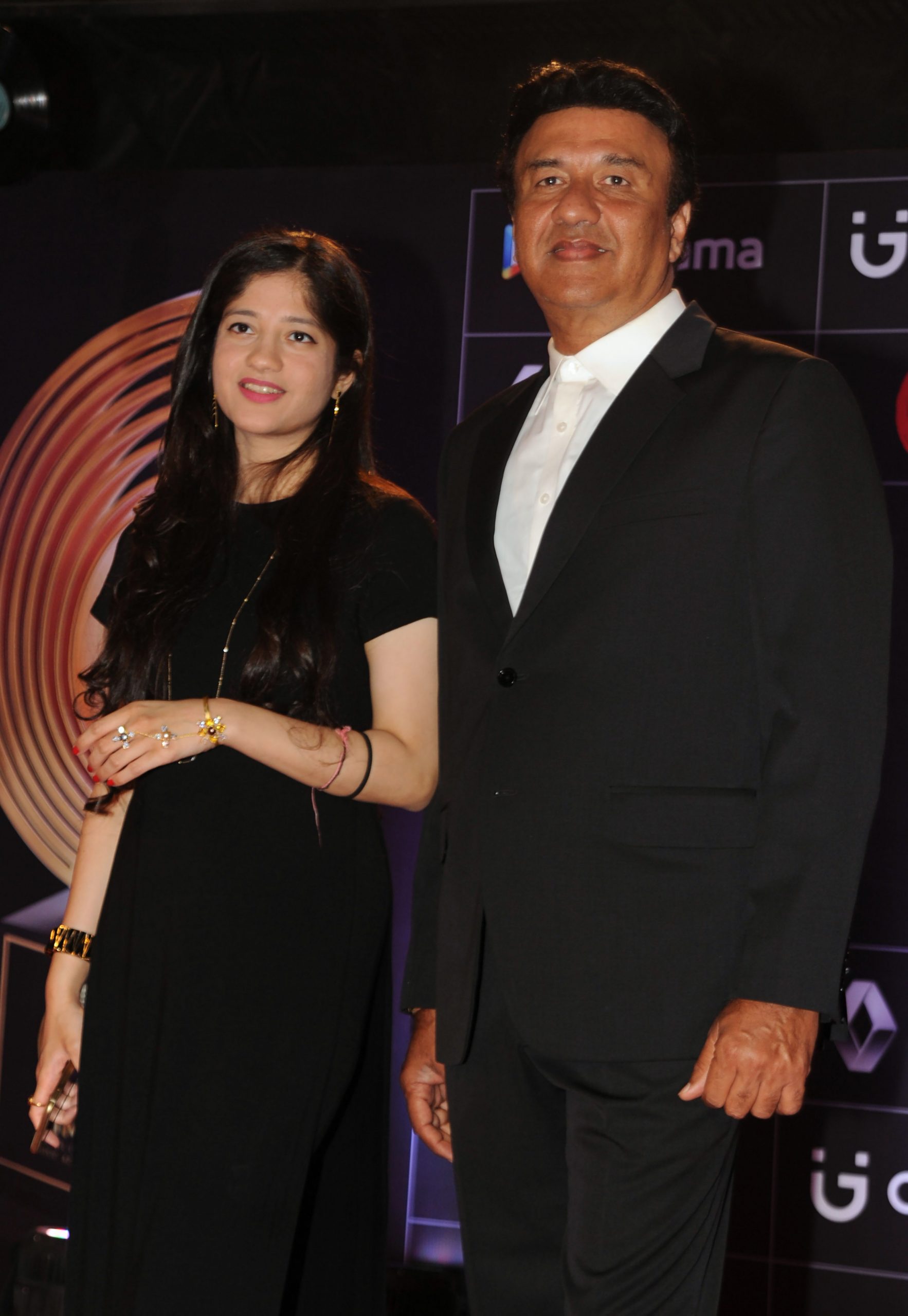
As of 2026, the veteran Indian music composer and singer Anu Malik is 65 years old, having celebrated his 65th birthday on November 2, 2025. With a career spanning over four and a half decades, Malik remains a foundational figure in the Bollywood music industry, known for his prolific output, National Award-winning compositions, and his long-standing presence as a television personality.
Biographical Profile and Current Age
Born as Anwar Sardar Malik on November 2, 1960, in Mumbai, Maharashtra, Anu Malik has witnessed the evolution of Indian cinema music from the era of large live orchestras to the modern digital age. In 2026, he stands as a bridge between the classic melodies of the 20th century and the contemporary sounds of the 21st.
Malik is the son of the renowned music director Sardar Malik and hails from a family deeply rooted in the arts. His brothers, Abu Malik and Daboo Malik, are also involved in the entertainment industry, and the musical lineage continues with his daughters, Anmol Malik and Ada Malik. Anmol, in particular, has carved a niche for herself as a singer and author, carrying forward the family’s creative legacy.
The Formative Years: 1980–1989
Anu Malik made his debut as a music composer in 1980 with the film Hunterwali 77. The 1980s were a period of intense struggle and experimentation for him. During this decade, the Bollywood music scene was dominated by legends like R.D. Burman, Laxmikant-Pyarelal, and Kalyanji-Anandji. For a young composer to find a foothold was a monumental task.
Despite the competition, Malik managed to deliver notable work in films like Sohni Mahiwal (1984), for which he received his first Filmfare nomination for Best Music Director. The soulful melodies of this period showcased his ability to blend traditional Indian folk elements with the commercial requirements of Bollywood. However, it wasn't until the early 1990s that he would achieve the "superstar" status among composers.
The Golden Decade: 1990–1999
The 1990s defined Anu Malik’s career and established him as one of the most versatile composers in the industry. This era began with the massive success of Phir Teri Kahani Yaad Aayee (1993) and Sir (1993), but it was Baazigar (1993) that changed everything. The soundtrack of Baazigar was a cultural phenomenon, earning him his first Filmfare Award for Best Music Director.
Versatility in Genres
What set Malik apart during the 90s was his ability to toggle between vastly different genres. He could produce high-energy, "tapoori" style hits for Govinda films like Coolie No. 1 (1995) and Judwaa (1997), and simultaneously compose hauntingly beautiful, semi-classical scores for films like Border (1997) and Virasat (1997).
The song "Sandese Aate Hain" from Border remains one of the most iconic patriotic songs in Indian history. It demonstrated Malik’s capability to handle long-form compositions (the song is over 10 minutes long) with emotional depth and structural complexity. This period also saw him collaborating extensively with lyricist Javed Akhtar and playback singers like Kumar Sanu, Alka Yagnik, and Sonu Nigam.
Mastery and International Recognition: 2000–2010
Entering the new millennium, Anu Malik reached the pinnacle of his critical acclaim. In 2001, he won the National Film Award for Best Music Direction for the film Refugee. The music was praised for its atmospheric use of desert-themed sounds and its reliance on melody over heavy percussion, proving that Malik could excel in high-art cinema as well as commercial blockbusters.
The Success of "Main Hoon Na"
In 2004, Malik composed the music for Farah Khan's directorial debut, Main Hoon Na. The soundtrack was a massive success, blending retro 70s Bollywood vibes with modern pop. It earned him another Filmfare Award. During this decade, he also composed for major films like:
- Fiza (2000)
- Asoka (2001)
- Aks (2001)
- Murder (2004)
- Jaan-E-Mann (2006)
His work in Murder was particularly significant as it helped usher in the era of "Sufi-rock" in Bollywood, with songs like "Bheegey Hont Tere" becoming chartbusters.
Television Career and Cultural Impact
Beyond the recording studio, Anu Malik became a household name through the medium of television. He was one of the original judges on Indian Idol, appearing on the show from its first season in 2004. His persona as a judge—marked by his spontaneous poetry (shayari) and blunt, often polarizing critiques—made him a central figure in the Indian reality TV landscape.
While his television career brought him immense popularity, it also made him a subject of mimicry and pop-culture memes. Despite the humor often directed at his unique style, his role in discovering and mentoring new vocal talent in India is undeniable. Many of today’s successful playback singers had their start on stages where Malik sat as a primary evaluator.
Challenges and Controversies
Anu Malik’s career has not been without significant challenges. Throughout his tenure, he faced frequent allegations of plagiarism, with critics pointing to similarities between his compositions and international hits. Malik often defended his work as "inspiration" or adaptation, a common practice in the pre-digital Bollywood era, though it remained a point of contention among music purists.
In late 2018, Malik faced allegations during the #MeToo movement in India. Multiple women accused him of sexual harassment, leading to his temporary removal from his judging position on Indian Idol. Malik denied the allegations and, after a period of hiatus, occasionally returned to the limelight and television, though the controversy left a lasting impact on his public image and the frequency of his big-budget film assignments.
Snapshot of Career Milestones (1980–2026)
| Period | Major Milestones | Key Soundtrack Highlights | Awards/Recognition |
|---|---|---|---|
| 1980s | Debut and Initial Recognition | Hunterwali 77, Sohni Mahiwal | Filmfare Nomination (Sohni Mahiwal) |
| 1990s | Superstardom & Versatility | Baazigar, Main Khiladi Tu Anari, Border | Filmfare Award (Baazigar) |
| 2000s | Critical Peak & Reality TV | Refugee, Main Hoon Na, Indian Idol | National Film Award (Refugee) |
| 2010s | Continued Compositions | Dum Laga Ke Haisha, Begum Jaan | Zee Cine Award |
| 2020-2026 | Legacy & Digital Presence | Hungama 2, Singles, Digital Mentorship | Lifetime Achievement Recognition |
Technical Style and Musical Signature
Anu Malik’s technical approach to music is characterized by a strong emphasis on the "hook line"—a melodic phrase that is immediately catchy and memorable. Unlike composers who rely heavily on complex arrangements, Malik’s strength often lies in the simplicity of the melody itself.
- Use of Rhythms: He frequently utilizes traditional Indian rhythms like the Dadra and Kaharwa talas, even in modern tracks, which gives his music a distinct "desi" (local) feel that resonates with the masses.
- Vocal Range: As a singer, Malik has a unique, nasal baritone. While not a classical vocalist, he has used his voice effectively in character-driven songs like "Ek Garam Chai Ki Pyali" or "Oonchi Hai Building," where personality is more important than technical perfection.
- Instrumentation: In his prime, Malik was known for grand string arrangements and the use of the harmonium in his composition process, often starting a tune on the harmonium before translating it to a full orchestra.
Anu Malik in 2026: The Current Phase
In 2026, at the age of 65, Anu Malik has transitioned into a "Statesman" role within the industry. While the frequency of his film scores has reduced in favor of younger composers like Arijit Singh (in his composing avatar), Mithoon, or various music collectives, Malik remains active through:
- Independent Music: Releasing singles and music videos on digital platforms, often collaborating with younger artists to stay relevant to Gen Z audiences.
- Music Consulting: Advising production houses on musical structure and the "commercial viability" of soundtracks.
- Public Appearances: Continuing to appear as a guest judge or veteran expert on musical reality shows across various networks.
His legacy is cemented by the fact that many of his 90s hits are being remixed and recreated for modern films, proving the enduring melodic value of his original work.
FAQs About Anu Malik
What is Anu Malik’s most prestigious award?
Anu Malik’s most prestigious honor is the National Film Award for Best Music Direction, which he won in 2001 for the film Refugee. Unlike popular awards based on commercial success, the National Award is a state-recognized honor for artistic excellence in cinema.
Is Anu Malik still active in the music industry in 2026?
Yes, as of 2026, Anu Malik remains active, though his focus has shifted toward independent projects, digital content, and special appearances on television. While he may not score 10 films a year as he did in the 1990s, he continues to influence the industry through his legacy and occasional new releases.
How many Filmfare Awards has Anu Malik won?
Anu Malik has won two Filmfare Awards for Best Music Director. The first was for Baazigar (1993) and the second was for Main Hoon Na (2004). He has received over a dozen nominations throughout his career, spanning several decades.
Who are some of the most famous singers Anu Malik has worked with?
Malik has worked with almost every major playback singer of the last four decades, including veterans like Lata Mangeshkar, Asha Bhosle, and Kishore Kumar (in his very early career), as well as 90s icons like Kumar Sanu, Alka Yagnik, Kavita Krishnamurthy, and Udit Narayan. He also played a key role in the early successes of Sonu Nigam and Sunidhi Chauhan.
What was Anu Malik’s first film?
His debut film as a music composer was Hunterwali 77, released in 1980. This marked the beginning of a career that has now spanned 46 years as of 2026.
Final Recommendation
For those interested in understanding the evolution of Bollywood music, a deep dive into Anu Malik’s discography is essential. To appreciate his technical range, one should listen to the Refugee (2000) soundtrack for its soulful depth and compare it with the high-energy pop of Judwaa (1997). Despite the controversies, his ability to craft melodies that stay in the public consciousness for decades is a testament to his innate musical instinct. Fans and students of music should look to his 1990s work as a masterclass in creating "commercial melody" that defines an era of cinema.