Homeowners in Ohio primarily encounter four major ant species: the Odorous House Ant, the Pavement Ant, the Carpenter Ant, and the Pharaoh Ant. Managing these pests in 2026 requires a combination of accurate identification, moisture control, and the strategic use of slow-acting baits rather than immediate contact sprays to ensure colony elimination.
Identifying the Most Common Ant Species in Ohio
Ohio's climate, characterized by humid summers and cold winters, creates a perfect environment for several ant species that thrive in the Midwestern ecosystem. Understanding which ant has invaded your home is the first step in determining the level of risk to your property and the most effective treatment method.
Odorous House Ants (Tapinoma sessile)
The Odorous House Ant is the most frequent nuisance pest for Ohio residents. These ants are small, measuring about 1/16 to 1/8 of an inch, and are typically dark brown or black. Their name comes from the distinct, unpleasant odor they release when crushed, often described as smelling like rotten coconuts or rancid butter.
In Ohio, these ants are known for their "tramp" behavior, meaning they move their nests frequently to follow food and moisture. They are particularly attracted to sweets and honeydew produced by aphids on garden plants. Inside the home, they are usually found in kitchens and bathrooms, nesting near water pipes, heaters, or inside wall voids. Because their colonies can contain thousands of workers and multiple queens, simply killing the ants you see will not solve the infestation.
Pavement Ants (Tetramorium caespitum)
If you see small mounds of sand or soil appearing in the cracks of your driveway or between the pavers of your patio, you likely have Pavement Ants. These are small, dark brown ants that are slightly larger than Odorous House Ants. They are most active in the spring when they emerge from under concrete slabs.
While Pavement Ants usually stay outdoors, they frequently enter Ohio homes through expansion joints in the foundation or gaps in the basement floor. They are scavengers and will eat almost anything, including grease, seeds, and small insects. While they do not cause structural damage, their presence in large numbers can be a significant nuisance in ground-level rooms.
Carpenter Ants (Camponotus pennsylvanicus)
The Black Carpenter Ant is the most dangerous ant species for Ohio homeowners. These are large ants, ranging from 1/4 to 1/2 inch in length, and are entirely black or dark red and black. Unlike termites, carpenter ants do not eat wood; instead, they hollow it out to create galleries for their nests.
In the Ohio landscape, carpenter ants naturally live in dead logs and standing trees. However, they are drawn to homes that have moisture-damaged wood. Common entry points include windowsills, door frames, and roof eaves where leaks have occurred. If you see "frass"—a material that looks like sawdust mixed with insect parts—piled near wooden structures, it is a definitive sign of an active carpenter ant colony.
Pharaoh Ants (Monomorium pharaonis)
Pharaoh Ants are a more complex challenge in 2026 due to their resistance to traditional pest control methods. These ants are very small (about 1/16 inch) and range in color from yellow to light red with a darker abdomen. They are notorious for "budding," a process where the colony splits into multiple new colonies if they sense a threat, such as the application of a repellent spray.
These ants require warm, humid environments and are often found in Ohio apartments, hospitals, and large residential complexes. They are particularly dangerous because they can transmit pathogens like Salmonella and Staphylococcus as they crawl across food preparation surfaces.
Why Ants Invade Ohio Homes
The persistence of ants in the Buckeye State is largely due to the intersection of seasonal weather patterns and residential construction habits. Understanding the "Why" behind an infestation allows for better long-term prevention.
The Search for Moisture
Ohio’s high humidity levels, especially in the Ohio River Valley and near the Great Lakes, contribute to moisture accumulation in homes. Ants are highly sensitive to desiccation (drying out) and will enter homes seeking stable humidity levels. Clogged gutters, leaky outdoor faucets, and poor drainage around the foundation create damp soil conditions that attract ants to the perimeter of the house.
Food Resource Availability
Ants are opportunistic feeders. In 2026, the shift toward more organic gardening and the preservation of native Ohio flora has inadvertently increased the population of aphids and scales in many yards. These insects produce honeydew, a sugary substance that serves as a primary fuel source for ant colonies. Once an outdoor food source is exhausted or weather conditions change, ants follow scent trails (pheromones) into kitchens in search of crumbs, spills, and improperly sealed pantry items.
Seasonal Transitions
Ohio’s distinct seasons dictate ant behavior. In late March and April, as the ground thaws, ants become active and begin foraging for protein to support new brood development. During the mid-summer heat, they often move indoors to escape extreme temperatures. In the fall, they may enter homes looking for a protected site to overwinter, although most native species remain dormant deep underground or within protected wood during the harshest winter months.
Structural Risks and the Danger of Carpenter Ants
While most ants are "nuisance pests," the Black Carpenter Ant poses a genuine threat to the equity of an Ohio home. Because Ohio has a high volume of older housing stock with wood-frame construction, the risk of structural compromise is significant if an infestation is left untreated for years.
Carpenter ants prefer to nest in wood that has a moisture content of over 20%. This often occurs in areas where flashing has failed, or where wooden decks are attached to the house without proper sealing. Over time, the "galleries" they excavate can weaken support beams and joists. In 2026, structural repairs for significant carpenter ant damage can cost homeowners anywhere from $2,000 to $10,000, depending on the location of the nest and the extent of the wood replacement required.
It is important to distinguish between "parent" colonies and "satellite" colonies. The parent colony, which contains the queen and larvae, is often located outside in a nearby tree or stump. The satellite colonies, which consist of workers and pupae, are what homeowners typically find inside their walls. Effective treatment must address both to prevent re-infestation.
Integrated Pest Management (IPM) for Ohio Homeowners
Integrated Pest Management is the gold standard for ant control in 2026. This approach focuses on long-term prevention and uses chemicals only as a last resort or in a highly targeted manner.
Step 1: Inspection and Identification
You cannot treat an ant problem effectively until you know what species you are dealing with. Use a magnifying glass to look for the "pedicel" (the waist) of the ant. Odorous house ants have one node that is hidden by the abdomen, while pavement ants have two visible nodes. If the ants are large and you see sawdust, treat for carpenter ants immediately.
Step 2: Sanitation and Habitat Modification
- Remove Food Sources: Store cereal, sugar, and flour in airtight plastic or glass containers. Wipe down counters daily with a vinegar solution to break pheromone trails.
- Manage Moisture: Fix leaky pipes under sinks and ensure that bathroom fans are functioning correctly to reduce humidity. Ensure that soil levels around the foundation are sloped away from the house.
- Vegetation Management: Trim tree branches and shrubs so they do not touch the house. These act as "highways" for ants to bypass ground-level perimeter treatments.
Step 3: Exclusion
Use a high-quality silicone caulk to seal gaps around windows, doors, and where utility lines enter the home. Pay close attention to the area where the siding meets the foundation. For Pavement Ants, sealing cracks in the basement floor can significantly reduce indoor sightings.
Step 4: Strategic Baiting
In 2026, professional entomologists strongly advise against using "bug bombs" or general repellent sprays for ants. These products often cause "scatter," where the ants split into multiple smaller colonies, making the problem worse. Instead, use slow-acting baits.
Baits work by mimicking food. Foraging ants take the bait back to the nest and share it with the queen and larvae. This is the only way to ensure the entire colony is eliminated. Use sugar-based baits for Odorous House Ants and protein-based baits for Carpenter Ants.
Comparing Common Ohio Ants
The following table provides a quick reference for identifying and understanding the behavior of the most common ants found in Ohio residential properties.
| Feature | Odorous House Ant | Pavement Ant | Carpenter Ant | Pharaoh Ant |
|---|---|---|---|---|
| Size | 1/16" - 1/8" | 1/8" | 1/4" - 1/2" | 1/16" |
| Color | Dark Brown/Black | Brown/Black | Black or Red/Black | Yellow/Light Red |
| Primary Nest Site | Wall voids, near pipes | Under concrete/slabs | Moist wood/Hollow doors | Warm wall voids/Kitchens |
| Odor when crushed | Rotten coconut | None notable | None notable | None notable |
| Structural Risk | Low (Nuisance) | Low (Nuisance) | High | Moderate (Health risk) |
| Best Control | Liquid sugar baits | Granular baits | Wood injection/Baits | Non-repellent baits only |
Professional Pest Control: Costs and Considerations in 2026
For many Ohio homeowners, a recurring ant problem requires professional intervention. In 2026, the pest control industry has moved toward more eco-friendly, "green" treatments that use botanical oils or targeted baits that have low toxicity to pets and humans.
Cost Breakdown
- Initial Inspection and Treatment: A one-time visit for a standard ant infestation (Odorous or Pavement ants) typically costs between $150 and $300.
- Carpenter Ant Specialized Treatment: Because this often requires drilling into walls or treating the exterior perimeter with specialized non-repellent liquids, costs range from $400 to $800.
- Quarterly Maintenance Plans: Many Ohio companies offer year-round protection plans. In 2026, these average $40 to $60 per month. These plans are often the best value for homes located in wooded areas or near water where ant pressure is constant.
When hiring a professional, ensure they are licensed by the Ohio Department of Agriculture. A reputable technician should be able to identify the species and explain the biology of the pest before applying any product.
Frequently Asked Questions
Why do ants keep coming back every spring in Ohio?
Ants are highly sensitive to ground temperature. In Ohio, as the soil warms up in late March, colonies that have been dormant deep underground resume activity. They often enter homes during this time because natural outdoor food sources (like nectar and other insects) are not yet abundant. The spring "bloom" of ants is usually a search for protein to help the queen produce new eggs for the season.
Are "natural" remedies like cinnamon or peppermint oil effective?
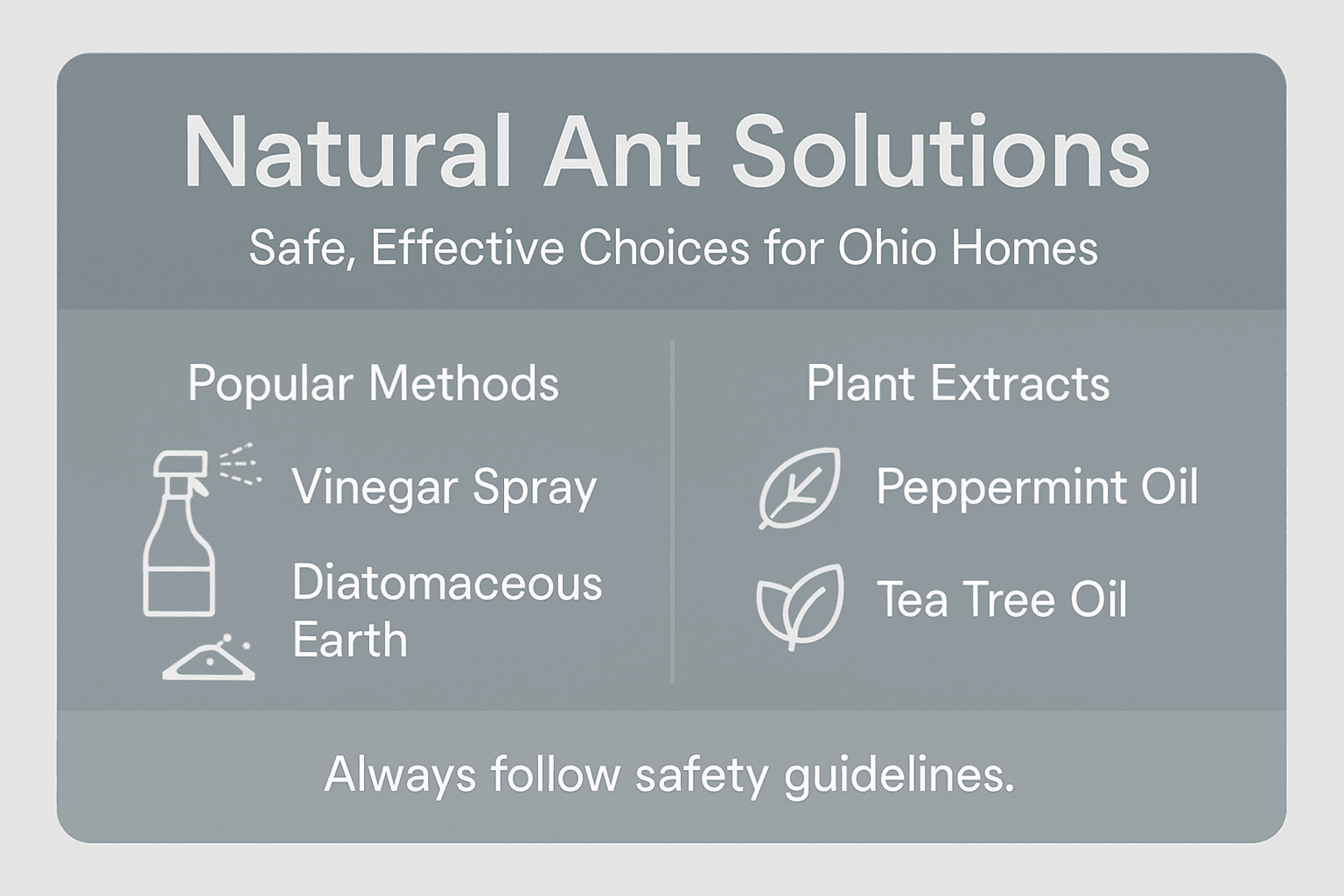
Natural repellents like peppermint oil, cinnamon, and coffee grounds can act as temporary deterrents. They disrupt the scent trails that ants use to navigate. However, they do not kill the colony. In a state like Ohio, where ant colonies can be massive, these methods usually only redirect the ants to a different entry point in your home rather than solving the infestation.
Can I get rid of carpenter ants myself?
While DIY baits are available, carpenter ants are notoriously difficult to eliminate because their parent nests are often located 50 to 100 feet away from the house in a neighbor's tree or a woodpile. If you see carpenter ants inside your home, especially during the winter, it indicates an internal nest. Given the risk of structural damage, a professional inspection is highly recommended to ensure the queen is neutralized.
What is the difference between an ant swarmer and a termite?
In Ohio, both ants and termites swarm in the spring. You can tell them apart by three features:
- Waist: Ants have a pinched "wasp-like" waist; termites have a thick, straight body.
- Antennae: Ants have elbowed (bent) antennae; termites have straight, bead-like antennae.
- Wings: Ant wings are unequal in length (front wings are longer); termite wings are all the same length and usually twice the length of their body.
Is it safe to use ant baits around pets and children?
Most modern ant baits used in 2026 utilize active ingredients like Borax or Spinosad in very low concentrations. When used in enclosed bait stations placed in areas inaccessible to pets and children (such as behind appliances or inside cabinets), the risk is minimal. Always read the product label and follow the "Keep Out of Reach of Children" guidelines strictly.
Final Recommendation for Ohio Homeowners
The most effective strategy for managing ants in Ohio is a proactive defense. Homeowners should conduct a "moisture audit" every spring, checking for soft wood around window frames and ensuring that mulch is kept at least six inches away from the home's foundation. If ants do enter, resist the urge to use aerosol sprays. Instead, deploy liquid ant baits and allow 7 to 10 days for the workers to transport the bait back to the colony. If the infestation persists after two weeks of baiting, or if you suspect the presence of Carpenter Ants, contact a licensed Ohio pest control professional to prevent potential structural damage.