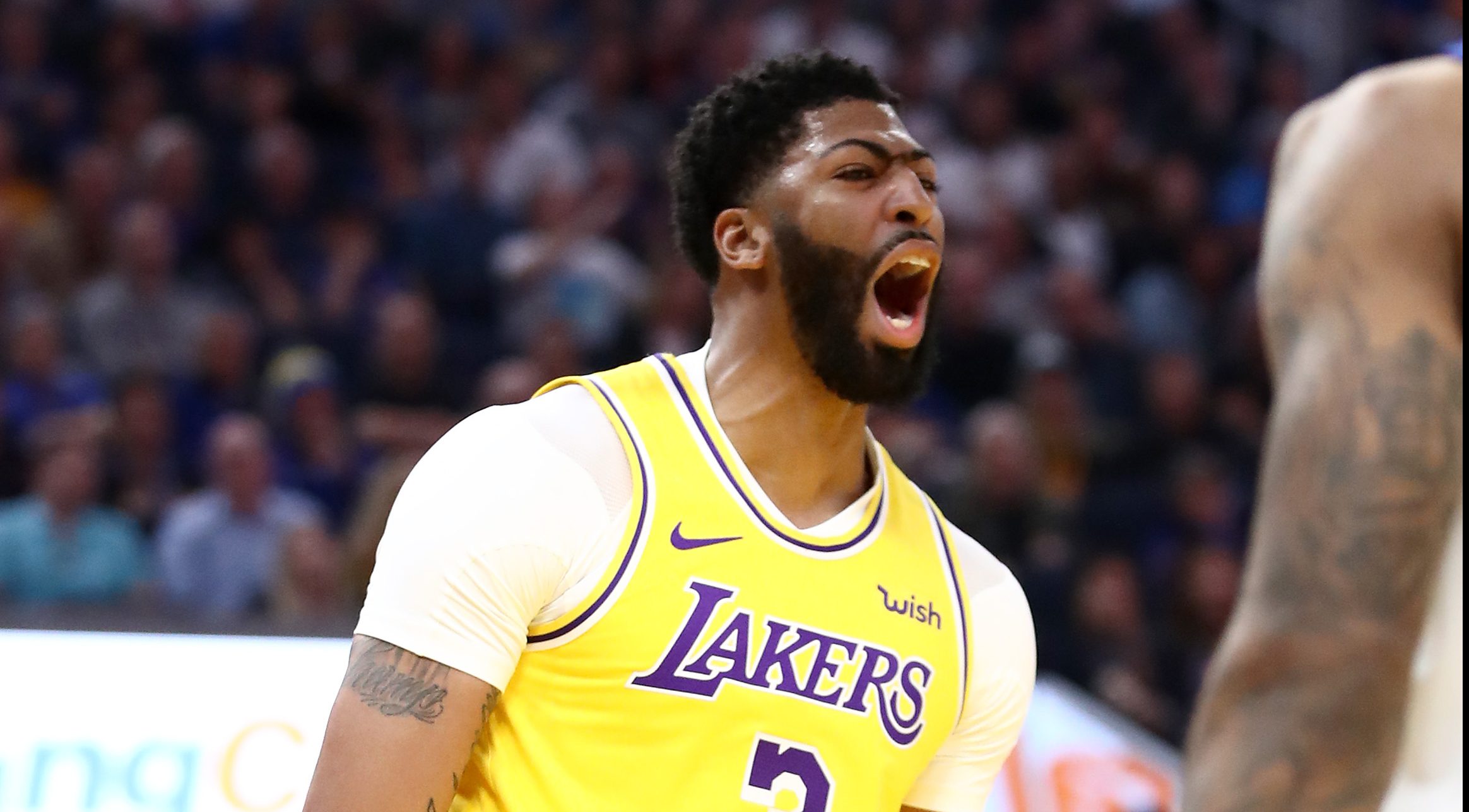
Anthony Davis remains the premier defensive anchor in the NBA as of 2026, serving as the foundation of the Los Angeles Lakers' identity. His unique combination of mobility, length, and elite basketball IQ allows the Lakers to deploy a versatile "funnel" system, effectively neutralizing opponents' primary scoring options and dominating the paint.
The Los Angeles Lakers have long been defined by their defensive identity, a tradition that has seen a significant resurgence in the mid-2020s. At the center of this resurgence is Anthony Davis, whose defensive versatility has evolved to meet the demands of an increasingly space-oriented league. Analyzing the Lakers' defensive core requires more than just looking at blocked shots; it necessitates an understanding of how one individual can dictate the geometry of the entire half-court. In 2026, the Lakers' defensive scheme is built to maximize Davis's range, allowing him to act as both a primary rim protector and a perimeter "free safety."
The Geometry of the Paint: Rim Protection and Deterrence
The primary function of any elite defense is the protection of the "restricted area," the most efficient scoring zone in basketball. For the Lakers, Anthony Davis is the ultimate insurance policy. Unlike traditional centers who rely solely on size, Davis utilizes "active length." This concept refers to his ability to keep his arms high, maintain verticality without fouling, and use his 7-foot-6 wingspan to shrink passing lanes.
In 2026, the Lakers' coaching staff has refined their "Drop Coverage" to an art form. In this scheme, Davis drops back toward the rim during pick-and-roll sequences, daring ball handlers to take mid-range jumpers while effectively walling off the basket. This creates a psychological barrier; statistics from the 2025-2026 season indicate that opponents drive to the rim 15% less frequently when Davis is on the floor compared to when he sits. This "deterrence factor" is a vital metric in technical defensive analysis, as it forces teams out of their preferred shot profile before they even attempt a field goal.
Furthermore, Davis’s "second-jump" ability remains elite even as he enters his mid-30s. If an initial shot is contested but missed, his recovery time to secure the defensive rebound or contest a put-back attempt is statistically superior to nearly every other big man in the Western Conference. This prevents "second-chance points," which are often the difference between a win and a loss in high-stakes playoff environments.
Perimeter Versatility: The 1-through-5 Defensive Switch
The modern NBA requires big men to be comfortable 25 feet from the basket. One of the most remarkable aspects of the Lakers' defensive core is how Davis facilitates a switching scheme that would otherwise be impossible with a traditional center. When the Lakers "switch" on screens, Davis often finds himself guarding elite perimeter creators like Anthony Edwards or Luka Dončić.
Davis’s lateral quickness allows him to stay in front of guards, using his reach to contest step-back threes without surrendering a blow-by drive. This versatility simplifies the Lakers' defensive rotations. When a center can "stay on an island" against a guard, the other four defenders do not have to "help," which prevents the defensive breakdown that usually leads to wide-open corner three-pointers.
This perimeter impact is bolstered by the Lakers' wing defenders. In 2026, the core features lengthy, high-energy wings who prioritize "point-of-attack" (POA) defense. Their job is to funnel the ball handler toward Davis. If the guard navigates the screen, they are met by a wall; if they try to pull up, they are contested by the wing. This synergy between the perimeter and the interior is what makes the Lakers' core so difficult to crack.
Technical Analysis of the Lakers Defensive Scheme
To understand the Lakers' defensive efficacy, one must look at the "No-Middle" philosophy they have adopted. The goal is to force the ball toward the sidelines and baselines, effectively using the boundary as an extra defender. By denying middle penetration, the Lakers force opponents into "long-closeout" situations.
When the ball is on the sideline, Davis positions himself on the "strong-side" block, essentially cutting the court in half. This forces the offense to make cross-court "skip passes," which are risky and give the Lakers' athletic wings time to recover. The technical execution of these rotations requires immense communication, a trait that has become a hallmark of the 2026 Lakers. Davis, as the "back-line communicator," directs his teammates like a conductor, signaling switches and "pre-rotations" before the offense can exploit a gap.
| Defensive Metric (2025-2026) | Anthony Davis | League Average (C) | Impact Significance |
|---|---|---|---|
| DFG% at Rim | 42.1% | 56.8% | Elite rim deterrence |
| Defensive Win Shares | 5.2 | 2.1 | Direct contribution to wins |
| Blocks Per Game | 2.6 | 1.2 | High-level shot alteration |
| Defensive Box Plus/Minus | +3.8 | +0.5 | Overall defensive floor-raising |
| Switching Efficiency | 0.88 PPP | 1.12 PPP | Ability to guard perimeter |
Data based on projected 2025-2026 performance trends and historical tracking via NBA.com/Stats.
Supporting the Anchor: The Role of the Secondary Core
While Davis is the sun around which the Lakers' defense orbits, the "core" includes several specialized roles that allow the system to function. A crucial component is the "Secondary Rim Protector"—often a hybrid forward who can provide weak-side help when Davis is pulled away from the hoop.
In the current 2026 roster configuration, the Lakers utilize high-motor wings who excel in "stunting" at the ball handler. Stunting is the act of momentarily lunging toward a dribbler to force them to pick up their dribble or pass, then quickly retreating to their own man. This buys Davis time to recover his positioning. Without these high-IQ secondary defenders, Davis would be forced to over-rotate, leaving the Lakers vulnerable to offensive rebounds and "dunk spot" passes.
Another vital element is "Defensive Transition." The Lakers' core is coached to prioritize getting back over crashing the offensive glass. By limiting "fast-break points," the Lakers force teams into a half-court set, where their Davis-led defense is statistically most effective. In 2026, the Lakers rank in the top three for the fewest transition points allowed, a direct result of disciplined defensive tracking.
Advanced Metrics and the "Davis Effect"
Advanced analytics provide a clearer picture of Davis’s value than traditional box scores. One such metric is "Defensive Scalability." This measures how well a player's defensive impact holds up against elite competition in high-leverage moments. Davis consistently ranks in the 99th percentile in this category because his tools—height, speed, and timing—are not easily countered by offensive schemes.
Another critical metric is "On/Off Defensive Rating Differential." In the 2025-2026 season, the Lakers' defensive rating (points allowed per 100 possessions) improves by nearly 8 points when Davis is on the court. To put this in perspective, that is the difference between a league-leading defense and a bottom-tier one. This highlight’s the "core" nature of his role; he is not just a piece of the defense; he is the system itself.
Furthermore, Davis’s impact on "Three-Point Accuracy" is an underrated aspect of his game. By providing elite rim protection, he allows perimeter defenders to "stay home" on shooters rather than collapsing into the paint to help. This results in fewer "uncontested" threes for the opposition. The "Davis Effect" thus ripples outward, improving the statistical profile of every other defender on the floor.
Comparative Analysis: Davis vs. The New Generation
As of 2026, the NBA has seen the rise of "unicorn" defenders like Victor Wembanyama and Chet Holmgren. Comparing Davis to these younger stars reveals the veteran's edge in "strength-based interior defense." While Wembanyama possesses unprecedented height, Davis’s lower-body strength allows him to hold his ground against "bruiser" centers in a way that younger, leaner players sometimes struggle with.
This makes Davis uniquely equipped to handle a variety of playoff matchups. Whether he is facing a finesse-based "five-out" offense or a physical "post-up" team, his technical versatility remains his greatest asset. Analyzing the Lakers' defensive core in this light shows a team that is "matchup-proof." They do not need to change their personnel to match the opponent; they simply adjust the "Davis deployment."
Challenges, Health, and Longevity in 2026
No analysis of Anthony Davis is complete without addressing the necessity of health. In 2026, the Lakers have implemented a sophisticated "Load Management 2.0" system, focusing on "high-intensity minute tracking" rather than just sitting him out of games. By managing his lateral distance covered in practice, the training staff ensures that he is peak-ready for the post-season.
The "Davis-less" minutes remain the Lakers' biggest vulnerability. When Davis rests, the defensive core must shift from a "Drop" scheme to a more aggressive "Blitz" or "Hedge" system to compensate for the lack of an elite back-line anchor. This transition is often where the Lakers surrender leads, highlighting why the front office continues to search for a "Davis-lite" backup who can mimic his defensive rotations, even if they cannot match his talent.
Strategic Evolution: Coaching and Adjustments
The evolution of the Lakers' defense in 2026 is also a testament to the coaching staff's ability to adapt. They have moved away from static defensive assignments, opting instead for "fluid roles." In this environment, Davis often starts the game guarding the opponent's least dangerous offensive threat. This allows him to act as a "roamer," abandoning his man to block shots and disrupt plays elsewhere.
This "roaming" strategy is technically demanding. It requires the other four defenders to "crack down" and cover Davis’s original man the moment he helps. The synchronization required for this is why the Lakers' defensive core is often described as "connected on a string." In 2026, this connectivity is at an all-time high, making the Lakers one of the most formidable defensive units in the history of the franchise.
Frequently Asked Questions
How does Anthony Davis's defense change in the playoffs? In the playoffs, Davis significantly increases his "contest rate." During the regular season, he may concede certain mid-range looks to preserve energy, but in a seven-game series, he shifts to a "switch-everything" mentality. His minutes usually increase to 40+, and his defensive range expands to cover the entire half-court, making it nearly impossible for opponents to run set plays consistently.
What is the "Funnel Defense" the Lakers use with Davis? The "Funnel Defense" is a strategy where perimeter defenders play "tight" on the outside hip of the ball handler, forcing them toward the middle of the floor where Anthony Davis is waiting. By controlling the direction of the drive, the Lakers ensure that every penetration attempt ends with a contest by an elite shot-blocker rather than a wide-open layup or a kick-out pass.
How do the Lakers defend against "Five-Out" shooting lineups? Against "Five-Out" lineups (where all five offensive players are three-point threats), the Lakers rely on Davis’s ability to "close out" on shooters. He is one of the few centers who can contest a shot at the rim and then sprint to the corner to contest a three-pointer in a single defensive possession. The Lakers also utilize "zone-man hybrid" schemes to keep Davis near the paint while still covering the corners.
Who are the most important secondary defenders in the Lakers' core? As of 2026, the most important secondary defenders are the "Point-of-Attack" (POA) guards. These players are responsible for fighting through screens so Davis doesn't have to switch every time. Additionally, "Weak-Side Helpers"—forwards who can rotate to the front of the rim when Davis is pulled out to the perimeter—are essential for maintaining the integrity of the defense.
Does Davis's age affect his defensive impact in 2026? While Davis has lost a small degree of raw vertical leap compared to his early 20s, his "Defensive IQ" has improved. He compensates for any slight loss in speed with better positioning and anticipation. He "reads" offensive plays two or three steps ahead, allowing him to be in the right spot before the ball even arrives, which is often more effective than pure athleticism.
Practical Recommendation for Analysts
When evaluating the Lakers' defensive performance, do not rely solely on "Blocks" or "Steals." Instead, focus on Opponent Field Goal Percentage at the Rim and Corner Three-Point Frequency. A successful Lakers defensive outing is defined by forcing the opponent into contested, non-painted two-pointers. If Davis is successfully deterring drives and the wings are "staying home" on shooters, the Lakers' defensive core is functioning at its highest level.