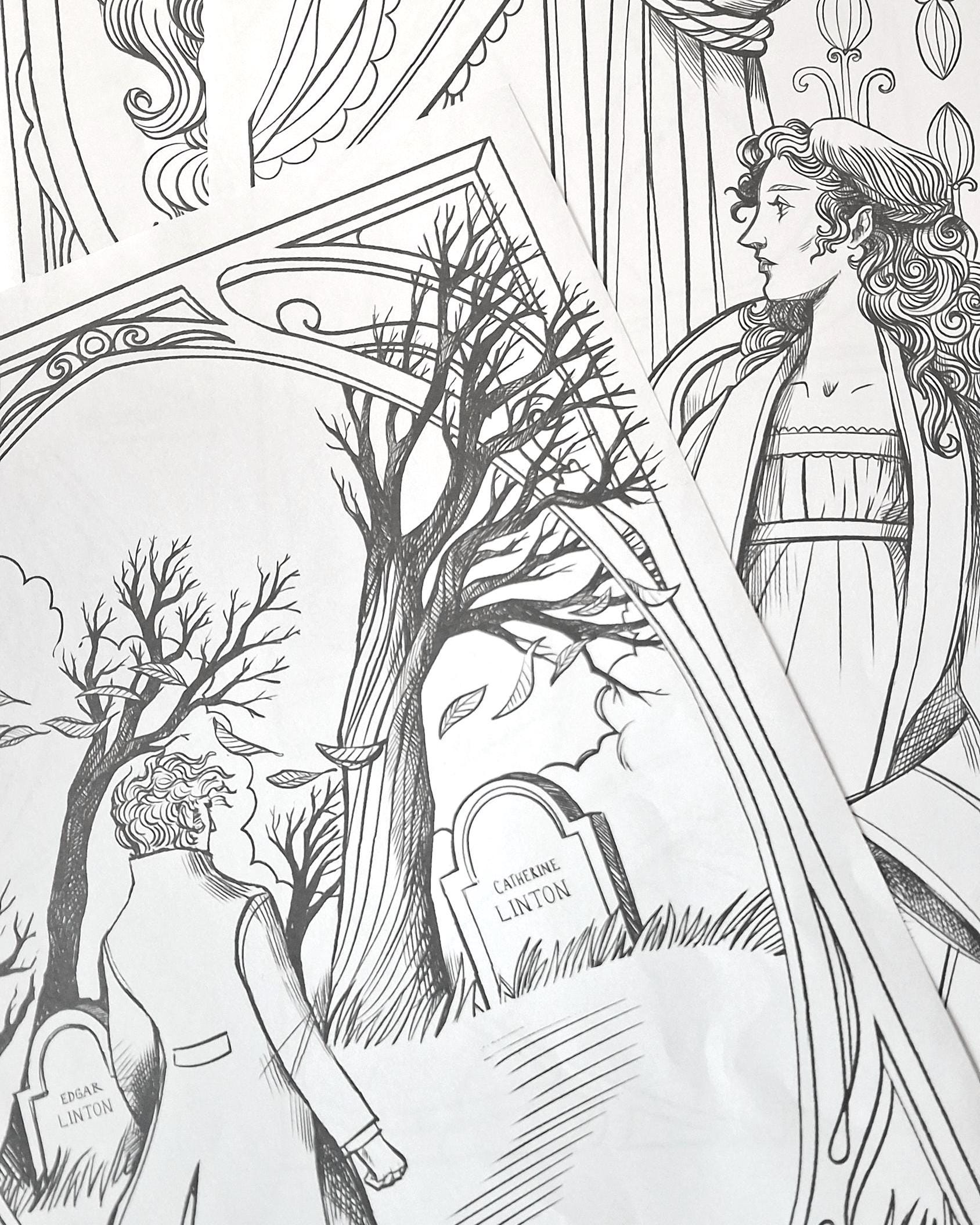
Heathcliff does not directly kill Catherine Earnshaw. Rather, Catherine dies from a combination of severe physical illness, psychological exhaustion, self-imposed starvation during a self-destructive fever, and complications arising from a premature childbirth, while Heathcliff’s toxic emotional torment undeniably accelerates her decline.
The question of whether Heathcliff kills Catherine is one of the most enduring, fiercely debated interpretations in English literature. Emily Brontë’s 1847 masterpiece, Wuthering Heights, presents a passionate, destructive, and ultimately tragic relationship that leaves modern readers and literary scholars examining the boundaries of psychological abuse, domestic control, and direct physical violence. To answer whether Heathcliff is responsible for Catherine's death, it is necessary to examine the text closely, look at the physiological and psychological factors of her demise, analyze Heathcliff's direct and indirect actions, and evaluate the thematic role of their gothic romance.
Understanding the Relationship Between Heathcliff and Catherine
To evaluate Heathcliff’s responsibility in Catherine’s death, one must first understand the intense, symbiotic bond that defines their relationship. Raised together at Wuthering Heights as adoptive siblings of a sort—though Heathcliff is treated largely as an outcast servant by Hindley Earnshaw after the death of old Mr. Earnshaw—Catherine and Heathcliff form an obsessive psychological attachment.
Catherine famously declares, "Nelly, I am Heathcliff," establishing that their identities are intertwined on a foundational level. When social pressures, class ambitions, and the desire for wealth and security compel Catherine to marry Edgar Linton instead of Heathcliff, the betrayal shatters the equilibrium of their world. Heathcliff flees Wuthering Heights, returning three years later as a wealthy, vengeful gentleman intent on destroying everyone who contributed to his humiliation and separation from Catherine.
However, the nature of their connection is not merely romantic in the conventional sense; it is destructive, gothic, and consuming. When Heathcliff returns, his campaign of calculated revenge sets off a chain reaction of psychological torment that directly impacts Catherine's fragile nervous system and emotional well-being.
The Direct Cause of Catherine’s Death
From a medical and narrative standpoint, Catherine’s death is precipitated by a severe brain fever and subsequent physical decline following her final, agonizing confrontation with Heathcliff.
When Edgar Linton discovers that Heathcliff has returned and is secretly visiting Catherine at Thrushcross Grange—and furthermore, that Heathcliff is attempting to manipulate Isabella Linton—he demands that Catherine choose between them. Catherine, already emotionally unstable, reacts by locking herself in her room. She refuses food and drink, entering a self-imposed fast that lasts for several days.
This prolonged starvation, combined with an intense psychological breakdown, triggers a severe delirium. During this fever, Catherine loses touch with reality, suffering from vivid hallucinations. She fails to recognize her own reflection in the mirror, believes she is still a wild child running across the moors at Wuthering Heights, and weakens her body to a point of no return.
Compounding this physiological collapse is her pregnancy. Catherine is pregnant with Edgar Linton’s child during this crisis. The severe physical trauma of the fever, coupled with self-starvation, forces a premature labor. She gives birth to Catherine Linton (young Cathy) and dies shortly afterward, never fully regaining her sanity or physical strength.
Analyzing Heathcliff’s Role: Direct Violence Versus Psychological Torment
While Heathcliff does not administer poison, strike a physical blow, or force Catherine to starve herself, his behavior creates the environment of acute emotional terror that precipitates her collapse. Examining his actions requires separating physical culpability from psychological causation.
| Type of Action | Heathcliff’s Behavior in the Text | Impact on Catherine |
|---|---|---|
| Physical Violence | None directed at Catherine's person; no physical assaults or murder attempts. | None. Catherine’s physical decline stems from internal illness and self-neglect rather than trauma inflicted by Heathcliff. |
| Psychological Manipulation | Cultivating a relationship with Isabella Linton to make Catherine jealous; invading Thrushcross Grange. | Heightens Catherine’s anxiety, exacerbating her hysterical state and triggering her decision to lock herself away. |
| Emotional Confrontation | Engaging in a fierce, accusatory argument with Catherine during her illness, blaming her for his suffering. | Pushes Catherine past her psychological breaking point, hastening the onset of her delirium and final collapse. |
As shown in the table above, Heathcliff’s weapon is psychological and emotional. During their final meeting at Thrushcross Grange, while Edgar is at church, Heathcliff forces his way into Catherine's sickroom. Rather than offering soothing comfort, the two lovers engage in a fierce, emotionally draining argument.
Heathcliff accuses Catherine of breaking her own heart and murdering him through her betrayal. He cries out in anguish, "You loved me—then what right had you to leave me?" Yet, despite his anger, he holds her in a fierce embrace that leaves her bruised. Catherine, in turn, accuses Heathcliff of driving her to madness and breaking her heart.
While this confrontation accelerates her physical collapse, it is driven by a mutual, catastrophic passion rather than a premeditated desire by Heathcliff to murder her. Heathcliff desperately wants Catherine to live, albeit on his terms and free from Edgar Linton's influence. His grief following her death—where he begs her ghost to haunt him and spends decades descending into madness—proves that her demise destroys him just as entirely.
Alternative Literary Interpretations and Criticisms
Literary critics remain divided on whether Heathcliff should be viewed as a domestic abuser whose psychological cruelty kills Catherine, or whether Catherine is ultimately the architect of her own destruction.
1. The Argument for Heathcliff’s Culpability
Many modern readers and feminist literary critics argue that Heathcliff functions as an abuser who exercises coercive control over Catherine. By returning with a calculated plot for revenge, exploiting Isabella Linton, and cornering a vulnerable, pregnant woman, Heathcliff pushes Catherine into a corner from which her only escape is psychological dissociation and death. From this perspective, even if Heathcliff did not wield a weapon, his relentless emotional terrorism makes him morally responsible for her fatal decline.
2. The Argument for Catherine’s Autonomy and Self-Destruction
Conversely, traditional and structural analyses of Wuthering Heights emphasize that Catherine is a willful, headstrong character who makes catastrophic choices. She chooses to marry Edgar Linton for social status and wealth while professing to love Heathcliff. Her decision to starve herself is an act of self-punishment and emotional manipulation directed at both Edgar and Heathcliff. In this reading, Catherine is a victim of her own volatile nature and the rigid social conventions of 19th-century England, rather than merely a passive victim of Heathcliff's malice.
Frequently Asked Questions
Does Heathcliff physically harm Catherine in the novel?
No, Heathcliff never physically assaults Catherine. While their embraces are often described as fierce, violent, and passionate, he does not commit acts of physical violence or attempted murder against her. Their conflicts are strictly psychological, emotional, and verbal.
What is the official cause of Catherine Earnshaw’s death?
Within the narrative, Catherine dies from a combination of a severe brain fever, psychological exhaustion, self-imposed starvation, and complications resulting from the premature birth of her daughter, young Cathy.
Why does Catherine starve herself?
Catherine starves herself out of a mixture of psychological distress, hysteria, and emotional manipulation. Trapped between her love for Heathcliff and her marriage to Edgar Linton, and distressed by their mutual hostility, she enters a self-destructive trance and refuses nourishment during her breakdown.
Does Heathcliff regret his treatment of Catherine?
Heathcliff is utterly devastated by Catherine’s death. Rather than feeling a sense of victory from his revenge plot, her death plunges him into decades of profound torment. He explicitly begs her ghost to haunt him, stating he cannot live without his soul.
Conclusion and Final Assessment
Heathcliff does not kill Catherine Earnshaw in any literal or legal sense. Catherine dies from a tragic convergence of physiological illness, self-starvation during a severe mental fever, and the physical trauma of premature childbirth. However, Heathcliff's intense emotional turbulence, vengeful return, and fierce confrontation during her illness undoubtedly act as catalysts for her final, fatal breakdown. Ultimately, Wuthering Heights portrays their deaths not as a murder, but as the collapse of a singular, inseparable entity torn apart by societal pressures and internal discord.