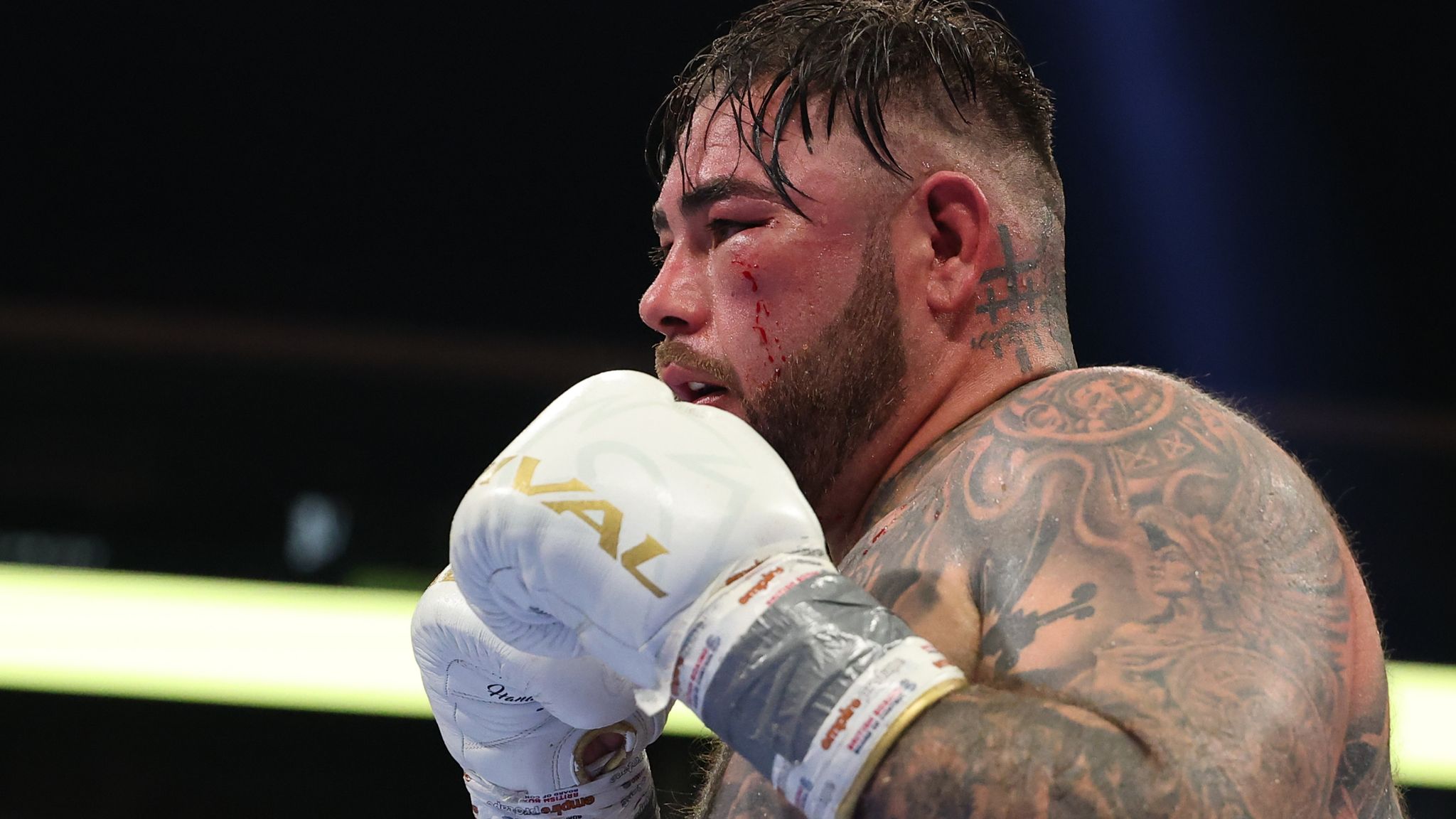
As of 2026, Andy Ruiz Jr. is 36 years old. Born on September 11, 1989, in Imperial, California, the former unified heavyweight champion remains a prominent figure in the boxing world. He will celebrate his 37th birthday in September 2026, marking nearly two decades since he first entered the professional ranks.
The question of age in heavyweight boxing is often a balance between declining physical speed and the accumulation of "old man strength" and ring generalship. For Andrés Ponce Ruiz Jr., better known as "The Destroyer," his mid-30s represent a critical juncture where his experience as the first fighter of Mexican heritage to win a heavyweight world title meets the physical realities of a demanding sport. Understanding his age is not just about a number on a calendar; it is about contextualizing where he stands in the pantheon of modern heavyweights and what he has left to achieve in the squared circle.
The Birth and Early Years of "The Destroyer"
Andy Ruiz Jr. was born on September 11, 1989. Growing up in the border town of Imperial, California, Ruiz was immersed in a culture that valued hard work and boxing prowess. His father, Andy Ruiz Sr., was instrumental in steering him toward the gym at the age of six, originally as a way to channel the energy of a hyperactive child and manage his weight.
By his teenage years, Ruiz was already competing against much older and more physically developed opponents. This early exposure to "grown-man" power helped shape the resilient style he is known for today. Despite his unassuming physique—a topic that has followed him throughout his career—his hand speed was evident from a very young age. This technical anomaly, a heavy-set fighter with the hand velocity of a middleweight, became his calling card as he progressed through the amateur ranks.
Amateur Beginnings and the Path to the Pros
Before turning professional, Ruiz had a significant amateur career, finishing with a record of 105-5. He represented Mexico in the qualifying rounds for the 2008 Beijing Olympics, though he did not ultimately make the final Olympic squad. This period of his life, specifically between the ages of 17 and 19, was foundational. It was here that he developed the counter-punching instincts that would later shock the world.
When he turned professional on March 28, 2009, at the age of 19, he was a raw but dangerous prospect. Fighting out of Tijuana, Mexico, in his debut, he knocked out Miguel Salvador Ramirez in the first round. At 19, Ruiz was already showing that his power was legitimate, but few could have predicted the heights he would reach a decade later.
Analyzing Andy Ruiz Jr.’s Professional Timeline by Age
To understand the trajectory of a heavyweight, it is helpful to look at their career through the lens of age-based milestones. Heavyweights often peak later than fighters in lighter weight classes, frequently reaching their physical and tactical prime between 28 and 34.
The Rise (Ages 19–28)
During his early 20s, Ruiz was a frequent fighter, often appearing on undercards and building a steady "O" on his record. His first real test came at age 27 when he fought Joseph Parker for the vacant WBO heavyweight title in 2016. Although he lost a narrow majority decision in Parker's home country of New Zealand, Ruiz proved that he belonged at the world-class level. At 27, he was physically peak but perhaps lacked the championship-level seasoning required to close out close rounds on the road.
The Peak: The 2019 Upset (Age 29)
The most significant year of Andy Ruiz Jr.’s life was 2019. At 29 years old, he stepped in as a late replacement for Jarrell Miller to face the undefeated, unified champion Anthony Joshua at Madison Square Garden.
On June 1, 2019, Ruiz achieved what many deemed impossible. After being dropped in the third round, he rose to drop Joshua twice in that same round and eventually stopped him in the seventh. At 29, Ruiz possessed the perfect combination of youthful durability and veteran composure. This win made him the WBA (Super), IBF, WBO, and IBO champion. However, the subsequent rematch six months later—where a 30-year-old Ruiz appeared significantly overweight and lost his titles—showed the pitfalls of sudden fame and the impact of lifestyle choices on an athlete's "boxing age."
The Veteran Years (Ages 31–36)
Since 2020, Ruiz has fought sparingly. His 30s have been defined by a search for consistency. He joined forces with renowned trainer Eddy Reynoso (coach of Canelo Alvarez) for a period, focusing on body composition and defensive discipline. His victories over Chris Arreola (at age 31) and Luis Ortiz (at age 32) showed a more patient, albeit less active, fighter. By the time he reached 2024 and 2025, including a high-profile draw against Jarrell Miller in August 2024, Ruiz was firmly in the "veteran" category, relying more on his timing and chin than raw volume.
The Impact of Age on Heavyweight Performance
At 36 years old in 2026, Ruiz is navigating the twilight of his prime. In boxing, age affects three primary attributes: reaction time, recovery speed, and metabolic rate.
- Reaction Time: Ruiz’s greatest asset has always been his "fast twitch" hand speed. Usually, this is the first thing to go as a fighter hits their mid-30s. However, Ruiz has maintained a surprising amount of velocity, largely because his style is built on short, compact hooks rather than long, looping shots.
- Recovery Speed: Training camps at 36 are vastly different than at 26. The joints take more of a beating, and the ability to bounce back from grueling sparring sessions diminishes. This often leads to longer gaps between fights, which has been a hallmark of Ruiz’s recent years.
- Metabolic Rate: Ruiz’s struggle with weight is well-documented. As an athlete crosses the 35-year-old threshold, the metabolism naturally slows down. For a fighter whose performance is heavily dictated by his conditioning and mobility, staying within a competitive weight range (typically 250–265 lbs for Ruiz) becomes a 24-hour-a-day battle.
Comparative Analysis: Ruiz vs. Heavyweight Legends
To see where Ruiz stands at 36, we can compare him to other legendary heavyweights at the same age. Historically, the heavyweight division is one where men can remain competitive well into their late 30s or even 40s.
| Fighter | Status at Age 36 | Long-Term Outcome |
|---|---|---|
| Andy Ruiz Jr. | Contender/Former Champion (2026) | TBD; looking for final title run. |
| Muhammad Ali | Lost to Leon Spinks; regained title vs. Spinks. | Retired at 39 after clear decline. |
| George Foreman | In the middle of a 10-year retirement. | Returned at 38; won title at 45. |
| Lennox Lewis | Defeated Mike Tyson and Vitali Klitschko. | Retired at 38 as the reigning champion. |
| Wladimir Klitschko | Defeated Mariusz Wach; held 3 major belts. | Remained champion until age 39. |
| Deontay Wilder | Lost rematch to Tyson Fury. | Experienced sharp decline in late 30s. |
As the table illustrates, 36 is often the "crossroads" age. For Lennox Lewis and Wladimir Klitschko, it was a period of dominance. For others, it was the beginning of the end. Ruiz’s relatively low number of "war" rounds (fights involving heavy punishment) suggests his boxing age might be younger than his chronological age, provided he maintains his fitness.
Physical Conditioning and Weight Management at 36
In 2026, the discussion around Andy Ruiz Jr. often centers on his physical preparation. At 36, the "dad bod" physique that once made him a folk hero is something he has tried to refine. Modern sports science has allowed heavyweights to extend their careers significantly. Ruiz has reportedly utilized advanced recovery techniques, including cryotherapy and specialized nutritional planning, to combat the natural inflammatory responses of a 36-year-old body.
The "Why" behind his weight management is simple: at 36, carrying an extra 20 pounds of non-functional mass puts immense strain on the cardiovascular system and the knees. For a fighter who relies on explosive bursts to close the distance against taller opponents (like the 6'6" and 6'9" giants of the current era), being "light" (for him) is the difference between being a world-class threat and a gatekeeper.
The "Destroyer’s" Current Status in 2026
In the current boxing landscape of 2026, Andy Ruiz Jr. remains a "high-risk, high-reward" opponent. Because of his name value and his status as a former champion, he is still a major draw for Pay-Per-View events, particularly in the United States and Mexico.
His age has made him a more selective fighter. He can no longer afford to take "tune-up" fights that don't lead to a significant payday or a title shot. The heavyweight division in 2026 is a mix of established veterans (like Oleksandr Usyk and Tyson Fury, who are also in their late 30s) and a new wave of younger, hungry prospects. Ruiz’s role is that of the "ultimate test." To beat him, a young fighter must navigate the fastest hands in the division and a chin that has rarely failed.
Future Prospects: Is Retirement on the Horizon?
For any 36-year-old fighter, the "R-word" (retirement) is always looming. For Andy Ruiz Jr., the decision to hang up the gloves will likely depend on two factors: health and the pursuit of a second reign as champion.
Most boxing analysts suggest that a heavyweight’s "cliff"—the point where abilities drop off suddenly—usually occurs between 37 and 39. Ruiz is approaching that window. However, because he does not rely on foot speed or height, his style may age more gracefully than a "fleet-of-foot" boxer. If he can secure one more major title fight in late 2026 or 2027, he could cement a legacy that goes beyond being a "one-hit-wonder" upset artist.
What’s Left to Prove?
Ruiz has already achieved more than 99% of professional boxers. He has:
- Won three of the four major world titles.
- Made history for Mexico.
- Earned generational wealth.
- Defeated several top-10 ranked heavyweights.
The only remaining goal for a 36-year-old Ruiz is likely the WBC belt—the one title that eluded him during his 2019 reign—or a high-profile trilogy/rematch that settles his standing among his peers.
Frequently Asked Questions
When is Andy Ruiz Jr.'s birthday?
Andy Ruiz Jr. was born on September 11, 1989. This makes him a Virgo. In the context of his boxing career, his late-year birthday means he often enters new stages of his career late in the calendar year.
How old was Andy Ruiz Jr. when he beat Anthony Joshua?
Ruiz was 29 years old when he defeated Anthony Joshua on June 1, 2019. He turned 30 just a few months after that historic victory, shortly before the rematch in Saudi Arabia.
Is 36 too old for a heavyweight boxer?
No, 36 is not considered "old" in the modern heavyweight division. Many champions, including Vitali Klitschko, George Foreman, and Oleksandr Usyk, have held world titles at 36 or older. However, it is an age where physical maintenance becomes more important than ever.
What is Andy Ruiz Jr.'s current record in 2026?
While his record has fluctuated with recent bouts, as of early 2026, he maintains a record with over 35 wins and fewer than 5 losses/draws. His 2024 draw with Jarrell Miller remains one of the most discussed points of his recent career.
Has Andy Ruiz Jr. retired?
As of 2026, Andy Ruiz Jr. has not officially retired. He continues to train and express interest in major fights, though his activity level is lower than it was in his 20s.
Final Recommendation for Fans and Analysts
If you are following Andy Ruiz Jr.'s career in 2026, the key is to watch his hand speed and punch output in the early rounds. At 36, these are the primary indicators of his remaining "shelf life" in the sport. While he may no longer be the underdog he was in 2019, his experience makes him a dangerous "crafty veteran" capable of upsetting the odds one more time. Keep an eye on official announcements from major sanctioning bodies (WBC, WBA, IBF, WBO) for news on his final run toward a heavyweight title.