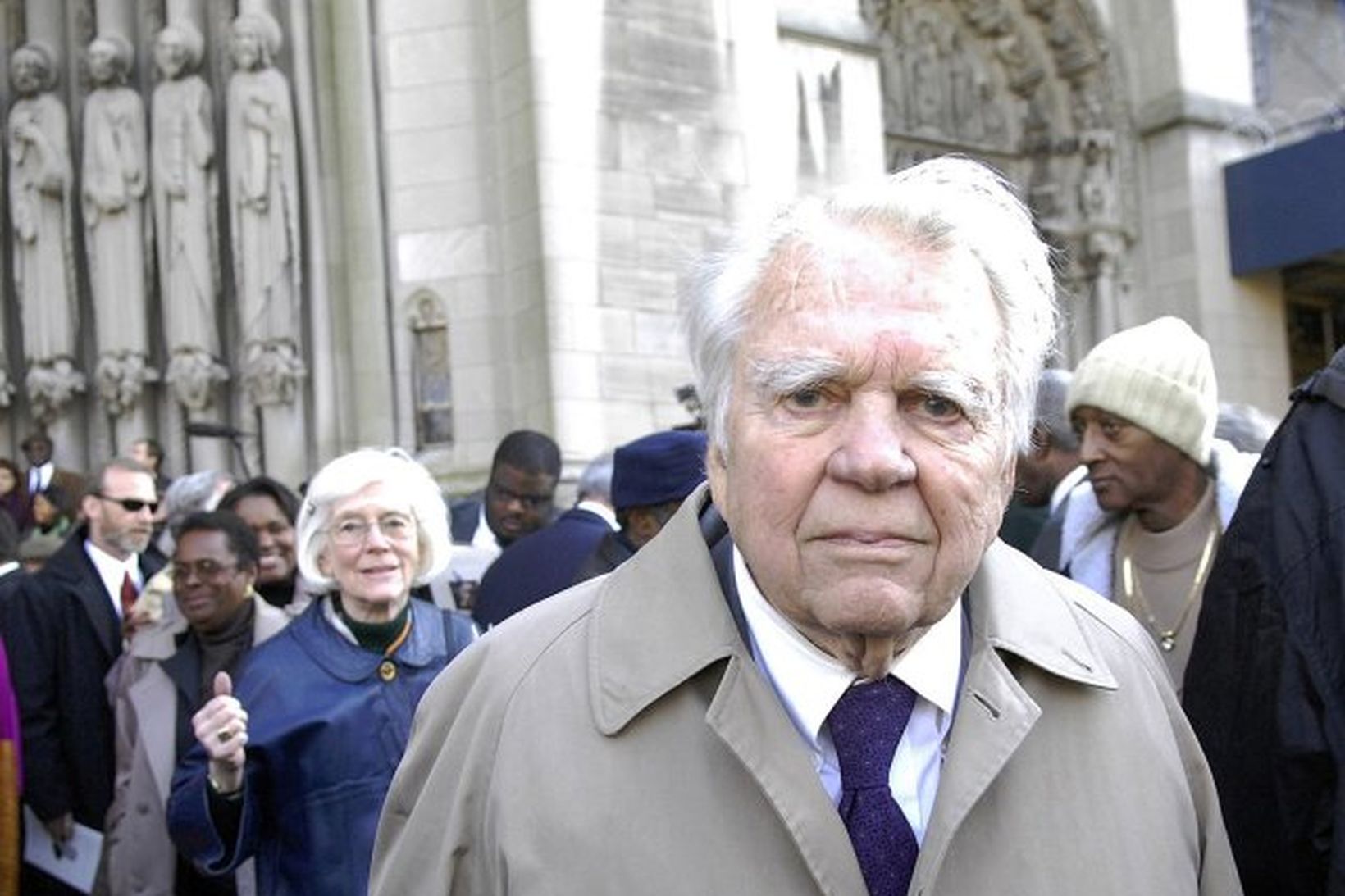
Andy Rooney, the iconic "60 Minutes" commentator and journalist, died on November 4, 2011, at the age of 92. His passing occurred in a New York City hospital following serious complications from a minor surgical procedure. Rooney had officially retired from his regular segment only one month prior to his death.
The Final Chapter: The Retirement and Death of an Icon
In the autumn of 2011, the American media landscape braced for the end of an era. Andy Rooney, a man whose voice had become synonymous with the Sunday evening routine of millions, announced his retirement from "60 Minutes." His final regular appearance aired on October 2, 2011, marking the conclusion of a 33-year run of his signature segment, "A Few Minutes with Andy Rooney." At 92, Rooney was the oldest active correspondent on network television, a testament to his mental acuity and the enduring relevance of his observational humor.
The circumstances surrounding his death were unexpected. Shortly after his retirement, Rooney underwent what was described by CBS as "minor surgery." While the specific nature of the surgery was not publicly disclosed out of respect for his family's privacy, medical complications ensued. Rooney’s health declined rapidly following the procedure, leading to his death on November 4, 2011. The news of his passing resonated deeply across the United States, as viewers felt they had lost a grumpy but lovable uncle who voiced the frustrations of the "everyman."
The timing of his death—coming so soon after he stepped away from the typewriter—led many to reflect on his work ethic. Rooney famously stated that "writers don't retire," and his brief period of rest before his passing seemed to underscore his lifelong commitment to the craft. He didn't just report the news; he provided the social fabric that bound the more serious investigative pieces of "60 Minutes" together with the common human experience.
From the Front Lines to the Television Screen: Rooney’s Early Career
Long before he was known for his bushy eyebrows and complaints about cereal boxes, Andy Rooney was a serious journalist who cut his teeth in the crucible of World War II. Born in 1919 in Albany, New York, Rooney began his career in the military. He was drafted into the U.S. Army in 1941 and eventually became a correspondent for Stars and Stripes.
Rooney was not a journalist who stayed behind the lines. He was one of the first American journalists to visit the Nazi concentration camps after liberation, and he flew on several bombing missions over Germany. These experiences provided him with a grounded, no-nonsense perspective on life and death that would later inform his television persona. He saw the world at its most chaotic and tragic, which perhaps explains why, in his later years, he felt the freedom to focus his professional energy on the "smaller" things in life that others overlooked.
After the war, Rooney joined CBS in 1949 as a writer for "The Arthur Godfrey Talent Scouts." His transition to television was seamless, as his ability to find the narrative thread in any situation made him an invaluable asset to the network. He wrote for several programs, including "The Garry Moore Show," before finding his permanent home in the news division. His partnership with Harry Reasoner in the 1960s and 1970s laid the groundwork for what would become his most famous contribution to American culture.
The Evolution of "A Few Minutes with Andy Rooney"
The segment that made Rooney a household name, "A Few Minutes with Andy Rooney," premiered in 1978. Initially, it was intended to be a temporary summer replacement, but it quickly became the show's most popular recurring feature. The format was deceptively simple: Rooney would sit at his famously cluttered desk—which he built himself—and offer an essay on a specific topic.
What set Rooney apart was his focus on the mundane. While his colleagues at "60 Minutes" like Mike Wallace and Morley Safer were tackling international scandals and political corruption, Rooney was asking why there was cotton in the top of aspirin bottles or why manufacturers were making coffee cans smaller while charging the same price. This focus on "the little things" was not a sign of triviality; rather, it was a masterful exercise in observational journalism.
Rooney’s writing style was characterized by its economy and clarity. He avoided jargon and abstract concepts, preferring concrete nouns and active verbs. He was a master of the "curmudgeon" persona, often appearing genuinely annoyed by the modern world’s perceived lack of common sense. However, underneath the grumpiness was a profound sense of logic and a deep affection for the American public. He spoke to the audience, not down to them, which built a level of trust that lasted for over three decades.
The Physicality of His Craft: The Typewriter and the Desk
In an age that was rapidly transitioning to digital technology, Andy Rooney remained a steadfast devotee of the physical world. His office at the CBS Broadcast Center in New York was legendary. It was filled with books, artifacts, and stacks of paper that seemed to defy the laws of physics. At the center of it all was his Underwood typewriter.
Rooney’s insistence on using a typewriter was not merely an affection for the past; it was a fundamental part of his creative process. He believed that the tactile nature of typing—the sound of the keys hitting the ribbon, the physical resistance of the machine—helped him think. For Rooney, writing was a form of manual labor. He treated his essays like a carpenter treats a piece of wood, carefully sanding down the rough edges until the final product was smooth and functional.
This commitment to the tangible extended to his subject matter. He often brought props onto the set: jars of jelly, different brands of sneakers, or handfuls of junk mail. By interacting with these physical objects, he made his abstract complaints relatable. As we look back from 2026, Rooney’s office and his typewriter represent a period of journalism where the "voice" of the writer was inseparable from the tools they used to create.
Managing Controversy and the "Rooney Rule"
Despite his widespread popularity, Andy Rooney was no stranger to controversy. His bluntness, which was his greatest strength, occasionally became a liability. In 1990, he was suspended for three months without pay following comments he made during a special program and a subsequent interview regarding racial intelligence and social behaviors. The suspension was met with a massive outcry from his fans, and his ratings actually increased when he returned to the air.
Rooney’s brush with "cancel culture" (long before the term existed) highlighted the tension between his old-school sensibilities and the evolving social norms of the late 20th century. He was a man of his generation, and while his views sometimes clashed with modern sensibilities, he remained unapologetically himself. He often used his segment to respond to hate mail, reading the most vitriolic letters aloud with a mixture of amusement and defiance.
He also famously refused to participate in the "celebrity" aspect of his job. He hated being interrupted while eating dinner and was known to be prickly with fans who approached him in public. He argued that he was a writer, not an actor, and that his only obligation to the public was to provide them with a well-written essay every Sunday night. This boundary-setting, while seen by some as rude, was actually a way for Rooney to preserve the authenticity that made his work possible.
Comparison of Career Milestones: Andy Rooney
| Era/Year | Role/Achievement | Significance |
|---|---|---|
| 1941–1945 | War Correspondent, Stars and Stripes | Established his "no-nonsense" journalistic voice during WWII. |
| 1949 | Joined CBS | Began a 60-year relationship with the network. |
| 1968 | "Of Black America" | Won his first Emmy for a script on the history of Black Americans. |
| 1978 | First "A Few Minutes" segment | Launched the most successful editorial segment in TV history. |
| 2003 | Lifetime Achievement Emmy | Recognized for his total contribution to the medium of television. |
| Oct 2, 2011 | Final Regular Appearance | Retired after 1,097 original essays for "60 Minutes." |
| Nov 4, 2011 | Death at Age 92 | Marked the end of an era for CBS News and broadcast journalism. |
The Enduring Influence on Modern Media
Even in 2026, the "Rooney style" of commentary can be seen across various media platforms. The rise of "vlogging" and personal essays in digital media owes a debt to Rooney’s pioneering work. He proved that an audience would tune in specifically for a person’s opinion, provided that opinion was backed by sharp writing and a distinct perspective.
Modern commentators, from late-night talk show hosts to independent YouTube essayists, utilize the same fundamental techniques Rooney perfected:
- The Relatable Gripe: Finding a small, universal annoyance that everyone experiences but no one talks about.
- The "Common Sense" Appeal: Framing arguments not through complex ideology, but through simple logic.
- The Direct Address: Looking straight into the camera and speaking as if talking to a single friend.
However, few have been able to replicate Rooney's longevity. His ability to stay relevant across multiple generations—from the Greatest Generation to Millennials—was a result of his refusal to change his persona to fit the times. He didn't try to be "hip" or "edgy." He was simply Andy Rooney, and that consistency was his greatest asset.
A Legacy of Writing and Reason
Andy Rooney’s legacy is ultimately one of the written word. While he is remembered as a television personality, he considered himself a writer first and foremost. He authored 16 books during his lifetime, most of which were collections of his essays. His books, such as A Few Minutes with Andy Rooney and My War, provided a more permanent home for his thoughts and allowed readers to appreciate the rhythm of his prose without the distraction of his television persona.
He taught a generation of journalists that you don't need a massive budget or a global scandal to tell a compelling story. Sometimes, all you need is a sharp eye, a steady hand on the typewriter, and the courage to say what everyone else is thinking. When he died in 2011, the world didn't just lose a commentator; it lost a master of the essay form.
The emptiness left by his segment on "60 Minutes" was never truly filled by a single successor. CBS experimented with different commentators, but none possessed the unique combination of wartime grit and domestic curiosity that Rooney brought to the screen. His death at 92 was the natural conclusion of a life lived fully and articulated clearly.
Frequently Asked Questions
What were the exact complications that led to Andy Rooney's death?
While CBS and the Rooney family did not release specific medical details, it was confirmed that he suffered from "serious complications" following a minor surgical procedure. In elderly patients, even minor surgeries can lead to systemic issues such as infections, respiratory failure, or cardiac stress, which are often the underlying causes in such cases.
Did Andy Rooney ever win an award for his work?
Yes, Andy Rooney was highly decorated. He won three Emmy Awards for his "60 Minutes" essays and a Lifetime Achievement Emmy in 2003. He also received the Peabody Award for his work, which is among the most prestigious honors in electronic media, recognizing distinguished achievement and meritorious public service.
How many "A Few Minutes with Andy Rooney" segments did he record?
Over the course of his 33 years on the air, Rooney produced 1,097 original essays. This body of work covers a vast array of topics, from the politics of the Cold War to the design of the paperclip, creating a comprehensive time capsule of American life in the late 20th and early 21st centuries.
Was Andy Rooney married, and did he have children?
Rooney was married to Marguerite "Marge" Howard for 62 years until her death in 2004. They had four children: Ellen, Martha, Emily, and Brian. His children followed in his footsteps in various ways; for example, Emily Rooney became a well-known journalist and television host in Boston, and Brian Rooney was a correspondent for ABC News.
What happened to Andy Rooney’s office after he died?
Following his death, much of Rooney’s office, including his iconic hand-built desk and his Underwood typewriter, was preserved. Elements of his workspace have been featured in retrospectives and museum displays to honor his contribution to journalism history.
Final Recommendation: Engaging with Rooney’s Work Today
For those looking to understand the impact of Andy Rooney, the best course of action is to revisit his original essays. While many are available in digital archives, reading his books provides the best insight into his mastery of the English language. Start with A Few Minutes with Andy Rooney to see how he transitioned his television voice to the page, or My War for a deeper look at the events that shaped his world view.
In an era of 2026 characterized by rapid-fire social media and AI-generated content, Rooney’s deliberate, thoughtful, and deeply human approach to commentary remains a vital blueprint for authentic communication. Whether you agree with his opinions or not, his commitment to clarity and his passion for the "ordinary" serve as a reminder that every small detail of our lives is worthy of a few minutes of our attention.