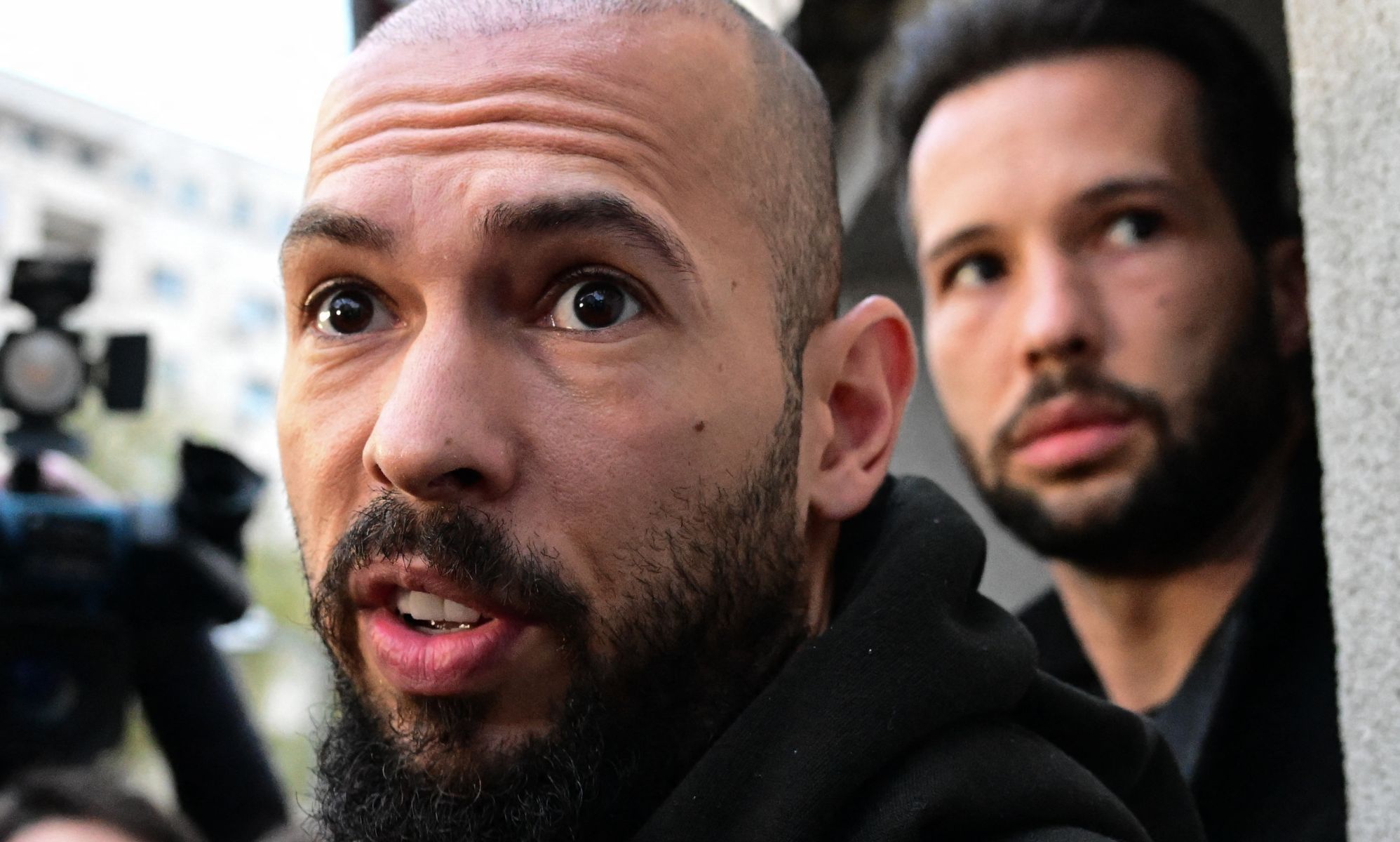
Andrew Tate is a U.S. citizen by birth, having been born in Washington, D.C., in 1986. He holds dual citizenship with the United Kingdom through his mother. His American status grants him specific legal rights, such as consular protection, while mandating federal tax obligations on his global income.
As of 2026, the question of Andrew Tate’s citizenship remains a focal point for legal analysts, tax authorities, and the general public. While much of his public persona is associated with his life in Romania and his upbringing in the United Kingdom, his status as a "U.S. person" under federal law carries significant weight. This citizenship is not merely a matter of identity; it dictates his relationship with the United States government, his travel capabilities, and his exposure to international legal frameworks. To understand the complexities of Andrew Tate’s U.S. citizenship, one must look at the constitutional basis for his status, the obligations it imposes, and the protections it affords a high-profile individual facing international scrutiny.
The Constitutional Basis: Why Andrew Tate Is a U.S. Citizen
The foundation of Andrew Tate’s U.S. citizenship is rooted in the principle of jus soli (right of the soil), which is enshrined in the 14th Amendment to the U.S. Constitution. Born on December 1, 1986, at Walter Reed Army Medical Center in Washington, D.C., Tate automatically acquired American citizenship the moment he was born. This is often referred to as "birthright citizenship."
His father, Emory Tate, was a native-born American citizen and a distinguished chess grandmaster who served in the United States Air Force. This lineage provided a secondary potential path to citizenship via jus sanguinis (right of blood), but because the birth occurred on U.S. soil, the 14th Amendment's primary clause was the governing factor. Even after moving to the United Kingdom as a child following his parents' divorce, Tate’s legal status as an American remained intact. Under U.S. law, citizenship acquired at birth is permanent unless an individual takes specific, formal steps to renounce it through the Department of State.
Dual Nationality: The Intersection of U.S. and UK Status
Andrew Tate is a dual citizen, holding passports for both the United States and the United Kingdom. His British citizenship is derived from his mother, Eileen Tate, a British national. Dual nationality is a complex legal state where an individual is simultaneously bound by the laws of two different sovereign nations.
The United States government does not formally "endorse" dual citizenship as a matter of policy, but it recognizes its existence and does not require a person to choose one over the other. However, the U.S. Supreme Court has ruled that a person can hold multiple citizenships without losing their U.S. status. For Tate, this dual status has historically facilitated his international lifestyle, allowing him to move between the UK, the U.S., and Europe with relative ease using whichever document is most advantageous at the time.
In 2026, this dual status remains a critical asset. While his British citizenship connects him to the European sphere, his U.S. citizenship ensures he maintains a formal link to the world’s largest economy and its legal protections. However, dual citizenship also means he is subject to the jurisdiction of two different sets of tax and criminal laws.
Global Taxation and the IRS: The Burden of U.S. Citizenship
One of the most significant consequences of Andrew Tate being a U.S. citizen is the requirement to adhere to citizen-based taxation. Unlike almost every other country (with the exception of Eritrea), the United States taxes its citizens on their worldwide income, regardless of where they live or where the money is earned.
The Role of FATCA
The Foreign Account Tax Compliance Act (FATCA) requires foreign financial institutions to report the assets and identities of U.S. persons to the Internal Revenue Service (IRS). As a U.S. citizen living primarily in Romania, Tate’s financial dealings are theoretically subject to intense scrutiny under FATCA. This includes:
- Form 1040 Reporting: The annual filing of federal income tax returns.
- FBAR (Foreign Bank and Financial Accounts Report): Mandatory reporting of any foreign bank accounts that exceed $10,000 at any point during the year.
- PFIC Rules: Complex tax treatments for "Passive Foreign Investment Companies," which often apply to international business structures.
Failure to comply with these regulations can lead to severe civil and criminal penalties. For high-net-worth individuals like Tate, the administrative burden of maintaining U.S. citizenship while operating global businesses is immense. This has led many expatriates to renounce their citizenship, but as of 2026, there has been no official record of Andrew Tate successfully completing the renunciation process.
Consular Protection and Rights Abroad
As a U.S. citizen, Andrew Tate is entitled to consular services from the U.S. Department of State. This is particularly relevant given his legal challenges in Romania. The primary role of a U.S. embassy or consulate when a citizen is detained abroad is to ensure that the individual is treated fairly under the host country's laws and receives basic human rights.
What the U.S. Embassy Can Do
- Monitor Legal Proceedings: Consular officers can attend court hearings to ensure due process is followed.
- Provide Lists of Attorneys: The embassy can provide a list of local English-speaking lawyers, though they cannot pay for legal representation.
- Ensure Humane Conditions: They check on the physical well-being of the citizen and ensure they receive medical care if needed.
- Communicate with Family: They facilitate communication between the detained citizen and their relatives in the United States.
It is important to note that U.S. citizenship does not grant "diplomatic immunity." An American citizen is fully subject to the laws of the country in which they reside. The U.S. government cannot "get someone out of jail" simply because they are a citizen; they can only advocate for the citizen's rights within the local legal system.
Comparison of U.S. vs. UK Citizenship Benefits
| Feature | United States Citizenship | United Kingdom Citizenship |
|---|---|---|
| Source of Right | Jus Soli (Birth in Washington D.C.) | Jus Sanguinis (Maternal Line) |
| Taxation Basis | Global Income (Citizenship-based) | Residency-based (Remittance rules) |
| Consular Access | U.S. Department of State / Embassies | Foreign, Commonwealth & Dev Office |
| Extradition Risk | High (Robust treaty with Romania) | High (Robust treaty with Romania) |
| Travel Access | 180+ countries visa-free | 180+ countries visa-free |
| Renunciation Fee | $2,350 (Subject to change) | £1,206 (Subject to change) |
Extradition and International Legal Standing
The fact that Andrew Tate is a U.S. citizen has significant implications for extradition. Extradition is the formal process where one country asks another to surrender a person for trial or punishment. The United States has a bilateral extradition treaty with Romania, which was signed in 2007.
If the United States were to bring charges against Tate for crimes committed either in the U.S. or under extraterritorial jurisdiction, they could request his extradition from Romania. Conversely, his U.S. citizenship does not protect him from being prosecuted in Romania for crimes alleged to have occurred on Romanian soil. In cases involving dual citizens, the "master nationality rule" often applies, meaning the country where the person is physically present typically treats them as its own subject or as a primary jurisdiction regardless of other citizenships.
Furthermore, his American status means that any assets held in U.S. banks or processed through the U.S. financial system (which uses the SWIFT network) are within the reach of U.S. federal investigators. This creates a "long-arm jurisdiction" that is much more potent than that of many other nations.
Public Rhetoric vs. Legal Reality
Throughout his career, Andrew Tate has frequently criticized Western "Matrix" institutions, including the governments of the United States and the United Kingdom. Despite this rhetoric, he continues to hold his U.S. passport. This creates a dichotomy between his public persona and his legal reality.
The U.S. passport is widely considered one of the most powerful travel documents in the world. It provides the holder with the ability to enter numerous countries without a prior visa and offers a level of international prestige and protection that few other documents can match. For a person who travels frequently and manages international investments, the benefits of maintaining U.S. citizenship often outweigh the ideological or tax-related drawbacks. In 2026, his retention of this status suggests a pragmatic recognition of the value of American legal standing.
The Process of Renunciation: A Path Not Taken?
If Andrew Tate wished to cease being a U.S. citizen, he would have to undergo a formal renunciation process. This is not as simple as making a public declaration or burning a passport.
The process involves:
- Appearing in Person: The individual must appear before a U.S. consular or diplomatic officer at a U.S. Embassy or Consulate outside of the United States.
- Signing an Oath: They must formally sign an oath of renunciation.
- Paying the Fee: The fee for renouncing U.S. citizenship is among the highest in the world ($2,350 as of current standards).
- Tax Clearance: The individual may be subject to an "exit tax" if they are considered a "covered expatriate" based on their net worth or past tax compliance.
As of 2026, there has been no public evidence or official government listing (such as the Quarterly Publication of Individuals Who Have Chosen to Expatriate) indicating that Tate has renounced. This keeps him firmly within the jurisdiction of the United States for the foreseeable future.
Frequently Asked Questions
Can Andrew Tate lose his U.S. citizenship for crimes committed abroad?
No, U.S. citizenship is rarely revoked for criminal activity. Under the 14th Amendment and the Supreme Court ruling in Afroyim v. Rusk, a natural-born citizen cannot be stripped of their citizenship against their will. It can only be lost if the individual performs a "relinquishing act" with the specific intent of giving up citizenship, such as formal renunciation.
Does being a U.S. citizen help him in his Romanian legal cases?
It provides him with the right to U.S. consular assistance, which ensures he is not being subjected to sub-standard prison conditions or denied legal rights. However, it does not give him immunity from Romanian law. The U.S. government typically does not interfere in the judicial processes of a sovereign nation unless there is a clear violation of international law or human rights.
Does he pay taxes to the U.S. even while living in Romania?
Yes. As a U.S. citizen, he is legally required to report all global income to the IRS. While he may be able to claim the Foreign Earned Income Exclusion (FEIE) or Foreign Tax Credits to avoid double taxation on the same income, he must still file all required disclosures.
Why is his birthplace Washington, D.C., significant?
His birth in the capital of the United States makes his citizenship indisputable. Because Washington, D.C., is a federal district under the direct jurisdiction of the U.S. government, any child born there is a citizen via the 14th Amendment, regardless of the parents' status (though his father was an American citizen anyway).
Could he be drafted into the U.S. military?
While the U.S. does not currently have a draft, all male U.S. citizens (including dual citizens living abroad) between the ages of 18 and 25 are required to register with the Selective Service System. Since Tate is over 35, this requirement no longer carries the risk of active induction, but the registration requirement was a legal obligation during his youth.
Practical Recommendation for Observers
For those tracking the legal and financial status of Andrew Tate in 2026, it is essential to distinguish between his social media presence and his legal obligations. While he may portray himself as an "international citizen" beholden to no one, his U.S. citizenship is a permanent legal bond that mandates financial transparency with the IRS and provides a framework for potential U.S. federal intervention.
To stay informed, observers should monitor official U.S. government databases, such as the Federal Register's expatriation list and Department of Justice press releases, rather than relying solely on social media commentary. Understanding the power and the burden of the U.S. passport is key to understanding the international legal dynamics surrounding Andrew Tate.