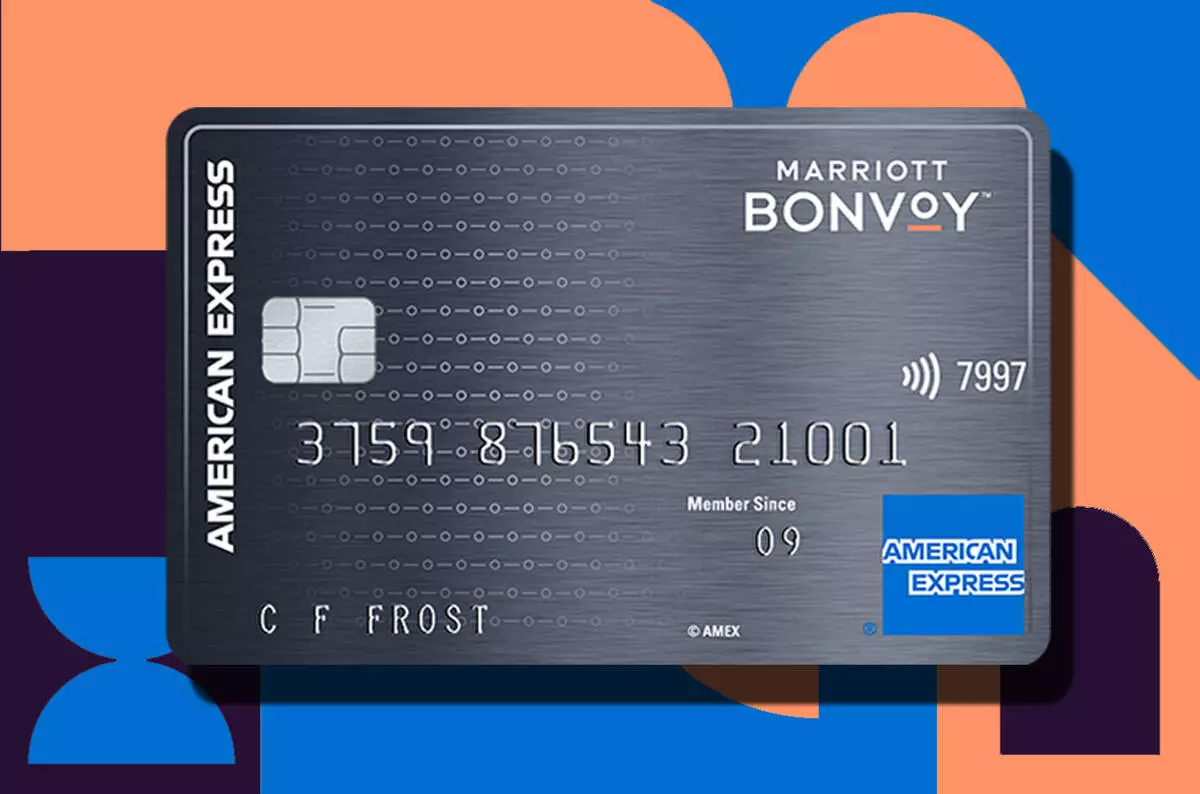
Deciding whether the Marriott Bonvoy Brilliant American Express Card is worth its $650 annual fee requires a careful calculation of how much you value travel perks, hotel status, and flexible rewards. For frequent Marriott guests, the card’s annual free night award, dining credits, and automatic Platinum Elite status often offset the cost, while casual travelers may find the high fee difficult to justify against the card's specific benefits.
Understanding the Marriott Bonvoy Brilliant Financial Commitment
In 2026, the premium credit card landscape remains highly competitive, and the Marriott Bonvoy Brilliant American Express Card stands as the pinnacle of the Marriott co-branded portfolio. With a $650 annual fee, it is positioned alongside other ultra-premium travel cards. Before assessing the value, it is essential to recognize that this is an investment in a specific ecosystem. Unlike general-purpose travel cards that allow you to transfer points to various airline or hotel partners, this card is strictly tethered to the Marriott Bonvoy program.
The fee is not merely a cost of entry; it is a purchase of a "lifestyle" within the Marriott hotel network. If your travel patterns do not consistently align with Marriott properties—which include brands ranging from Courtyard and Fairfield to Ritz-Carlton and St. Regis—the card’s utility diminishes significantly.
The Core Value Drivers
To determine if the card pays for itself, you must weigh the annual statement credits and benefits against the $650 expenditure. As of 2026, these are the primary components that serve as the foundation of the card's value:
1. The Annual Free Night Award
The most significant benefit for many is the Free Night Award (FNA) provided every year upon your card anniversary. This certificate is valid for a one-night stay at participating Marriott Bonvoy properties with a redemption level of up to 85,000 points.
- Valuation Strategy: If you use this certificate at a property where the nightly rate exceeds $500, you have already recouped the majority of your annual fee.
- Flexibility: You can add up to 15,000 points from your Bonvoy account to the certificate, allowing you to book properties that cost up to 100,000 points per night. This versatility makes it much easier to extract high-end value from the benefit.
2. Monthly Dining Credit
The card offers a $25 monthly dining credit for eligible purchases at restaurants worldwide. Over the course of a full year, this totals $300 in statement credits.
- The "Catch": Because this credit is issued monthly, it requires active management. You must ensure you spend at least $25 on dining each month. If you fail to utilize this credit in any given month, the value is lost forever.
3. Automatic Platinum Elite Status
Perhaps the most distinct feature of the Brilliant card is the automatic granting of Marriott Bonvoy Platinum Elite status. Usually, this status requires 50 qualifying nights per year.
- Benefits of Platinum Status: This includes a 50% bonus on points earned on stays, space-available room upgrades (including some suites), late checkout (until 4:00 PM), and welcome gift options at check-in (such as breakfast or points).
- Real-World Value: The value here is subjective. If you stay at Marriott hotels 20 to 30 nights a year, the room upgrades and complimentary breakfast alone could be worth hundreds of dollars, effectively bridging the gap between the card's cost and its benefits.
Comparative Analysis of Annual Benefits
To visualize the break-even point, it is helpful to contrast the fixed costs with the potential liquid or near-liquid offsets.
| Benefit | Annual Value (Estimated) | Constraints |
|---|---|---|
| Annual Free Night Award | $400 - $600 | Max 85k points; subject to availability |
| Monthly Dining Credit | $300 | $25/month; expires monthly |
| Property Credit | $100 | Only at Ritz-Carlton/St. Regis |
| Total Potential Offset | $800 - $1,000 | Depends on usage habits |
Note: The Property Credit is valid only for a two-night minimum stay at The Ritz-Carlton or St. Regis properties, booked through specific portals. It is a niche benefit that should not be factored into your baseline valuation unless you stay at these luxury tiers.
Who Should (and Should Not) Carry This Card
The decision to pay $650 for a credit card is rarely about a single feature; it is about the intersection of your travel frequency and your loyalty to the brand.
The Ideal Cardholder
You likely belong in this category if:
- You stay at Marriott hotels 20+ nights per year: You will naturally maximize the Platinum Elite status and the various on-property perks.
- You are a "Luxury Traveler": You enjoy staying at high-end properties like The Ritz-Carlton or W Hotels where the 85,000-point certificate can be easily utilized.
- You are an organic spender on dining: If you already spend $25 or more at restaurants monthly, the credit is effectively "free money."
The Unlikely Candidate
You should look elsewhere if:
- You prefer hotel variety: If you enjoy booking whichever hotel is cheapest or most convenient regardless of brand, a co-branded card will restrict your value.
- You are a budget traveler: The card offers the best value when redeemed for expensive, high-category hotels. Redeeming points or certificates for low-end, budget properties often results in poor "cents per point" value.
- You struggle with complex benefits: If managing monthly credits and specific booking portals feels like a chore, the mental energy spent maintaining the card may outweigh the financial rewards.
Strategic Considerations for 2026
As of 2026, the travel industry has seen dynamic shifts in how loyalty points are valued. Marriott has increasingly moved toward dynamic pricing, meaning the number of points required for a room fluctuates based on demand. This makes the Free Night Award a "floating" asset.
The Risks of Devaluation
When you hold a card with a high fee, you are exposed to the risk of program devaluations. If Marriott increases the point requirements for top-tier properties, your 85,000-point certificate may cover fewer hotels than it did in previous years. Furthermore, if you rely on Platinum status for breakfast, be aware that Marriott’s breakfast policies vary significantly by brand; it is not always a guaranteed full buffet, and some brands offer limited credits instead.
Managing the Application Strategy
If you decide the card is worth the cost, consider the timing of your application. Credit card issuers often have "welcome offers" that provide a significant bonus of points after a minimum spend requirement is met in the first few months. This "sign-up bonus" is often the single largest driver of value in the first year of card ownership, potentially worth more than $1,000 in hotel stays. However, ensure you are eligible for the bonus based on current American Express and Marriott Bonvoy terms, which often include "anti-churning" rules that prevent you from getting a bonus if you have held other Marriott cards recently.
Frequently Asked Questions
Does the $650 fee include lounge access?
Yes, the card provides a Priority Pass Select membership, which grants access to over 1,200 airport lounges worldwide. You must enroll in this benefit through your American Express account to activate it. This is a significant perk for frequent flyers that adds value beyond the hotel-specific benefits.
Can I downgrade to a cheaper card if I no longer want to pay $650?
Yes, you can request a "product change" to a lower-fee Marriott Bonvoy card. However, be aware that you may lose certain benefits like Platinum Elite status and the higher-tier Free Night Award. Always contact American Express customer service to discuss the implications before downgrading.
Is the $100 property credit cash?
No, it is a statement credit. When you book a qualifying two-night stay at a participating Ritz-Carlton or St. Regis property and charge incidentals (like spa treatments or dining) to your room, the $100 is credited back to your account. It is not an automatic discount on the room rate itself.
Do points earned with this card expire?
Marriott Bonvoy points do not expire as long as you remain an active member, which includes having at least one qualifying activity (earning or redeeming) at least once every 24 months. Holding the card counts as maintaining your account activity.
How do I maximize the value of the 85,000-point certificate?
To maximize value, search for properties during peak season or in high-demand cities (like New York, London, or Tokyo) where cash rates often exceed $600 per night. By using the certificate on these dates, you ensure that the cost of your annual fee is covered by a single night's stay.
Next Steps for Your Decision
To finalize your decision, take an objective look at your past 12 months of travel. Count the number of nights you spent in hotels and identify how many of those were at Marriott properties. If the number is below 15, calculate the cost of those stays. If you aren't spending enough on hotels to benefit from the status and aren't disciplined enough to capture the $300 in annual dining credits, the $650 fee will likely be a net loss.
If you are a frequent traveler who values the prestige of elite status and the comfort of luxury hotels, the card is a powerful tool. Begin by reviewing your 2026 travel calendar and identifying at least one major trip where you could apply your Free Night Award. If that trip alone covers the fee, the remaining perks—lounge access, dining credits, and elite status—become the genuine profit of your card membership.