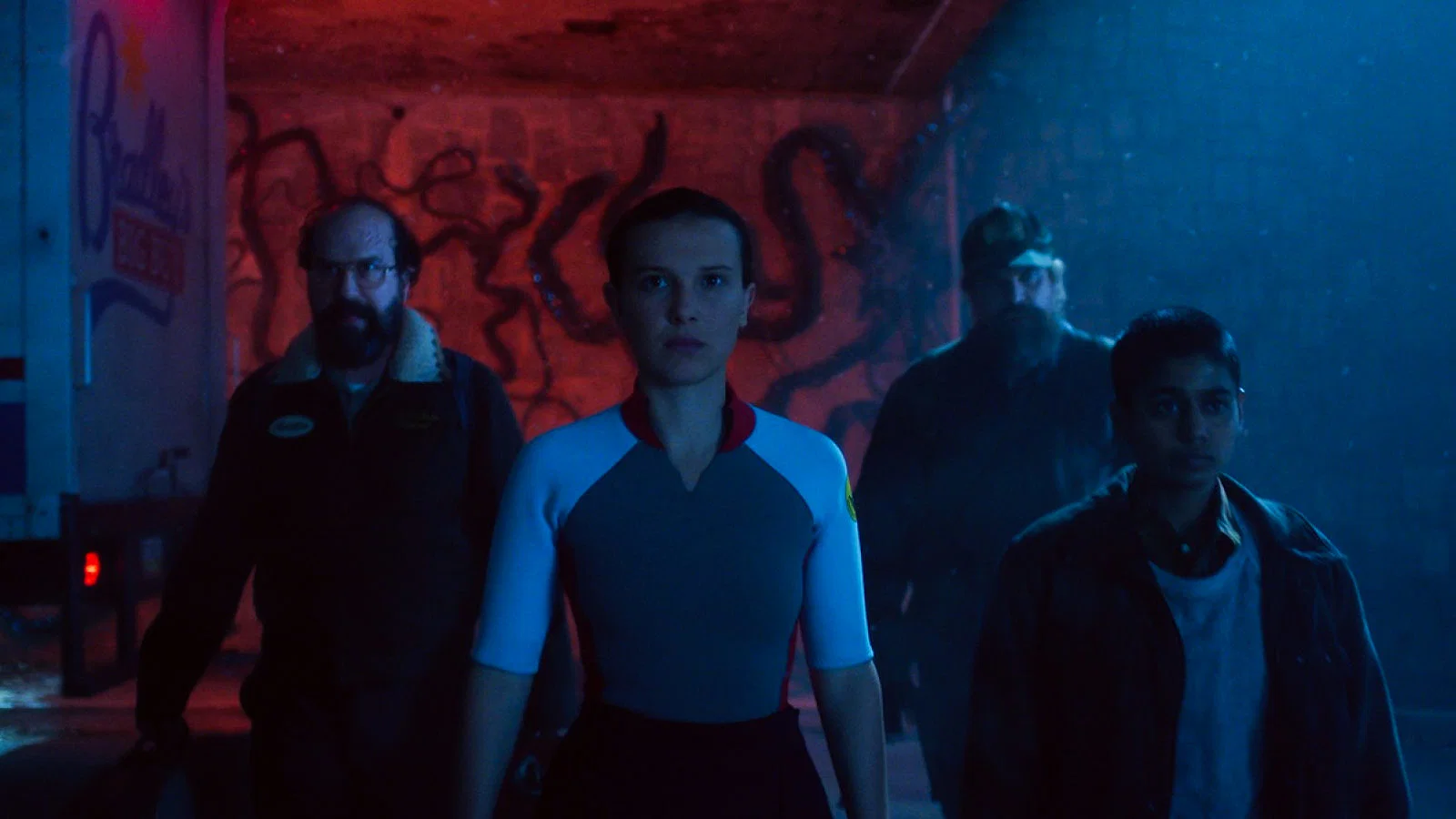
Stranger Things evolved from a localized 1980s mystery into a global dark-fantasy blockbuster, shifting its focus from intimate character-driven horror to high-stakes supernatural warfare. This evolution caused a divide between fans who preferred the grounded suspense of the early seasons and those who embraced the grand spectacle and expanded lore of the later years.
The Genesis of a Phenomenon: Small-Town Mystery and Nostalgia
When Stranger Things debuted on Netflix in 2016, it was a "sleeper hit" that relied heavily on word-of-mouth. Created by the Duffer Brothers, the first season was a masterclass in atmospheric storytelling, drawing heavily from the works of Steven Spielberg, Stephen King, and John Carpenter. Set in the fictional town of Hawkins, Indiana, in 1983, the story focused on the disappearance of a young boy, Will Byers, and the appearance of a telekinetic girl named Eleven.
The primary appeal for the initial audience was its intimacy. The stakes were personal: a mother looking for her son, a group of friends trying to find their companion, and a police chief dealing with his own grief. The supernatural element, the "Upside Down," was a shadow in the periphery—unexplained, terrifying, and contained. This era of the show is often cited by purists as the peak of the series because the horror felt tangible and the 1980s setting felt like a lived-in reality rather than a neon-soaked caricature.
The Middle Years: Tonal Shifts and the "Summer of Love"
As the show progressed into its second and third seasons, the "American" identity of the series began to lean into the cultural excesses of the decade. Season 2 (2017) expanded the scope but kept the core dynamics mostly intact, introducing the "Mind Flayer" as a more Lovecraftian threat. However, it was Season 3 (2019) that marked the first significant pivot point for the fanbase.
Season 3 leaned heavily into the "mall culture" of 1985. The color palette shifted from the muted autumnal browns and greys of the first two seasons to vibrant, neon-lit saturation. The tone became more comedic, almost slapstick in places, particularly with the "Scoops Troop" subplot. While this season was a massive commercial success, some fans felt the series was becoming a parody of itself. The introduction of a secret Russian base beneath a Midwestern mall pushed the suspension of disbelief for those who enjoyed the localized government conspiracy of Season 1.
The evolution here was clear: Stranger Things was no longer just a horror-mystery; it was becoming a summer blockbuster. This transition prioritized set pieces, visual effects, and "shippable" character pairings over the slow-burn dread that established the series.
Season 4 and 5: The Move to Epic Dark Fantasy
By the time Season 4 arrived in 2022—and as we look back from 2026—the series had undergone its most radical transformation. The Duffer Brothers moved away from the 45-minute episodic format toward "movie-length" chapters, with some episodes exceeding 90 minutes. The story also fractured geographically, moving between Hawkins, California, Nevada, and Russia.
The introduction of Vecna (Henry Creel) fundamentally changed the show's mythology. For the first time, the "Upside Down" was given a face and a human origin story. This was a move toward high-stakes fantasy similar to A Nightmare on Elm Street or even The Lord of the Rings. The evolution from "Kids on Bikes" to "Warriors in an Apocalypse" was complete.
From the 2026 perspective, we can see that this expansion was necessary to justify the show's massive budget and global footprint, but it came at the cost of the show's original DNA. The "small-town" feel was replaced by a global conflict that felt less like a hidden secret and more like a public disaster.
Why the Fanbase Split: Analyzing the Divide
The "split" in the Stranger Things fandom isn't a simple matter of liking or disliking the show. Most fans remained loyal through the final season in 2025/2026, but their reasons for watching changed. The divide generally falls into three categories: Tonal Preference, Character Bloat, and Pacing.
1. Tonal Preference: Suspense vs. Spectacle
Early fans gravitated toward the Amblin-esque mystery where the monster was rarely seen. Later fans were drawn to the "Event TV" aspect—the massive CGI battles, the gore, and the high-octane action. Those who preferred the "psychological horror" of the Hawkins Lab found the later seasons too loud and flashy. Conversely, those who found Season 1 "too slow" praised the kinetic energy of the later years.
2. The Problem of Character Bloat
As the series evolved, the cast grew exponentially. In Season 1, the core cast was tight. By Season 4 and 5, the show had to juggle over a dozen "main" characters. This led to a fragmented narrative where some characters (like Jonathan Byers or Will Byers in middle seasons) felt sidelined or reduced to a single personality trait. The split occurred between fans who wanted deep character development for the original "Party" and those who enjoyed the chemistry of newer additions like Robin Buckley or Eddie Munson.
3. Pacing and "Feature Film" Episodes
The decision to make episodes longer in the final two seasons was polarizing. For some, it provided "more bang for their buck" and allowed for deeper world-building. For others, it destroyed the "binge-ability" of the show. The 150-minute Season 4 finale was a major point of contention; some saw it as a cinematic achievement, while others saw it as a sign of a lack of editorial restraint.
Comparative Evolution of Stranger Things (Seasons 1-5)
The following table outlines the technical and narrative shifts that occurred across the series' decade-long run.
| Feature | Season 1 (2016) | Season 3 (2019) | Season 4/5 (2022-2025/26) |
|---|---|---|---|
| Primary Genre | Supernatural Mystery | Action/Summer Horror | Dark Fantasy/Epic Horror |
| Visual Aesthetic | Muted, Grainy, Retro | Vibrant, Neon, Saturated | High Contrast, Cinematic, Dark |
| Main Antagonist | The Demogorgon (Animalistic) | The Mind Flayer (Incorporeal) | Vecna (Sentient/Humanoid) |
| Episode Length | 42–55 Minutes | 45–77 Minutes | 63–150+ Minutes |
| Setting Scope | Hawkins, Indiana | Hawkins (The Mall) | Global (Hawkins, Russia, CA) |
| Theme | Childhood Innocence | Adolescent Rebellion | Trauma and Sacrifice |
The "American" Aspect: Cultural Export and Identity
Stranger Things is uniquely American in its construction, yet it became one of the most successful international exports in streaming history. The evolution of the show reflects a broader trend in American media: the scaling of a "niche" concept into a "mega-franchise."
The show utilized American tropes—the high school bully, the corrupt government agency, the Fourth of July celebration—and exported them to a global audience. However, the "split" also occurred because the show began to feel less like an authentic recreation of the 1980s and more like a modern interpretation of the 1980s. Season 1 felt like it could have been filmed in 1983. Season 4 and 5 felt like modern blockbusters set in 1986. This distinction is subtle but significant for fans who prioritize historical and atmospheric accuracy.
The Technical Evolution: From Practical Effects to Digital Mastery
Another reason for the series' evolution—and the resulting fan divide—is the technological shift in how the show was produced.
- Season 1: Relied heavily on practical effects, prosthetics, and clever lighting to hide the Demogorgon. This created a sense of "grounded" horror.
- Seasons 4 and 5: Utilized world-class CGI and motion capture. While the visual fidelity of Vecna was praised, the reliance on digital environments (the Mindscape, the massive Upside Down rifts) removed some of the "physicality" that fans loved in the early years.
Fans who grew up on 80s cinema often preferred the tactile nature of the early seasons, while younger audiences, accustomed to the Marvel Cinematic Universe (MCU) style of filmmaking, appreciated the visual ambition of the later stages.
Frequently Asked Questions
Why did Stranger Things change its tone so drastically in Season 3?
The Duffer Brothers intended for each season to reflect a different year and a different style of 80s filmmaking. Season 3 was designed to mimic the "Summer Blockbuster" vibe of 1985 movies like Back to the Future. This resulted in more humor, brighter colors, and a faster pace, which contrasted sharply with the darker, slower tones of Seasons 1 and 2.
Was the split in the fanbase mostly due to character deaths?
While character deaths (or the lack thereof) were a major talking point, the split was primarily about the scale of the show. Many fans felt that the show's "plot armor"—where main characters survived impossible odds—cheapened the stakes, while others were deeply attached to the cast and did not want to see them die.
How did the long gaps between seasons affect the evolution of the show?
The significant delays (partially due to the COVID-19 pandemic and industry strikes) meant that the child actors aged much faster than their characters. This forced the Duffers to lean into more "adult" themes and darker horror, as the "cute kids on bikes" dynamic was no longer physically possible.
Is "American Stranger Things" different from the international version?
No, Stranger Things is a global Netflix original. However, the term "American Stranger Things" is often used in international markets to distinguish the core series from localized spin-offs or clones that attempted to replicate its success. The core series remains a deeply American narrative rooted in Cold War anxieties and U.S. suburban culture.
Did the series finale resolve the fan divide?
By 2026, the general consensus is that the series finale provided a definitive ending that satisfied most lore-heavy questions. However, the divide remains between those who believe the show should have stayed a "limited mystery" and those who believe its evolution into an epic saga was the correct path for a modern streaming giant.
Practical Recommendation for Viewers
If you are a new viewer or returning to the series after a long hiatus, it is helpful to approach Stranger Things as two distinct eras.
- Era 1 (Seasons 1-2): Treat this as a character-driven horror mystery. Focus on the atmosphere and the subtext of 1980s suburban life.
- Era 2 (Seasons 3-5): Approach this as a dark fantasy epic. Expect higher stakes, more CGI, longer runtimes, and a shift toward "superhero" tropes.
Understanding this tonal evolution before watching can help mitigate the "whiplash" that many fans experienced as the series transitioned from a small-town secret into a global phenomenon. For the best experience, view the series as a chronicle of the characters' growth from children to young adults, mirroring the show's own growth from a small project into a cultural titan.