During Operation Desert Storm, the United States military suffered 148 battle-related deaths and 145 non-battle deaths, totaling 293 fatalities during the combat phase of the Persian Gulf War. Additionally, 467 service members were wounded in action. These figures represent one of the lowest casualty rates in the history of modern large-scale conventional warfare.
Historical Context of Operation Desert Storm
To understand the scope of American soldier casualties in Desert Storm, one must first examine the scale of the deployment. Operation Desert Shield (the buildup) and Operation Desert Storm (the combat phase) involved the largest mobilization of U.S. and coalition forces since the Vietnam War. By the time the ground war commenced in February 1991, approximately 694,550 U.S. personnel were stationed in the Kuwaiti Theater of Operations (KTO).
The conflict was characterized by a massive, multi-week air campaign followed by a lightning-fast ground offensive that lasted only 100 hours. The primary objective was the expulsion of Iraqi forces from Kuwait, which had been invaded in August 1990. Because the Iraqi military was, at the time, the fourth-largest in the world, military planners and medical units originally anticipated significantly higher casualty rates than what actually occurred.
Statistical Breakdown of Fatalities and Injuries
The casualty data for the Persian Gulf War is often divided into two distinct categories: battle-related and non-battle-related. As of current 2026 records maintained by the Department of Defense (DoD), the numbers remain a benchmark for the efficacy of precision-guided munitions and superior air power.
Battle Deaths (Killed in Action)
Of the 148 U.S. battle deaths, the vast majority occurred during the final days of the conflict. The Army suffered the highest number of combat fatalities, followed by the Marine Corps. These deaths were the result of direct engagement with enemy forces, including small arms fire, artillery, and the infamous SCUD missile attacks.
Non-Battle Deaths
Perhaps the most surprising statistic of the conflict was the number of non-battle deaths (145), which nearly equaled the number of combat-related fatalities. These incidents occurred throughout both Desert Shield and Desert Storm. The causes included:
- Vehicle accidents in the harsh desert terrain.
- Aviation mishaps during training and transport.
- Natural causes and sudden illnesses.
- Unintentional discharge of weapons.
Wounded in Action (WIA)
The 467 service members recorded as Wounded in Action represent a remarkably low number compared to the nearly 700,000 troops deployed. This high survival rate is attributed to the overwhelming speed of the coalition advance, which prevented Iraqi forces from mounting a sustained defense, and the high quality of U.S. body armor and armored vehicle protection available at the time.
Key Events Contributing to High Casualty Counts
While the overall casualty count was low, several specific incidents accounted for a significant percentage of the total American losses.
The Dhahran SCUD Missile Attack
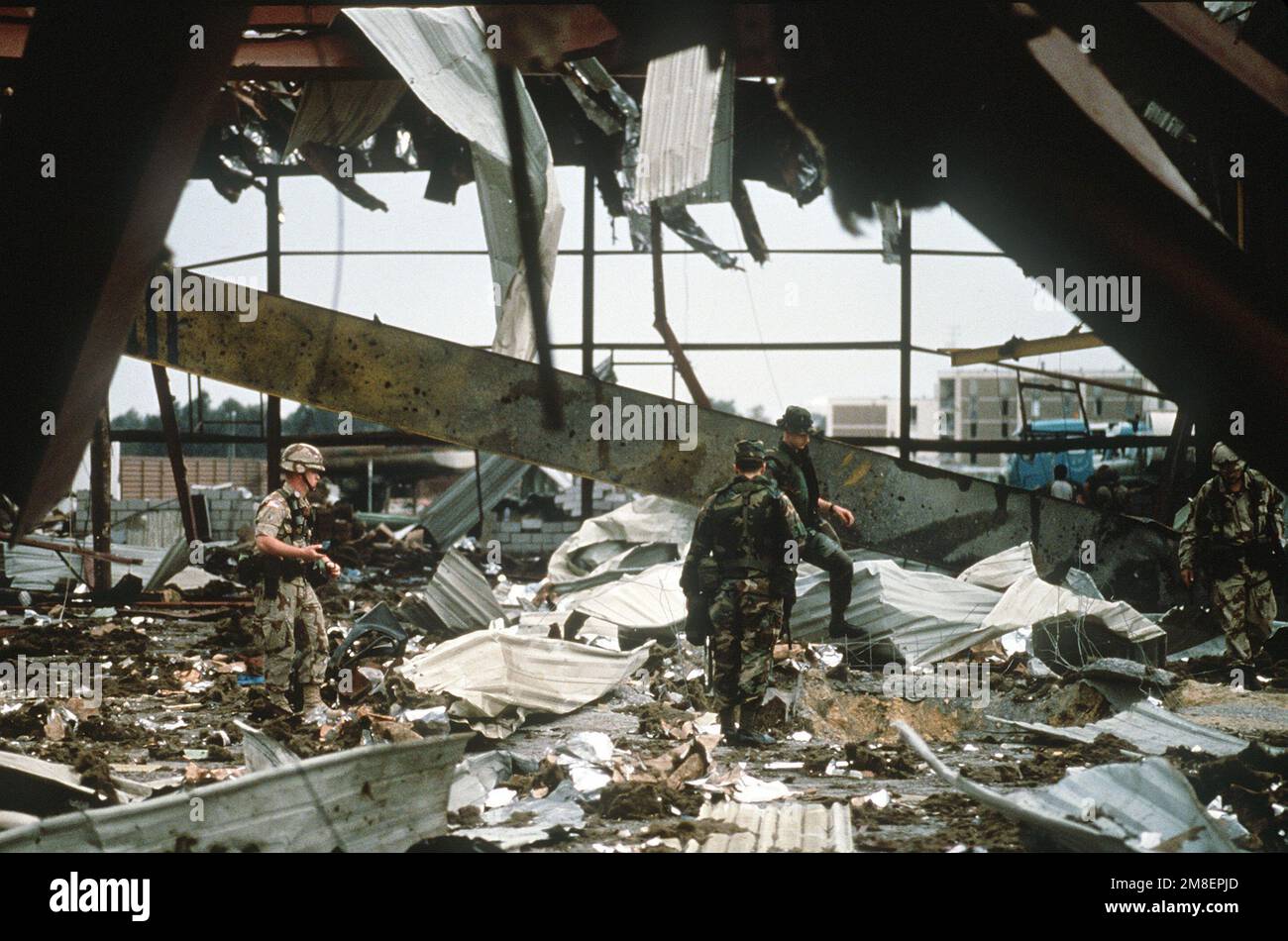
The single deadliest event for U.S. forces occurred on February 25, 1991. An Iraqi Al Hussein (SCUD) missile struck a U.S. Army barracks in Dhahran, Saudi Arabia. The barracks housed members of the 14th Quartermaster Detachment, an Army Reserve unit from Greensburg, Pennsylvania.
This single strike killed 28 American soldiers and wounded 99 others. The high loss of life was exacerbated by a software error in the Patriot missile defense system’s clock, which prevented the interceptor from tracking the incoming SCUD. This event alone accounted for approximately 19% of all U.S. battle deaths during the entire war.
The Battle of Khafji
The Battle of Khafji (January 29 – February 1, 1991) was the first major ground engagement of the war. While primarily a coalition victory involving Saudi and Qatari forces supported by U.S. air power and Marines, it resulted in 11 U.S. Marine fatalities, many of which occurred in a single friendly fire incident involving an LAV-25.
The Role of Friendly Fire (Fratricide)
One of the most somber aspects of American soldier casualties in Desert Storm is the prevalence of friendly fire. In previous conflicts like World War II or Vietnam, friendly fire accounted for an estimated 10% to 15% of total casualties. In Desert Storm, however, that figure rose to approximately 24% of all combat deaths.
Technical and Operational Causes
Several factors contributed to this high rate of fratricide:
- Speed of Movement: The "left hook" maneuver and the rapid pace of the armored advance meant that units often moved faster than communication networks could update their positions.
- Thermal Sight Ambiguity: U.S. tanks, particularly the M1A1 Abrams, were equipped with advanced thermal sights that allowed them to engage targets at long ranges in total darkness or through smoke. However, at extreme distances, an Iraqi T-72 and a U.S. Bradley Fighting Vehicle could look remarkably similar on a thermal screen.
- Environmental Conditions: Sandstorms, oil well fires ignited by retreating Iraqi troops, and heavy smoke created a chaotic visual environment that increased the risk of misidentification.
Of the 148 battle deaths, 35 were officially attributed to friendly fire. Furthermore, 72 of the 467 wounded were also victims of fratricide. These incidents led to significant post-war investments in Identification Friend or Foe (IFF) systems for ground vehicles.
Summary of Casualties by Category
The following table provides a breakdown of U.S. personnel statistics during the combat phase of the Persian Gulf War.
| Category | Count | Primary Causes / Notes |
|---|---|---|
| Killed in Action (KIA) | 148 | Enemy fire, SCUD attacks, and landmines. |
| Non-Battle Deaths | 145 | Vehicle accidents, heart attacks, training mishaps. |
| Wounded in Action (WIA) | 467 | Shrapnel, gunshot wounds, and blast injuries. |
| Friendly Fire Deaths | 35 | Misidentification during night/low-visibility combat. |
| Missing in Action (MIA) | 0 | All personnel eventually accounted for by 2009. |
| Total Deployed (U.S.) | 694,550 | Peak strength in the Kuwaiti Theater (KTO). |
Medical Advancements and Survival Rates
The low mortality rate among the wounded was not merely a matter of luck; it was the result of a highly sophisticated medical evacuation (MEDEVAC) system. By 1991, the U.S. military had refined the "Golden Hour" concept—the principle that a wounded soldier’s chances of survival increase exponentially if they receive surgical intervention within 60 minutes of injury.
Mobile Army Surgical Hospitals (MASH) and Fleet Hospitals were positioned close to the front lines. The use of GPS (Global Positioning System), which was relatively new at the time, allowed MEDEVAC pilots to locate casualties in the featureless desert with unprecedented precision, even during sandstorms or at night.
Long-Term Casualties: Gulf War Illness (GWI)
When discussing American soldier casualties in Desert Storm, it is medically and historically necessary to address the "invisible" casualties that manifested after the troops returned home. As of 2026, research continues into what is commonly known as Gulf War Illness (GWI) or Gulf War Syndrome.
Prevalence and Symptoms
Approximately 25% to 30% of the 696,000 veterans who served in the Gulf War have reported chronic multi-symptom illnesses. Symptoms include:
- Chronic fatigue and muscle pain.
- Cognitive dysfunction (often called "brain fog").
- Respiratory issues and skin rashes.
- Neurological problems.
Causative Agents
The Department of Veterans Affairs (VA) and independent researchers have identified several potential exposures that may have contributed to these long-term casualties:
- Sarin Gas Exposure: During the destruction of the Khamisiyah ammunition depot in March 1991, low levels of nerve agents were released into the atmosphere.
- Pyridostigmine Bromide (PB) Tablets: These were given to troops as a pretreatment for potential nerve gas attacks.
- Pesticides: Extensive use of organophosphates to protect troops from desert insects.
- Oil Well Fires: The inhalation of toxic smoke from over 600 burning oil wells in Kuwait.
While these are not counted in the official 1991 "battle death" statistics, the U.S. government has recognized these conditions for the purposes of disability benefits and ongoing medical care.
Comparison with Other Conflicts
To provide perspective on the Desert Storm casualty figures, it is helpful to compare them to other major U.S. military engagements. In the Vietnam War, the U.S. suffered over 58,000 deaths. In the Korean War, the figure was approximately 36,000.
Even in the more recent Iraq War (Operation Iraqi Freedom), which began in 2003, the U.S. suffered over 4,400 deaths over nearly a decade of conflict. The brevity and lopsided nature of Desert Storm—often referred to as a "hyperwar"—resulted in a casualty-to-deployment ratio that remains an outlier in military history.
FAQs About American Casualties in Desert Storm
How many American soldiers died from friendly fire in Desert Storm?
Official records indicate that 35 American service members were killed by friendly fire during Operation Desert Storm. This accounted for roughly 24% of the total battle deaths. The high percentage was largely due to the rapid movement of forces, night operations, and the difficulty of identifying vehicles at long ranges using thermal optics.
What was the single deadliest day for Americans in the Gulf War?
February 25, 1991, is considered the deadliest day of the conflict. On this date, an Iraqi SCUD missile hit a U.S. Army barracks in Dhahran, Saudi Arabia, killing 28 soldiers. Most of these casualties were members of the 14th Quartermaster Detachment, a Reserve unit from Pennsylvania.
Did any American soldiers remain Missing in Action (MIA) after Desert Storm?
For many years, Navy Captain Michael "Scott" Speicher was the only American listed as MIA from the Gulf War. His F/A-18 Hornet was shot down on the first night of the air war (January 17, 1991). In 2009, his remains were recovered in the Anbar province of Iraq and identified, meaning there are currently no unaccounted-for MIA personnel from Desert Storm.
How did the number of non-battle deaths compare to combat deaths?
The numbers were remarkably close. There were 148 battle-related deaths and 145 non-battle deaths during the active phases of the conflict. Non-battle deaths were primarily caused by vehicle accidents, aircraft crashes during transport, and medical emergencies like heart attacks or sudden illness.
Is Gulf War Illness considered part of the casualty count?
In formal military reporting, "casualties" usually refer to those killed or wounded during the timeframe of the conflict. However, the Department of Veterans Affairs recognizes thousands of veterans who suffer from Gulf War Illness as having service-connected disabilities. While not part of the initial 293 fatalities, these veterans represent the long-term human cost of the war.
How many female soldiers were casualties in Desert Storm?
Fifteen female service members died during the Persian Gulf War, and 21 were wounded. These women served in various roles, including transport pilots, medics, and support personnel. Their service and sacrifice played a key role in the subsequent 1993 decision to lift the ban on women flying in combat missions.
Practical Recommendations for Researchers and Veterans
For those seeking more granular data or official documentation regarding American soldier casualties in Desert Storm, several authoritative resources are available as of 2026:
- National Archives and Records Administration (NARA): Researchers can access the "Defense Casualty Analysis System" (DCAS) through the National Archives to find specific records by name, unit, or home state.
- The Department of Veterans Affairs (VA): Veterans experiencing health issues related to their service in the Gulf are encouraged to apply for the Gulf War Registry health exam. This helps the VA track long-term health trends and provides veterans with specialized care.
- American Battle Monuments Commission: For information on those memorialized or interred in overseas cemeteries, the ABMC maintains a comprehensive database of service members lost in theater.
- Unit History Associations: Many specific units, such as the 1st Infantry Division or the 24th Infantry Division (Mechanized), maintain their own archives and memorial pages that provide detailed accounts of specific engagements and losses.
Understanding the casualty figures of Desert Storm requires a balance of statistical analysis and recognition of the individual lives lost. While the war was a strategic success with historically low losses, the impact on the families of the 293 fallen and the thousands of veterans dealing with long-term health effects remains a significant chapter in American military history.