Yes, Amberley Snyder is still actively barrel racing today. Following her life-altering 2010 car accident that resulted in paraplegia, Snyder adapted her riding technique using customized gear, including a seatbelt and leg straps. She continues to train horses, compete in rodeo events, conduct riding clinics, and inspire audiences nationwide as a professional athlete and motivational speaker.
Amberley Snyder’s Current Status in Competitive Rodeo
Amberley Snyder remains a prominent figure in professional rodeo and adaptive sports. Far from stepping away from the arena, Snyder continues to ride, train, and enter competitive barrel racing events. Her ongoing involvement in rodeo spans multiple roles: active competitor in Women’s Professional Rodeo Association (WPRA) and open barrel races, horse trainer, advocate for adaptive equine sports, and public speaker.
Snyder’s decision to remain in the saddle is not merely ceremonial. She actively runs her competitive horses against non-disabled professional cowgirls, competing under the same governing rules and time standards as every other contestant. Barrel racing is an event determined solely by the stopwatch; there are no handicap points or special time adjustments for riders with disabilities. Snyder's ability to remain competitive at high levels highlights both her exceptional horsemanship and the refined adaptive equipment she developed.
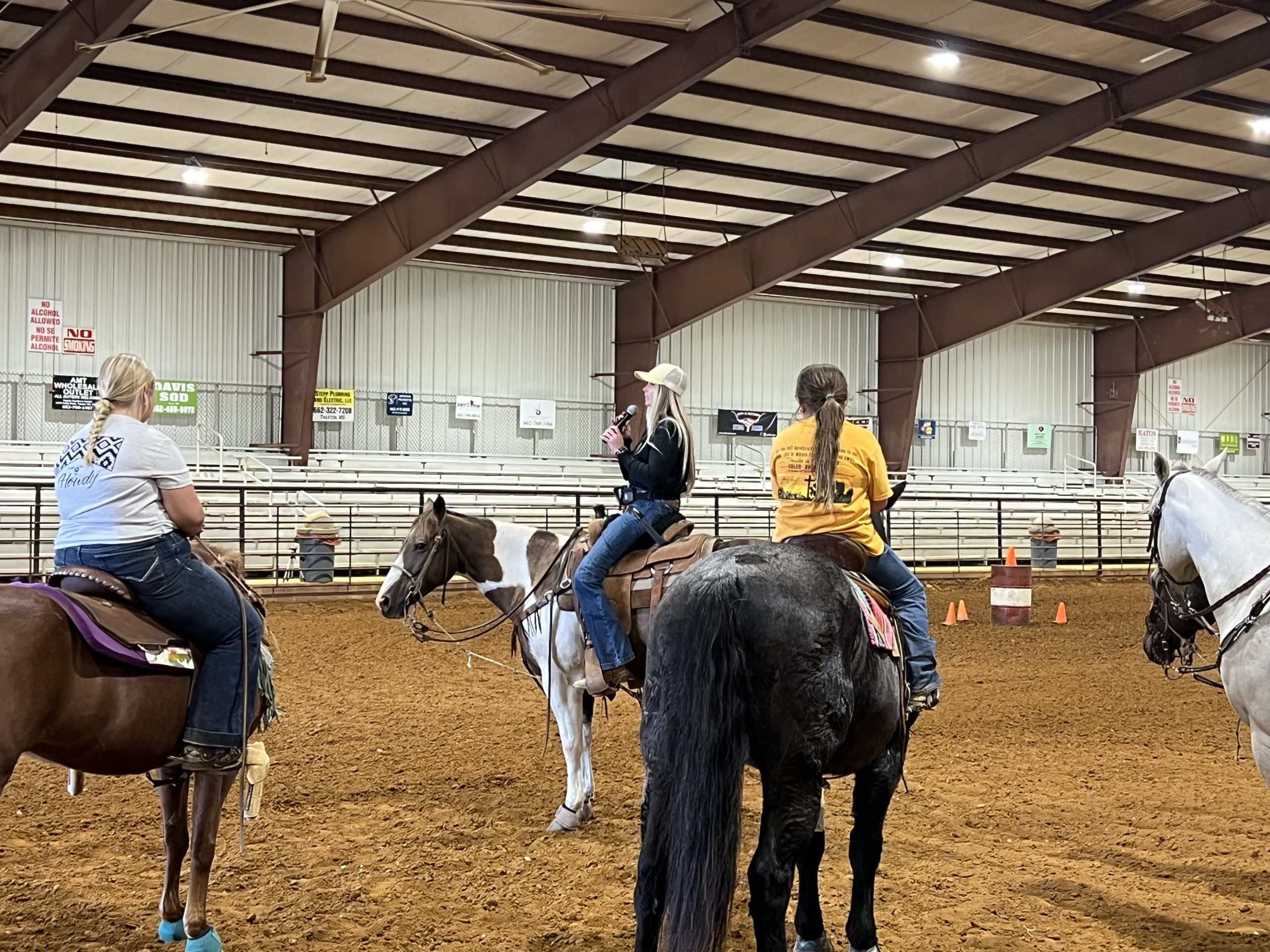
Beyond entering jackpots and professional rodeos, Snyder devotes substantial time to conditioning her horses, developing young prospects, and sharing her specialized riding methods. She frequently conducts clinics, encouraging other riders—both disabled and able-bodied—to refine their body positioning, seat balance, and equine communication.
The 2010 Injury and Her Return to the Arena
To understand Snyder’s presence in barrel racing today, it is essential to review the pivotal event that reshaped her life and career. In 2009, prior to her injury, Snyder achieved one of her major early career milestones by winning the National High School Rodeo Association (NHSRA) All-Around Cowgirl World Championship. She was a rising star in youth rodeo with clear aspirations for professional success.
On January 10, 2010, while driving to the Denver Stock Show in Colorado, Snyder suffered a severe truck rollover accident on an icy highway. Unbuckled at the moment of the crash after stopping for gas, she was ejected from her vehicle and struck a fence post. The impact fractured her T12 vertebra, resulting in complete spinal cord damage and permanent paralysis from the waist down. Doctors informed her that she would never walk again, let alone ride horses competitively.
Physical Rehabilitation and Adapting to Paraplegia
Discharged from the hospital in a wheelchair, Snyder refused to accept an absolute end to her equestrian career. Her physical therapy regimen was focused not just on daily living skills, but on re-establishing the balance required to sit atop a horse without trunk and lower-body motor control.
Within four months of her accident, Snyder returned to the saddle. Initial attempts presented immense physical challenges; without sensation or control in her legs and core muscles below the T12 level, maintaining balance during rapid movement proved extremely difficult. The lateral forces generated during a sharp turn around a barrel would instantly pull an unanchored rider off the horse.
Rather than abandoning the sport, Snyder and her family engineered custom modifications to secure her in the saddle while preserving safety in the event of a fall or horse accident.
The Technology of Adaptive Barrel Racing
Barrel racing requires explosive acceleration, sharp turns around three cloverleaf-patterned barrels, and rapid deceleration. Able-bodied riders rely heavily on lower-leg pressure, thigh grip, and stirrup leverage to guide the horse, balance their weight, and absorb acceleration forces. Because Snyder lacks leg movement and abdominal core control below her waist, she relies on customized adaptive gear paired with refined upper-body mechanics.
- Upper-Body Posture & Weight Shift
- Custom Saddle with Built-in Seatbelt (Secures pelvic region to the saddle tree)
- Velcro Leg & Thigh Straps (Keeps limbs flush against horse’s flanks)
- Rubber Bands Securing Feet to Stirrups (Prevents feet from slipping while riding)
1. The Customized Seatbelt System
The cornerstone of Snyder’s setup is a heavy-duty nylon belt attached directly to the saddle tree. Positioned across her lap, this belt anchors her pelvis to the seat of the saddle, mimicking the stability that functional core and hip flexor muscles typically provide. The tension is calibrated to hold her firmly in the pocket during high-speed turns while allowing quick-release capability for emergency dismounts.
2. Velcro Thigh and Knee Straps
To keep her legs from swinging outward due to centrifugal force, Snyder uses wide Velcro straps that wrap around her thighs and knees, binding them close to the horse's body. This eliminates loose movement, reduces drag, and prevents her legs from interfering with the horse’s shoulders or ribs.
3. Stirrup Securing Bands
Heavy-duty rubber bands secure her boots inside the stirrups. Because she cannot feel where her feet are positioned, these bands prevent her boots from slipping out during violent maneuvers, ensuring her lower body maintains a consistent profile throughout the run.
4. Specialized Saddle Engineering
Snyder utilizes saddles customized with a deeper seat pocket, a taller cantle, and modified rigging positions. The high cantle supports her lower back, while the deep seat creates a secure pocket that helps maintain an upright spinal position under rapid shifts in momentum.
Technical Comparison of Standard vs. Adaptive Barrel Racing
The table below details the operational differences between standard barrel racing mechanics and the adaptive methods Snyder uses to achieve high-performance results.
| Component / Function | Standard Barrel Racing Method | Amberley Snyder’s Adaptive Method |
|---|---|---|
| Primary Steering Cues | Combined rein pressure, inside leg pressure, and seat weight | Direct rein pressure, voice commands, and upper-torso angle shifts |
| Rider Stability | Thigh contraction, heel pressure, and core muscle bracing | Integrated lap belt, Velcro thigh straps, and high-cantle saddle |
| Foot & Stirrup Control | Active weight distribution through stirrup treads | Boots rubber-banded to stirrups for fixed alignment |
| Speed Acceleration Cues | Leg squeezing, spur pressure, and forward hip drive | Voice cues ("Whoa", whistle, clucks) and forward hand rein release |
| Turning Acceleration | Inside leg holding the horse off the barrel; outside leg pushing | Voice reinforcement, neck-reining, and hand placement on horn/reins |
| Safety Exit Mechanism | Natural push-off from stirrups and saddle | Emergency quick-release buckle on the primary seatbelt |
Communication and Horse Training Without Leg Cues
One of the most complex aspects of Snyder’s riding is her horse training methodology. Standard equestrian training teaches horses to yield to leg pressure—moving away from pressure on their ribs to flex, side-pass, or initiate turns. Because Snyder cannot apply leg cues, her horses must be retrained to respond to an entirely different vocabulary of signals.
- Standard Horse Cues
- Leg pressure on ribs
- Spur cues for speed
- Heel placement
- Core weight shift
- Amberley Snyder's Adaptive Cues
- Neck reining
- Upper-body tilt
- Voice commands
- Hand position on reins
Rein and Neck Controls
Snyder relies on precise rein handling. By applying distinct neck-reining pressure against the horse's neck, combined with direct rein contact on the bit, she signals turn initiation, flex points, and rate (slowing down before a turn).
Upper-Body Weight Distribution
Without abdominal control, Snyder uses her shoulders, chest, and head placement to alter her center of gravity. Shifting her shoulders backward signals rate and collection; leaning slightly forward over the saddle horn releases the horse to accelerate down the alleyway and between barrels.
Vocal Cues and Auditory Conditioning
Her horses are trained to respond to clear vocal commands. Specific vocalizations cue transitions into different gaits, bursts of speed on the straightaways, or collection when approaching a turn. This verbal conditioning replaces the traditional leg squeeze or spur check used by non-disabled riders.
Major Milestones and Career Achievements
Snyder’s athletic career after her injury includes several historic milestones that brought international visibility to adaptive equestrian sports.
- 2009: NHSRA All-Around Cowgirl Champion
- 2010: Car accident resulting in T12 spinal cord injury
- 2011: Return to competitive barrel racing with adaptive gear
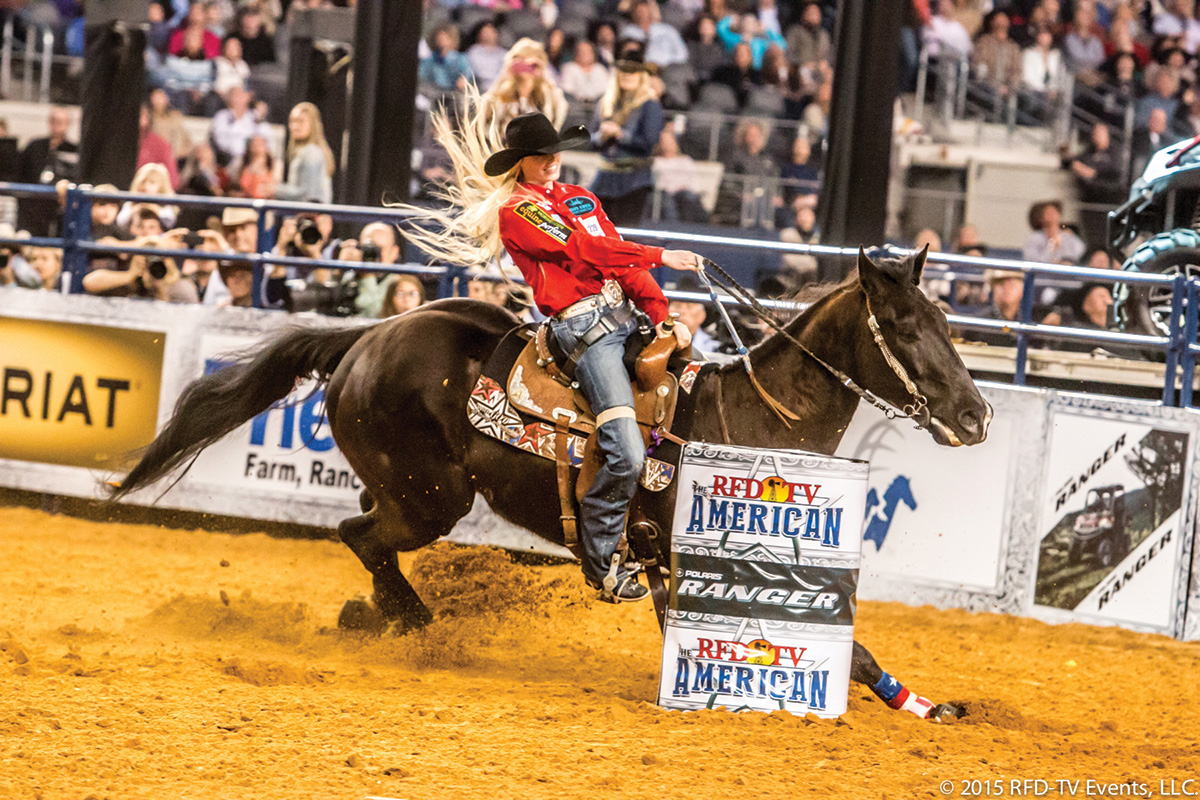
- 2015: Fan-voted Exemption Qualifier at RFD-TV's The American Rodeo
- 2019: Netflix releases biopic "Walk. Ride. Rodeo." featuring Snyder's stunt riding
- 2020s+: Active WPRA contestant, professional speaker, author, and clinician
The 2015 RFD-TV’s The American Rodeo
In 2015, Snyder was voted by rodeo fans nationwide to fill the Fan Exemption slot at RFD-TV’s The American Rodeo at AT&T Stadium in Arlington, Texas—one of the richest single-day rodeos in the world. Competing against the top barrel racers in the world, she clocked a competitive run of 15.926 seconds on her horse, Power, earning a standing ovation from over 40,000 spectators and proving her capability on a national stage.
The Netflix Biopic: Walk. Ride. Rodeo. (2019)
Snyder’s story was adapted into the 2019 Netflix original film Walk. Ride. Rodeo. Beyond serving as a consultant and writer for the film, Snyder personally performed all the post-accident stunt riding scenes. Film producers initially attempted to use able-bodied stunt doubles, but realized that no other rider could replicate Snyder’s exact upper-body posture, balance, and riding style in the saddle. Her sister, Autumn, performed the pre-accident riding scenes, making the film a unique family project.
Authorship and Motivational Speaking
In addition to her athletic endeavors, Snyder authored a children’s book titled Walk Ride Rodeo featuring Power, which details her journey of resilience. She travels extensively across the United States delivering keynote speeches to corporate organizations, agricultural summits, medical conferences, and youth groups, sharing lessons on overcoming adversity, setting goals, and adapting to life changes.
Challenges and Considerations for Adaptive Equestrians
While Amberley Snyder’s achievements demonstrate what is possible with adaptive equipment, adaptive riding involves inherent physical and operational challenges that require careful management.
Equipment Safety and Emergency Dismounts
Securing a rider to a saddle introduces significant risks if a horse falls or rears up. Able-bodied riders can jump clear of a falling horse, whereas a strapped-in rider risks being pinned underneath the animal. To manage this risk:
- Quick-release buckles are integrated into the seatbelt harness.
- Horses selected for adaptive barrel racing must possess an exceptionally calm demeanor, high responsiveness, and minimal propensity for bolting or bucking.
- Safety personnel and ground assistants are stationed near the arena gates during runs.
Thermal Regulation and Physical Fatigue
Individuals with spinal cord injuries above the lumbar spine often experience disrupted thermoregulation, making it difficult for the body to sweat efficiently below the level of injury. Competing in hot outdoor arenas requires deliberate heat management strategies, including cooling vests and shaded staging areas.
Muscle Spasms and Nerve Pain
Paraplegia often involves involuntary muscle spasms in the lower extremities. Uncontrolled spasms while riding can throw off balance or confuse the horse. Managing spasms through physical conditioning, stretching routines, and proper leg strap tension is critical before every run.
Frequently Asked Questions
Is Amberley Snyder still barrel racing today?
Yes. Amberley Snyder continues to actively ride, train horses, enter barrel racing competitions, and perform at rodeos and equine events across the country.
How does Amberley Snyder stay on her horse while barrel racing?
Snyder uses a customized adaptive riding system that includes a nylon seatbelt attached to the saddle tree to anchor her hips, Velcro straps to secure her knees and thighs to the saddle, and rubber bands to hold her boots in the stirrups.
Did Amberley Snyder do her own riding in the Netflix movie Walk. Ride. Rodeo.?
Yes. Snyder served as her own stunt double for all post-accident riding scenes in the 2019 Netflix film Walk. Ride. Rodeo. Her sister, Autumn Snyder, performed the riding scenes representing Amberley prior to her 2010 accident.
What injury did Amberley Snyder sustain in her accident?
In January 2010, Snyder suffered a T12 spinal cord injury during a truck rollover crash, resulting in complete paraplegia from the waist down.
How does Amberley Snyder signal her horse to turn or speed up without using her legs?
Snyder relies on upper-body posture shifts, detailed neck-reining, hand movement, and vocal commands. Her horses are specifically retrained to read shoulder positioning, rein pressure, and spoken cues instead of leg pressure.
What governing bodies does Amberley Snyder compete in?
Snyder holds a card with the Women’s Professional Rodeo Association (WPRA) and competes in WPRA-sanctioned rodeos as well as open jackpot barrel races nationwide.
Summary and Practical Takeaways
Amberley Snyder’s ongoing presence in competitive barrel racing proves that severe physical impairment does not have to end an athletic career. For adaptive athletes, equestrians, and fans seeking to learn from her approach, key takeaways include:
- Adaptive Modifications Must Prioritize Function and Safety: Snyder’s system relies on anchoring the pelvis while maintaining quick-release options for emergency dismounts.
- Equine Retraining Requires Consistency: Transitioning a horse from leg-based cues to vocal and rein-based cues demands patient, incremental conditioning focused on upper-body weight awareness.
- Focus on Standardized Competition: Snyder competes directly against non-disabled athletes under identical rules, proving that adaptive engineering and clear rider-horse communication can overcome severe physical limitations.
To stay updated on Amberley Snyder’s competition schedule, speaking dates, and clinical appearances, follow her official website and verified social media channels.