Alyssa Farah Griffin has served in several high-profile government positions, most notably as the White House Director of Strategic Communications, Press Secretary for the Department of Defense, and Press Secretary for Vice President Mike Pence. Before her executive branch service, she held senior communications roles for the House Freedom Caucus and the Republican Study Committee.
The professional trajectory of Alyssa Farah Griffin is a unique case study in American political communications. As of 2026, she remains a prominent fixture in national media, balancing her role as a co-host on ABC’s The View with her work as a political commentator for CNN. Her journey from the halls of Congress to the highest levels of the executive branch—and eventually to a pivotal role in daytime television—reflects a career defined by rapid ascent and significant ideological evolution. To understand her current influence, one must examine the specific "offices" and roles she occupied during some of the most turbulent years in modern American politics.
Early Career and Congressional Foundations
Before becoming a household name in the executive branch, Alyssa Farah Griffin (then Alyssa Farah) built a foundation in conservative media and legislative communications. Her entry into the professional world was influenced by her background in a politically active family, but she quickly carved out her own niche in Washington, D.C.
WorldNetDaily (WND)
Farah’s first major foray into media and communications was at WorldNetDaily (WND), a conservative news outlet founded by her father, Joseph Farah. She worked as an associate producer and reporter, gaining early experience in digital media and political messaging. While this role was in the private sector, it served as the springboard for her transition into the public sector. This period was essential for her development in understanding how narrative-driven media impacts political outcomes, a skill she would later use to navigate the complex media environment of the Trump administration.
The Office of Representative Mark Meadows
Her formal entry into government began in the House of Representatives. She served as the Communications Director for Representative Mark Meadows (R-NC). Meadows, who would later become the White House Chief of Staff, was a rising star in the conservative wing of the Republican Party. Working for Meadows allowed Farah to develop deep ties with the most conservative elements of the GOP, learning the nuances of legislative strategy and the importance of localized constituent messaging.
The Republican Study Committee (RSC)
Advancing her career on the Hill, Farah became the Communications Director for the Republican Study Committee (RSC). The RSC is the largest caucus of conservatives in the House, and managing its communications required a sophisticated understanding of policy and a high degree of coordination among dozens of congressional offices. In this role, she was responsible for articulating the caucus’s stance on fiscal responsibility, national security, and social issues, further solidifying her reputation as a sharp, effective Republican operative.
Leadership in the House Freedom Caucus
One of the most significant "offices" Farah held prior to the White House was serving as the Senior Advisor and Communications Director for the House Freedom Caucus. This group is widely considered the most influential and ideologically rigid bloc of conservatives in the House of Representatives.
Breaking Barriers in Conservative Leadership
Farah’s tenure with the Freedom Caucus was notable not just for the political battles she navigated—such as the repeal and replace efforts regarding the Affordable Care Act—but also because she was the first woman to serve as the group's spokesperson. This role required her to be a fierce advocate for the caucus’s hardline positions, often putting her at odds with moderate members of her own party and the Democratic leadership.
Strategic Messaging and Media Relations
In the Freedom Caucus, Farah mastered the art of the "media offensive." She was responsible for ensuring that the caucus’s voice was heard in a crowded 24-hour news cycle. This involved crafting press releases, managing high-stakes interviews for members, and coordinating with right-leaning media outlets to maintain pressure on Republican leadership. The skills she honed here—the ability to simplify complex legislative jargon into digestible talking points—would become her trademark in the years that followed.
Executive Branch Service: The Vice Presidency
In 2017, Farah moved from the legislative branch to the executive branch, joining the administration of President Donald Trump. Her first major role in the White House was as the Press Secretary for Vice President Mike Pence.
Serving as the Voice of the Vice President
As Press Secretary to the Vice President, Farah was the primary point of contact for the media regarding Pence’s official duties. This included domestic policy rollouts, international diplomatic trips, and his role as the President of the Senate. Unlike the often-combative briefings seen in the main White House press room, the Vice President’s communications shop under Farah was generally viewed as more traditional and disciplined.
The Transition to National Prominence
Working for Pence allowed Farah to gain experience in high-level diplomacy and national security. She accompanied the Vice President on numerous overseas trips, coordinating with the State Department and foreign press corps. This role was a crucial stepping stone, as it transitioned her from a "Hill staffer" to a senior administration official with a global perspective. It also established her as a loyal but professional operative within the Trump orbit, a reputation that would eventually lead to her appointment at the Pentagon.
The Pentagon: Press Secretary for the Department of Defense
In September 2019, Alyssa Farah made history when she was appointed as the Press Secretary for the Department of Defense (DoD). At the age of 30, she was the youngest person ever to hold this position, a role that is traditionally reserved for seasoned veterans or career civil servants.
Managing Global Crises
The role of DoD Press Secretary is vastly different from a political press role. It requires managing communications for a department with millions of employees and a global footprint. During her time at the Pentagon, Farah served under Secretary of Defense Mark Esper. She was responsible for communicating the U.S. military’s stance on several critical issues, including:
- The transition of U.S. forces in Syria.
- The response to Iranian aggression in the Persian Gulf.
- The initial military logistics involved in the COVID-19 pandemic response.
Maintaining Non-Partisan Professionalism
One of the key challenges of the Pentagon role is the necessity of maintaining a non-partisan tone. The military is an apolitical institution, and the Press Secretary must balance the political goals of the administration with the operational security and integrity of the armed forces. Farah was generally credited with being a steady hand at the podium during a time when the relationship between the White House and the Pentagon was occasionally strained.
White House Director of Strategic Communications
In April 2020, Farah returned to the White House proper, this time in the senior-most communications role of her career: White House Director of Strategic Communications. She was brought in during a major shake-up of the communications team, coinciding with Kayleigh McEnany’s appointment as Press Secretary.
Scope of the Role
The Director of Strategic Communications is responsible for the long-term messaging of the administration, as opposed to the day-to-day "firefighting" of the Press Secretary. Farah’s mandate included:
- COVID-19 Response: Coordinating the messaging for the White House Coronavirus Task Force.
- The Abraham Accords: Leading the communications strategy for the historic peace agreements between Israel and several Arab nations.
- Judicial Appointments: Managing the public narrative surrounding the confirmation of Supreme Court Justice Amy Coney Barrett.
Resignation and Turning Point
Farah’s tenure in this office ended in December 2020. She resigned from the White House, citing a desire to pursue new opportunities. However, it was later revealed through her public statements and testimony that her departure was motivated by her growing discomfort with the administration’s claims regarding the 2020 election results. Her resignation marked a significant turning point in her career, as she moved from being an insider to a vocal critic of the events leading up to January 6, 2021.
Professional History Summary Table
| Years | Organization / Office | Primary Role | Key Focus |
|---|---|---|---|
| 2010–2013 | WND (WorldNetDaily) | Associate Producer / Reporter | Conservative media and digital reporting. |
| 2013–2015 | U.S. House of Representatives | Communications Director | Rep. Mark Meadows and the RSC. |
| 2015–2017 | House Freedom Caucus | Senior Advisor / Comm. Director | First woman spokesperson for the caucus. |
| 2017–2019 | Office of the Vice President | Press Secretary (Mike Pence) | Executive branch media relations and diplomacy. |
| 2019–2020 | Department of Defense | Press Secretary | Global military communications; youngest in role. |
| 2020 | The White House | Dir. of Strategic Communications | Long-term messaging and Abraham Accords. |
| 2021–Present | CNN / ABC News | Political Contributor / Co-Host | Political analysis and media commentary. |
Post-Government Career: Media and The View
Following her departure from the White House, Alyssa Farah Griffin transitioned into the private sector, utilizing her extensive government experience to become a prominent media personality. Her "office" shifted from the West Wing to the television studio.
CNN Political Contributor
Shortly after leaving the administration, Farah joined CNN as a political contributor. In this role, she provided a unique perspective as a former high-ranking Trump official who had broken with the former president. Her insights into the inner workings of the GOP and the White House made her a sought-after voice during the coverage of the January 6th Committee hearings and the subsequent election cycles.
Joining The View
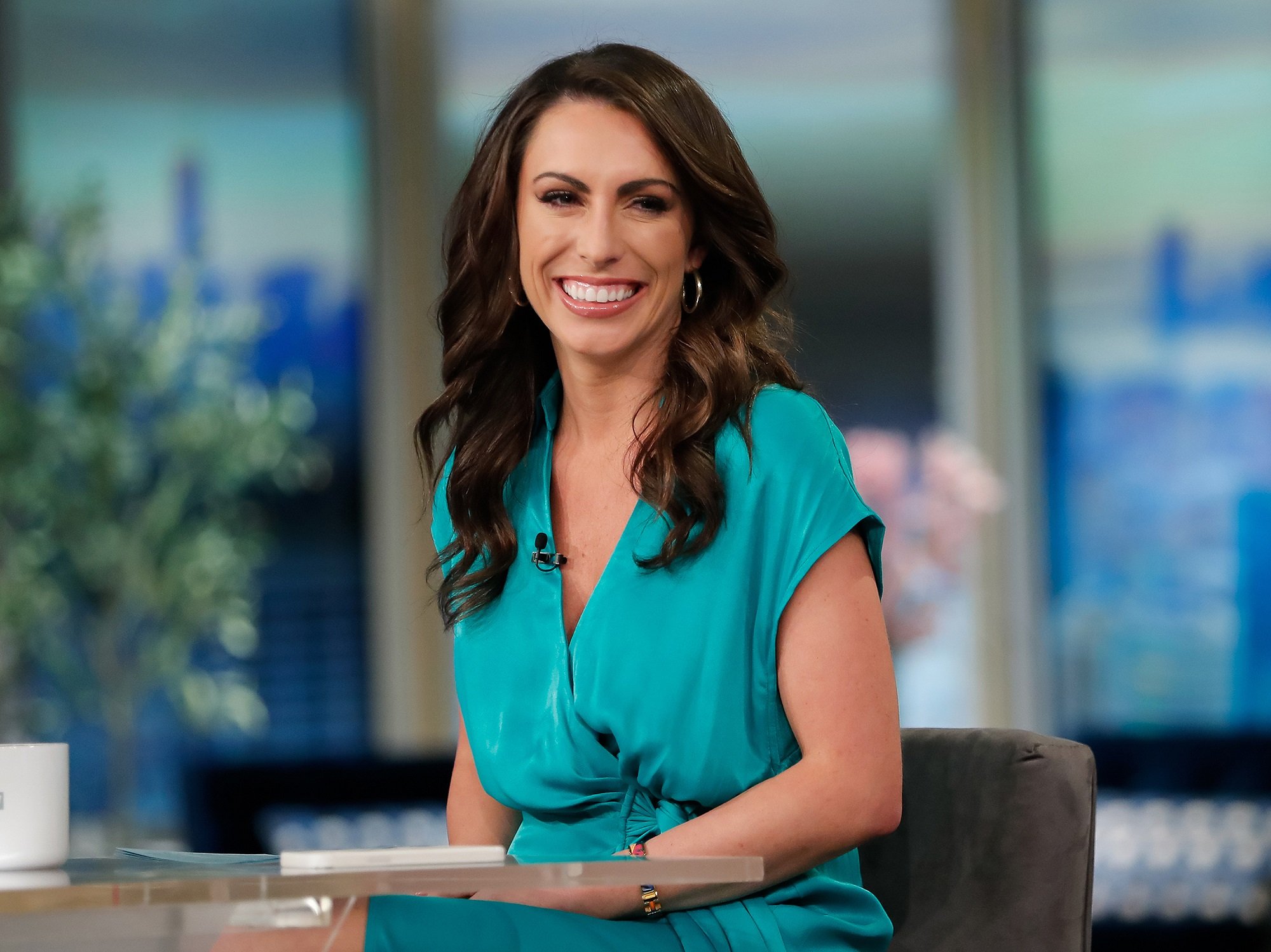
In August 2022, after a lengthy search for a permanent conservative co-host to replace Meghan McCain, ABC announced that Alyssa Farah Griffin would join The View. This platform provided her with a much broader audience than her previous political roles. As a co-host, she has focused on representing a "principled conservative" viewpoint while engaging in spirited debates with her more liberal co-hosts. By 2026, her presence on the show has become a staple of daytime television, where she frequently discusses the importance of bipartisan dialogue and the future of the Republican Party.
Frequently Asked Questions
What was Alyssa Farah Griffin's highest-ranking role in the government?
Her highest-ranking role was White House Director of Strategic Communications. This is a senior-level (Assistant to the President) position that involves overseeing the entire messaging apparatus of the executive branch. While her role as Pentagon Press Secretary was arguably more visible on a global scale, the Strategic Communications role placed her at the heart of the White House's policy-making and narrative-shaping efforts.
Why did she leave the Trump administration?
Farah resigned in December 2020. While her initial resignation letter was professional and appreciative, she later clarified that she could no longer support the administration's efforts to subvert the results of the 2020 presidential election. She stated that she felt a responsibility to speak out against the misinformation being spread about the election, which eventually led to her testifying before the House Select Committee on the January 6 Attack.
Was she the youngest Press Secretary at the Pentagon?
Yes, when she was appointed as the Press Secretary for the Department of Defense in 2019 at the age of 30, she became the youngest person to ever hold that position. This was a significant achievement, as the role usually requires decades of experience in either military affairs or senior-level government communications.
How did her role at the House Freedom Caucus influence her later career?
Her time at the House Freedom Caucus was foundational because it taught her how to manage high-pressure communications for a controversial and highly scrutinized group. It also built her connections with Mark Meadows, who eventually brought her into the inner circle of the Trump administration. This role established her "conservative credentials," which she still references today when discussing her political identity.
What is her current role as of 2026?
As of 2026, Alyssa Farah Griffin continues to serve as a permanent co-host on the ABC talk show The View. She also maintains her role as a political contributor for CNN, where she provides analysis on elections, policy, and the current state of the Republican Party. She is often categorized as a "Never-Trump" conservative or a member of the anti-Trump GOP wing.
Final Recommendation for Researchers
To get the most accurate picture of Alyssa Farah Griffin's professional history, researchers should look at the specific press releases and briefing transcripts from her time at the Department of Defense and the Vice President's office. These documents provide a factual record of her official statements and the policy priorities she represented. Additionally, her testimony to the January 6th Committee offers valuable context regarding the end of her government service and her transition into the media roles she occupies today.

)
