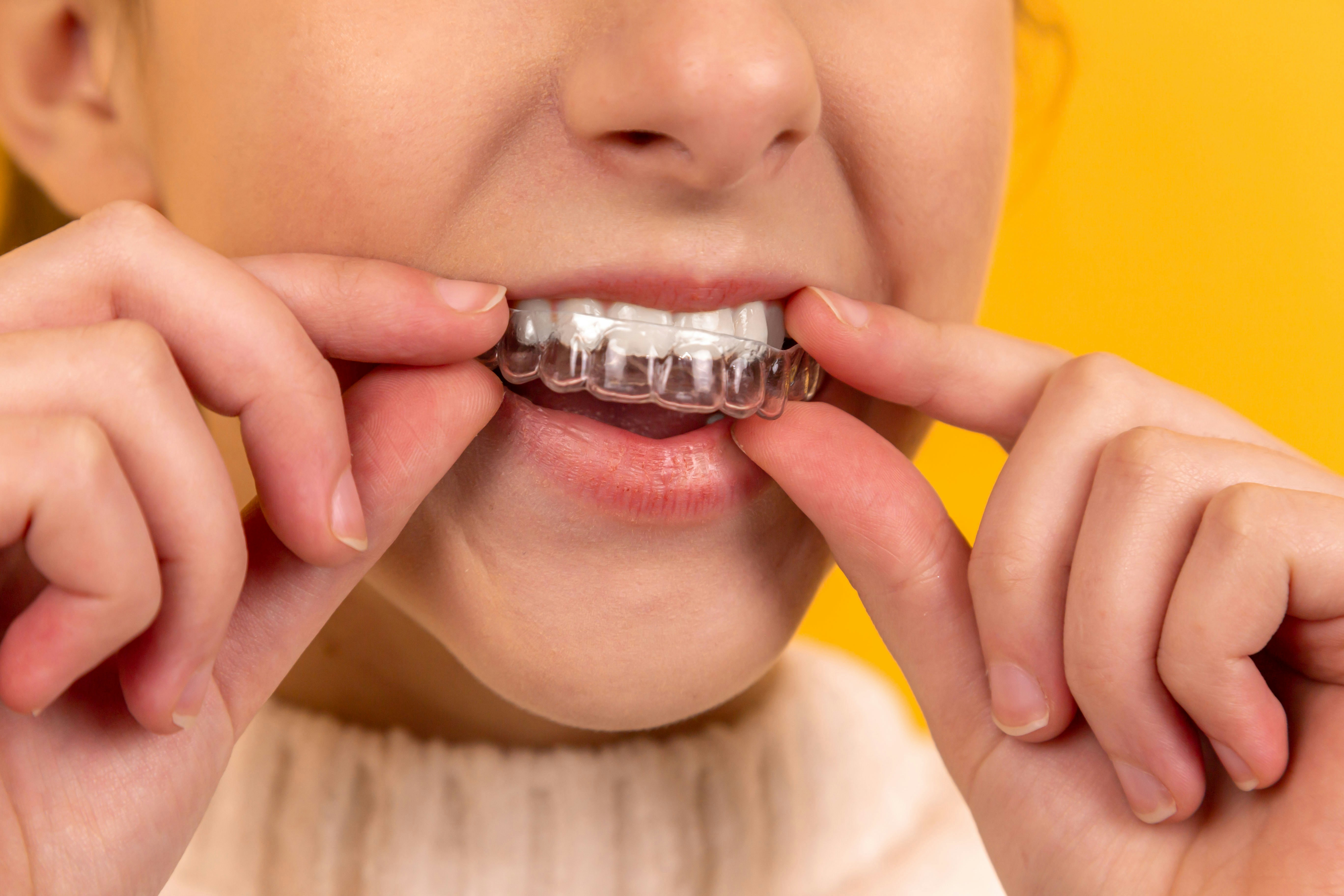
If you are looking for an alternative to Invisalign, you have several clinically proven options ranging from doctor-led clear aligners like Spark and ClearCorrect to at-home solutions such as Byte, or even invisible lingual braces like InBrace. The right choice depends on your budget, the complexity of your dental alignment needs, and whether you prefer in-person professional supervision or the convenience of remote monitoring.
Orthodontic technology has advanced significantly by 2026, moving far beyond the era where Invisalign held a near-monopoly on clear aligner therapy. While Invisalign remains a premium gold standard due to its proprietary SmartTrack material and extensive patent library, competitors have developed specialized materials and hybrid treatment models that offer comparable—and sometimes superior—results for specific cases. This guide explores the diverse landscape of modern teeth straightening to help you navigate costs, clinical efficacy, and treatment experiences.
The Evolution of Clear Aligner Alternatives
For nearly two decades, Invisalign was synonymous with "clear aligners." However, the expiration of key patents allowed other dental manufacturers to enter the space, driving innovation in polymer science and 3M printing. In 2026, the market is broadly divided into three categories: premium doctor-led aligners, hybrid/remote aligners, and fixed "invisible" appliances.
The shift toward alternatives is often driven by three primary factors:
- Affordability: Invisalign typically ranges from $3,000 to $8,000. Competitors often provide more flexible pricing structures.
- Material Preferences: Some patients find Invisalign’s plastic slightly more "visible" or prone to staining compared to newer, thinner high-performance polymers.
- Treatment Intensity: Not every patient needs the full suite of Invisalign's "attachments" (small tooth-colored bumps). Many seek simpler solutions for minor overcrowding or relapse.
Top Doctor-Led Aligner Alternatives
These brands require an in-person visit to a dentist or orthodontist. They are the most direct competitors to Invisalign because they involve professional diagnostics, including X-rays and 3M intraoral scans.
1. Spark Aligners
Spark has emerged as a top-tier alternative, favored by many orthodontists for its clarity. Manufactured by Ormco, Spark uses a proprietary material called TruGEN. Clinical observations suggest that TruGEN is more transparent and more resistant to staining than many other aligner plastics. Furthermore, Spark aligners are designed with polished edges that may reduce irritation to the gingival tissue (the gums).
2. ClearCorrect
Owned by the Straumann Group, a global leader in dental implants, ClearCorrect offers a highly flexible treatment model. Their "Flex" and "Unlimited" plans allow providers to tailor the cost to the patient’s specific needs. For example, a patient with a minor "social six" alignment issue (only the front six teeth) might pay significantly less with ClearCorrect than with a standard Invisalign package. ClearCorrect aligners are known for a slightly firmer feel, which some practitioners believe provides better "grip" for certain types of tooth rotations.
3. 3M Clarity Aligners
3M, a company famous for material science, produces the Clarity system. This system is often integrated into a "hybrid" treatment where a patient might wear traditional braces for a few months to fix a complex bite issue and then switch to Clarity aligners to finish the aesthetic alignment. This versatility makes it a powerful tool for orthodontists managing complex clinical cases.
At-Home and Hybrid Aligner Solutions
The landscape for at-home teeth straightening has matured following the market shifts of the mid-2020s. Today, the focus is on hybrid oversight, where technology bridges the gap between convenience and clinical safety.
Byte
Byte remains a leader in the direct-to-consumer space, primarily targeting mild to moderate alignment issues. Their standout feature is the HyperByte device, a high-frequency vibration tool used for five minutes a day. According to the company, these micro-vibrations help seat the aligners more securely against the teeth and may reduce discomfort. Byte is generally the most affordable alternative, often costing under $3,000, but it is not suitable for complex bite corrections or severe malocclusions.
Candid (CandidPro)
Candid underwent a significant transformation, moving away from a purely at-home model to the CandidPro system. This is a hybrid model where you start your journey with a local dentist who takes the initial scans and performs a clinical health check. Afterward, your progress is monitored remotely via a smartphone app and a specialized dental monitoring lens. This "best of both worlds" approach ensures that a professional is tracking your tooth movement without requiring you to visit the office every four weeks.
Invisible Alternatives Beyond Aligners
Sometimes the best alternative to Invisalign isn't another plastic tray, but a different form of "invisible" orthodontics.
Lingual Braces (InBrace and Brava)
Lingual braces are placed on the back (lingual) side of the teeth. Systems like InBrace use a "Smartwire" programmed with AI to move teeth autonomously.
- Pros: They are truly 100% invisible from the front. They work 24/7, unlike aligners which you might forget to put back in after lunch.
- Cons: They can initially affect speech (causing a slight lisp) and may be more difficult to clean. They are often more expensive than Invisalign.
Ceramic Braces
While not removable, ceramic braces use clear or tooth-colored brackets and wires. From a distance, they are significantly less noticeable than traditional metal braces. They are often the best alternative for patients who have severe alignment issues that clear aligners cannot physically fix, such as significant vertical movements or large gaps.
Comparison of Invisalign Alternatives (2026 Data)
| Feature | Invisalign | Spark Aligners | Byte | CandidPro | Lingual Braces |
|---|---|---|---|---|---|
| Primary Oversight | In-person Dentist | In-person Orthodontist | Remote Professional | Hybrid (In-person + App) | In-person Orthodontist |
| Material Type | SmartTrack Polymer | TruGEN (High Clarity) | PETG Plastic | BPA-free Polymer | Surgical Steel/Gold |
| Complexity Range | Low to High | Moderate to High | Low Only | Low to Moderate | High |
| Est. Cost (USD) | $3,000 – $8,000 | $3,500 – $7,500 | $1,900 – $2,800 | $3,500 – $5,500 | $5,000 – $10,000 |
| Removable? | Yes | Yes | Yes | Yes | No |
| Typical Duration | 6 – 18 months | 6 – 15 months | 4 – 6 months | 6 – 12 months | 12 – 24 months |
Clinical Suitability: When to Choose an Alternative
Choosing an alternative is not just about cost; it is about the biomechanics of your mouth. Orthodontics is a medical procedure, and the "best" tool depends on what the teeth need to do.
Crowding vs. Spacing
For simple spacing (gaps) or mild crowding, at-home alternatives like Byte or the CandidPro hybrid model are usually sufficient. However, if your teeth are "rotated" (turned on their axis) more than 20 degrees, the specialized attachments available through doctor-led systems like Spark or Invisalign are necessary to provide the leverage needed for the move.
Bite Correction (Overbite, Underbite, Crossbite)
If you need to correct your bite—how your upper and lower teeth meet—at-home aligners are generally contraindicated. Bite correction requires the use of elastics (rubber bands) and precision-engineered anchors that only a dentist or orthodontist can install. In these cases, Spark or traditional ceramic braces are the most effective alternatives.
The "Compliance" Factor
The biggest failure point for Invisalign and its aligner alternatives is patient compliance. Aligners must be worn 22 hours a day. If you know you lack the discipline to keep them in, the best "alternative" is a fixed appliance like InBrace or ceramic braces. Since they are glued to your teeth, you cannot forget to wear them, ensuring the treatment finishes on schedule.
Cost and Financial Considerations in 2026
The price of orthodontic treatment is influenced by the 2026 economic climate, including material costs and professional fees. However, several ways exist to make alternatives more affordable:
- Dental Insurance: Most insurance plans that cover "orthodontia" provide a lifetime maximum (typically $1,500 to $3,000). This applies to any doctor-led alternative (Spark, ClearCorrect) just as it does to Invisalign. At-home kits are sometimes excluded, so verify your "D2110" or "D2120" coverage codes.
- HSA/FSA Funds: Since clear aligners are a medical necessity for many, you can use pre-tax Health Savings Account or Flexible Spending Account dollars to pay for any of these alternatives.
- Payment Plans: Almost all major providers (Byte, Candid, and private orthodontic offices) offer monthly financing. In 2026, many offices have moved to 0% interest in-house financing to remain competitive against direct-to-consumer brands.
Common Mistakes When Seeking Alternatives
When moving away from the Invisalign brand, patients often fall into a few common traps:
- Prioritizing Price Over Health: Selecting the cheapest at-home kit for a complex case can lead to "root resorption" (shortening of the tooth roots) or bite misalignment if not properly supervised.
- Ignoring Local Reviews: For doctor-led brands like Spark or ClearCorrect, the skill of the doctor matters more than the brand of the plastic. A highly skilled orthodontist can do more with a "lesser" brand than an inexperienced one can do with Invisalign.
- Assuming "Clear" Means "Invisible": All aligners require some level of maintenance. If you don't clean your Spark or ClearCorrect trays properly, they will cloud and become visible, defeating the purpose of the alternative.
Frequently Asked Questions
Are alternatives to Invisalign as effective as the original?
Yes, for the majority of cases. Brands like Spark and ClearCorrect use similar high-quality medical polymers and advanced 3D planning software. In many clinical studies, the results are indistinguishable, provided the treating clinician is experienced with the specific system being used.
Is Byte better than Invisalign?
"Better" depends on the goal. Byte is more convenient and significantly cheaper for minor cosmetic straightness. However, Invisalign is objectively more powerful for fixing structural jaw issues and complex tooth movements because it involves direct physical supervision and specialized attachments.
What is the cheapest way to straighten teeth in 2026?
The most budget-friendly option is usually a direct-to-consumer aligner company like Byte, especially when purchased during promotional periods. However, for those with severe misalignment, the "cheapest" long-term option is often traditional metal braces, as they avoid the costly revisions sometimes needed when aligners fail to achieve the desired result.
Do I still need to wear a retainer with Invisalign alternatives?
Absolutely. Regardless of the brand or method used to move your teeth, the bone around the roots needs time to solidify in the new position. Without a retainer (worn nightly for life), your teeth will eventually shift back toward their original positions, a phenomenon known as orthodontic relapse.
Can I switch from Invisalign to an alternative mid-treatment?
Switching mid-treatment is difficult and often costly. Each brand uses different software and proprietary tooth-movement logic. If you switch, you would likely need a new scan and a completely new treatment fee. It is best to choose your system before the first tray is manufactured.
Final Recommendation
If you have minor crowding and want the lowest price, Byte or a similar at-home service is a viable starting point. If you want the best aesthetic appearance (the clearest plastic) and professional oversight, ask your orthodontist about Spark Aligners. For those with complex dental issues who still want an "invisible" look, InBrace (lingual braces) or 3M Clarity integrated with a hybrid treatment plan offers the most predictable path to a perfect smile. Always begin with a professional consultation—many orthodontists in 2026 offer these for free—to determine exactly which category of malocclusion you have before committing to a brand.