Allstate Insurance is a leading American provider of property and casualty insurance, primarily focusing on personal lines such as auto and homeowners coverage. As of 2026, the company maintains its position as one of the largest publicly traded insurers in the United States, utilizing a multi-channel distribution strategy that combines a vast network of captive agents with robust digital direct-to-consumer platforms.
The Allstate Corporation: Evolution and 2026 Market Position
The Allstate Corporation has evolved significantly from its 1931 origins as a subsidiary of Sears, Roebuck and Co. Today, it stands as a sophisticated financial services holding company. In 2026, Allstate's business model is characterized by its "Transformative Growth" strategy, which aims to expand market share by improving customer access, reducing expenses, and investing in advanced technology.
While many know the brand through its "Good Hands" slogan, the technical backbone of the company is its Property-Liability segment. This segment represents the core of the business, accounting for the vast majority of its annual revenue. By 2026, Allstate has successfully integrated various subsidiaries, including National General and the remnants of the Esurance brand, into a unified ecosystem. This integration allows the company to serve a broader spectrum of risk profiles, from "standard" drivers with pristine records to "non-standard" drivers who may have a history of accidents or violations.
The company's market presence in 2026 is defined by a shift toward "Protection Plans." This broader definition of insurance includes not just traditional P&C policies but also identity theft protection, device insurance (via SquareTrade), and roadside assistance. This diversification strategy helps stabilize the company’s earnings when the property and casualty market faces volatility due to high inflation or increased frequency of natural disasters.
Understanding Property and Casualty (P&C) at Allstate
Property and casualty insurance is a broad category that includes two main types of coverage. Property insurance helps protect things you own, such as your home or car. Casualty insurance, often referred to as liability insurance, provides protection if you are found legally responsible for an accident that causes injuries to another person or damage to their property.
At Allstate, the P&C portfolio is dominated by personal lines. Unlike some competitors that focus heavily on commercial or industrial risks, Allstate has refined its underwriting models to cater to the individual consumer and small business owner. In the 2026 landscape, the company utilizes high-frequency data and artificial intelligence to refine its P&C pricing, a process known as "segmentation." This ensures that premiums more accurately reflect the specific risk of each policyholder, rather than relying on broad regional averages.
The Role of Underwriting and Combined Ratios
To understand Allstate’s health in 2026, one must look at its underwriting performance. The company aims for a "combined ratio" below 100%. A combined ratio is a measure of profitability used by insurance companies to indicate how well they are performing in their daily operations. It is calculated by taking the sum of incurred losses and expenses and then dividing them by the earned premium. A ratio below 100% indicates that the company is making an underwriting profit. Allstate's 2026 strategy focuses on maintaining this ratio through disciplined pricing and the use of telematics to mitigate losses.
Allstate Auto Insurance: 2026 Features and Framework
Auto insurance remains the primary driver of premium volume for Allstate. In 2026, the company offers a tiered approach to coverage, allowing drivers to customize their policies based on their budget and risk tolerance.
Standard Coverage Components
Every Allstate auto policy is built upon a foundation of essential coverages required by state laws:
- Liability Coverage: Includes Bodily Injury (BI) and Property Damage (PD). This is the core "casualty" component that pays for the other party's expenses if you are at fault in an accident.
- Collision Coverage: Pays for damage to your own vehicle resulting from a collision with another car or object, regardless of fault.
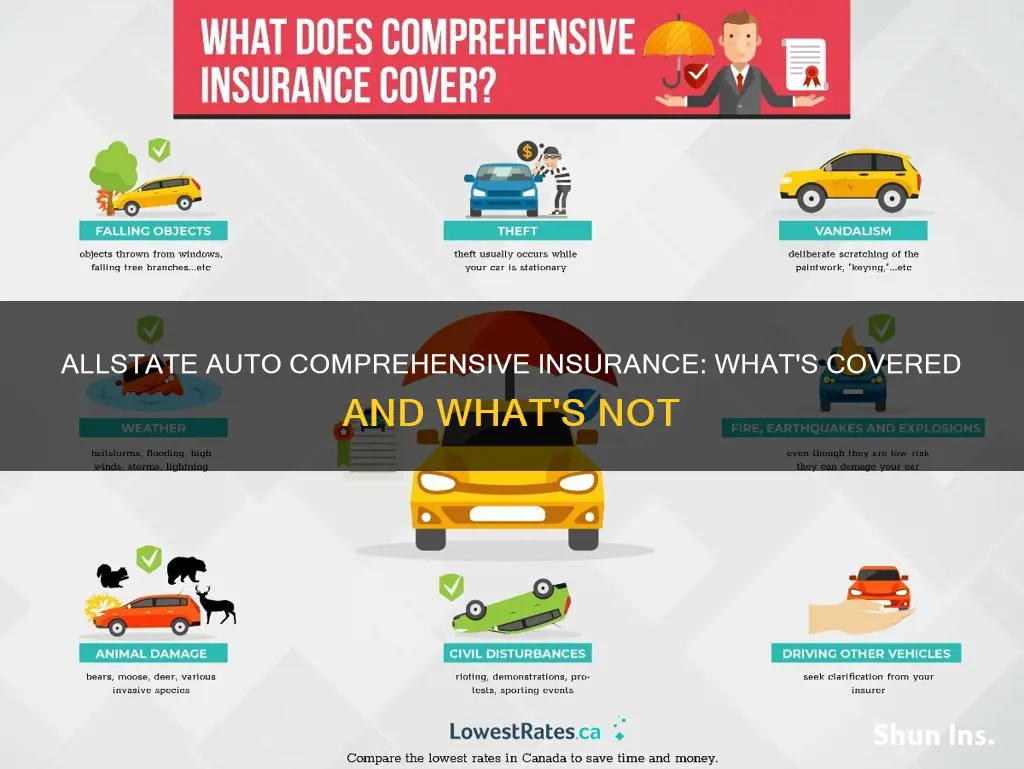
- Comprehensive Coverage: Protects against "acts of God" and other non-collision events, such as theft, vandalism, fire, or damage from falling objects.
Advanced Telematics: Drivewise and Milewise
By 2026, Allstate has moved telematics from an optional perk to a central feature of its auto offerings.
- Drivewise: This program monitors driving behaviors such as speed, braking, and time of day. Safe drivers receive "performance feedback" via the Allstate mobile app and can earn significant discounts on their premiums. In 2026, the data transparency of Drivewise has improved, allowing users to see exactly how specific trips impacted their potential savings.
- Milewise: This is Allstate’s pay-per-mile insurance solution. It is designed for low-mileage drivers, such as remote workers or retirees. Policyholders pay a low daily base rate plus a per-mile rate. In an era of fluctuating fuel costs and hybrid work models, Milewise has become an essential tool for cost-conscious consumers.
Claims Satisfaction and Technology
The claims process is where the P&C promise is tested. Allstate utilizes "QuickFoto Claim," which allows users to upload photos of vehicle damage directly through the app. In 2026, AI-driven image recognition software can often provide an initial repair estimate within hours, significantly shortening the time between the accident and the settlement.
Allstate Homeowners Insurance: Protecting the Modern Property
Home insurance is the second pillar of Allstate’s P&C business. In 2026, the challenges of climate change and rising construction costs have led Allstate to implement more sophisticated home protection features.
Core Policy Structure
A standard Allstate homeowners policy (often an HO-3 form) typically includes:
- Dwelling Coverage (Coverage A): Protects the physical structure of the home.
- Other Structures (Coverage B): Covers detached buildings like garages, sheds, or fences.
- Personal Property (Coverage C): Protects the contents of the home, such as furniture, electronics, and clothing.
- Loss of Use (Coverage D): Provides for additional living expenses if the home becomes uninhabitable due to a covered peril.
- Personal Liability (Coverage E): Protects the homeowner if someone is injured on the property and sues for damages.
2026 Specialized Endorsements
Recognizing the changing needs of homeowners, Allstate offers several specialized add-ons:
- HostAdvantage: Designed for people who rent out their homes on platforms like Airbnb or Vrbo. It provides protection for personal belongings that might be damaged by a guest.
- Green Improvement Protection: Covers the additional cost of replacing damaged appliances or materials with more energy-efficient, "green" alternatives.
- Scheduled Personal Property: Provides higher limits of coverage for high-value items like jewelry, fine art, or musical instruments that may exceed the standard limits of Coverage C.
The Impact of Exterior Inspection Technology
In 2026, Allstate utilizes aerial imagery and drone technology to assess roof conditions and property risks before issuing or renewing a policy. This "virtual inspection" process helps homeowners identify potential issues, such as overhanging tree limbs or deteriorating shingles, before they lead to a claim. It also allows Allstate to price risk more accurately based on the actual state of the property.
Comparative Overview: Allstate vs. The Industry
To understand Allstate’s value proposition in 2026, it is helpful to compare its features with general industry standards.
| Feature | Allstate P&C Offerings | Industry Standard |
|---|---|---|
| Agent Access | Extensive captive agent network + Digital | Varies (mostly digital or mostly independent) |
| Telematics | Drivewise (Behavior) & Milewise (Mileage) | Usually limited to one behavior-based app |
| Claims Tech | AI-integrated QuickFoto Claim | Standard mobile photo claims |
| Bundle Discount | Highly competitive (Auto + Home + Life) | Standard 5% to 15% |
| Financial Strength | Typically A+ (Superior) by AM Best | Varies significantly by regional carrier |
| Specialized Coverage | HostAdvantage, Identity Protection | Often requires third-party add-ons |
Financial Strength and Regulatory Standing
For any insurance provider, financial stability is the most critical metric. In 2026, Allstate remains a "blue chip" insurer. Organizations like AM Best, Moody’s, and Standard & Poor’s (S&P) consistently rate Allstate’s core insurance subsidiaries in the "Superior" or "Excellent" categories. These ratings indicate the company’s ability to meet its ongoing insurance policy and contract obligations—essentially, their ability to pay claims even after major catastrophes.
However, the 2026 regulatory environment is complex. Allstate, like all P&C insurers, must seek approval from state departments of insurance for rate increases. In states prone to wildfires or hurricanes, such as California, Florida, and Louisiana, Allstate has had to balance its risk appetite with the necessity of maintaining solvency. This sometimes leads to stricter underwriting guidelines or higher deductibles for wind and hail damage in specific geographic zones.
Prerequisites for Obtaining Allstate Insurance
Acquiring a policy in 2026 involves several steps designed to verify the risk profile of the applicant.
- Information Gathering: You will need the Vehicle Identification Number (VIN) for all autos or the specific construction details (year built, square footage, roof type) for a home.
- Risk Assessment: Allstate will pull a Comprehensive Loss Underwriting Exchange (CLUE) report. This report details your claims history over the last several years. A history of frequent claims can impact eligibility or pricing.
- Credit-Based Insurance Score: In most states (where legally permitted), Allstate uses a credit-based insurance score to help determine premiums. Statistics show a correlation between credit management and insurance risk.
- Inspection Requirements: For homeowners insurance, Allstate may require an exterior inspection or a high-resolution photo of the home’s electrical panel and HVAC system to ensure the property meets safety standards.
Strategic Advantages of Bundling
In 2026, the most effective way to manage P&C costs at Allstate is through "bundling." By placing both auto and home insurance with the company, policyholders often unlock a "Multi-Policy Discount" that can reduce the total premium by up to 25%.
Beyond the financial savings, bundling simplifies the management of the insurance portfolio. A single login to the Allstate mobile app allows the user to view all declarations pages, pay bills, and initiate claims for different types of property. Furthermore, having multiple policies with a single carrier can sometimes provide "tenure protection," making it less likely that a company will non-renew a policy after a single isolated claim.
Common Pitfalls and How to Avoid Them
When navigating Allstate's P&C offerings in 2026, consumers should be aware of a few common mistakes:
- Underinsuring Personal Property: Many homeowners default to a percentage of their dwelling coverage for their personal property. However, with the rising costs of electronics and home office equipment, this may not be sufficient. It is vital to conduct a home inventory.
- Ignoring Telematics Privacy: While Drivewise offers discounts, it involves sharing driving data. Users should review the privacy disclosures to understand how their data is used.
- Selecting High Deductibles Without Savings: Choosing a $2,500 deductible can significantly lower your premium, but in 2026, you must ensure you have that cash readily available in an emergency fund to cover the initial cost of a claim.
Frequently Asked Questions
Does Allstate offer coverage for electric vehicles (EVs) in 2026?
Yes, Allstate has specific underwriting models for EVs that account for their unique repair costs, battery replacement values, and specialized safety features. Some states may even offer "alternative fuel" discounts for EV owners.
How does Allstate handle claims during large-scale natural disasters?
Allstate utilizes a "National Catastrophe Team." During major events, the company deploys mobile claim centers to the affected area. In 2026, they also use satellite imagery to expedite "total loss" declarations for properties that are clearly destroyed, allowing for faster payment of emergency funds.
Is Allstate a good choice for high-risk drivers?
Through its acquisition of National General, Allstate has a strong presence in the non-standard auto market. This means they can often provide coverage for drivers with DUIs or multiple accidents who might be declined by other standard carriers.
Can I manage my Allstate policy entirely without an agent?
Yes. While Allstate's agent network is a core strength, their 2026 digital platform allows for full self-service. You can quote, bind, pay, and claim entirely through the mobile app or website.
What is the "Allstate Claim Satisfaction Guarantee"?
This is a unique feature for auto insurance where, in participating states, Allstate may provide a credit to your premium if you are unhappy with the way your claim was handled. It serves as a performance incentive for their adjusters.
Does Allstate cover home-based businesses?
A standard homeowners policy provides very limited coverage for business property and generally no liability coverage for business-related accidents. Allstate offers a "Home Business Insurance" endorsement or separate commercial policies to fill this gap.
Practical Next Actions
For those considering Allstate for their property and casualty needs in 2026, the recommended first step is to utilize the "Allstate Personal Financial Representative" tool online. This allows you to find an agent who understands the specific regional risks of your area—be it hail in the Midwest or coastal flooding in the East.
Before signing, request a "Full Quote Disclosure" that lists all applied discounts. Verify that you are receiving credit for safety features like anti-theft devices, smoke detectors, and any telematics participation. Finally, compare the "Replacement Cost" versus "Actual Cash Value" provisions in your policy to ensure you are fully protected against 2026 construction prices.