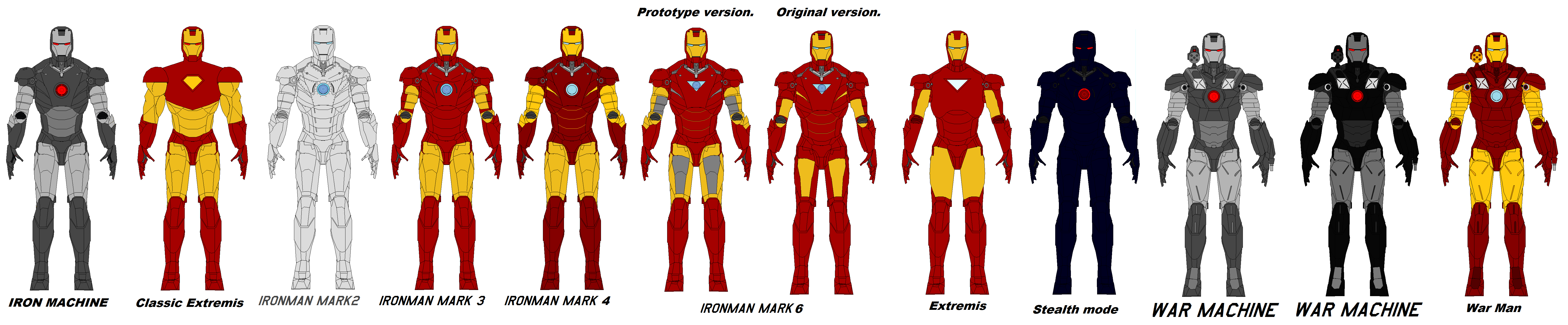
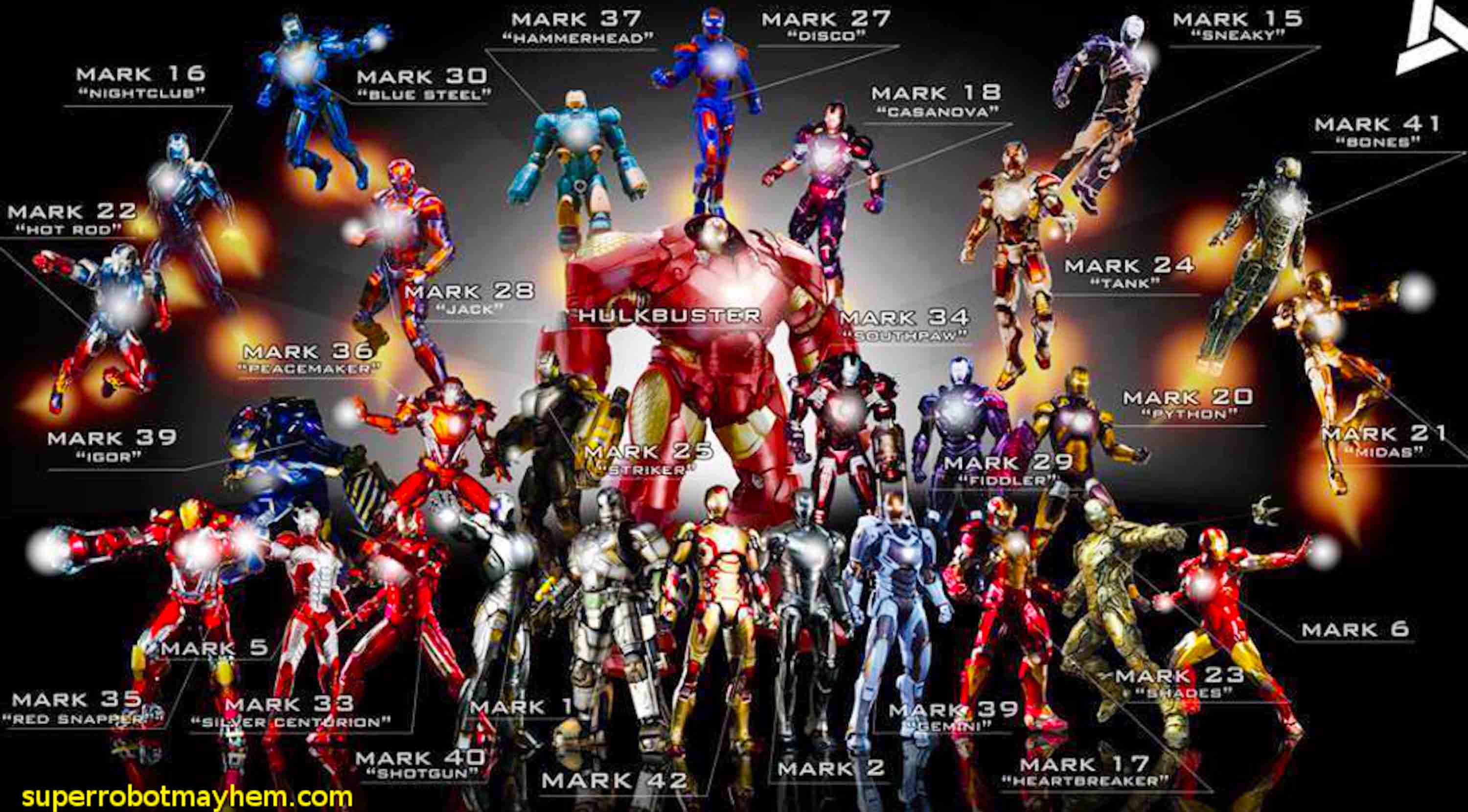
The Iron Man armor serves as the definitive technological icon in the Marvel Universe, evolving from a crude, life-saving shrapnel-plate suit built in a cave to highly sophisticated, nanotechnology-infused systems capable of traversing the cosmos. This progression represents the intersection of Tony Stark’s iterative engineering philosophy, the miniaturization of arc reactor power sources, and the integration of artificial intelligence into combat operations.
The Foundations of Innovation: The Mark I and II
Tony Stark’s journey began with the Mark I armor, constructed within the Gulmira caves. This suit was not designed for efficiency or elegance; it was an exercise in desperate survival. Built from stolen Stark Industries missile parts and a primitive arc reactor, the Mark I featured a heavy, metallic chassis that provided basic protection against small-arms fire and basic offensive capabilities, such as a flamethrower and a hydraulic punch.
The transition to the Mark II signaled the shift from survival gear to a strategic weapon system. The Mark II introduced the iconic gold-titanium alloy, which mitigated the icing problems Stark encountered during high-altitude flight tests. This prototype iteration established the baseline for the "flight and fire" paradigm, integrating the iconic repulsor palm-emitters and the boot-mounted stabilizers that remain the gold standard for Iron Man mobility today.
Technical Milestones: The Arc Reactor and Integration
The core of every armor iteration is the arc reactor—a miniaturized fusion energy source that powers both the suit’s systems and, initially, the electromagnet keeping shrapnel from Stark’s heart.
As Stark’s engineering prowess matured, the power density of the reactor increased, allowing for higher energy throughput. This enabled the development of complex weapon systems like the Unibeam (chest-mounted projector) and more sophisticated AI-assisted targeting. The evolution of the armor is essentially an evolution of power management: as systems became more power-hungry, the reactor technology moved from palladium cores to self-synthesized elements, reducing weight and increasing efficiency.
The Era of Specialization: Modular and Environment-Specific Suits
Following the standardization of the "Classic" armor, Stark began developing specialized suits designed to address specific environmental or combat challenges. These suits demonstrate the engineering depth of the Stark Industries research and development pipeline.
Notable Specialized Armors
- Mark 38 (Igor): A heavy-lifting suit designed for structural support and debris clearing. It sacrificed speed and flight efficiency for immense raw power and hydraulic strength.
- Mark 44 (Hulkbuster): Perhaps the most well-known of the specialized suits, the Hulkbuster was designed as a containment system. It featured modular components that could be deployed via satellite, allowing Stark to swap out damaged limb units mid-combat.
- Mark 33 (Silver Centurion): A suit engineered for versatility, utilizing an enhanced energy shield system that provided superior defense against directed energy weapons.
From Physical Plate to Nanotechnology
The most significant leap in Iron Man’s technical evolution occurred with the transition from rigid, heavy plating to the Bleeding Edge and Nanotech frameworks. Unlike the mechanical, articulated suits of the earlier years—which required complex gantry systems for donning and doffing—nanotechnology suits consist of millions of microscopic machines stored in a housing unit on the wearer’s body.
These nanites can be commanded to reshape themselves into any configuration Stark requires, from offensive cannons to defensive shields, or even jet thrusters. This shift represents the pinnacle of user-interface integration, as the suit reacts near-instantaneously to the user’s neural inputs, effectively becoming a second skin.
Comparative Analysis of Armor Generations
| Armor Generation | Core Mechanism | Primary Advantage | Main Limitation |
|---|---|---|---|
| Mark I-III | Hydraulic/Mechanical | High durability | Slow deployment, high weight |
| Mark V (Suitcase) | Foldable plates | Portability | Reduced armor thickness |
| Modular (Mark 40+) | Satellite drop pods | Tactical specialization | Long resupply/transit time |
| Nanotech (Mark 50+) | Self-assembling molecules | Instant deployment/morphing | High complexity, power drainage |
User Interface and Artificial Intelligence
The armor is useless without an intuitive interface. The evolution of the JARVIS (Just A Rather Very Intelligent System) and FRIDAY interfaces allowed Stark to offload the cognitive burden of flight control and combat telemetry. By delegating sensor data analysis and system diagnostics to an AI, Stark was able to focus on high-level tactical decision-making.
This partnership between human intellect and machine processing is a critical component of the armor's effectiveness. The AI monitors the health of the suit, calculates the trajectory of projectiles, and manages power consumption during high-stress scenarios, effectively troubleshooting malfunctions before they result in mission failure.
Troubleshooting and Maintenance Requirements
Managing advanced armor like the Iron Man series requires strict adherence to maintenance protocols. Even with self-repairing nanites, the core housing unit is susceptible to EMP (Electromagnetic Pulse) disruption and severe energy-draining attacks.
Operators must regularly perform:
- System Calibration: Ensuring the neural interface is synchronized to prevent input lag.
- Power Core Cycling: Replacing or charging the arc reactor to prevent output instability.
- Physical Inspection: Checking for structural fatigue in non-nanotech components after high-impact engagements.
Frequently Asked Questions
What is the most powerful Iron Man armor?
The "most powerful" title is often debated, but the Mark 85 (nanotech-integrated) is generally considered the apex of Stark’s technology. It combines the versatility of nanotechnology with the refined offensive output of years of iterative testing, allowing it to withstand cosmic-level threats.
How does the suit stay pressurized at high altitudes?
The armor uses a sophisticated Environmental Control System (ECS). This includes a localized life-support system that provides oxygen and regulates cabin pressure within the helmet, allowing Stark to survive at altitudes where the air is too thin to breathe.
Why does Stark keep changing his armor designs?
Stark’s approach to engineering is inherently iterative. He treats each encounter as a learning opportunity; if a suit suffers damage in a specific way, he develops an upgrade for the next version to mitigate that exact vulnerability.
Can the armor be hacked?
While the armor is shielded, high-level cyber-warfare can attempt to bypass security protocols. Stark continuously updates the armor's firewall and encryption to prevent unauthorized remote access, maintaining an "air-gapped" preference for critical systems where possible.
How are the suits stored?
Early suits required physical racks and gantry systems within the Stark Mansion or Tower. Modern nanotech suits require only a small storage unit, such as a chest piece or wrist-mounted housing, significantly increasing deployment readiness.
Recommendation for Further Study
To fully grasp the complexity of the armor's evolution, readers should analyze the schematic differences between the early, gear-heavy suits and the current fluid-state armor. The primary takeaway is that Stark’s designs have moved away from "heavy metal protection" toward "energy manipulation and versatility." For those interested in the engineering logic, reviewing the performance of the Mark 44 during containment operations provides the best insight into modular, task-specific design.