Travelers can choose from several air conditioning options depending on their mode of transport and accommodation, ranging from fixed RV rooftop units and high-efficiency mini-splits to portable compressor units and battery-powered evaporative coolers. Selecting the right system requires balancing cooling capacity (BTUs), power consumption, humidity levels, and installation requirements for your specific environment.
Understanding the Fundamentals of Mobile Cooling
Before selecting an air conditioning system, travelers must understand the technical metrics that define performance in a mobile or temporary environment. The most critical measurement is the British Thermal Unit (BTU), which quantifies the amount of heat a unit can remove from a space per hour. For a standard van or small camper, 5,000 to 8,000 BTUs may suffice, whereas a large motorhome or a poorly insulated cabin might require 13,500 to 15,000 BTUs.
In 2026, the efficiency of these units is more vital than ever due to the rise of off-grid travel. Efficiency is typically measured by the Energy Efficiency Ratio (EER) or the Seasonal Energy Efficiency Ratio (SEER). A higher rating indicates that the unit provides more cooling per watt of electricity consumed. For travelers relying on battery banks or portable power stations, a unit with a high EER is the difference between staying cool all night and waking up to a dead battery.
Furthermore, air conditioning isn't just about lowering the temperature; it is about dehumidification. Compressor-based systems remove moisture from the air, which is essential in humid climates like the Southeast United States or Southeast Asia. Without this moisture removal, even a cool room can feel oppressive and "clammy."
RV Rooftop Air Conditioners: The Industry Standard
Rooftop units remain the most common choice for motorized and towable RVs. These units are mounted over a standard 14x14 inch roof vent and are designed to withstand the vibrations and wind resistance associated with highway travel.
Mechanical Operation and Power Draw
Most rooftop units operate on 120V AC power, meaning they require a connection to "shore power" at a campground or the use of a heavy-duty generator. A standard 13,500 BTU unit typically draws about 14–16 Amps while running, but the "start-up" or surge current can be significantly higher—often exceeding 30 Amps for a split second.
To manage this, many travelers in 2026 install Soft Start devices. These electronic modules smooth out the power surge required by the compressor, allowing travelers to run their AC on smaller generators or even high-end lithium battery systems with robust inverters.
Pros and Cons of Rooftop Units
The primary advantage is space-saving; by utilizing the roof, travelers keep their interior floor space clear. However, these units are notorious for being loud, as the compressor sits directly above the living space. They also increase the vehicle's height, which can be a concern for low-clearance bridges and fuel economy.
The Rise of Mini-Split Systems for Long-Term Travelers
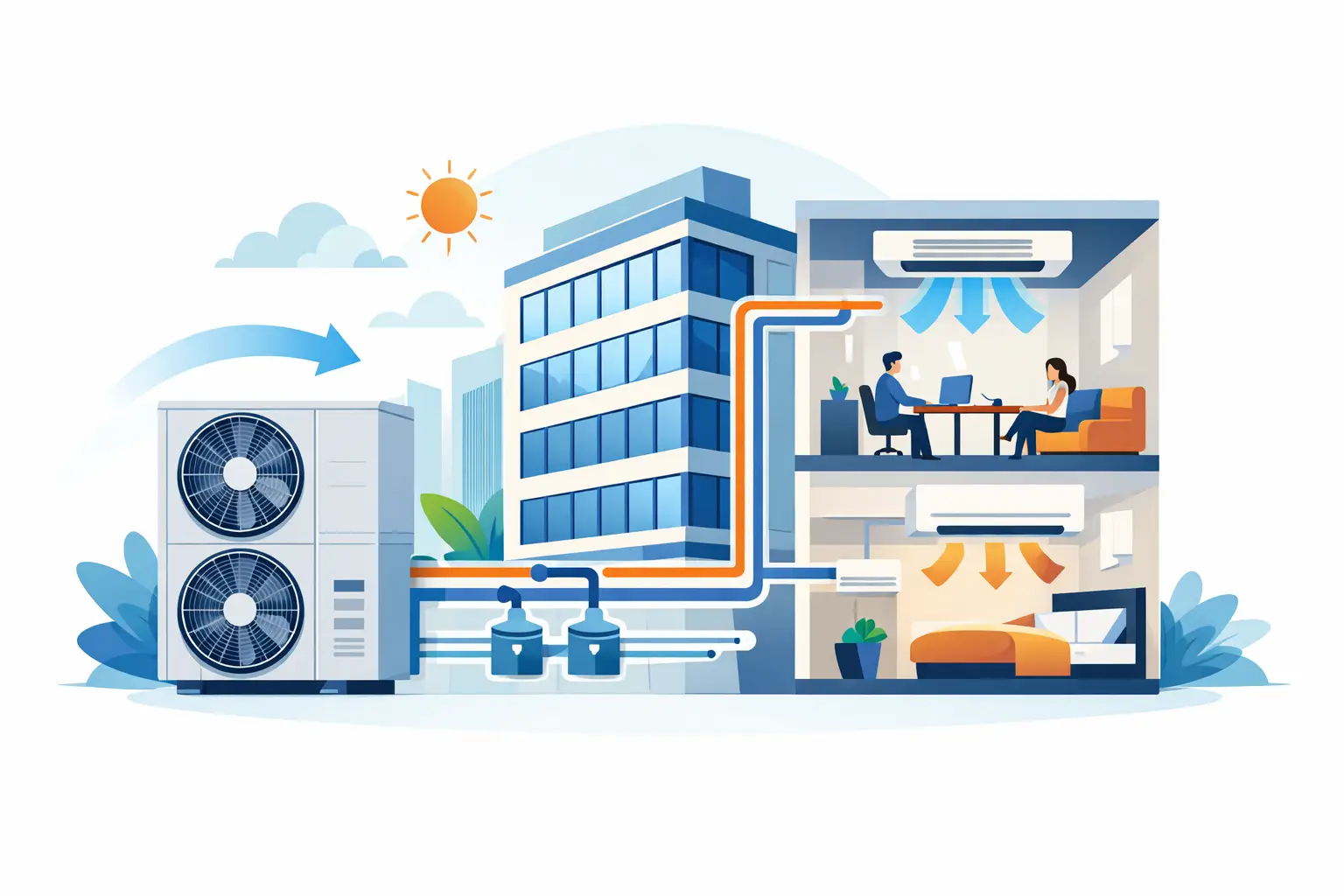
In recent years, and especially moving into 2026, mini-split air conditioners have gained massive popularity among "skoolie" (bus conversion) owners and digital nomads living in vans. A mini-split consists of two parts: an indoor air handler and an outdoor condenser.
Why Mini-Splits are Gaining Ground
Mini-splits use inverter technology, which allows the compressor to run at variable speeds. Unlike a traditional rooftop AC that is either 100% "on" or "off," a mini-split can throttle down to maintain a temperature, using significantly less power. They are also incredibly quiet—often registering below 20 decibels inside, which is barely a whisper.
For travelers, the challenge is installation. Mounting the outdoor condenser requires structural modifications, usually on the rear bumper or a custom tongue rack. However, the reward is a system that can often run entirely on solar power during the day if the vehicle is equipped with a sufficiently large solar array (800W+).
Portable Air Conditioners: Flexibility for Tents and Small Vans
Portable AC units are self-contained systems that sit inside the living space. They are popular for travelers who do not want to make permanent modifications to their vehicles or for those staying in temporary rentals with poor climate control.
Single Hose vs. Dual Hose Systems
When selecting a portable unit, the hose configuration is paramount. Single-hose units pull air from the room, cool it, and vent the heat outside. This creates negative pressure, which unfortunately pulls warm air into the room through cracks in doors or windows. Dual-hose units are far more efficient because they use one hose to draw in outside air for cooling the condenser and a second hose to exhaust the heat, maintaining neutral pressure inside.
Limitations of Portability
Portable units take up valuable floor space and require a window or a custom port for the exhaust hose. They also produce a significant amount of condensate water. While many modern 2026 models feature "auto-evaporation," in high-humidity environments, travelers will still need to manually drain a water tank or set up a drainage hose.
12V and 48V DC Air Conditioners: The Off-Grid Revolution
For travelers who prioritize boondocking (camping without hookups), DC-powered air conditioners have become the gold standard in 2026. Unlike traditional units that require an inverter to change battery power from DC to AC, these units run directly off the battery bank.
Efficiency Gains
By eliminating the inverter from the cooling equation, travelers save 10% to 15% in energy efficiency that would otherwise be lost to heat during power conversion. Manufacturers like Dometic, Mabru, and Nomadic Cooling produce units specifically for the 12V and 48V markets. A 48V system is particularly effective for larger builds, as it allows for thinner wiring and more efficient power delivery over longer distances within a vehicle.
Evaporative Coolers (Swamp Coolers): A Niche Solution
It is a common mistake for travelers to buy an evaporative cooler thinking it is a portable air conditioner. These devices work by blowing air over a water-saturated pad. As the water evaporates, it absorbs heat, cooling the air.
The Humidity Constraint
Evaporative coolers are only effective in arid climates (humidity below 30%). In places like the Arizona desert or the Australian Outback, they can drop temperatures by 15–20 degrees Fahrenheit. However, in a humid environment like Florida or Southeast Asia, they will simply make the room feel muggy without providing any real cooling. For a traveler, they are a low-power option—often running on a simple USB plug—but their utility is strictly geographic.
Comparison of Traveling Air Conditioning Options
| AC Type | Power Source | Best For | Typical BTU | Installation Difficulty |
|---|---|---|---|---|
| Rooftop Unit | 120V AC | Standard RVs / Campgrounds | 13,500 - 15,000 | Moderate (Standard cutout) |
| Mini-Split | 120V or 12V/48V | Bus Conversions / Stealth Vans | 9,000 - 12,000 | High (Requires HVAC tools) |
| Portable (Compressor) | 120V AC | Tents / Temporary Rentals | 5,000 - 10,000 | Low (Vent hose only) |
| DC Powered (12V/48V) | Battery Bank | Off-grid Van Life / Boondocking | 6,000 - 9,000 | Moderate to High |
| Evaporative Cooler | USB / 12V | Arid Climate Camping | N/A (Evaporative) | None (Plug and play) |
Powering Your AC: Solar, Lithium, and Generators
The biggest hurdle for any traveler is the power budget. In 2026, the transition toward Lithium Iron Phosphate (LiFePO4) batteries has made mobile air conditioning more feasible.
Solar Feasibility
To run even a small 5,000 BTU air conditioner sustainably on solar, a traveler typically needs a minimum of 600W to 800W of solar panels and at least 400Ah of lithium battery capacity. This allows for several hours of cooling during the day while the sun is out, with enough reserve to "buffer" the cooling in the evening.
Generator Considerations
If solar is not an option, a portable inverter generator is the fallback. For travelers, noise is a major consideration. Most National Parks in the United States have strict decibel limits (usually 60 dB at 50 feet). High-quality inverter generators from brands like Honda or Yamaha are preferred because they throttle their engine speed based on the load, reducing noise and fuel consumption compared to "open-frame" construction generators.
Maintenance and Care on the Road
Traveling is hard on machinery. Dust, vibrations, and varying air quality mean that travelers must be more diligent about maintenance than homeowners.
- Filter Cleaning: In the small confines of a van or RV, filters clog quickly with pet dander and dust. Clean filters every two weeks of heavy use.
- Coil Inspection: For rooftop and mini-split units, the exterior condenser coils can become clogged with road grime or insects. Use a soft brush or specialized coil cleaner once a season.
- Check for Leaks: Vibrations from driving can loosen refrigerant fittings over time. If you notice a gradual drop in cooling performance, it is likely a slow refrigerant leak that requires a technician.
- Clear Drain Lines: Ensure the condensate drain line is clear. A clogged line will result in water backing up and dripping into your living space, potentially causing mold or structural damage.
Frequently Asked Questions
Can I run my RV air conditioner while driving?
Yes, you can run your RV air conditioner while driving if you have a built-in generator or a high-output alternator system. Most Class A and Class C motorhomes are designed to run the house generator while in motion to assist the dashboard AC in cooling the large living area. For van lifers with DC units, the vehicle's alternator can often provide enough power to run the AC while the engine is running.
How many solar panels do I need to run a portable AC?
To run a typical 8,000 BTU portable AC (approx. 900 watts), you would need at least 1,000 to 1,200 watts of solar panels to account for real-world inefficiencies and provide enough power to both run the unit and charge your batteries. This is often difficult to achieve on the limited roof space of a standard vehicle, making portable ACs better suited for shore power or large battery banks.
Is it better to leave the AC on all day or turn it on only when needed?
In a mobile environment, it is generally better to start the AC early in the day before the vehicle's "thermal mass" (the furniture, walls, and floor) gets hot. Once a small space becomes heat-soaked, an air conditioner has to work much harder to cool it down. Keeping the temperature stable at a moderate level is often more energy-efficient than trying to drop the temperature 20 degrees in the heat of the afternoon.
Are "battery-powered" portable fans a viable alternative?
While fans do not lower the air temperature, they facilitate evaporative cooling on the skin, making you feel cooler. In 2026, high-efficiency brushless DC fans can run for days on a single charge. If you are in a situation where power is extremely limited and the humidity isn't too high, a high-velocity fan paired with wet towels (the "swamp cooler" principle) is the most viable alternative to actual air conditioning.
Can I use a window AC unit in a van or camper?
While window units are the cheapest option, they are not built for the vibrations of travel. Many budget travelers use them by cutting a hole in the rear door or side wall, but the internal components of a household window unit often fail prematurely due to road shock. Furthermore, they are difficult to seal properly, which can lead to air leaks and water intrusion during rain.
Practical Recommendation for Travelers
For the best balance of efficiency and comfort in 2026, DC-powered (12V/48V) mini-split or rooftop units are the recommended choice for dedicated travel vehicles. They eliminate the need for an inverter and provide the most cooling per watt. If you are a casual traveler or tent camper, a dual-hose portable unit is your best secondary option, provided you have access to shore power. Always calculate your energy budget before departure and ensure your cooling choice matches the climate of your destination.