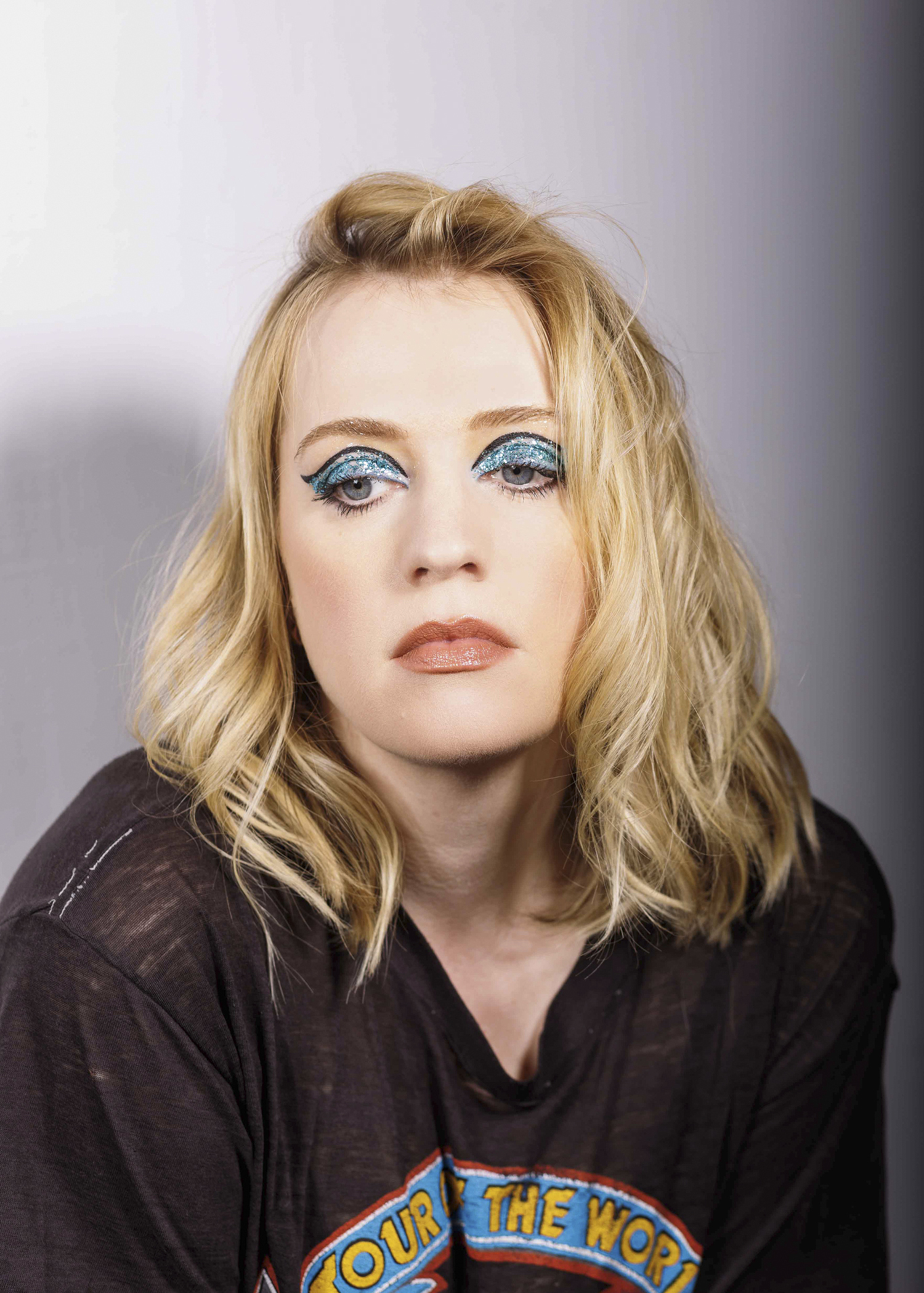
As of 2026, Alexz Johnson’s net worth is estimated to be between $2 million and $3 million. This figure reflects her sustained career as a multi-disciplinary artist, combining significant early-career earnings from major television lead roles with a highly successful, two-decade-long independent music career supported by a loyal global fan base.
The Financial Foundation: Early Career Success
Alexz Johnson’s financial trajectory began in the late 1990s and early 2000s, a period where television budgets for youth-oriented programming were substantial. Her role as Annie Thelen in Disney Channel’s So Weird provided her first major professional income. As a series lead on a high-profile network, her per-episode salary established a solid financial base during her teenage years.
However, the primary driver of her early wealth was her role as Jude Harrison in the CTV/Noggin series Instant Star. Running for four seasons, the show was an international success, sold into over 120 countries. For a Canadian production of that era, lead actors typically commanded salaries that reflected the show’s global syndication potential. Beyond the base salary, Johnson performed the majority of the show’s soundtrack material. While many actors are work-for-hire, Johnson’s unique position as the voice of the franchise allowed her to participate in soundtrack sales that reached gold status in several territories.
The Epic Records Era and Opportunity Cost
A critical chapter in understanding Alexz Johnson’s net worth is her time signed to Epic Records (a subsidiary of Sony BMG) and later Capitol Records. Following the success of Instant Star, Johnson was poised for a mainstream pop career. Significant "advances" are common in these major label deals—often ranging from $250,000 to over $1,000,000 for a multi-album rollout.
While these advances provide immediate liquidity, they are technically recoupable loans. Because Johnson’s debut major-label album, Voodoo, faced numerous corporate delays and was eventually shelved by the label before being released independently, much of that potential mainstream wealth was tied up in legal and contractual limbo. The "opportunity cost" during these years was high; however, the eventual release of Voodoo through her own channels allowed her to pivot toward a more sustainable, high-margin business model.
Transitioning to the Independent Business Model
Since 2010, Johnson has operated primarily as an independent artist. This shift is essential to explaining her net worth in 2026. While independent artists may have lower "gross" revenue than major-label stars, their "net" profit per unit sold is significantly higher.
The Power of Crowdfunding
Johnson was an early adopter of crowdfunding platforms like Kickstarter and PledgeMusic. In 2012, she famously raised over $67,000 for a North American tour, nearly double her initial goal. Throughout the 2010s and early 2020s, she continued this trend, bypassing traditional label financing for her albums A Stranger Time, Still Alive, and Seasons.
By 2026, her ability to mobilize a dedicated fan base has become a predictable revenue stream. For an independent artist, a successful crowdfunding campaign doesn't just cover production costs; it often provides a surplus that serves as a salary for the artist, effectively removing the "middleman" of a record label.
Ownership of Master Recordings
Perhaps the most significant contributor to her long-term wealth is the ownership of her master recordings. Unlike her early work with Instant Star (owned by DHX Media/WildBrain) or her unreleased Sony material, her independent albums are her assets. In the 2026 music economy, owning one’s masters means receiving the "Lion’s share" of streaming royalties from platforms like Spotify, Apple Music, and Tidal. While streaming rates remain a point of industry contention, an artist who owns their masters receives approximately 70-80% of the payout, compared to the 15-20% typical of traditional label deals.
Revenue Stream Analysis: Beyond the Stage
To understand the $2 million to $3 million valuation, one must look at the diversified nature of her income. Johnson is not reliant on a single "hit" but rather a "long tail" of various assets.
| Revenue Category | Primary Sources | Financial Impact (2026) |
|---|---|---|
| Acting Residuals | So Weird, Instant Star, Final Destination 3 | Steady, passive income via ACTRA/SAG-AFTRA |
| Music Streaming | Spotify, Apple Music, YouTube | Monthly recurring revenue from a large catalog |
| Live Performances | International tours, VIP experiences | High-margin, immediate cash flow |
| Music Publishing | Performance Rights Organizations (SOCAN/BMI) | Royalties from radio, TV sync, and public play |
| Direct-to-Fan Sales | Bandcamp, Shopify, Patreon | Maximum profit margin on physical goods |
Television Residuals and Syndication
Even in 2026, the "streaming wars" have benefited actors from cult-classic series. Shows like So Weird being available on Disney+ and Instant Star appearing on various ad-supported streaming services (FAST channels) generate residual checks. Under ACTRA (Alliance of Canadian Cinema, Television and Radio Artists) regulations, lead performers receive ongoing payments when their work is rebroadcast or streamed. For a series lead like Johnson, these checks provide a reliable financial floor that supplements her more volatile music income.
Synchronized Licensing (Sync)
Johnson’s music is frequently "synced" to television shows and films. A single "sync" placement—where a song is used in a background scene or a trailer—can pay anywhere from $5,000 to $50,000 depending on the production budget and the usage terms. Given her history in the television industry, her catalog is well-positioned for these lucrative placements, which contribute significantly to her annual earnings without requiring the overhead of touring.
The "Middle Class" Artist Reality in 2026
It is important to contextualize Johnson’s net worth within the broader "middle class" of the entertainment industry. She does not possess the multi-hundred-million-dollar wealth of a stadium-filling pop star, but she also avoids the massive debts and overhead associated with that level of fame.
Her wealth is categorized by low overhead and high equity. By self-managing much of her career alongside a small team, she avoids the 20% management fees and 10% agent fees that strip away the earnings of many performers. Her net worth is a reflection of careful financial management, avoiding the "flashy" expenditures typical of early-2000s celebrities, and investing back into her own intellectual property.
Challenges and Economic Factors
While her financial status is stable, several factors influence the fluctuation of her net worth heading into 2026:
- Inflation and Touring Costs: The cost of logistics, fuel, and venue rentals has increased significantly. For independent artists, this requires higher ticket prices and more aggressive merchandise sales to maintain the same profit margins as five years ago.
- Currency Exchange: As a Canadian artist often earning in USD and EUR but living (at various times) in Canada or the US, her net worth is subject to currency fluctuations.
- Market Saturation: With millions of songs uploaded to streaming platforms daily, the cost of "discovery" (marketing) has risen, eating into the net profits of independent releases.
FAQs About Alexz Johnson’s Net Worth
How much did Alexz Johnson earn from Instant Star?
While exact contract details are private, lead actors in high-syndication Canadian series during that era typically earned between $15,000 and $30,000 per episode. Across 52 episodes, this would total over $1 million in gross earnings before taxes, commissions, and expenses.
Does she own the rights to the Instant Star songs?
No. The rights to the Instant Star soundtracks are primarily owned by the production company (originally Epitome Pictures, now WildBrain). However, she receives performer royalties and "mechanicals" whenever those songs are streamed or sold.
How does her crowdfunding success impact her net worth?
Crowdfunding acts as both a revenue source and a risk-mitigation tool. By securing the capital before the product is created, she ensures that she never goes into personal debt to produce an album, preserving her existing assets and net worth.
Is her net worth affected by her siblings' careers?
Alexz comes from a creative family (including her brother Brendan Johnson, a frequent collaborator). While they often work together, their finances are legally separate. However, working with family often allows for lower production costs, which indirectly preserves her wealth.
What is her most profitable asset?
In 2026, her most profitable asset is likely her independent music catalog (2010–present). Because she owns the master rights and publishing for much of this work, the profit margins are significantly higher than her early-career commercial work.
Final Practical Assessment
For those analyzing the financial health of a career like Alexz Johnson's, the key takeaway is the value of intellectual property ownership. Her move away from major labels—while appearing to be a "downward" move in terms of fame—was a savvy "upward" move in terms of financial independence and long-term equity.
If you are an aspiring artist or an investor in the creator economy, Johnson’s career serves as a blueprint for the "Independent Professional" model. Her net worth is not built on a single "lottery win" but on the consistent accumulation of rights, residuals, and a direct, unmediated relationship with her audience.