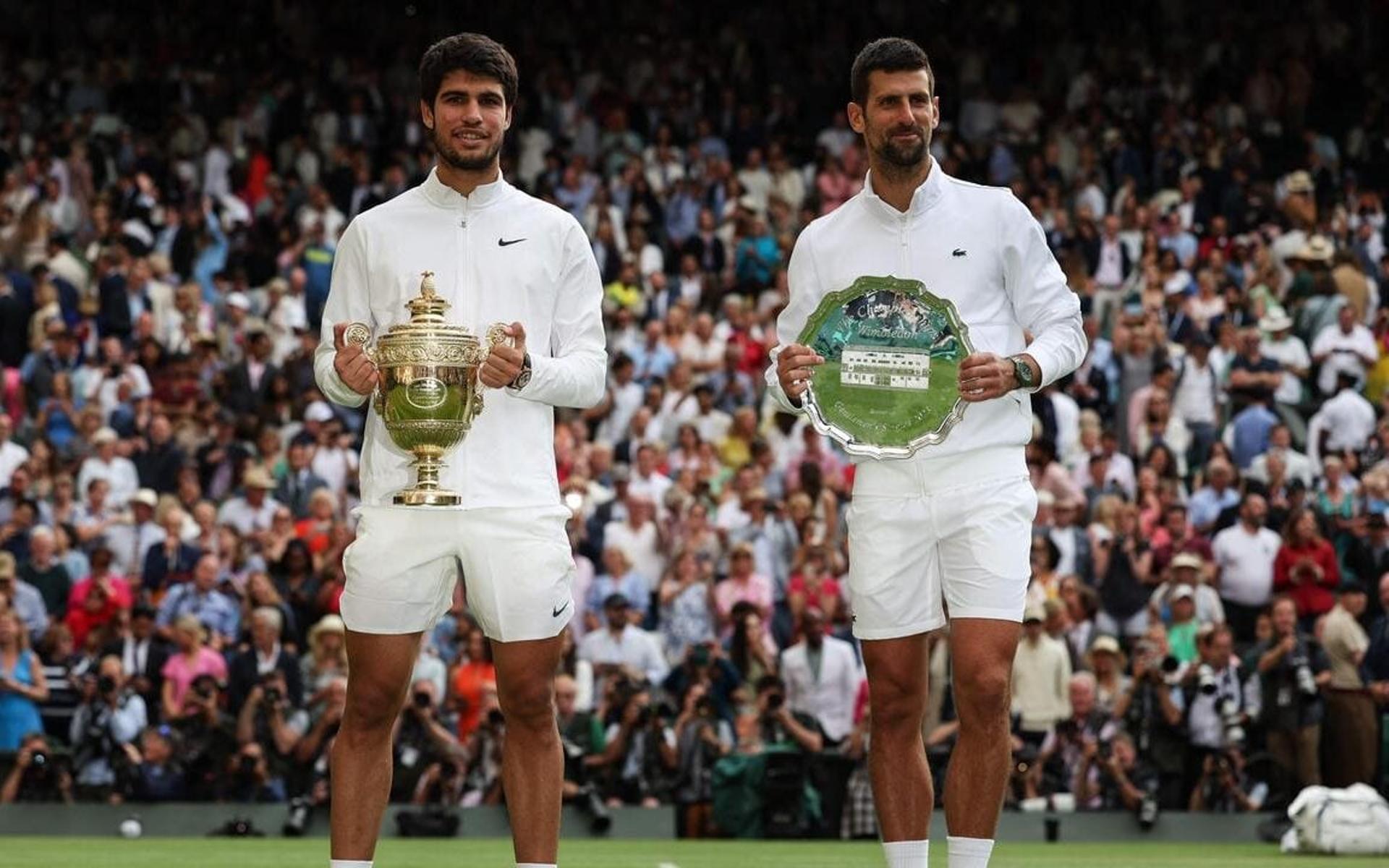
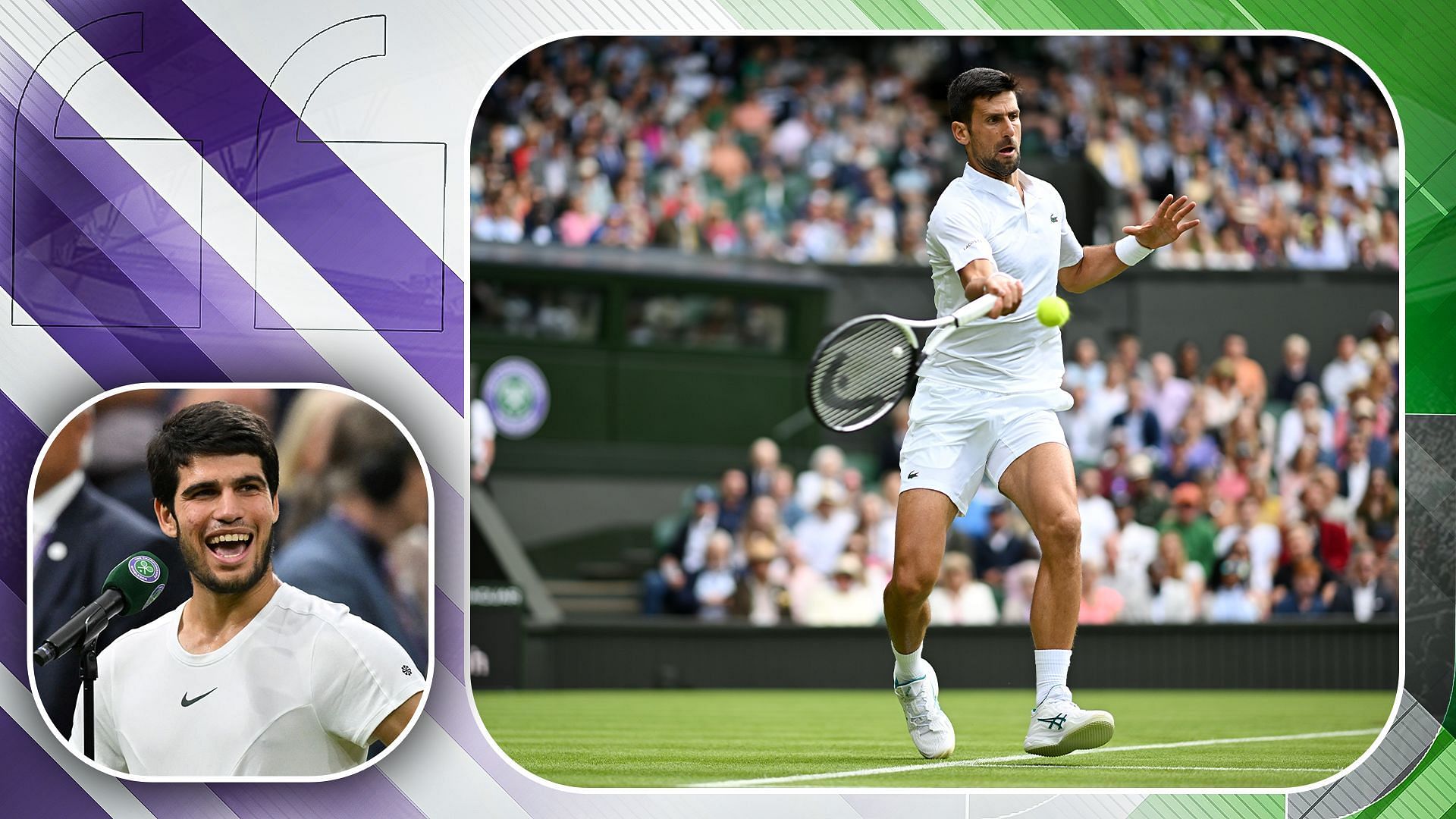
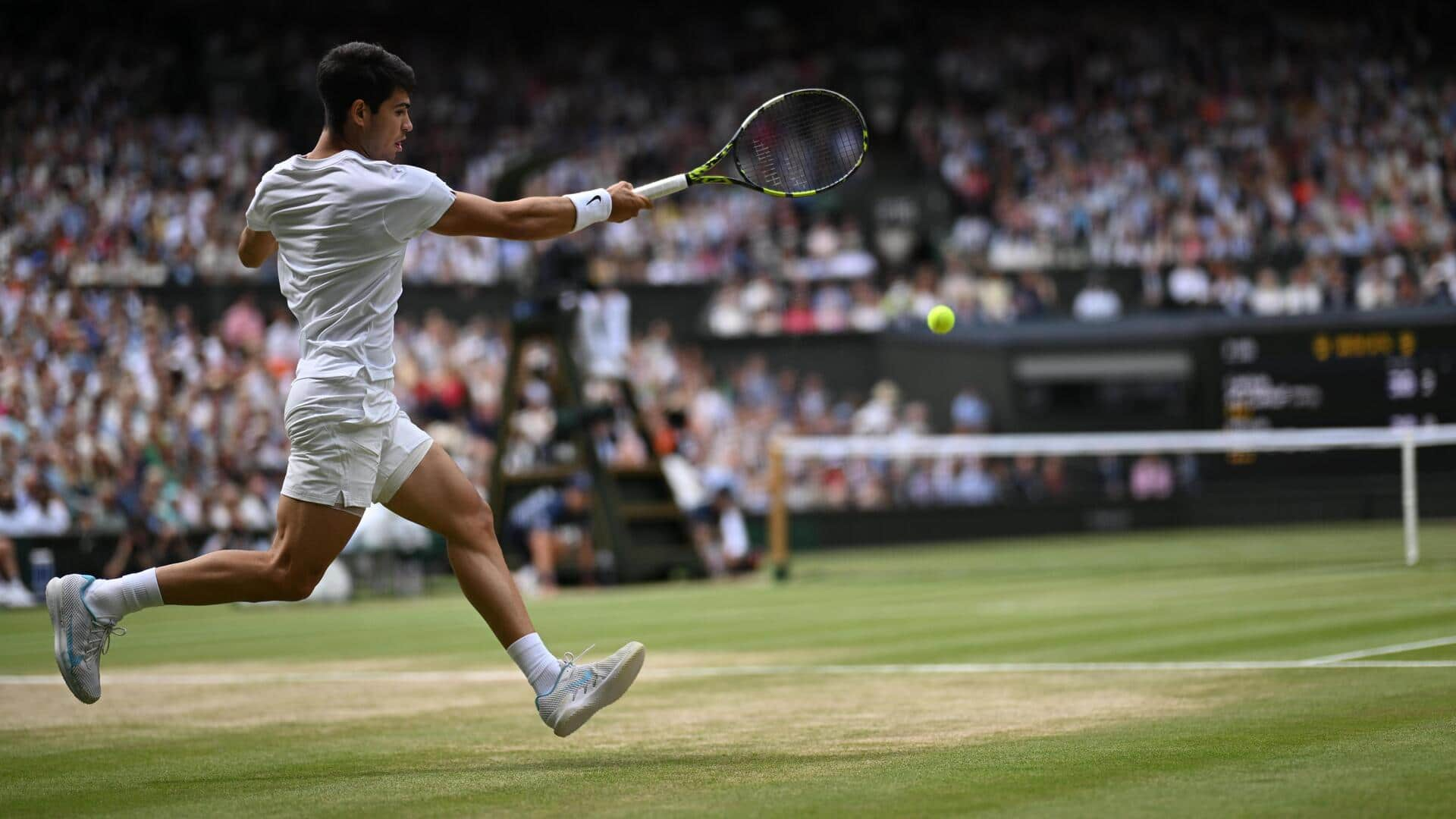
In the 2024 Wimbledon Men’s Singles Final, Carlos Alcaraz defeated Novak Djokovic in straight sets, 6-2, 6-2, 7-6(4), to claim his second consecutive title at the All England Club. The match, a rematch of the 2023 epic, demonstrated a significant shift in the tennis hierarchy as Alcaraz dominated the legendary Serb for the majority of the two-hour and 27-minute contest.
The Context: A Clash of Eras and Physical Resilience
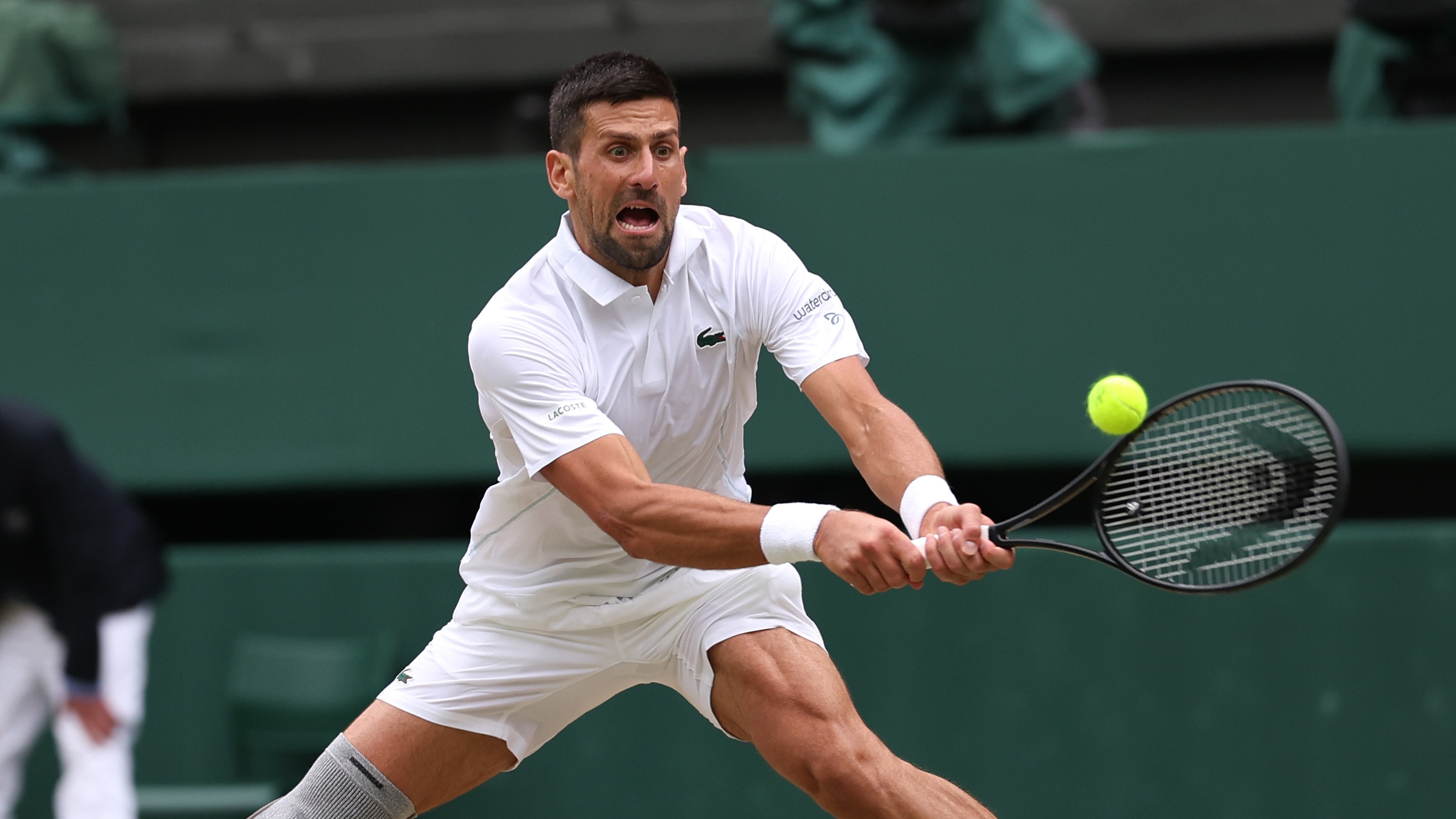
Entering the 2024 Wimbledon final, the narrative was split between the meteoric rise of Carlos Alcaraz and the supernatural recovery of Novak Djokovic. Just weeks prior, Djokovic had undergone surgery on a torn medial meniscus suffered during the French Open. His participation in the tournament was in doubt until the final days of preparation. By the time he reached the final, he was wearing a grey compression sleeve on his right knee, signaling both his vulnerability and his iron will.
Alcaraz, meanwhile, arrived as the reigning French Open champion, looking to complete the rare "Channel Slam"—winning Roland Garros and Wimbledon in the same calendar year. As we look back from 2026, this particular match is frequently cited as the moment the "Big Three" era effectively transitioned into the Alcaraz era. While Djokovic had won the 2023 ATP Finals and maintained a high ranking, the 2024 Wimbledon final was a tactical and physical dismantling that the tennis world had rarely seen inflicted upon the 24-time Grand Slam champion.
Technical Breakdown: How Alcaraz Neutralized the Djokovic Baseline
The hallmark of Novak Djokovic’s career has been his "un-breakability" from the baseline. However, Alcaraz utilized a specific tactical framework that exploited Djokovic’s slightly reduced lateral mobility following his knee surgery.
Aggressive Return Positioning
Alcaraz took the ball significantly earlier than he did in their 2023 encounter. By standing closer to the baseline on Djokovic’s second serves, Alcaraz forced the Serb into defensive positions immediately. In the first two sets, Alcaraz won 45% of receiving points, a staggering statistic against arguably the greatest server-plus-one player in history.
The "Power-and-Drop" Combination
The technical variety in Alcaraz’s game was the deciding factor. He consistently used his heavy, high-RPM forehand to push Djokovic three to four meters behind the baseline. Once the depth was established, Alcaraz executed the disguised drop shot with surgical precision. Because Djokovic’s explosive first step was marginally hampered by his recent surgery, he found himself unable to reach the short balls or, when he did, unable to do anything constructive with them.
Serve Variety and Placement
Alcaraz’s serve in the 2024 final was more disciplined than in previous rounds. He focused on the "T" and the wide slice to Djokovic’s forehand, preventing the Serb from leaning into his legendary backhand return. Alcaraz won 84% of his first-serve points, allowing him to hold serve with relative ease until the dramatic closing stages of the third set.
Tactical Shifts: Djokovic’s Attempted Recovery
By the third set, it was clear that Djokovic’s standard game plan—waiting for the opponent to miss—was not working. Alcaraz was playing high-octane tennis with an uncharacteristically low unforced error count. Djokovic attempted several adjustments to stem the tide.
- Serve and Volley: Djokovic began coming to the net more frequently to shorten the points. This was a necessity driven by his inability to win the long, grueling rallies that Alcaraz was dictating.
- Changing the Pace: In the third set, Djokovic took more pace off the ball, hitting lower, skidding slices to Alcaraz’s forehand. This forced Alcaraz to generate all the power himself, which led to a brief spike in errors.
- The Mental Squeeze: Djokovic’s greatest weapon has always been his mental fortitude. He waited for the "finisher’s anxiety" to hit the young Spaniard. This moment arrived at 5-4 in the third set, with Alcaraz serving for the championship.
The Turning Point: The 5-4 Drama in the Third Set
The most analyzed segment of the 2024 final occurred when Alcaraz led 5-4 and 40-0 on his own serve. With three championship points in hand, the victory seemed inevitable. However, a double fault followed by a series of tight groundstrokes allowed Djokovic to claw back into the game.
Djokovic eventually broke back, a sequence that sent shockwaves through the Centre Court crowd. In previous years, such a collapse against Djokovic would have signaled the end for a younger player. Djokovic’s ability to capitalize on "chokes" is legendary. However, Alcaraz demonstrated the psychological growth that has defined his career through 2025 and 2026. He settled his nerves, held serve to force a tiebreak, and then played a nearly flawless tiebreak to close out the match.
Comparative Performance Metrics
To understand the scale of Alcaraz's dominance in 2024 compared to their grueling five-set battle in 2023, the following table highlights key performance indicators (KPIs) from the match.
| Performance Metric | Carlos Alcaraz (2024) | Novak Djokovic (2024) | Notes |
|---|---|---|---|
| First Serve % Won | 84% | 66% | Alcaraz controlled his service games with ease. |
| Winners | 42 | 26 | Alcaraz’s aggression was rewarded. |
| Unforced Errors | 24 | 25 | High quality from Alcaraz given his aggressive style. |
| Net Points Won | 16/22 (73%) | 22/53 (42%) | Djokovic’s frequent net rushes were often punished. |
| Break Points Converted | 5/14 | 1/3 | Alcaraz applied constant pressure on the Djokovic serve. |
| Match Duration | 2h 27m | 2h 27m | Significantly shorter than the 2023 final (4h 42m). |
Historical Significance: The Changing of the Guard
The 2024 Wimbledon final is often compared to the 2008 final between Roger Federer and Rafael Nadal. While the 2008 match was a close five-set battle, the 2024 final was significant for its one-sided nature. It was the first time since the early 2000s that Djokovic looked genuinely outclassed on a grass court.
For Alcaraz, this victory confirmed that his 2023 win was not a fluke or a product of a single bad day for Djokovic. It established him as the premier grass-court player of the new generation. For Djokovic, the match was a testament to his grit—reaching a Wimbledon final less than six weeks after knee surgery—but it also highlighted the physical toll that twenty years on tour had finally begun to take.
Requirements for Success on Grass: The Alcaraz Formula
Analyzing Alcaraz's performance provides a blueprint for how modern tennis is played on grass. Unlike the serve-and-volley specialists of the 90s, Alcaraz uses a "baseline-plus" approach.
- Low Center of Gravity: Alcaraz’s ability to stay low to the ground allows him to handle the low bounces of the grass while maintaining the leverage needed for his massive forehand.
- Footwork Adaptability: Moving on grass is notoriously difficult due to the slick surface. Alcaraz has mastered the "grass-court slide," a technique previously perfected by Djokovic, but with more explosive recovery steps.
- Tactical Bravery: Alcaraz’s willingness to go for "lines" on big points—such as his down-the-line backhand in the tiebreak—puts immense pressure on opponents who prefer to play a high-percentage game.
Common Mistakes and Misconceptions
Several misconceptions persisted in the immediate aftermath of the 2024 final. Some analysts argued that Djokovic’s performance was solely due to his knee. While the injury was a factor, it ignores the fact that Alcaraz’s level of play was statistically higher than almost any other performance in a Wimbledon final in the previous decade.
Another misconception was that Alcaraz "almost choked" the match away. In reality, the recovery in the tiebreak showed a level of maturity that is rare in 21-year-old athletes. Winning a tiebreak after losing three championship points requires a level of mental reset that even many veteran players struggle to achieve.
Frequently Asked Questions
Did Novak Djokovic’s knee injury decide the 2024 Wimbledon final?
While Djokovic’s knee surgery limited his lateral explosive movement, Alcaraz’s tactical execution was the primary driver of the result. Alcaraz played a high-risk, high-reward game that likely would have troubled any version of Djokovic. The injury certainly prevented Djokovic from extending rallies, but Alcaraz’s serve and return numbers suggest he was the superior player regardless of the physical context.
How many Wimbledon titles does Carlos Alcaraz have as of 2026?
Following his victory in 2024, Carlos Alcaraz added to his 2023 title. By the current 2026 season, he remains one of the most dominant forces on grass, having solidified his status as a multi-time champion at the All England Club. His back-to-back wins against Djokovic in '23 and '24 are considered the foundation of his Wimbledon legacy.
What was the key difference between the 2023 and 2024 finals?
The 2023 final was a physical and emotional marathon that lasted nearly five hours, with both players having clear opportunities to win. The 2024 final was much more linear; Alcaraz established dominance early and never truly let go, despite the brief hiccup in the third set. The 2024 version of Alcaraz was more refined, more patient, and more confident in his tactical plan.
Was this Novak Djokovic’s last Wimbledon final?
As of 2026, the 2024 final remains one of Djokovic’s last major stands at the All England Club. While he continued to compete at a high level through 2025, the 2024 match is frequently highlighted by historians as the definitive end of his undisputed reign over the tournament’s center court.
Why was Alcaraz’s drop shot so effective in this specific match?
On grass, the ball stays lower and dies faster after a drop shot than on clay or hard courts. Because Djokovic was protecting his surgically repaired knee, he was hesitant to sprint forward and plants his foot firmly for the slide. Alcaraz recognized this early and used the drop shot to keep Djokovic off-balance, effectively making the court feel much larger than it actually is.
Final Practical Implications for Tennis Enthusiasts
For those studying the game, the Alcaraz vs. Djokovic 2024 Wimbledon final serves as a masterclass in aggressive court positioning and mental resilience. If you are looking to improve your own game based on these players:
- Work on the "Split-Step": Notice how both players, even a compromised Djokovic, never miss a split-step. This is the foundation of their movement.
- Shorten the Backswing on Returns: Alcaraz’s success came from a compact return of serve, which is essential on fast surfaces like grass.
- Mental Reset Drills: Practice scenarios where you lose a big lead. Alcaraz’s ability to win the 2024 tiebreak after losing three match points is a skill that can be developed through pressurized practice sessions.
The 2024 Wimbledon final remains a landmark event in sports history, representing the transition from the most successful generation of players to a new era led by a singular talent.