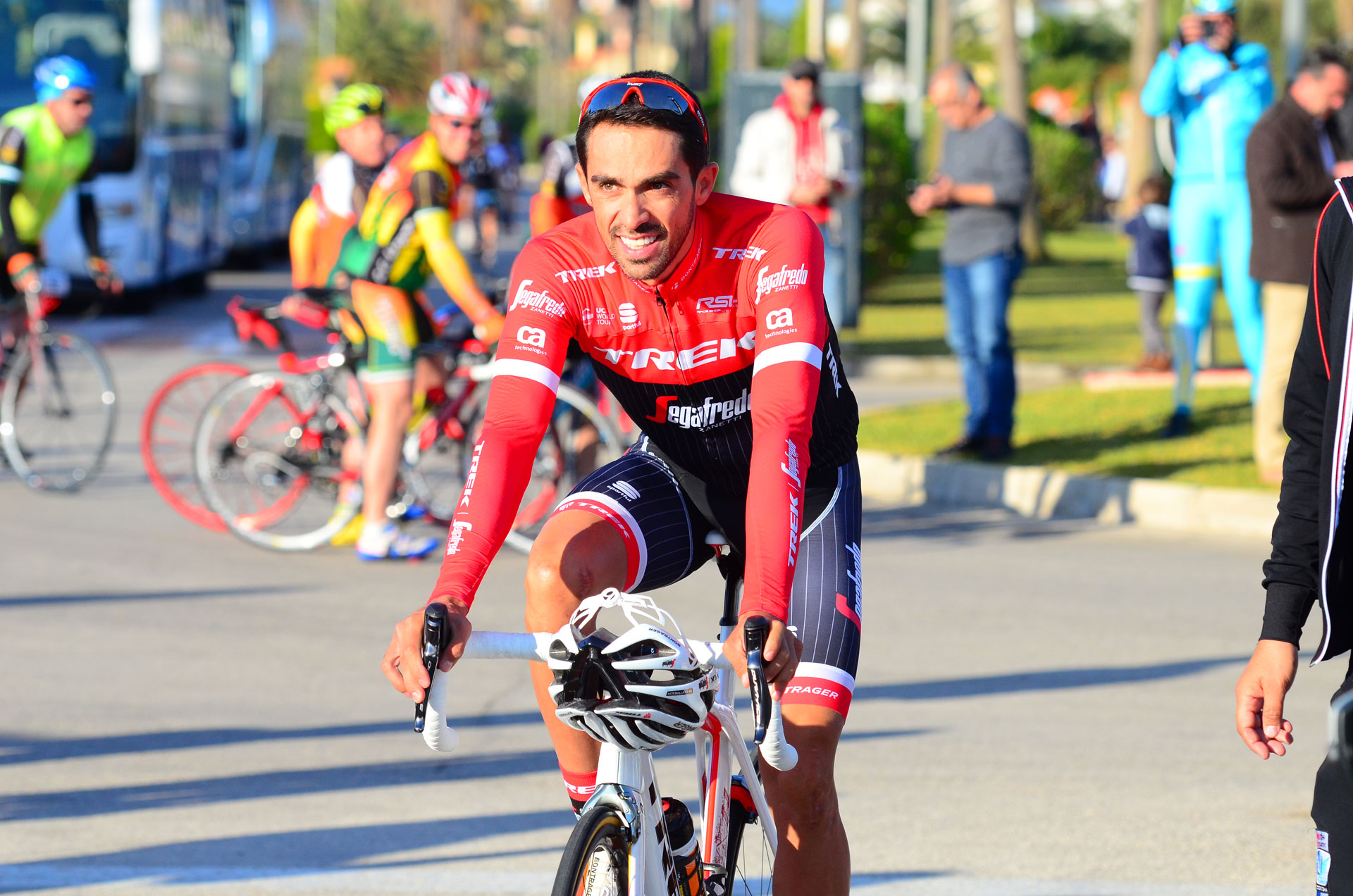
Alberto Contador officially retired from professional cycling in September 2017, concluding a storied career at the Vuelta a España. As of 2026, he remains one of only seven riders to have won all three Grand Tours. Since hanging up his wheels, Contador has transitioned into a successful entrepreneur, team owner, and lead commentator for Eurosport.
The Architect of Modern Attacking Cycling
To understand why Alberto Contador remains a household name in 2026, one must look at the vacuum his retirement left in the professional peloton. Known by his nickname "El Pistolero" for his signature finger-gun celebration, Contador represented an era of instinctive, aggressive racing that often defied the data-driven "marginal gains" philosophy of his rivals.
His retirement at the end of the 2017 season was not due to a lack of form, but a conscious choice to exit at the top of his game. His final professional victory—a solo mountain raid on the brutal Alto de l’Angliru—served as a poetic summation of his career: a defiant, uphill struggle against the odds that ended in triumph.
Early Career and the 2004 Health Crisis
Before his Grand Tour dominance, Contador’s career nearly ended before it truly began. In 2004, while racing the Vuelta a Asturias, he suffered a life-threatening cerebral cavernoma (a vascular malformation in the brain). The subsequent surgery left him with a massive scar across his scalp and a renewed perspective on life. This near-death experience is frequently cited by cycling historians as the catalyst for his "never-say-die" racing style. He returned to the peloton in 2005, winning a stage of the Tour Down Under, signaling the arrival of a generational talent.
The Triple Crown: Dominance in the Grand Tours
Contador’s place in the pantheon of cycling greats is secured by his membership in the elite club of riders who have won the Tour de France, the Giro d’Italia, and the Vuelta a España. His ability to climb with a high-cadence, out-of-the-saddle style—often described as "dancing on the pedals"—made him nearly impossible to drop during his peak years.
The Tour de France Breakthrough (2007, 2009)
His first Tour de France win in 2007 came under tumultuous circumstances following the withdrawal of Michael Rasmussen. However, it was his 2009 victory that truly defined his grit. Racing for Astana, Contador faced internal opposition from teammate Lance Armstrong, who had returned from retirement. Despite a hostile team environment and psychological warfare within the bus, Contador proved he was the strongest climber in the world, securing his second yellow jersey in Paris.
The Giro-Vuelta Double (2008)
In 2008, after his Astana team was barred from the Tour de France due to previous doping scandals involving other riders, Contador pivoted to the Giro d’Italia and the Vuelta a España. He won both, becoming the first Spaniard to achieve the feat and the fastest rider in history to win all three Grand Tours (completing the set in just 14 months).
| Grand Tour | Years Won (Official) | Key Rivalry |
|---|---|---|
| Tour de France | 2007, 2009 | Andy Schleck, Cadel Evans |
| Giro d’Italia | 2008, 2015 | Riccardo Riccò, Fabio Aru |
| Vuelta a España | 2008, 2012, 2014 | Chris Froome, Alejandro Valverde |
The Clenbuterol Controversy and Resurgence
No retrospective on Alberto Contador is complete without addressing the 2010 clenbuterol case. During the 2010 Tour de France, Contador tested positive for an infinitesimal amount (50 picograms) of the banned substance. His defense—that the substance entered his system via contaminated meat—led to a protracted legal battle.
The Court of Arbitration for Sport (CAS) eventually handed down a two-year backdated ban in 2012. This resulted in him being stripped of his 2010 Tour de France title and his 2011 Giro d’Italia title. While this remains a stain on his official palmarès, many fans and peers continued to view him as the "moral winner" of those races, citing the tiny amount of the substance detected.
The 2012 Vuelta: The "Fuente Dé" Masterpiece
Upon his return from suspension in late 2012, Contador staged what many consider the greatest tactical coup in modern cycling history. Trailing Joaquim "Purito" Rodríguez in the Vuelta a España, Contador launched a long-range attack on a mid-mountain stage to Fuente Dé. He caught his rivals off guard, overturned a significant deficit, and reclaimed the red jersey. This victory solidified his reputation as a rider who prioritized instinct over the power meter.
Life After Professional Racing (2018–2026)
Since his retirement, Contador has not followed the path of many former pros into quiet anonymity. Instead, he has built a multi-faceted business empire and remains a central figure in the cycling world.
Team Ownership and Development: Polti-Kometa
Alongside his long-time teammate and friend Ivan Basso, Contador founded the Alberto Contador Foundation. This grew into the professional team currently known as Polti-Kometa (as of 2026). The team serves as a bridge for young talent, particularly from Spain and Italy, to enter the WorldTour. Contador’s hands-on approach involves mentoring riders on tactical positioning and the mental fortitude required for three-week races.
Aurum Bikes: Engineering the "Perfect" Ride
In 2020, Contador and Basso launched Aurum Bikes. The brand’s flagship model, the Magma, was designed to reflect Contador’s preferences as a climber: extreme stiffness, lightweight construction, and agile handling. By 2026, Aurum has established itself as a premium boutique brand, competing with established giants like Specialized and Trek. Contador remains the primary test rider, often seen on social media tackling grueling Spanish climbs to verify frame iterations.
Broadcasting and Media Influence
For fans who missed his racing style, Contador’s transition to the commentary booth has been a welcome development. Working primarily with Eurosport GCN, he provides expert analysis. His "Contador’s Cam" segments and pre-race tactical previews are highly regarded for their depth. He has a unique ability to predict when a rider is about to crack or when a tactical move is being orchestrated, often minutes before it becomes apparent to the general audience.
The Technical Evolution of "El Pistolero"
Contador was a pioneer in several technical aspects of the sport that have become standard by 2026.
- The Out-of-the-Saddle Technique: Unlike many modern riders who stay seated to maximize aerodynamic efficiency, Contador utilized a standing position for long durations. This required immense core strength and a specific bike geometry that prioritized front-end stability.
- Weight Management: Contador was known for his obsessive attention to "race weight." He often pushed the limits of the UCI’s 6.8kg minimum weight limit, working closely with mechanics at Saxo Bank and Trek-Segafredo to ensure his bike was exactly on the limit without sacrificing safety.
- Tactical Flexibility: He was one of the last "all-rounder" champions who could win a time trial against specialists (as he did in the 2009 Tour de France against Fabian Cancellara) and still drop the best climbers in the high mountains.
Legacy and Impact on the Next Generation
As we look at the peloton in 2026, the "Contador Effect" is visible in riders like Tadej Pogačar and Remco Evenepoel. These athletes have revived the aggressive, long-range attacking style that Contador championed during the era of Team Sky’s dominance.
Contador’s legacy is defined by his resilience. Whether returning from a brain surgery that could have ended his life or reclaiming his status after a controversial ban, he never changed his fundamental approach to the sport. He was a rider who preferred to lose while attacking than to finish on the podium by being conservative.
Frequently Asked Questions
Why did Alberto Contador retire in 2017?
Contador chose to retire because he felt he could no longer compete for the absolute top step of the podium in the Tour de France. He stated he wanted to leave the sport while still being a protagonist in the races, rather than fading away in the middle of the pack. His victory on the Angliru in his final race was the "perfect" exit he had planned.
How many Grand Tours did Alberto Contador actually win?
Officially, Alberto Contador has 7 Grand Tour titles:
- 2 Tour de France (2007, 2009)
- 2 Giro d’Italia (2008, 2015)
- 3 Vuelta a España (2008, 2012, 2014) He was stripped of the 2010 Tour de France and 2011 Giro d’Italia due to a doping violation.
Is Alberto Contador still involved in professional cycling?
Yes, very much so. In 2026, he is the co-owner of the Polti-Kometa professional cycling team, the founder of Aurum Bikes, and a lead analyst/commentator for Eurosport. He also participates in numerous "Gran Fondo" events and remains an ambassador for several cycling-related charities through his foundation.
What was the "Pistolero" celebration?
The celebration involved Contador mimicking firing a pistol with his hand as he crossed the finish line. It became one of the most recognizable "brand" images in sports. He started the gesture early in his career as a way to signify that he had "shot" his rivals on the final climb.
What is the Alberto Contador Foundation?
The Foundation focuses on two main pillars: promoting cycling among youth through its various racing teams and raising awareness for stroke prevention. Because of his 2004 cerebral cavernoma, Contador uses his platform to educate people on the early warning signs of strokes and brain hemorrhages.
Final Recommendation for Fans
For those looking to relive the career of the cyclist who retired in 2017, the best resource is his documentary, "The Final Stage," which chronicles his last season with Trek-Segafredo. Additionally, following his current analysis on Eurosport provides a masterclass in professional cycling tactics. If you are an aspiring cyclist, studying his 2012 Vuelta attack at Fuente Dé remains the gold standard for understanding how to win a race with your head when your legs are no longer the strongest.