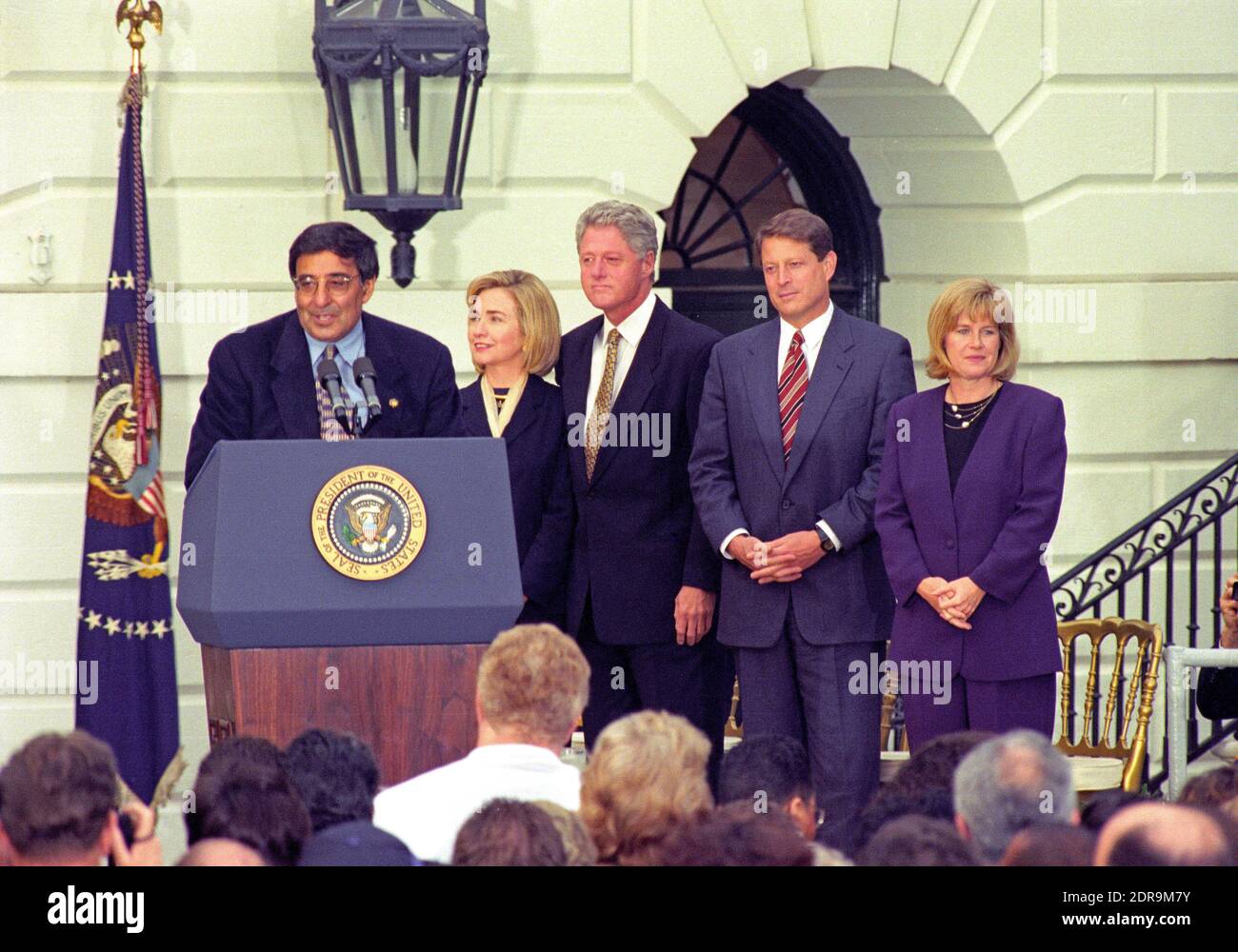
When Al Gore completed his tenure as the 45th Vice President of the United States in January 2001, public disclosures and financial evaluations indicated that his net worth was estimated to be between $1 million and $2 million. This modest capital base, largely tied to residential real estate in Tennessee and standard government pensions, bore little resemblance to the multi-hundred-million-dollar fortune he accumulated in the decades that followed through private equity investments, corporate board positions, and media ventures.
Understanding the financial standing of a major public figure at a specific historical junction requires examining federal disclosure rules, personal assets, family inheritances, and the stark contrast between political salaries and post-political wealth generation. This examination explores the documented financial reality of Al Gore at the conclusion of his vice presidency, clarifying how his assets were structured and what factors subsequently shifted his financial trajectory.
The Context of Public Disclosures: Financial Transparency in 2001
Evaluating the net worth of a federal official requires analyzing the documents they are legally obligated to file under the Ethics in Government Act of 1978. While these public financial disclosure reports do not demand an exact dollar-for-dollar accounting of total net worth, they require itemized reporting of assets, liabilities, unearned income sources, and outside positions within specific monetary ranges.
When Al Gore prepared to leave the executive branch in early 2001, his final public financial disclosure reports offered a transparent window into his personal holdings. Federal officials report assets in broad brackets—such as $15,001 to $50,000, or $100,001 to $250,000—making exact calculations difficult without supplementary data. However, investigative journalists, financial analysts, and biographers cross-referenced these disclosures with local real estate records and probate documents to establish a reliable baseline.
The consensus among financial historians and journalists is that Gore’s net worth upon leaving office hovered around $1.5 million. By contemporary standards for national political figures, particularly those who had served decades in the House of Representatives, the United States Senate, and the executive branch, this sum was remarkably ordinary. It reflected a career spent almost entirely in public service, where congressional and executive salaries, while comfortable, did not match the private sector compensation of corporate executives or high-earning attorneys.
Breakdown of Assets Upon Leaving the White House
To understand Al Gore's financial condition in January 2001, one must look at the specific asset classes he and his then-wife, Tipper Gore, owned at the time. Their portfolio was characterized by traditional, conservative holdings rather than speculative investments or high-risk equities.
Real Estate Holdings
Real estate constituted the most substantial portion of the Gore family's net worth at the turn of the millennium.
- The Carthage, Tennessee Property: The Gores owned a family farm and residential property in Carthage, Tennessee. While possessing significant sentimental value and serving as his official voting residence, its market valuation at the time was modest compared to major metropolitan real estate markets.
- The Nashville Residence: The family also maintained ties to residential property in Nashville, Tennessee.
- The Washington, D.C. Connection: Throughout his vice presidency, Gore resided in the official Vice President's Residence at the United States Naval Observatory. Upon leaving office, the couple purchased a home in the upscale neighborhood of Arlington, Virginia, later moving to a historic estate in Nashville's Belle Meade neighborhood.
Investments, Savings, and Pensions
Unlike many contemporary politicians who build portfolios through extensive stock trading or corporate retainers, Gore's liquid assets were relatively straightforward:
- Government Retirement Accounts: As a career public servant who served in the U.S. Army, the House, the Senate, and two terms as Vice President, Gore was vested in the federal civil service and congressional retirement systems. These pensions provided a reliable income stream but added limited lump-sum liquidation value to his immediate net worth statement.
- Mutual Funds and Savings: Financial disclosures revealed standard mutual fund holdings, government securities, and family savings accounts, largely managed conservatively to avoid conflicts of interest while in public office.
- Inheritance and Family Trust Elements: The Gore family had historical ties to real estate and business interests in Tennessee, originating from his father, Albert Gore Sr., who served as a U.S. Senator. However, these estates had largely been distributed or taxed through prior generations, leaving no massive inherited liquidity upon his exit from the White House.
| Asset Category | Estimated Value Range (Circa 2001) | Primary Nature of Holdings |
|---|---|---|
| Real Estate | $800,000 – $1,200,000 | Family farm in Carthage, Tennessee, and regional residential holdings. |
| Pensions & Retirement | Valued as income streams | Vested federal and congressional pension benefits accrued over decades of service. |
| Liquid Assets & Securities | $200,000 – $500,000 | Conservative mutual funds, cash savings accounts, and government-backed notes. |
| Total Estimated Net Worth | $1,000,000 – $2,000,000 | Combined conservative estimate based on final federal disclosures. |
The Legislative and Ethical Constraints of Public Service
The modest net worth Al Gore possessed in 2001 was a direct byproduct of the strict ethical boundaries placed on high-ranking executive branch officials. While serving as Vice President, Gore was subject to rigorous financial oversight designed to prevent conflicts of interest between public duties and private financial gain.
Federal officials must divest from individual stocks and sector-specific mutual funds that might intersect with their regulatory or legislative portfolios. Consequently, many politicians park their wealth in broad-market index funds or blind trusts. Furthermore, the salary of a Vice President in 2000 was $175,000 per year—a respectable income, but one that was heavily offset by the high cost of maintaining two households (one in Washington and one in Tennessee), travel expenses not covered by official budgets, and the tax burdens associated with public life.
Because federal officials cannot leverage their current office for commercial enterprise, lucrative book deals, paid speaking engagements, or advisory roles while actively serving, wealth accumulation is fundamentally paused during active public service. Gore’s financial profile upon leaving office reflects this structural freeze.
The Divergence: Post-2001 Wealth Accumulation
To fully grasp why questions regarding Al Gore’s net worth in 2001 persist, it is necessary to contrast that baseline with his subsequent financial evolution. Within a decade of leaving the White House, estimates of Gore’s net worth grew exponentially, with some media outlets placing it well over $100 million or even approaching $200 million. This dramatic shift occurred due to a convergence of entrepreneurial ventures, media investments, and strategic partnerships.
Current TV and Silicon Valley Ventures
Shortly after his departure from public office, Gore co-founded Current TV, an independent cable and satellite television network focused on youth-oriented journalism and participatory media. When the network was sold to Al Jazeera in 2013, Gore reportedly netted tens of millions of dollars from his ownership stake.
Apple Inc. and Kleiner Perkins
In 2003, Gore joined the board of directors of Apple Inc., a position that included substantial grants of stock options. As Apple’s market capitalization surged over the following two decades, those stock options grew significantly in value. Additionally, Gore became a partner at Kleiner Perkins Caufield & Byers, a prominent Silicon Valley venture capital firm, where he focused on investments in sustainable and green technologies.
Media, Speaking, and Environmental Advocacy
The release of the documentary An Inconvenient Truth in 2006, along with his subsequent Nobel Peace Prize in 2007, elevated Gore’s global profile as a leading voice on climate change. His paid speaking engagements commanded substantial fees, further accelerating his personal capital generation.
None of these revenue streams existed or were permissible while he was occupying the vice presidency. Therefore, conflating his modern financial status with his financial reality in January 2001 represents a common historical misunderstanding.
Common Misconceptions About Political Wealth
Public fascination with the personal finances of former political leaders often leads to the circulation of unverified rumors and exaggerated estimates. When evaluating figures like Al Gore, several analytical errors frequently occur:
- Assuming Lifetime Wealth Accumulation is Linear: Observers often look at a politician's current wealth and assume they possessed similar capital throughout their career. In reality, modern political fortunes are frequently built after leaving office through the monetization of public brand recognition, board memberships, and entrepreneurial enterprise.
- Confusing Organizational Revenue with Personal Wealth: High-profile organizations associated with a public figure—such as the Climate Reality Project or various advocacy groups—manage operational budgets and endowments that are legally distinct from the individual's personal net worth.
- Misinterpreting Disclosure Brackets: Because federal financial disclosures use broad ranges rather than exact figures, amateur analysts often take the high-end estimates of every asset category to manufacture inflated net worth totals.
Frequently Asked Questions
What was Al Gore's salary as Vice President?
During his final years in office, Al Gore’s salary as Vice President of the United States was $175,000 annually, as established by congressional pay schedules for executive branch officers at the turn of the millennium.
Did Al Gore inherit a large fortune before entering the White House?
No. While his father, Albert Gore Sr., was a prominent U.S. Senator and later a corporate executive, family estates were divided across generations, and Al Gore relied primarily on his salaries from the military, journalism, Congress, and the executive branch prior to his post-2001 business ventures.
When did Al Gore's net worth begin to increase significantly?
His wealth began to scale rapidly after 2001 through private sector endeavors, most notably his involvement with Apple Inc. as a board member, his partnership in venture capital with Kleiner Perkins, and the eventual sale of Current TV to Al Jazeera in 2013.
Are public financial disclosures mandatory for Vice Presidents?
Yes. Under the Ethics in Government Act of 1978, the Vice President, along with the President, members of Congress, and senior federal officials, must file annual financial disclosure reports detailing assets, liabilities, and outside income sources.
Why do politicians often build wealth only after leaving office?
Federal ethics laws prohibit active officials from engaging in outside commercial enterprises, accepting corporate board seats, or leveraging their current public position for private financial gain, restricting wealth accumulation primarily to public salaries and pre-existing investments until they return to private life.
Conclusion and Final Perspective
Examining Al Gore’s net worth when he left the White House in January 2001 reveals a conventional financial profile rooted in decades of public service rather than private sector accumulation. With an estimated net worth between $1 million and $2 million, consisting largely of residential real estate in Tennessee and standard government pension rights, Gore exited executive office with modest liquid wealth compared to the fortunes he later amassed. Distinguishing his 2001 financial baseline from his subsequent entrepreneurial and corporate success clarifies the mechanics of post-political wealth generation in modern American history.