An aircraft operator certificate is an official authorization issued by a national aviation authority that permits a commercial enterprise or individual to operate aircraft for public transport or specialized aerial services. It establishes that the holder possesses the operational organization, management personnel, maintenance systems, and safety programs required to meet stringent statutory safety standards.
Navigating the regulatory landscape of commercial aviation requires a firm grasp of the credentials that authorize flight operations. Whether launching a new charter airline, establishing an aerial photography business, or managing a fleet of corporate jets, understanding the legal framework is essential. At the center of this framework sits the authorization that separates private hobbyists from commercial operators.
Understanding the mechanics of this certificate involves examining the precise criteria set by regulators, the distinctions between different operational models, and the ongoing obligations required to maintain compliance. This guide breaks down everything prospective operators and aviation professionals need to know about securing, utilizing, and maintaining this vital credential.
What Is an Aircraft Operator Certificate?
An aircraft operator certificate—frequently referred to as an Air Operator Certificate (AOC) in commercial airline contexts—is a formal license granted by a civil aviation authority. In the United States, this authority is the Federal Aviation Administration (FAA), while in Europe, it is the European Union Aviation Safety Agency (EASA) working alongside national authorities.
The certificate validates that an operator has demonstrated the professional competence and financial capacity to conduct safe operations. It is distinct from an aircraft registration certificate, which establishes ownership and nationality of a specific physical airframe. While registration proves who owns the plane, an operator certificate proves who controls the operational system—the pilots, the dispatchers, the maintenance schedules, and the safety management systems—that keeps the plane flying safely.
Without this authorization, commercial carriage of passengers or cargo for hire is illegal. Regulators enforce these requirements to protect the flying public and ensure that commercial pressures never compromise baseline aviation safety protocols.
Regulatory Framework and Governing Bodies
Aviation regulation is governed by international standards established by the International Civil Aviation Organization (ICAO), a specialized agency of the United Nations. ICAO Annex 6 sets forth the global baseline for the operation of aircraft, specifically addressing international commercial air transport.
National aviation authorities translate these international standards into binding local regulations:
- United States: Governed primarily by Title 14 of the Code of Federal Regulations (14 CFR). Commercial operations typically fall under Part 121 (scheduled air carriers) or Part 135 (commuter and on-demand operations).
- European Union: Governed by EASA regulations, notably Commission Regulation (EU) No 965/2012, which outlines specific technical requirements and administrative procedures for commercial air transport.
- United Kingdom: Regulated by the Civil Aviation Authority (CAA) under retained EU law and domestic UK Civil Aviation Publication (CAP) standards.
Compliance with these rules is mandatory. Regulators maintain ongoing oversight through routine inspections, safety audits, and mandatory reporting mechanisms.
Key Types of Certificates and Operational Categories
Aviation authorities categorize operational certificates based on the nature of the flights, the size of the aircraft, and whether operations are scheduled or unscheduled.
Scheduled Air Carriers
These operators run regular, published flights between specific destinations, typically utilizing large commercial transport category aircraft. They are subject to the highest level of regulatory scrutiny, requiring extensive infrastructure, robust dispatch systems, and dedicated crew training programs.
Commuter and On-Demand Operators
Often operating smaller turboprops and business jets, these entities provide charter flights, air taxi services, or regional feeder routes. In the United States, these are generally certificated under 14 CFR Part 135. They balance commercial flexibility with rigorous safety standards tailored to smaller fleets and diverse operating environments.
Aerial Work and Specialized Operations
Certain commercial activities do not involve the public transport of passengers or standard cargo from point A to point B. These include agricultural spraying, firefighting, aerial photography, and construction lifting. While these operations may fall under distinct regulatory subparts (such as 14 CFR Part 133 for rotorcraft external-load operations or Part 137 for agricultural aircraft), they still require explicit authorization from the aviation authority.
Prerequisites for Obtaining a Certificate
Securing an operator certificate is a rigorous, multi-step process that can take anywhere from several months to over a year. The applicant must prove compliance across multiple operational domains before a single commercial flight can take place.
1. Management Personnel Qualifications
Regulators require candidates to appoint qualified individuals to key leadership positions. These typically include:
- Accountable Manager: Holds ultimate corporate responsibility for the financial and operational integrity of the certificate.
- Director of Operations: Oversees flight operations, crew scheduling, and operational control.
- Chief Pilot: Responsible for flight standards, pilot training, and checking protocols.
- Director of Maintenance: Ensures that all aircraft maintenance is performed in accordance with approved manuals and regulatory standards.
2. Operational Manuals
Applicants must author and submit a comprehensive suite of manuals tailored to their proposed operation. These documents dictate how the company functions day-to-day and include:
- General Operations Manual (GOM): Outlines company policies, crew duties, and operational procedures.
- Aircraft Maintenance Manual (AMM) / Continuing Airworthiness Management Exposition (CAME): Details how the fleet will be maintained, inspected, and repaired.
- Training Manual: Establishes initial and recurrent training curricula for pilots, flight attendants, and maintenance personnel.
- Safety Management System (SMS) Manual: Outlines how the organization identifies hazards, assesses risks, and mitigates safety issues.
3. Financial and Administrative Readiness
Applicants must demonstrate adequate capital reserves to fund the operation safely without cutting corners on maintenance or training. Proof of insurance covering passenger liability, property damage, and hull loss is also mandatory.
Step-by-Step Application Process
The certification process follows a structured pathway overseen by a dedicated certification project team from the regulatory authority.
| Phase | Title | Description | Key Deliverables |
|---|---|---|---|
| Phase 1 | Pre-Application | Initial discussions between the applicant and the regulatory authority to define scope and requirements. | Formal application intent, Statement of Intent. |
| Phase 2 | Formal Application | Submission of formal paperwork, draft manuals, and organizational charts for review. | Completed application package, initial manual drafts. |
| Phase 3 | Document Evaluation | Thorough technical review of all submitted manuals and programs by regulatory specialists. | Accepted/Approved manuals, corrected deficiencies. |
| Phase 4 | Inspection and Demonstration | On-site inspections of facilities, aircraft, maintenance setups, and proving flights. | Proving flight reports, facility verification. |
| Phase 5 | Certification | Final issuance of the operator certificate and associated operations specifications (OpSpecs). | Issued Certificate and active OpSpecs. |
During the demonstration phase (Phase 4), the operator must conduct actual flights under simulated commercial conditions. This allows inspectors to evaluate crew coordination, dispatch reliability, and adherence to company manuals in real-world scenarios.
Operations Specifications (OpSpecs)
An operator certificate is rarely a standalone document. It is almost always accompanied by Operations Specifications (OpSpecs). These are binding legal documents issued by the aviation authority that define the precise boundaries within which the certificate holder is permitted to operate.
OpSpecs detail:
- Specific aircraft makes, models, and individual tail numbers authorized for use.
- Geographic areas of operation (e.g., specific domestic routes, North Atlantic airspace, or oceanic tracks).
- Authorized meteorological minimums for takeoff and landing (including Category II and III instrument landing capabilities).
- Specialized authorizations, such as Extended Diversion Time Operations (EDTO) or Reduced Vertical Separation Minimum (RVSM) compliance.
Violating an OpSpec is equivalent to violating the operator certificate itself and can result in emergency suspension or revocation by regulators.
Ongoing Compliance and Continuing Airworthiness
Receiving the certificate is only the beginning. Maintaining the credential requires constant vigilance, internal auditing, and adherence to strict oversight schedules.
Continuing Airworthiness
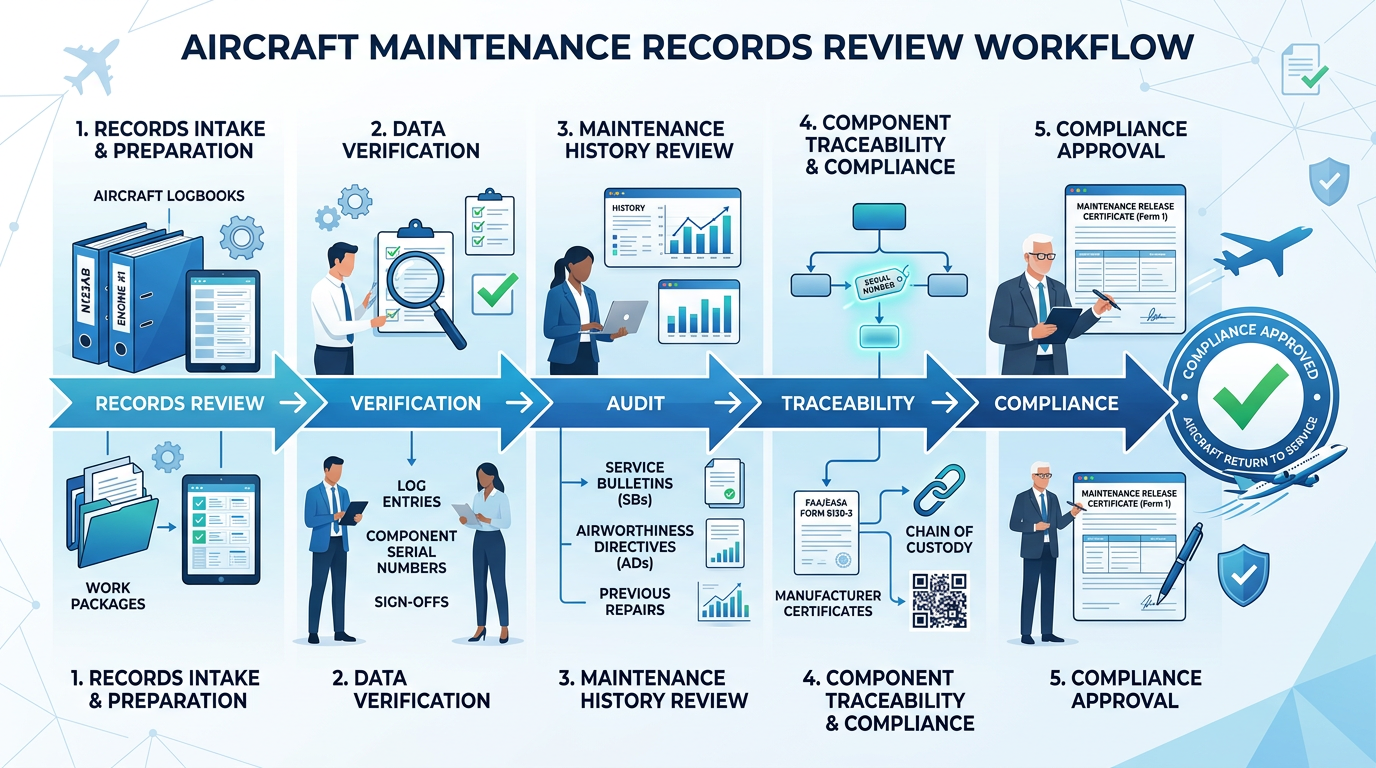
Every aircraft operated under the certificate must be maintained under an approved maintenance program. Mechanics must sign off on every inspection, repair, and modification. Parts must be traceable, and airworthiness directives issued by manufacturers or regulators must be complied with on strict timelines.
Safety Management Systems (SMS)
Modern aviation regulation heavily emphasizes proactive risk management. Operators are expected to maintain an active SMS that encourages voluntary reporting of safety hazards, near-misses, and operational errors without punitive retaliation, fostering a robust internal safety culture.
Surveillance and Audits
National aviation authorities conduct regular surveillance audits. Inspectors may arrive unannounced to review pilot logbooks, observe flight dispatch procedures, inspect maintenance hangars, or audit financial and training records. Failure to maintain standards can lead to fines, operational restrictions, or revocation of the certificate.
Common Misconceptions and Pitfalls
Navigating the certification process frequently trips up new entrants who underestimate the complexity of commercial aviation regulations.
- Misconception: Buying an aircraft equals the right to fly for hire. Owning a corporate jet or turboprop privately does not grant the legal right to charter it out. Commercial operations require an institutional framework far beyond private pilot privileges.
- Pitfall: Inadequate Manuals. Submitting generic, copied manuals instead of documents customized to the specific organizational structure and fleet is the most common cause of multi-month delays during Phase 3 document evaluations.
- Misconception: Certificates are permanent. An operator certificate is a privilege, not a permanent right. It remains valid only as long as the operator continuously meets all regulatory criteria.
Frequently Asked Questions
What is the difference between an aircraft registration and an operator certificate?
An aircraft registration is tied to the physical aircraft, establishing its nationality and legal ownership. An operator certificate is issued to the company or individual managing the operational systems—such as pilots, dispatch, and maintenance—authorizing them to use that aircraft for commercial transport.
Can an individual hold an operator certificate, or must it be a corporation?
While regulations vary slightly by jurisdiction, individuals can sometimes hold certificates for very small-scale operations (such as single-pilot aerial work or small charter operations). However, most commercial operations utilize corporate entities like corporations or limited liability companies to manage liability and operational complexity.
How long does it take to obtain an operator certificate?
The timeline varies significantly based on the complexity of the operation. A simple single-aircraft charter or aerial work certificate may take 6 to 9 months, while a complex scheduled air carrier certification under strict airline standards frequently takes 12 to 24 months.
What happens if an operator violates their certificate terms?
If an aviation authority discovers safety violations, illegal charter operations (often called "grey market" charter), or unauthorized deviations from OpSpecs, they can take enforcement action. This ranges from civil penalties and financial fines to the emergency suspension or permanent revocation of the certificate.
Are operator certificates internationally transferrable?
No. An operator certificate is issued by a specific national aviation authority (such as the FAA or EASA) and is bound by that nation's legal framework. Operating internationally requires bilateral agreements, specific foreign air carrier permits, and compliance with the airspace regulations of every country visited.
Practical Next Steps for Prospective Operators
For aviation professionals or entrepreneurs seeking to establish a commercial operation, preparation is paramount. Begin by engaging qualified aviation legal counsel and experienced regulatory consultants who have successfully navigated the certification pathway with your local aviation authority. Draft a clear business plan that accounts for the substantial capital requirements of the pre-application and demonstration phases, and establish contact with your regional aviation authority office to schedule an initial pre-application meeting. Thorough preparation in the early stages minimizes costly delays and sets the foundation for a safe, legally compliant commercial enterprise.