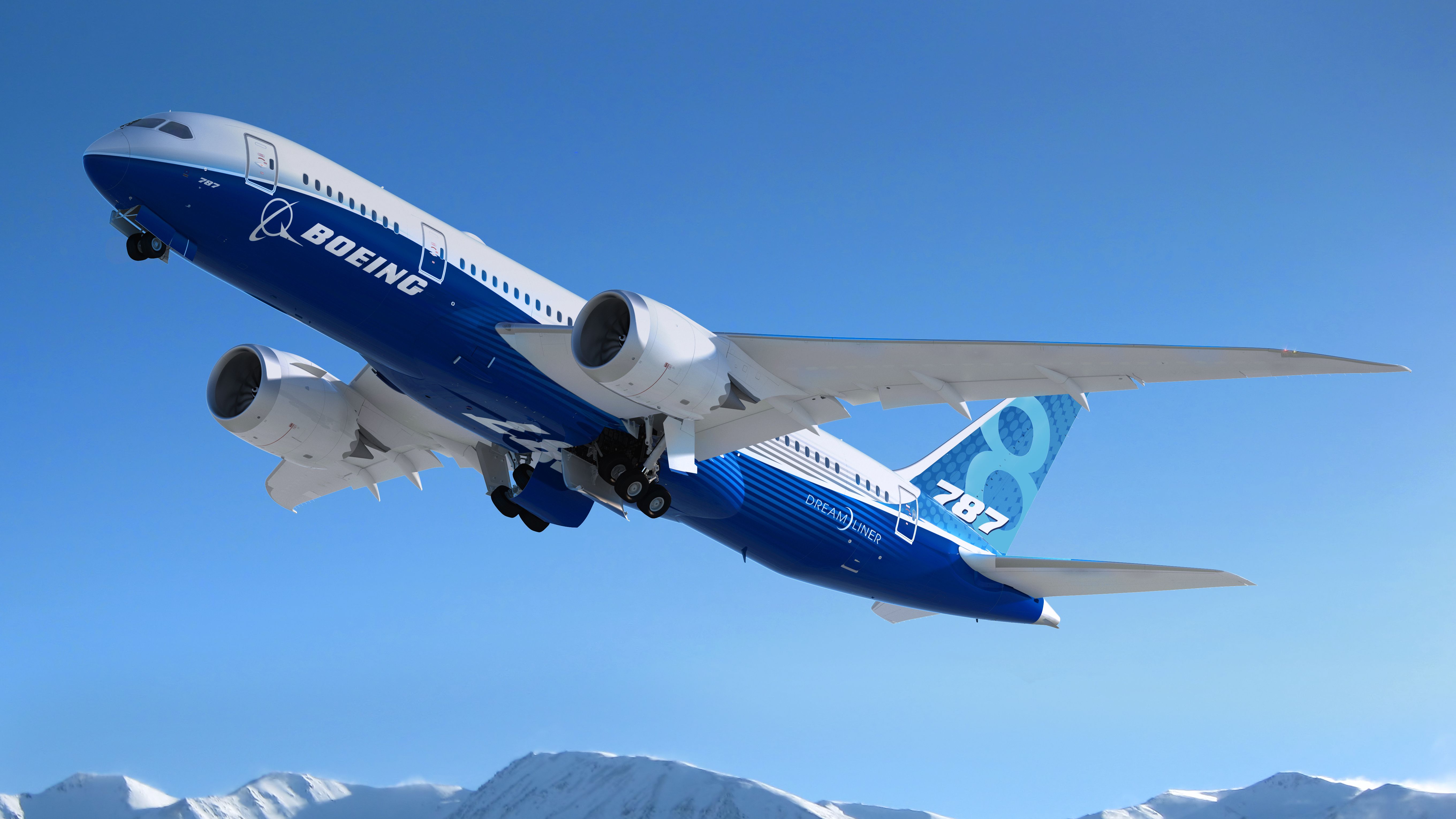
As of 2026, the Airbus Defense and Space (DS) A330 MRTT remains the primary wide-body "alternative" to Boeing’s strategic platforms, but it falls short due to its reliance on a legacy aluminum airframe, higher lifecycle fuel consumption compared to composite-heavy competitors like the 787 Dreamliner, and volumetric constraints in its cargo-refueling balance. While the MRTT is operationally superior in current refueling mission flexibility, it lacks the raw aerodynamic efficiency and modern "digital-first" airframe architecture that defines the 787 generation.
The competition between Airbus Defense and Space (DS) and Boeing has traditionally been defined by the "Tanker Wars," where the A330 Multi-Role Tanker Transport (MRTT) has largely dominated the international export market. However, as we look at the landscape in 2026, the term "alternative" has taken on a new meaning. With the Boeing 787 Dreamliner setting the global standard for wide-body efficiency in the commercial sector, Airbus DS has struggled to translate that same level of "clean-sheet" disruptive success into the military and strategic transport domain.
To understand why the Airbus DS offering—primarily the A330-200 based MRTT—is perceived as falling short in the shadow of 787-class technology, one must look beyond simple range and payload figures. The issue lies in the fundamental philosophy of airframe evolution, the cost of sustained operations (Total Cost of Ownership), and the shifting requirements of modern air forces that now prioritize "persistence" over mere "capacity."
The Platform Paradox: Legacy Versatility vs. Modern Efficiency
Airbus DS’s flagship, the A330 MRTT, is built upon the A330-200 commercial airframe. In the early 2000s and 2010s, this was a masterstroke. The A330 was a proven, reliable, and highly capable platform. However, the Boeing 787 Dreamliner introduced a paradigm shift: the extensive use of carbon-fiber-reinforced polymers (CFRP).
The A330 MRTT falls short of the 787’s efficiency because it is essentially a "generation-minus-one" airframe. While Airbus has introduced the A330neo (New Engine Option) on the commercial side, the Defense and Space division has been slower to fully weaponize and certify the "neo" for all MRTT missions. This leaves the current fleet of Airbus DS tankers operating with older aerodynamic profiles and heavier structural weights.
Structural Weight and Fuel Fraction
The 787 Dreamliner’s composite structure allows for a higher fuel fraction—the ratio of fuel weight to total takeoff weight. For a strategic tanker or long-range VIP transport, this is critical. Airbus DS’s A330 MRTT must carry more "dead weight" in the form of its aluminum-lithium alloy skin and traditional fasteners. In a 2026 operational environment where carbon neutrality and fuel logistics are under intense scrutiny, the 15% to 20% higher fuel burn of the A330 platform compared to a theoretical 787-class tanker is a significant operational penalty.
Cabin Pressurization and Crew Fatigue
One of the Dreamliner’s "soft" advantages that Airbus DS has struggled to match is the lower cabin altitude and higher humidity levels made possible by a composite fuselage. In long-endurance missions—such as 12-hour "orbit" refueling patterns or transcontinental strategic lift—crew fatigue is a major factor. The A330 MRTT, with its traditional metallic fuselage, cannot safely maintain the same low cabin altitude (6,000 feet) as the 787 without risking structural fatigue over the airframe’s life.
The Sales Gap: Why the A330-800neo Failed as a "Dreamliner Killer"
In the commercial world, the Airbus A330-800neo was intended to be the direct "Dreamliner alternative." Its failure to capture significant market share has directly impacted Airbus DS. Because the military division relies on a healthy commercial production line to keep unit costs low, the poor performance of the A330-800neo has limited the "DS" pipeline.
The A330-800neo fell short because:
- Range-to-Cost Ratio: The 787-8 was designed from the ground up for the "point-to-point" long-haul market, whereas the A330-800 was a derivative.
- Engine Integration: The Rolls-Royce Trent 7000 engines on the A330neo are excellent, but the 787’s GEnx and Trent 1000 options were integrated into an all-electric architecture that eliminates heavy bleed-air systems.
- Resale Value: Defense departments often look at the "secondary market" for airframes. The massive global fleet of 787s ensures a steady supply of parts and expertise, whereas the A330-800 is a niche product.
Strategic Mission Profiles: Capacity vs. Volumetric Efficiency
When discussing why the Airbus DS alternative falls short, we must address the "volumetric efficiency" of the cargo deck. The A330 MRTT is praised for its ability to carry fuel in the wings without sacrificing the main deck for extra tanks. This is a massive advantage over the Boeing KC-46 (based on the 767).
However, when compared to what a 787-9 or 787-10 could offer in a hypothetical "Defense and Space" configuration, the A330 starts to look dated. The Dreamliner has a wider cross-section and more advanced loading systems that allow for higher pallet density. In the "Multi-Role" part of MRTT, the Airbus platform is reaching its limit in terms of how much palletized cargo it can carry while simultaneously loitering on station for refueling.
Technical Comparison: A330 MRTT vs. 787-8 (Strategic Specs)
| Feature | Airbus DS A330 MRTT | Boeing 787-8 (Commercial Base) | Impact on Defense Role |
|---|---|---|---|
| Fuselage Material | Aluminum-Lithium Alloy | 50% Composite (CFRP) | Weight vs. Durability |
| Typical Range | 8,000 nm | 7,300 nm (higher payload) | Loiter time/Persistence |
| Fuel Efficiency | Baseline | ~20% improvement | Logistics footprint |
| Max Takeoff Weight | 233 tonnes | 227 tonnes | Structural loading limits |
| Bleed Air System | Pneumatic | All-Electric | Maintenance/Weight |
The LMXT Setback: A Strategic Turning Point
A critical moment for Airbus DS occurred during the competition for the U.S. Air Force’s "Bridge Tanker" (KC-Y) program. Airbus DS partnered with Lockheed Martin to offer the LMXT, a modified A330 MRTT. While the LMXT was a formidable "Dreamliner alternative" in the refueling space, it ultimately faced headwinds that highlight the platform’s limitations.
The U.S. market’s pivot toward the "Next-Generation Air Refueling System" (NGAS) essentially leapfrogged the A330 MRTT. The Air Force signaled that it no longer wanted just a "big bus with a boom." It wanted stealth, connectivity, and extreme efficiency—areas where the 787’s modern architecture has a natural advantage over the A330's 1990s-era design heritage. Airbus DS found that even with Lockheed’s help, dressing up a legacy airframe with new sensors could not fully compensate for the underlying physics of an older aerodynamic design.
Maintenance and the "Digital Twin" Gap
In 2026, aircraft maintenance is driven by predictive analytics and "Digital Twins." The Boeing 787 was built with thousands of internal sensors designed to report structural health in real-time.
Airbus DS has retrofitted many of these capabilities into the A330 MRTT (through their Smart MRTT initiative), but these are "add-ons" rather than "native" features. The A330 falls short here because its wiring harnesses, hydraulic systems, and flight control computers were not originally designed for the massive data throughput required for 2026-style AI-driven maintenance. This leads to:
- Higher "Unscheduled Maintenance" rates.
- More complex sensor integration for autonomous refueling (A3R).
- Greater difficulty in implementing "Open Mission Systems" (OMS) that allow different nations to plug in their own encryption and data links.
The A350 Pivot: Admitting the A330’s Limits?
Perhaps the strongest evidence that the current Airbus DS wide-body alternative "falls short" is Airbus's own pivot toward the A350 for future high-end government and military missions. The A350 is Airbus’s true technical answer to the Dreamliner.
By offering the A350 as a "Corporate Jet" (ACJ350) and exploring its potential as a Future Strategic Tanker, Airbus DS is acknowledging that the A330 platform has reached its ceiling. The A350 brings the composite materials, the efficiency, and the "digital backbone" that the A330 lacks. However, as of 2026, the A350 is significantly more expensive to procure, leaving Airbus DS in a difficult middle ground: an A330 that is becoming obsolete and an A350 that is too costly for many mid-tier air forces.
Frequently Asked Questions
Why is the A330 MRTT still considered the "gold standard" if it falls short of the Dreamliner?
The A330 MRTT is the gold standard for current operational availability. It is a "ready-now" solution with a proven boom and hose-and-drogue system. While the Dreamliner (787) is technically superior as an airframe, it has never been fully developed or certified as a military tanker. The A330's "shortcomings" are primarily in future-proofing and efficiency, not in its ability to perform today's missions.
Does Airbus DS plan to replace the A330 MRTT with a 787-like composite aircraft?
Airbus is currently focusing on the A330neo and the A350 as its future strategic platforms. The A350 is the closest equivalent to the 787's technology suite. Airbus DS is actively working on integrating military systems into these newer airframes to address the efficiency gap.
How does fuel efficiency impact military operations?
Fuel efficiency is not just about cost; it’s about "Fuel to Give." If a tanker burns less fuel to get to its station, it has more fuel available to transfer to fighters or bombers. The 20% efficiency advantage of a modern airframe like the 787 translates directly into longer "on-station" time or fewer required tanker sorties.
Is the Boeing KC-46 basically a 787?
No. The Boeing KC-46 is based on the 767-2C, which is an even older airframe design than the A330. This is why the A330 MRTT has won almost every international competition against the KC-46. However, when people refer to the "Dreamliner alternative," they are usually comparing the A330 to the potential or VIP versions of the 787, which far outclass both the A330 and the 767 in technology.
What is "Autonomous Wing-to-Wing" refueling, and does Airbus DS have it?
Airbus DS has pioneered A3R (Automatic Air-to-Air Refueling), which uses cameras and sensors to guide the boom into the receiver aircraft without manual input. While Airbus DS leads in this specific software, the underlying "A330" platform's physical limitations (vibration, sensor mounting points) make it harder to evolve compared to a clean-sheet digital airframe.
Summary and Recommendations
For defense procurement officers and strategic planners in 2026, the choice between Airbus DS and its competitors is no longer a simple matter of payload. The A330 MRTT remains a powerhouse of reliability, but it is undeniably an aircraft of the past.
Recommendation for Operators:
- Prioritize Mission Profiles: If your requirement is for immediate, high-volume refueling capacity, the A330 MRTT's current "shortcomings" in efficiency are outweighed by its combat-proven status.
- Evaluate Lifecycle Costs: For long-term 30-year acquisitions, the "Total Cost of Ownership" of an aluminum airframe in a high-fuel-cost world must be weighed against the higher initial price of a composite platform like the A350.
- Monitor the A330neo Transition: Keep a close watch on Airbus DS’s progress in certifying the A330-800/900neo for military use, as this will bridge some of the efficiency gap with the Dreamliner.
While Airbus DS provides the most "complete" military wide-body package today, the "Dreamliner alternative" will continue to fall short until the defense world fully embraces the composite, all-electric architecture that has already revolutionized commercial aviation.