Choosing between the Airbus A321 and the Boeing 737-800 involves balancing seat-mile costs against operational flexibility. The Airbus A321 excels in high-density markets with its superior capacity and containerized cargo system. In contrast, the Boeing 737-800 offers lower acquisition costs and exceptional reliability for high-frequency, mid-capacity regional networks.
The narrowbody market in 2026 remains dominated by the legacy of these two aircraft families. While the A321neo and 737 MAX have taken over new production lines, the A321-200 (ceo) and 737-800 (NG) continue to be the primary workhorses for secondary market acquisitions, lease renewals, and cargo conversion programs. For an airline operator, the decision between these two platforms dictates not just fuel burn, but maintenance infrastructure, pilot recruitment, and ground handling efficiency.
Capacity and Cabin Configuration (LOPA)
The most immediate differentiator between the two aircraft is their physical size and the resulting Layout of Passenger Accommodations (LOPA). The Airbus A321 is roughly 7 meters longer than the Boeing 737-800, which fundamentally alters its revenue potential.
The A321 Capacity Advantage
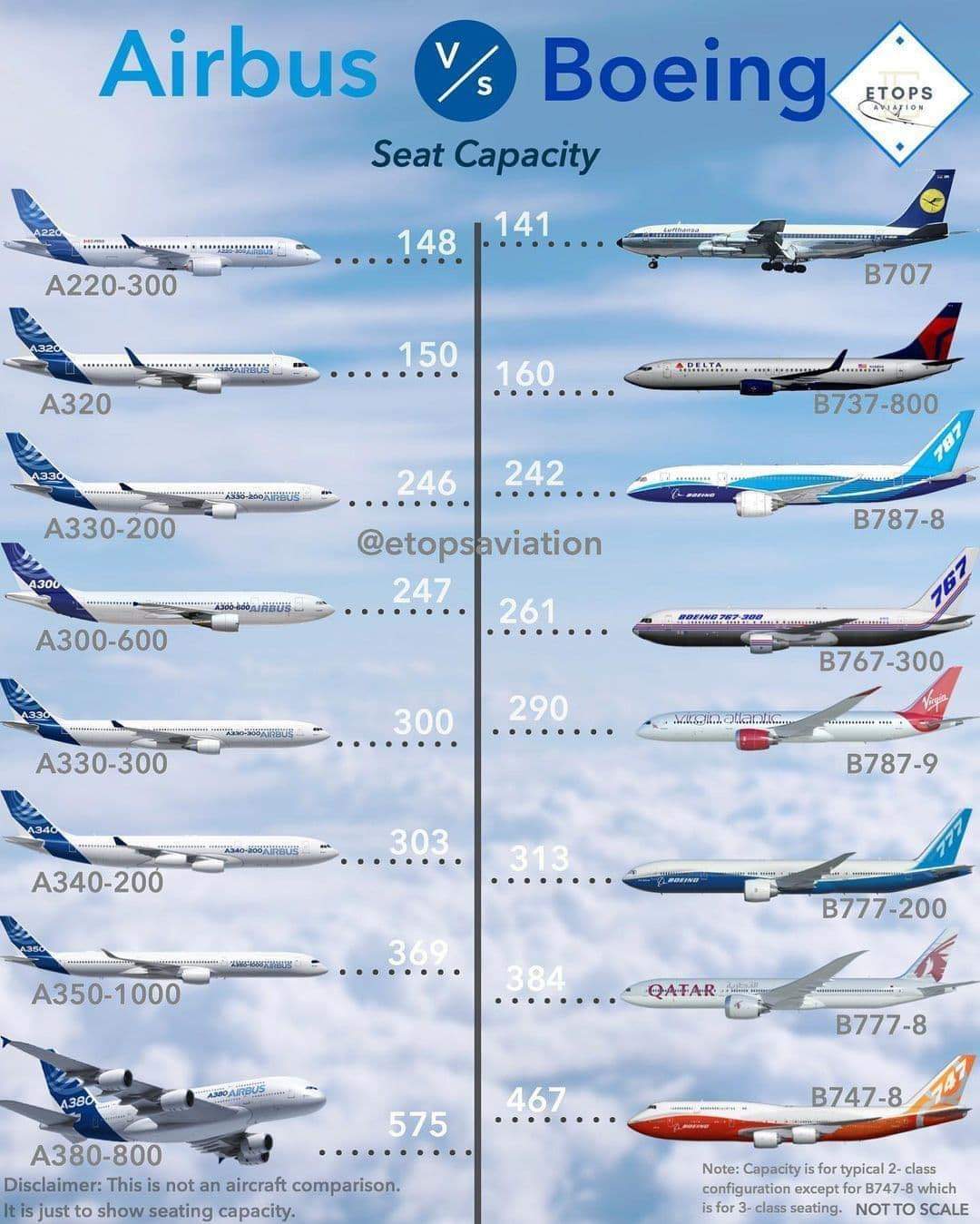
In a typical 2026 high-density configuration, the A321 can accommodate between 210 and 220 passengers. Even in a standard two-class layout, most operators comfortably fit 185 to 190 seats. This extra "real estate" allows for a more flexible cabin. Operators can install larger premium cabins or extra-legroom economy sections without sacrificing the base capacity that makes the route profitable. The A321’s wider fuselage (by approximately 7 inches) also allows for 18-inch wide seats, which has become a significant marketing point for long-haul narrowbody operations.
The 737-800 Sweet Spot
The Boeing 737-800 typically tops out at 189 seats in a high-density, single-class configuration (often utilized by low-cost carriers like Ryanair). In a standard two-class configuration, it usually seats between 160 and 162 passengers. While it lacks the sheer volume of the A321, the 737-800 is often seen as the "right-sized" aircraft for routes where a 200-seat aircraft would result in low load factors. For operators focused on frequency rather than volume—running six flights a day instead of four—the 737-800 offers a more manageable risk profile per departure.
Payload and Cargo Capabilities
For many operators, the decision is made not in the cabin, but in the belly. The architectural differences between the Airbus and Boeing narrowbody lines result in vastly different ground handling requirements and revenue streams.
Containerized Cargo vs. Bulk Loading
The Airbus A321 supports the use of LD3-45W containers. This allows airlines to pre-load luggage and freight into containers, which are then mechanically hoisted into the aircraft. This "unit load device" (ULD) system significantly reduces the time required for baggage loading and unloading, protects luggage from the elements, and allows for the seamless transfer of cargo from widebody international flights to narrowbody domestic legs.
The Boeing 737-800, conversely, is a bulk-load aircraft. Every piece of luggage and every box of freight must be manually stacked by ground crews within the hold. While this allows for a slightly higher utilization of the actual cubic volume of the hold (as there is no "dead space" around containers), it increases the labor cost and the risk of workplace injuries for ground handlers. Furthermore, it slows down the turnaround time (TAT) on high-utilization routes. In 2026, as labor costs for ground handling continue to rise, the A321’s containerized system offers a distinct operational advantage for hub-and-spoke carriers.
Operational Economics and Fuel Burn
In 2026, fuel efficiency remains the largest variable expense for any airline. When comparing these two legacy platforms, the "Cost per Available Seat Mile" (CASM) vs. "Trip Cost" becomes the central metric of the debate.
Trip Cost vs. Seat-Mile Cost
The Boeing 737-800 generally boasts a lower total trip cost. It is a lighter aircraft with lower maximum takeoff weights (MTOW) in standard configurations, leading to lower landing fees and slightly lower absolute fuel burn on a like-for-like 500-nautical-mile mission.
However, the Airbus A321 almost always wins on CASM. Because it spreads its operating costs over a significantly larger number of seats, the cost to move a single passenger from point A to point B is lower on the A321, provided the airline can maintain high load factors. If an operator consistently fills more than 85% of an A321, it will generate significantly more profit than a 737-800 on the same route. If load factors are routinely below 70%, the 737-800’s lower trip cost makes it the more economically viable choice.
Performance and Range
The A321-200 (ceo) sometimes struggles with "field performance" when compared to the 737-800. At high-altitude airports or in "hot and high" conditions, the A321 may face more significant payload restrictions than the 737-800. The Boeing 737-800 has a reputation as a "hot rod," with a wing design that offers excellent lift characteristics, allowing it to operate out of shorter runways with fewer compromises.
| Feature | Airbus A321-200 (ceo) | Boeing 737-800 (NG) |
|---|---|---|
| Typical 2-Class Seating | 185 - 190 | 160 - 162 |
| Max High-Density Seating | 220 | 189 |
| Cargo System | Containerized (LD3-45W) | Bulk Load |
| Fuselage Width | 3.95 m (13 ft 0 in) | 3.76 m (12 ft 4 in) |
| Typical Range | 3,000 - 3,200 nmi | 2,900 - 3,000 nmi |
| Max Takeoff Weight (MTOW) | ~93,500 kg | ~79,000 kg |
| Engine Options | CFM56-5B or IAE V2500 | CFM56-7B |
Maintenance, Repair, and Overhaul (MRO)
By 2026, both the A321-200 and the 737-800 are mature platforms with global MRO support. However, the maintenance philosophies differ.
The CFM56 Factor
The Boeing 737-800 is powered exclusively by the CFM56-7B engine. This engine is perhaps the most successful jet engine in history, with a massive pool of spare parts, lease engines, and qualified technicians. Airlines operating the 737-800 benefit from a highly competitive MRO market that keeps engine shop visit costs relatively predictable.
The Airbus A321 offers a choice between the CFM56-5B and the IAE V2500. While the CFM engine offers commonality for some, the V2500 is often preferred for the A321 because it provides slightly better performance on the larger frame. However, the V2500 can be more expensive to maintain and has a more complex shop-visit requirement. Operators must carefully evaluate their existing engine shop contracts before choosing an A321 fleet.
Commonality and Pilot Pool
For an operator already flying the A320 or A319, adding the A321 is seamless. The Cross-Crew Qualification (CCQ) and the Common Type Rating across the Airbus A320 family allow pilots to fly all three variants interchangeably. This simplifies scheduling and reduces the "reserve" pilot overhead.
Boeing offers similar commonality across the 737 NG family (737-600 through 737-900ER). However, in 2026, many operators are looking at the transition to the MAX. While there is a high degree of commonality between the 737-800 and the 737 MAX 8, the flight deck differences are more pronounced than those found between the A321ceo and A321neo.
The Secondary Market and Asset Value in 2026
As of 2026, the 737-800 remains the most liquid aircraft asset in the world. Because so many airlines operate the type, finding a sub-lessee or a buyer for a mid-life 737-800 is generally faster than for an A321.
P2F (Passenger-to-Freighter) Conversions
A critical factor in the 2026 residual value of these aircraft is their viability as freighters. The 737-800BCF (Boeing Converted Freighter) has become the standard for express parcel delivery (e.g., Amazon, DHL, FedEx). Its reliability and ease of loading make it the premier narrowbody freighter.
The A321P2F is a newer entrant but is rapidly gaining ground. Because the A321 is larger and supports containerized loading on the main deck, it offers more volume than the 737-800 freighter. For operators focused on e-commerce—where density is low but volume is high—the A321P2F is becoming the preferred choice. This high demand for freighter conversions keeps the floor price of used A321 passenger airframes high, even as they age.
Technical Limitations and Considerations
Corrosion and Fatigue
The 737 NG family has faced specific issues over the years, such as the "pickle fork" inspections (referring to the fuselage-to-wing attachment bracket). Operators of older 737-800s in 2026 must ensure that all Airworthiness Directives (ADs) related to structural fatigue have been addressed.
The Airbus A321, being a fly-by-wire aircraft, relies heavily on its flight control computers. While extremely safe, these systems require a different type of technical expertise compared to the more mechanical cables-and-pulleys legacy found in parts of the 737’s design. Furthermore, the A321’s landing gear is more complex due to the aircraft's length and the need to prevent tail strikes during rotation.
Environmental Regulations
In 2026, CORSIA (Carbon Offsetting and Reduction Scheme for International Aviation) and other regional carbon taxes are in full effect. The A321’s ability to carry more passengers with roughly the same fuel burn as a smaller aircraft gives it a "green" edge in terms of CO2 per passenger kilometer. This can result in lower environmental levies for the operator.
Expert Selection Criteria for Operators
When making the final determination between these two aircraft, an airline's management should use the following checklist:
- Network Density: If 60% of your routes require more than 180 seats to be profitable, the A321 is the clear winner.
- Infrastructure: Do your hubs have the high-speed loaders required for LD3 containers? If you rely on manual labor in developing markets, the 737-800 is more "plug-and-play."
- Existing Fleet: The cost of "splitting" a fleet (operating both Boeing and Airbus) is massive. Unless the fleet size exceeds 20 aircraft, the overhead of two sets of spare parts, two sets of tools, and two pilot pools usually outweighs the efficiency gains of a specific aircraft.
- Mission Length: For short hops (under 90 minutes), the 737-800’s faster turnaround and lower weight are advantageous. For "long-thin" routes (3-5 hours), the A321’s cabin comfort and seat-mile efficiency dominate.
Frequently Asked Questions
Which aircraft has a better safety record, the A321 or the 737-800? Both aircraft have exceptional safety records and are among the safest machines ever built. The 737-800 (NG) is a distinct generation from the 737 MAX and did not share the software issues associated with the newer model. The A321 uses the same flight-envelope protection systems as the rest of the A320 family, which has been proven over decades of service.
How does the 2026 fuel price impact the choice? Higher fuel prices favor the A321 because of its lower fuel burn per seat. When fuel is cheap, the 737-800’s lower acquisition and maintenance costs make it more attractive. In the 2026 market, with volatile energy prices and a transition toward SAF, the A321 is generally viewed as the more "future-proof" legacy asset.
Can the 737-800 be upgraded to match the A321's capacity? No. The 737-800 is physically limited by its fuselage length and exit limits. To get closer to the A321's capacity, an operator would need to look at the 737-900ER or the 737 MAX 9/10, but these aircraft have different performance characteristics and higher price points.
Is pilot training more expensive for one or the other? The costs are comparable. However, the pilot market in 2026 is tight. If your region has a surplus of Airbus-rated pilots (common in Europe and Asia), the A321 will be easier to staff. If you are in North America or parts of Africa where Boeing dominates, the 737-800 pool may be deeper.
What is the "Tail Strike" risk on the A321? Because the A321 is significantly longer than the A320, it has a lower pitch margin during takeoff and landing. Pilots must be specifically trained on the rotation technique for the A321 to avoid scraping the rear fuselage. Modern avionics updates available in 2026 have mitigated this risk with enhanced pitch-limit indicators.
Final Recommendation
For the airline operator in 2026, the Airbus A321 is the superior tool for growth and efficiency on high-volume trunk routes. Its containerized cargo and high seat count make it an unbeatable revenue generator in mature markets. However, the Boeing 737-800 remains the "king of the secondary market." For startup airlines, low-cost carriers in emerging markets, or operators with decentralized networks, the 737-800’s lower entry cost, mechanical simplicity, and robust performance provide a level of financial flexibility that the larger Airbus cannot match.
Operators should prioritize the A321 if they have a hub-and-spoke model with high cargo demand. They should prioritize the 737-800 if they require a versatile, lower-risk asset that can be easily liquidated or converted to a freighter later in its lifecycle.
For more technical data on narrowbody performance, consult the EASA Type Certificate Data Sheets or the Boeing Commercial Airplanes technical specifications for the 737 NG family.