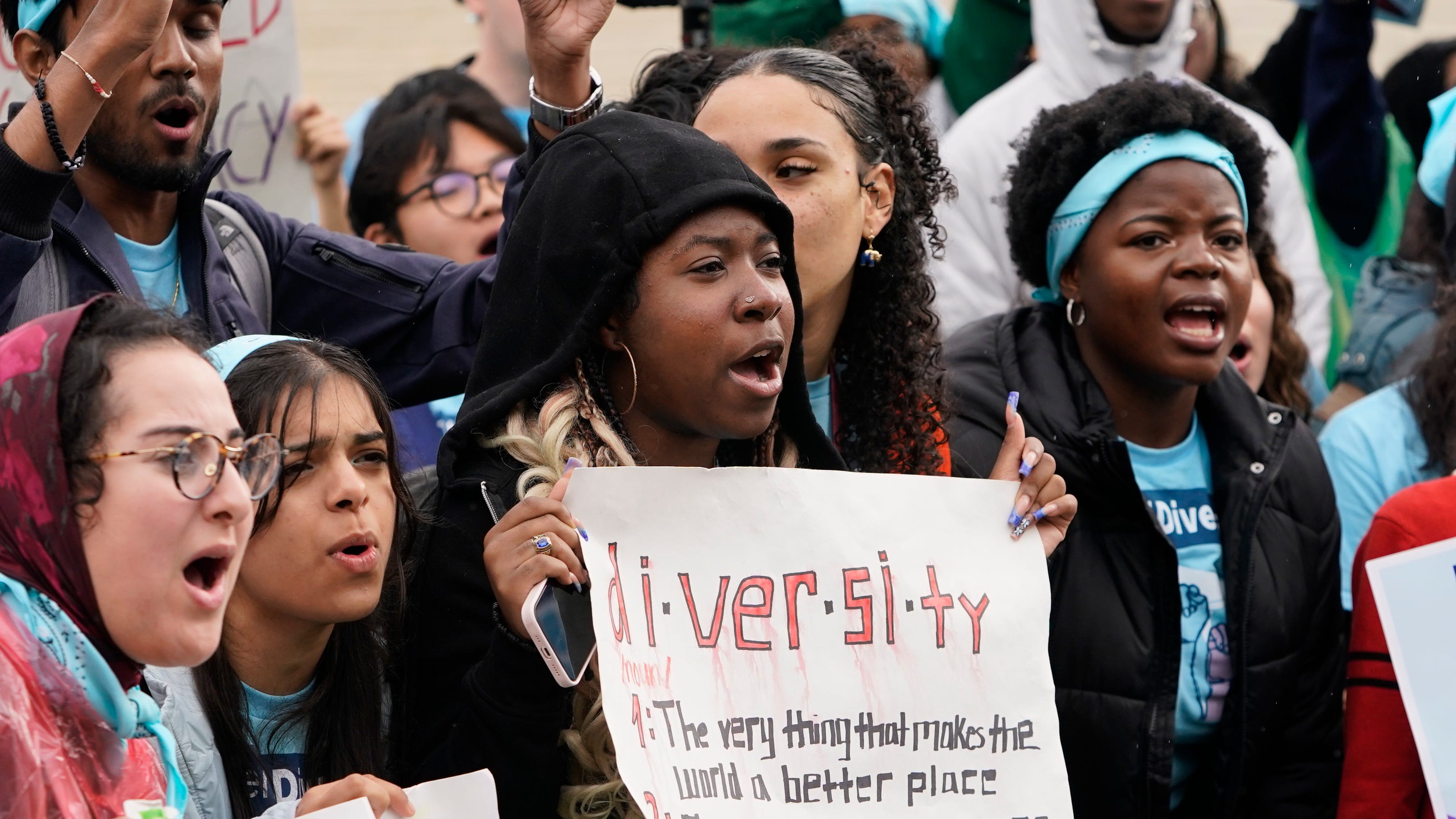
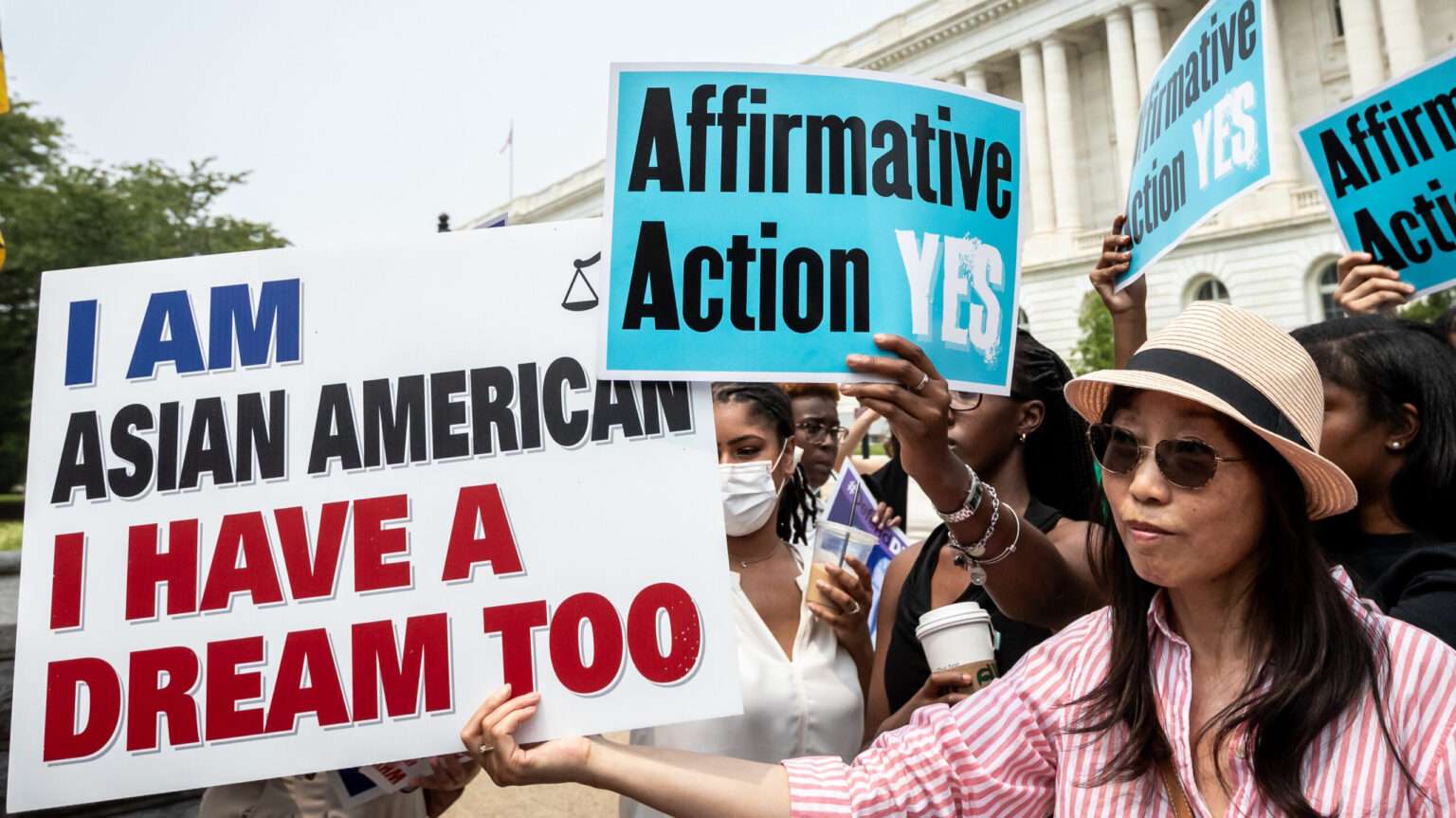
Affirmative action in U.S. law refers to the set of constitutional principles, federal statutes, and regulatory frameworks designed to eliminate unlawful discrimination and address historical underrepresentation in education, employment, and public contracting. Governed primarily by the Equal Protection Clause of the Fourteenth Amendment and Titles VI and VII of the Civil Rights Act of 1964, the legal boundaries of affirmative action have shifted significantly over five decades, culminating in landmark Supreme Court rulings that strictly limit race-conscious decision-making.
Professional Advice Limitation
This article provides legal analysis and historical context for educational purposes only. It does not constitute formal legal advice. Compliance officers, legal counsel, and administrators should consult qualified legal professionals regarding specific institutional policies or corporate practices.
The Constitutional and Statutory Foundations of Affirmative Action
The legal structure governing affirmative action rests on two distinct pillars: constitutional law, which restricts state action, and statutory law, which applies to both public and private entities receiving federal funds or operating in commercial markets.
- U.S. Constitutional Baseline: Fourteenth Amendment (Equal Prot.)
- Strict Scrutiny Test Standard
- Compelling Government Interest
- Narrowly Tailored Execution
- Public & Private Education: Title VI, Civil Rights Act (1964) — Prohibits racial discrimination in federally funded programs.
- Employment & Contracting: Title VII, Civil Rights Act (1964) & EO 11246 — Prohibits employment discrimination; mandates affirmative outreach for federal contractors.
- Strict Scrutiny Test Standard
The Equal Protection Clause and Strict Scrutiny
Under the Fourteenth Amendment to the U.S. Constitution, no state shall "deny to any person within its jurisdiction the equal protection of the laws." When a government policy classifies individuals by race, courts evaluate the policy under strict scrutiny—the highest level of judicial review. To survive strict scrutiny, a race-conscious government action must satisfy two criteria:
- Compelling Government Interest: The state must demonstrate an extraordinarily important, non-speculative justification for using race. Historically, the Supreme Court recognized two compelling interests: remedying specific, identified past discrimination by the government entity involved, and obtaining the educational benefits of a diverse student body in higher education.
- Narrow Tailoring: The use of race must be strictly necessary to achieve that compelling interest. If race-neutral alternatives could accomplish the same goal, or if the policy operates as a blanket quota, it fails narrow tailoring.
Title VI and Title VII of the Civil Rights Act of 1964
While the Fourteenth Amendment applies directly to state actors (such as public universities and government agencies), federal statutory law extends non-discrimination mandates to private institutions:
- Title VI (42 U.S.C. § 2000d): Prohibits discrimination on the ground of race, color, or national origin in any program or activity receiving federal financial assistance. Because almost all private colleges and universities accept federal research grants or financial aid funds, Title VI subjects them to equal protection standards parallel to public institutions.
- Title VII (42 U.S.C. § 2000e et seq.): Prohibits employment discrimination by private and public employers based on race, color, religion, sex, or national origin. Title VII explicitly prohibits taking adverse or favorable employment actions (hiring, promotion, firing, compensation) based on protected characteristics.
Executive Order 11246
Issued by President Lyndon B. Johnson in 1965, Executive Order 11246 mandates that non-exempt federal contractors and subcontractors take positive steps—termed "affirmative action"—to ensure equal employment opportunity regardless of race, color, religion, sex, or national origin. Administered by the U.S. Department of Labor's Office of Federal Contract Compliance Programs (OFCCP), EO 11246 requires contractors to analyze their workforce demographics, identify underutilization of women and minorities, and establish placement goals and outreach mechanisms. Crucially, EO 11246 prohibits quotas, preferences, or set-asides in hiring decisions.
Key Supreme Court Precedents
The jurisprudence of affirmative action has evolved through a series of landmark decisions by the Supreme Court of the United States.
- 1978 — Bakke: Quota systems banned; race allowed only as an individual "plus factor."
- 2003 — Grutter & Gratz: Student diversity upheld as a compelling interest if non-mechanical.
- 2016 — Fisher II: Strict scrutiny upheld; race-neutral alternatives must be exhausted.
- 2023 — SFFA v. Harvard: Race-conscious admissions ruled unconstitutional under Equal Protection and Title VI.
Regents of the University of California v. Bakke (1978)
In Regents of the University of California v. Bakke, the Supreme Court evaluated the UC Davis School of Medicine's policy of reserving 16 out of 100 seats in each entering class for minority applicants.
Justice Lewis F. Powell Jr. authored the controlling opinion, establishing two key principles:
- Quotas are unconstitutional: Rigid numerical set-asides violate the Equal Protection Clause.
- Diversity as a compelling interest: Public universities may consider race as a flexible "plus factor" within an individualized, holistic review process to achieve the educational benefits of a diverse student body.
Grutter v. Bollinger and Gratz v. Bollinger (2003)
In 2003, the Supreme Court addressed two companion cases involving the University of Michigan:
- Grutter v. Bollinger: The Court upheld the University of Michigan Law School’s race-conscious admissions policy. Writing for the majority, Justice Sandra Day O'Connor reaffirmed Justice Powell’s opinion in Bakke, ruling that student body diversity is a compelling state interest. The Law School’s holistic, individualized assessment passed strict scrutiny because race was not used in a mechanical or decisive manner.
- Gratz v. Bollinger: The Court struck down the University of Michigan’s undergraduate admissions policy, which automatically awarded 20 points (out of a 150-point scale) to applicants from underrepresented minority groups. The Court held that this point allocation lacked individualized review and was effectively non-individualized, failing narrow tailoring.
Fisher v. University of Texas (2013 and 2016)
In Fisher I (2013) and Fisher II (2016), Abigail Fisher challenged the University of Texas at Austin's admissions policy, which combined a race-neutral "Top Ten Percent Plan" with a holistic review incorporating race. The Supreme Court established that courts must accord no deference to a university's assertion that its race-conscious plan is narrowly tailored. Instead, the institution bears the burden of proving that no workable race-neutral alternatives could produce the educational benefits of diversity.
Students for Fair Admissions v. Harvard and UNC (2023)
In June 2023, the Supreme Court decided Students for Fair Admissions, Inc. v. President and Fellows of Harvard College and Students for Fair Admissions, Inc. v. University of North Carolina (600 U.S. 181). The Court effectively ended race-conscious admissions in higher education.
Chief Justice John Roberts, writing for the majority, held that Harvard and UNC’s admissions programs violated the Equal Protection Clause of the Fourteenth Amendment (and by extension, Title VI):
- Lack of measurable objectives: The goals asserted by the universities (such as "training future leaders" and "promoting cross-racial understanding") were not sufficiently concrete or measurable to subject to judicial review under strict scrutiny.
- Impermissible use of race: The Court found that race operated as a negative factor for certain applicants (specifically Asian American candidates) and relied on racial stereotyping.
- Absence of an end point: The programs lacked a logical or definite termination date, violating the principle that race-conscious remedies must be temporary.
The Essay Exception
Crucially, the Court clarified that universities are not prohibited from considering an applicant's discussion of how race has impacted their life, provided that the applicant is evaluated as an individual:
"Nothing in this opinion should be construed as prohibiting universities from considering an applicant’s discussion of how race affected his or her life, be it through discrimination, inspiration, or otherwise... But universities may not simply establish through application essays or other means the regime we today hold unlawful."
Higher Education Admissions vs. Employment Law
A common point of confusion in law is the distinction between race-conscious higher education admissions and workplace affirmative action rules. The legal frameworks governing these two domains differ significantly.
- Legal Regimes: Admissions vs. Employment
- Higher Education Admissions (Title VI & 14th Amendment Equal Prot.)
- Direct race-conscious selection PERMANENTLY PROHIBITED (SFFA 2023).
- Focus shifted to socioeconomic status, geographic diversity, and lived experience essays.
- Employment & Contracting (Title VII & Executive Order 11246)
- Explicit race-conscious hiring, promotion, or firing strictly ILLEGAL under Title VII.
- Federal contractors MUST conduct outreach & pipeline analysis under EO 11246 (without preferences).
- Higher Education Admissions (Title VI & 14th Amendment Equal Prot.)
Higher Education Admissions Post-SFFA
Following the SFFA decision, colleges, universities, and law schools cannot use race as an independent factor or "plus factor" in admissions decisions. Institutions must ensure that admissions committees do not view applicant race data during the evaluation process. However, institutions may adopt race-neutral policies aimed at broadening access, such as:
- Expanding recruitment in low-income school districts or rural regions.
- Eliminating standardized testing requirements or legacy admissions preferences.
- Prioritizing applicants from low socioeconomic backgrounds or first-generation college students.
- Evaluating individual candidate essays detailing personal hardship, overcoming discrimination, or leadership experiences.
Workplace Affirmative Action under Title VII
Title VII of the Civil Rights Act of 1964 has long barred private and public employers from using race, gender, or ethnicity as a decision-making factor in hiring, promotion, discipline, or termination decisions.
Unlike higher education post-Bakke and prior to SFFA, commercial employers were never permitted to use race as a standalone "plus factor" to achieve workplace diversity for its own sake. Under Title VII, explicit racial preferences in employment are lawful only under narrow remedial circumstances: to remedy a demonstrable, specific historical imbalance caused by past discriminatory practices of that specific employer, pursuant to a formal, temporary, narrowly tailored affirmative action plan (see United Steelworkers of America v. Weber, 443 U.S. 193 (1979); Johnson v. Transportation Agency, 480 U.S. 616 (1987)).
Federal Contractor Compliance (EO 11246)
For businesses operating as federal contractors, affirmative action is an affirmative administrative duty, not an authorization to grant hiring preferences. Contractors subject to Executive Order 11246 must:
- Maintain an active Affirmative Action Program (AAP).
- Perform annual workforce utilization analyses comparing internal representation against the available pool of qualified candidates in the regional labor market.
- Establish non-mandatory "placement goals" where underutilization is identified.
- Expand recruitment pipelines, post job openings publicly, and audit hiring practices to eliminate artificial entry barriers.
EO 11246 explicitly prohibits contractors from establishing quotas, reserving positions for protected groups, or using race or sex as a selection criterion.
Legal Doctrines and Statutory Frameworks Comparison
The following table synthesizes the primary legal mechanisms governing affirmative action and diversity policies in the United States.
| Governing Framework | Domain / Scope | Primary Legal Standard | Permissibility of Race-Conscious Decisions | Key Supreme Court Ruling / Rule |
|---|---|---|---|---|
| 14th Amendment Equal Protection Clause | State Actors, Public Universities, Municipalities | Strict Scrutiny (Compelling Interest + Narrow Tailoring) | Unconstitutional in higher education admissions unless correcting explicit past state discrimination | SFFA v. Harvard / UNC (2023); Parents Involved (2007) |
| Title VI, Civil Rights Act of 1964 | Federally Funded Entities (Public & Private Universities) | Parallel to 14th Amendment Equal Protection Standards | Prohibited as a direct selection factor; limited to individual lived experience essays | SFFA v. Harvard (2023); Regents of Univ. of Cal. v. Bakke (1978) |
| Title VII, Civil Rights Act of 1964 | Public & Private Employers (15+ employees) | Non-discrimination in employment decisions | Prohibited for hiring/promotion; permitted only as narrow, temporary remedy for employer's past discrimination | United Steelworkers v. Weber (1979); Ricci v. DeStefano (2009) |
| Executive Order 11246 | Federal Contractors & Subcontractors | Affirmative administrative outreach, analysis, and pipeline building | Prohibited from using race as a decision criterion; requires non-discriminatory outreach | Administered by U.S. Dept. of Labor (OFCCP) regulations |
| 42 U.S.C. § 1981 | Private Contracts & Commercial Relationships | Prohibition of intentional racial discrimination in contract making | Prohibited; private grants, fellowships, or vendor programs restricted by race face strict liability | Runyon v. McCrary (1976); Domino's Pizza, Inc. v. McDonald (2006) |
Contemporary Legal Challenges and Corporate Diversity Policies
Following the Supreme Court's decision in SFFA, civil rights litigation expanded into corporate Diversity, Equity, and Inclusion (DEI) initiatives, workforce training, and minority fellowship programs.
Litigation Under 42 U.S.C. § 1981
Section 1981 of the Civil Rights Act of 1866 guarantees all citizens the same right to make and enforce contracts regardless of race. Because employment relationships, grant funding, vendor programs, and fellowship awards are legal contracts, conservative legal groups have utilized Section 1981 to challenge:
Race-Restricted Grants and Venture Funding: Programs that restrict eligibility for business capital grants exclusively to underrepresented racial groups have faced injunctions where courts found them to constitute race-based contractual exclusion.
Diversity Fellowships: Law firms and corporations offering clerkships, internships, or tuition assistance open only to specific racial minorities have largely restructured these programs to remove demographic eligibility bars, opening access to all candidates demonstrating commitment to diversity or overcoming personal adversity.
Supplier Diversity Programs: Vendor quotas or exclusive bidding tracks based on business owner race are vulnerable under Section 1981 and Equal Protection standards unless grounded in documented public sector disparity studies.
Post-2023 Risk Landscape under 42 U.S.C. § 1981
- High Risk / Vulnerable Policies
- Grants limited by applicant race.
- Fellowships with racial exclusions.
- Fixed racial quotas in hiring/vendors.
- Tie-breaker selection using race.
- Compliant / Low Risk Alternatives
- Broad outreach to underrepresented geographic & economic regions.
- Holistic evaluation of adversity essays.
- Skill-based & transparent hiring.
- High Risk / Vulnerable Policies
Compliant Workforce Strategies
To maintain legal compliance under Title VII and Section 1981 while promoting diverse talent pipelines, corporate legal teams focus on input-based diversity rather than output-based preferences:
- Broadened Recruitment: Expanding campus recruitment beyond traditional feeder schools to include Historically Black Colleges and Universities (HBCUs), Hispanic-Serving Institutions (HSIs), state universities, and community colleges.
- Structured, Skill-Based Hiring: Utilizing standardized interview questions, anonymized resume reviews, and rubric-based evaluations to eliminate unconscious bias without introducing demographic preferences.
- Inclusive Fellowships: Opening corporate leadership development and internship programs to all qualified applicants regardless of background, evaluating candidates on merit, talent, and lived experience.
Common Misconceptions About Affirmative Action Law
Misconception 1: Quotas were legal in university admissions until the 2023 SFFA ruling.
Fact: The Supreme Court explicitly banned racial quotas in higher education admissions in 1978 (Bakke). From 1978 until 2023, universities were permitted only to use race as an individualized "plus factor" in holistic evaluations, not as a numerical quota or rigid point system.
Misconception 2: The SFFA decision invalidated Executive Order 11246 for federal contractors.
Fact: SFFA focused on Title VI and the Fourteenth Amendment Equal Protection Clause in university admissions. It did not strike down Executive Order 11246. Federal contractors remain required by OFCCP regulations to maintain affirmative action programs focused on non-discriminatory outreach, recruitment, and workforce utilization data tracking.
Misconception 3: Employers can legally use race as a "tie-breaker" between two equally qualified candidates.
Fact: Under Title VII of the Civil Rights Act of 1964, using race as a tie-breaker in employment decisions is unlawful discrimination. Employers may not make hiring, promotion, or compensation choices based on race, even if candidates are otherwise equally matched.
Practical Recommendations for Institutional Compliance
Educational institutions, employers, and legal professionals navigating modern affirmative action legal frameworks should implement structural guardrails:
For Universities and Law Schools
- Audit Admissions Systems: Ensure admissions management software hides self-identified racial and ethnic demographic data from readers and selection committees during application review.
- Refine Application Prompts: Structure essay prompts to invite candidates to share personal stories of resilience, leadership, character, or overcoming systemic obstacles, evaluating essays solely on individual candidate merit.
- Expand Race-Neutral Recruitment: Invest in pipeline programs targeting socioeconomically disadvantaged high schools, transfer pathways from community colleges, and regional outreach.
For Employers and Federal Contractors
- Review DEI Frameworks: Inspect internal talent management language, internship criteria, and supplier diversity materials to ensure no opportunities are restricted or conditioned upon race or ethnicity.
- Fulfill Federal Contractor Mandates: Ensure Affirmative Action Plans (AAPs) focus strictly on broad-based recruitment, eliminating procedural barriers, and gathering required statistical data without establishing preferences or quotas.
- Train Hiring Managers: Conduct annual mandatory training for talent acquisition teams on Title VII compliance, emphasizing structured interviewing and objective evaluation metrics.
Frequently Asked Questions
Can applicants still write about their race in college and law school applications?
Yes. The Supreme Court's ruling in SFFA v. Harvard explicitly permits applicants to discuss how their race, heritage, or background impacted their life through personal experiences with discrimination, inspiration, or character development. However, universities must evaluate the student based on their individual character and experiences, not on race as a categorical designation.
Does affirmative action law require federal contractors to hire underqualified candidates?
No. Executive Order 11246 explicitly forbids federal contractors from hiring underqualified individuals or using race or sex to grant preferences. Contractors are required to expand their recruitment efforts to ensure a diverse qualified candidate pool, but final selection decisions must be made without regard to protected attributes.
How does Title VII apply to corporate supplier diversity programs?
Title VII applies to employment, but corporate supplier diversity programs are governed primarily by 42 U.S.C. § 1981, which prohibits racial discrimination in contracting. Supplier diversity programs that restrict bids, grant contracts, or offer financial benefits exclusively based on minority ownership face significant legal risk under Section 1981 unless they remain open to all qualified small or disadvantaged businesses.
What is the difference between equal employment opportunity (EEO) and affirmative action?
Equal Employment Opportunity (EEO) is a legal mandate under Title VII prohibiting employers from discriminating against individuals based on protected characteristics in any aspect of employment. Affirmative action (under Executive Order 11246 for federal contractors) goes beyond non-discrimination by requiring proactive efforts to recruit, retain, and develop diverse talent pools where underutilization exists.
What is the legal standard of strict scrutiny in affirmative action cases?
Strict scrutiny is the most stringent judicial review standard used by U.S. courts. To survive strict scrutiny, a race-conscious government action must serve a "compelling state interest" and be "narrowly tailored" so that it achieves that interest using the least restrictive means possible, without relying on quotas or broader racial classifications.
Conclusion and Next Actions
The legal framework of affirmative action has transitioned from permissive holistic race-consciousness in academic admissions to strict race-neutrality across educational programs, while maintaining structured non-discriminatory outreach requirements for federal contractors under Title VII and Executive Order 11246. Institutions must carefully align their operational policies with contemporary judicial precedents to uphold equal access while mitigating legal risk.
Next Actions:
- Educational Administrators: Review admissions workflows to confirm that demographic data fields are concealed during evaluation cycles and update essay scoring rubrics to focus on individual applicant experiences.
- Corporate HR Counsel: Audit employee development programs, fellowships, and hiring guidelines to ensure full compliance with Title VII and Section 1981 non-discrimination principles.
- Federal Contractors: Maintain compliance with OFCCP regulations by focusing affirmative action efforts on broad recruitment outreach, objective job classifications, and accurate utilization analysis.