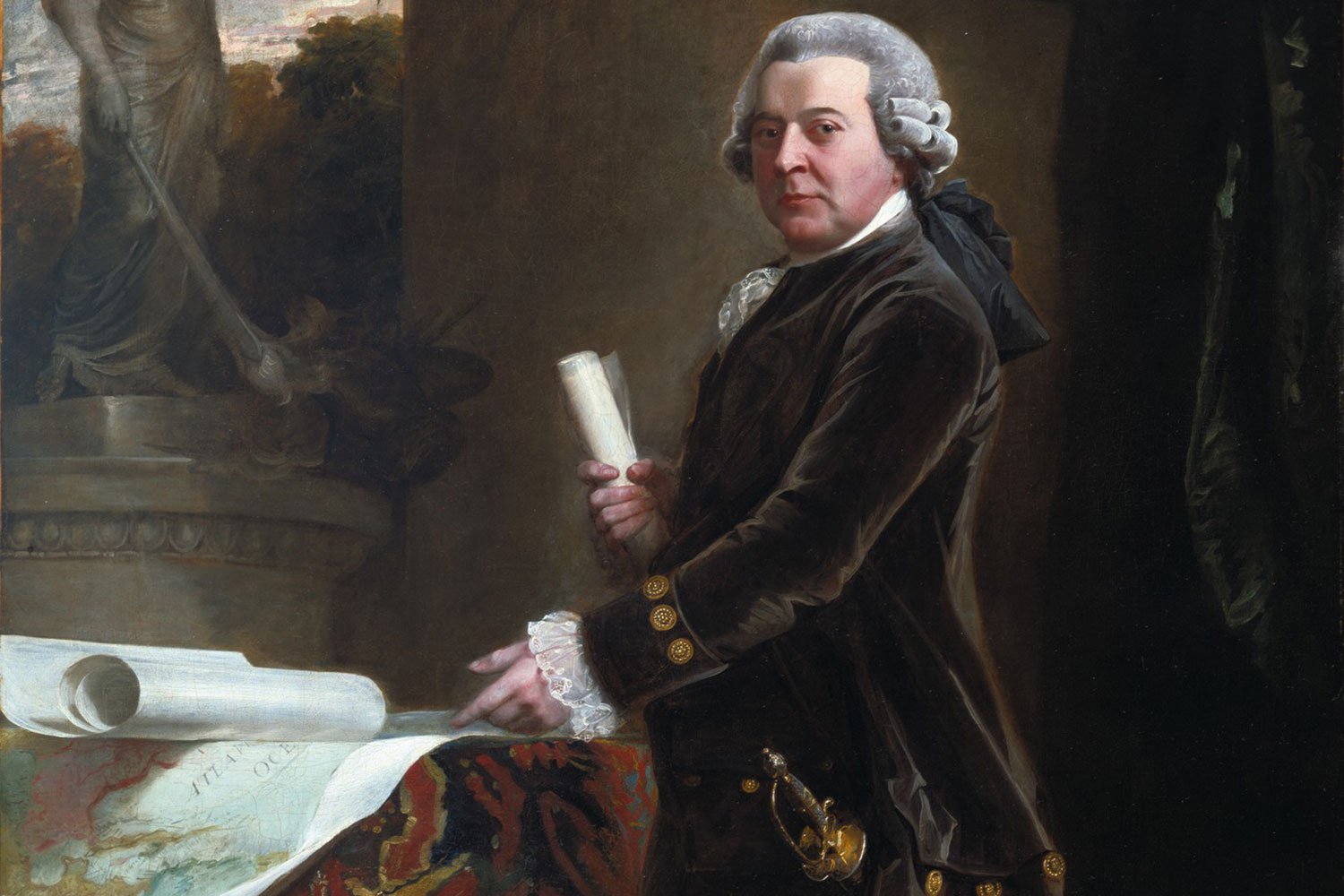
When searching for Adams' age when he died in history, the exact answer depends on which prominent historical figure named Adams (or Adam) is being referenced. Second U.S. President John Adams died at age 90 on July 4, 1826. Sixth U.S. President John Quincy Adams died at age 80 in 1848, Founding Father Samuel Adams died at age 81 in 1803, and the biblical figure Adam lived to 930 years according to the Book of Genesis.
Disambiguating "Adams" in Historical Records
Because several figures named Adams played pivotal roles in world history and religious literature, intent varies depending on whether the query focuses on early American statesmen or ancient religious texts. Below is an overview of the primary figures associated with this question:
- John Adams (2nd U.S. President): Died at age 90 years, 247 days on July 4, 1826.
- John Quincy Adams (6th U.S. President): Died at age 80 years, 227 days on February 23, 1848.
- Samuel Adams (Founding Father & Statesman): Died at age 81 years, 5 days on October 2, 1803.
- Abigail Adams (First Lady & Patriot): Died at age 73 years, 340 days on October 28, 1818.
- Biblical Adam (Genesis Patriarch): Recorded in biblical text as dying at age 930 years.
The following sections examine each of these figures in detail, exploring their lifespans, the circumstances of their deaths, and their historical context.
John Adams: Longevity and Death at Age 90
John Adams was born on October 30, 1735 (October 19, 1735, Old Style) in Braintree, Massachusetts, and died on July 4, 1826. At the time of his passing, he was 90 years old, making him the longest-lived U.S. President up to that point in history. His record for presidential longevity endured for nearly two centuries until Herbert Hoover surpassed it in 1964.
Birth: October 30, 1735 (Braintree, MA) Death: July 4, 1826 (Quincy, MA) Age at Death: 90 years, 247 days Key Role: 2nd U.S. President, Co-author of the Declaration of Independence
Health and Later Years in Quincy
After losing the presidential election of 1800 to Thomas Jefferson, John Adams retired to his family estate, Peacefield, in Quincy, Massachusetts. Unlike many contemporaries who suffered chronic metabolic or cardiovascular ailments early in retirement, Adams remained physically active and intellectually engaged well into his eighties.
He suffered from tremors in his hands (likely essential tremor) and declining eyesight in his later years, which made writing difficult and required family members to serve as amanuenses. Despite these physical limitations, his cognitive function remained sharp. He maintained an extensive correspondence, most famously reconciling with Thomas Jefferson in 1812 through a exchange of letters that lasted until their simultaneous deaths in 1826.
The Historic Coincidence of July 4, 1826
John Adams died on the 50th anniversary of the adoption of the Declaration of Independence—July 4, 1826. In an extraordinary historical coincidence, his lifelong friend and political rival, Thomas Jefferson, died on the exact same day at Monticello, Virginia, just hours earlier.
Adams' health deteriorated rapidly during the summer of 1826 due to heart failure and general systemic decline. On the morning of July 4, he became unresponsive. Historical accounts record his final audible words as, "Thomas Jefferson survives," unaware that Jefferson had passed away at approximately 1:00 PM that afternoon. Adams died at approximately 6:20 PM at his home in Quincy.
John Quincy Adams: Death at Age 80 in the U.S. Capitol
John Quincy Adams, the eldest son of John and Abigail Adams, was born on July 11, 1767, and served as the sixth President of the United States from 1825 to 1829. He died on February 23, 1848, at the age of 80 years old.
Birth: July 11, 1767 (Braintree, MA) Death: February 23, 1848 (Washington, D.C.) Age at Death: 80 years, 227 days Key Role: 6th U.S. President, U.S. Representative from Massachusetts
Post-Presidency Career and Sudden Collapse
Unlike most former presidents who retired from public life, John Quincy Adams took the unusual step of running for the U.S. House of Representatives in 1830. He served nine consecutive terms in Congress representing Massachusetts, becoming a prominent anti-slavery advocate and opponent of the Mexican-American War.
On February 21, 1848, while on the floor of the House of Representatives, Adams stood to speak against a resolution honoring officers who served in the Mexican-American War. Mid-motion, he suffered a massive cerebral hemorrhage (stroke) and collapsed onto his desk.
Final Moments and Legacy
Members of Congress carried Adams into the Speaker's Room adjacent to the House chamber, as he was too ill to be transported back to his residence. He lay in a comatose state for two days before dying on the evening of February 23, 1848. His reported final words were, "This is the last of earth. I am content."
John Quincy Adams served in public office across more than five decades, spanning diplomatic missions in Europe, the U.S. Senate, the Department of State, the White House, and the House of Representatives.
Samuel Adams: Death at Age 81
Samuel Adams, a second cousin of John Adams, was a key organizer of the American Revolution, a leader of the Sons of Liberty, a signers of the Declaration of Independence, and the fourth Governor of Massachusetts. Born on September 27, 1722, he died on October 2, 1803, at the age of 81 years old.
Birth: September 27, 1722 (Boston, MA) Death: October 2, 1803 (Boston, MA) Age at Death: 81 years, 5 days Key Role: Revolutionary Leader, Signer of Declaration, Governor of Massachusetts
In his final decade, Samuel Adams suffered from an unspecified movement disorder—modern medical historians suggest essential tremor or Parkinsonism—that caused severe shaking in his hands and head, forcing his retirement from public office in 1797. He passed away at his home in Boston and was interred at the Granary Burying Ground.
Biblical Adam: Lifespan of 930 Years
In religious history and textual scholarship, the name "Adam" frequently refers to the first human depicted in the Book of Genesis. According to Hebrew scripture, Adam lived an extraordinary lifespan prior to the Great Flood.
Textual Source: Book of Genesis 5:5 Stated Age at Death: 930 years Context: Antediluvian Genealogy (Adam to Noah)
Genesis 5:5 states: "Altogether, Adam lived a total of 930 years, and then he died."
Interpretations of Biblical Longevity
The reported ages of antediluvian figures in Genesis (such as Adam at 930, Seth at 912, and Methuselah at 969) are understood through several interpretive lenses by historians, theologians, and textual scholars:
- Literal Theological Interpretation: Traditional creationist perspectives accept the 930-year timeframe literally, attributing extended lifespans to pristine genetic health before environmental degradation or divine reduction of human lifespans (Genesis 6:3).
- Numerological and Symbolic View: Many biblical scholars argue that ancient Near Eastern genealogies used base-60 mathematical structures or symbolic numbers to indicate honor, divine favor, or epochal transitions rather than biological solar years.
- Calendar Recalibration Theories: Early historical scholars hypothesized that ancient lunar cycles (months) were translated as "years" in early oral traditions, though mathematical conversion of these numbers creates discrepancies in sexual maturity ages within the text.
Comparative Overview of Historical Figures Named Adams / Adam
The table below compares the birth dates, death dates, exact ages at death, and historical context for the primary figures associated with this search query:
| Figure | Lifespan Dates | Age at Death | Primary Historical Identity | Cause / Context of Death |
|---|---|---|---|---|
| John Adams | Oct 30, 1735 – Jul 4, 1826 | 90 years, 247 days | 2nd U.S. President | Natural causes / Heart failure on 50th Independence Day |
| John Quincy Adams | Jul 11, 1767 – Feb 23, 1848 | 80 years, 227 days | 6th U.S. President | Cerebral hemorrhage (stroke) in U.S. Capitol |
| Samuel Adams | Sep 27, 1722 – Oct 2, 1803 | 81 years, 5 days | Revolutionary Leader | Natural causes / Age-related decline in Boston |
| Abigail Adams | Nov 22, 1744 – Oct 28, 1818 | 73 years, 340 days | First Lady & Patriot | Typhoid fever at Peacefield estate |
| Charles Francis Adams Sr. | Aug 18, 1807 – Nov 21, 1886 | 79 years, 95 days | U.S. Diplomat & Congressman | Natural causes / Age-related illness |
| Biblical Adam | Genesis Chronology | 930 years | First Man (Genesis Narrative) | Natural death (Genesis 5:5) |
Historical Context of Lifespans in the 18th and 19th Centuries
Understanding John Adams' death at age 90 requires evaluating early American life expectancy. Modern readers often assume that living to 90 was almost impossible in the 18th century, but statistical context clarifies how adult longevity functioned during that era.
Life Expectancy at Birth vs. Adult Survival
While average life expectancy at birth in the late 1700s was roughly 35 to 40 years, that low figure was driven primarily by high infant and childhood mortality rates. Infectious diseases such as smallpox, diphtheria, yellow fever, and dysentery claimed a large percentage of children before age five.
However, an individual who survived childhood and reached age 20 in 18th-century New England had a high probability of living into their late 60s or 70s. Reaching age 90, as John Adams did, remained exceptional, but it occurred far more frequently among affluent individuals with access to clean water, adequate nutrition, and safe living conditions.
Lifespans of the First Five U.S. Presidents
The early U.S. presidents exhibited remarkable longevity compared to the general population of their era:
- George Washington: Died at age 67 (1799) from acute epiglottitis.
- John Adams: Died at age 90 (1826) from age-related heart failure.
- Thomas Jefferson: Died at age 83 (1826) from uremia and chronic ailments.
- James Madison: Died at age 85 (1836) from chronic heart failure.
- James Monroe: Died at age 73 (1831) from heart failure and tuberculosis.
John Adams held the record as the longest-lived founding president, a testament to his resilient constitution, temperate habits, rural living environment in Massachusetts, and freedom from military field trauma.
Factors Contributing to John Adams' Longevity
Historical records, letters, and medical biographies reveal several factors that contributed to John Adams living to 90 years of age during an era without antibiotics or modern cardiovascular medicine:
Active Rural Lifestyle and Temperance
Adams engaged in daily physical labor on his farm in Quincy throughout his middle and late life. Even during his legal and political career, he took long walks and rode horses regularly. While he enjoyed hard cider with breakfast—a standard practice in 18th-century New England—he avoided excessive alcohol consumption and maintained a balanced, farm-based diet.
Strong Family Support Network
Social isolation is a known factor in cognitive and physical decline among the elderly. Following the death of his wife Abigail in 1818, John Adams lived surrounded by family, including his son Thomas Boylston Adams, his daughter-in-law, grandchildren, and domestic staff. His continuous correspondence with political figures, historians, and former colleagues kept his mind active.
Geographical Isolation from Epidemics
Quincy, Massachusetts was far less dense than port cities like Philadelphia or New York, which suffered recurring outbreaks of yellow fever and cholera. Adams spent his retirement years away from urban disease vectors, reducing his exposure to lethal epidemic pathogens.
Frequently Asked Questions
Did John Adams and Thomas Jefferson die on the same day?
Yes. Both John Adams and Thomas Jefferson died on July 4, 1826, which marked the 50th anniversary of the adoption of the Declaration of Independence. Jefferson died at approximately 1:00 PM at Monticello, while Adams died at approximately 6:20 PM in Quincy, Massachusetts.
What were John Adams' last words?
John Adams' reported final words were "Thomas Jefferson survives." However, Jefferson had died a few hours earlier in Virginia. Because communications relied on horseback couriers at the time, Adams had no way of knowing Jefferson had already passed away.
Who was the oldest U.S. President when he died?
Jimmy Carter holds the record for the oldest U.S. President in history, reaching age 100 in October 2024. Before Carter and other modern leaders like George H.W. Bush (94) and Ronald Reagan (93), John Adams held the presidential longevity record from 1826 until Herbert Hoover passed age 90 in 1964.
Did John Quincy Adams die while serving in Congress?
Yes. John Quincy Adams collapsed on the floor of the U.S. House of Representatives on February 21, 1848, after suffering a stroke. He was carried into the Speaker's Room inside the Capitol building, where he died two days later on February 23, 1848, at age 80.
How old was Samuel Adams when he died compared to John Adams?
Samuel Adams died at age 81 on October 2, 1803. His second cousin, John Adams, lived nine years longer, dying at age 90 on July 4, 1826.
Key Takeaways and Summary
When evaluating how old Adams was when he died in history, confirm which historical figure is being studied:
- John Adams (2nd President): Age 90 (1735–1826). Known for his long retirement in Quincy, Massachusetts, and dying on the 50th 4th of July.
- John Quincy Adams (6th President): Age 80 (1767–1848). Known for dying in the U.S. Capitol after a long post-presidential congressional career.
- Samuel Adams (Revolutionary): Age 81 (1722–1803). Famous for leading resistance in Boston prior to the American Revolution.
- Biblical Adam: Age 930 according to Genesis 5:5.
For standard U.S. history inquiries, John Adams dying at age 90 is the primary reference point.